AI Authority
Unlock the secrets to transforming your marketing strategy with the 🧭 Expert Guide Marketing | AI Business Playbook.
Start ReadingWe’re covering how to create expert-level guides to educate your prospects and make them customers.
We’ll cover:
Part 1: Why teach?
Part 2: Breaking down complex topics
Part 3: Written guides
Part 4: Video tutorials
Part 5: Course compilations
Let’s get started:
Why Teach?
why teaching makes sense for marketers
linking top of funnel to bottom of funnel
summary of the week
What’s all this? Why am I making you a teacher this week?
You’ve probably heard the saying “those who can’t do, teach”.
Pretty damn offensive to teachers if you ask me.
It’s a reference to “Those who can, do; those who can’t, teach” from a George Bernard Shaw play, which is actually a (deliberate) misquote of Aristotle.
The OG saying is:
“Those who can, do. Those who understand, teach”
Much better I’m sure you’ll agree!
One of my personal heroes Richard Feynman took it a step further with:
“If you want to master something, teach it. The more you teach, the better you learn. Teaching is a powerful tool to learning.”
The best way to know you’ve absolutely mastered a subject is to be able to teach other people about it.
And this has powerful ramifications when it comes to marketing to an audience.
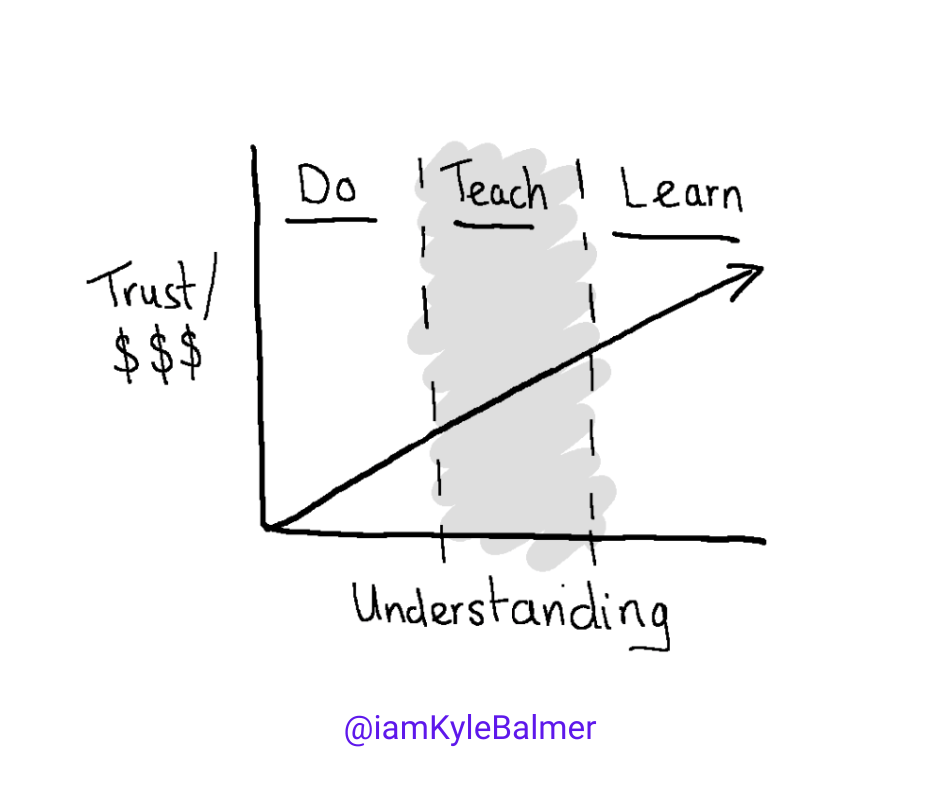
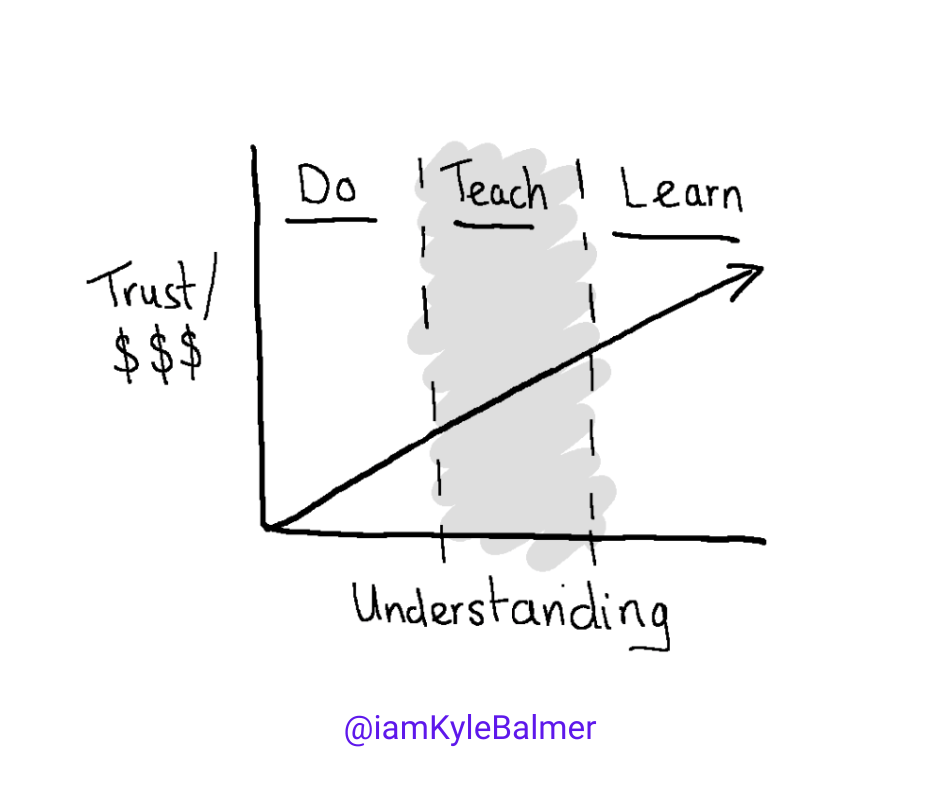
Being able to teach a subject shows our audience that we have mastery.
It automatically puts you in a place of authority. It’s literally: I know something you don’t and I’m going to impart that to you.
That authority can be parlayed into sales and business growth.
If you run a business that is in any way connected to your expertise (and you should) then providing educational content is an extremely powerful play.
I’m not talking about giving lessons, writing books or producing courses. You can do all these too. But this week we’ll mainly be covering bite size educational content.
I’m talking about:
“how I did it” guides
tips and tricks
hacks
build in public posts
answering questions
and similar educational snippets
All of this positions you as an expert in your niche. And people buy from experts.
At the top of any audience funnel we use broad, shallow, generally accessible content to attract attention.
Think things like viral videos, humorous memes, hot takes, news updates and more “general” content. This is what we use to get people interested in us on social media and (hopefully) follow.
Top of funnel content doesn’t sell though!
After someone follows us we need to move them towards the sale.
Sales messages and direct call-to-actions are bottom of funnel audience content. It’s for people who know, like and trust us and are ready to purchase from us.
The question is what is in that messy middle?
How do we convert someone who is passively interested in us to someone who actively wants to buy from us? How do we move them from top of funnel to bottom of funnel?
This is where educational guides are so powerful. We use guides to build trust and show our audience we know what we’re talking about. And to move them down the funnel.
This is the true power of this content type and what we’ll be focusing on this week.
This is what has allowed me to turn Prompt Entrepreneur into a solid 6 figure business in less than 9 months.
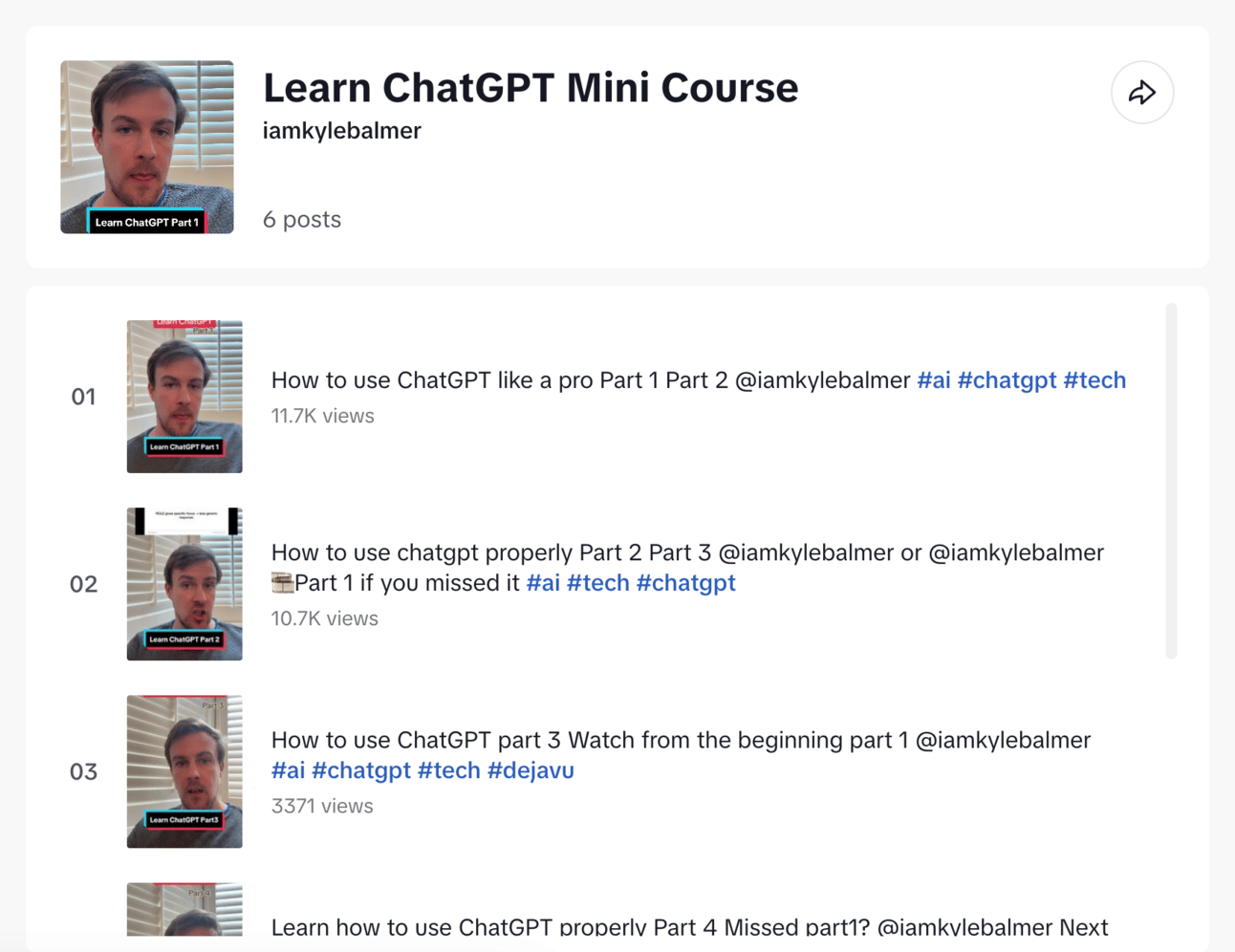
For example check these two videos below:
These two educational videos alone (both on the exact same topic!) have led to $40,000 of direct revenue. Not bad for around 4 minutes of video footage!
All because content like this helps you build your reputation in your niche, show off your expertise and gain trust.
Regardless of your niche this is a hyper-powerful technique.
This week we’ll be using AI to put together an educational content machine.
Specifically we’ll look at:
creating infinite lists of topic ideas
bolstering our own expertise
breaking complex topics down into teachable guides
creating blog article guides
Twitter thread mini-guides
short form video for TikTok, YouTube, Twitter, IG and LinkedIn
long form tutorials
compiling expertise int lead magnets, paid courses and membership communities.
If you are a Premium sub I’ll see you in the next Part.
Keep prompting,
Kyle
Before we can demonstrate our expertise we need to i) decide what we are talking about and ii) have a firm grasp of the topic itself.
Let’s get started:
Breaking Down Complex Topics
creating a topic list
teach yourself first!
basic teaching framework
First up we need to decide what exactly we are going to teach. For every niche there genuinely countless topics. The key is knowing how to capture ideas. Here are a handful of methods I use.
First, review your competitors and look at their most popular educational content. If they have popular videos on a certain topic that means that there is audience demand.
Make your own version of their guides, with your own twist. For example here is Justin Fineberg’s TikTok account. Go follow it if you aren’t:
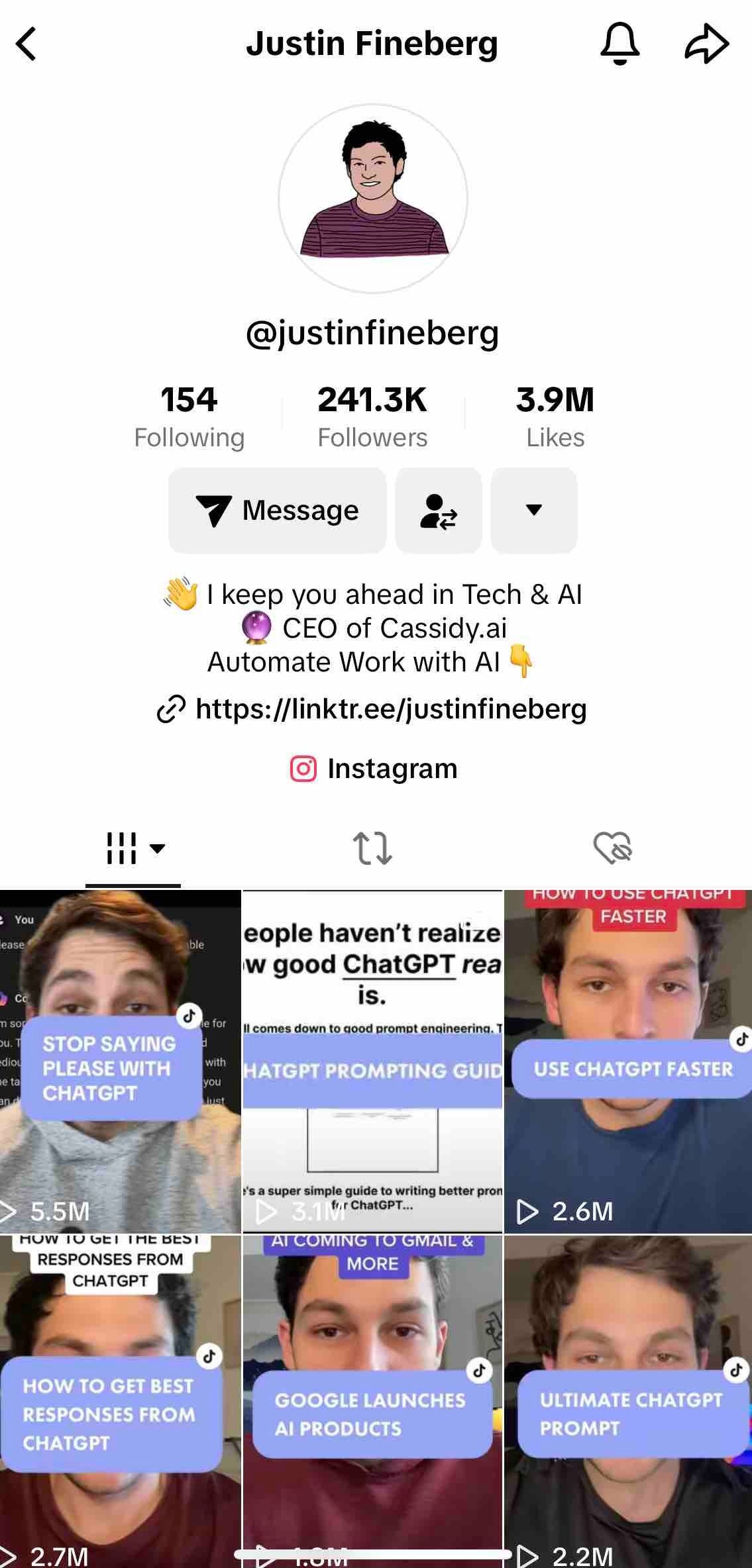
I can sort his content by popularity and get valuable insights.
His top vids are:
Stop saying please with ChatGPT
ChatGPT prompting guide
How to use ChatGPT faster
and so on.
Immediately if you know your niche you’ll start having ideas.
You don’t copy the videos - that’s i) crappy and ii) won’t work because it won’t be in voice.
Instead, in my case, I’d look at this and think “oh a guide on whether to be polite to AI” is a good video idea. That’s it. We’re just looking for inspiration here. Go ahead and do this with accounts on all platforms for a broad range of inspiration.
Second, the Reddit method. I’ve covered this in detail in a full Playbook.
Basically though find subreddits related to your niche and sort by top threads to find popular topics.
Third, questions.
Use Google AdWords or Answer the Public to find questions that people in your niche are asking.
As a rough and ready method you can also use Google autosuggest. Start typing in a phrase in your niche like “how to use AI for sales” and see what Google suggests as next words:
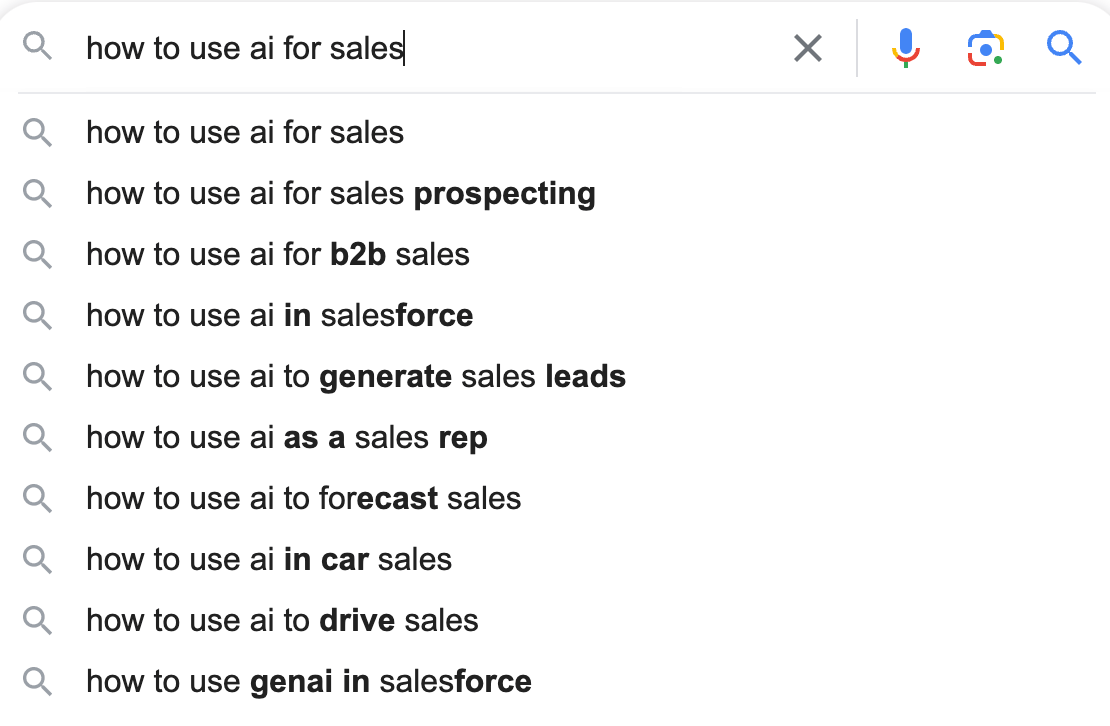
All amazing content ideas for guides.
Use question words like how, what, when, who, why to get Google to give you specific questions.
These are all starter ideas. Once you’ve started to make content and publish it people will start to directly ask you (the expert) their questions. Once this happens your content can cover these requested rather than researched topics
Once you have some topics let’s make sure you yourself “get” it.
We don’t want to talk about something we don’t understand. So let’s use AI to give us a crash course and test our knowledge.
Help me understand [topic]

ELI5 and then ask 5 questions to confirm my understanding
Add your topic and ChatGPT will “explain it like you’re 5” (ELI5) and then ask clarifying questions:
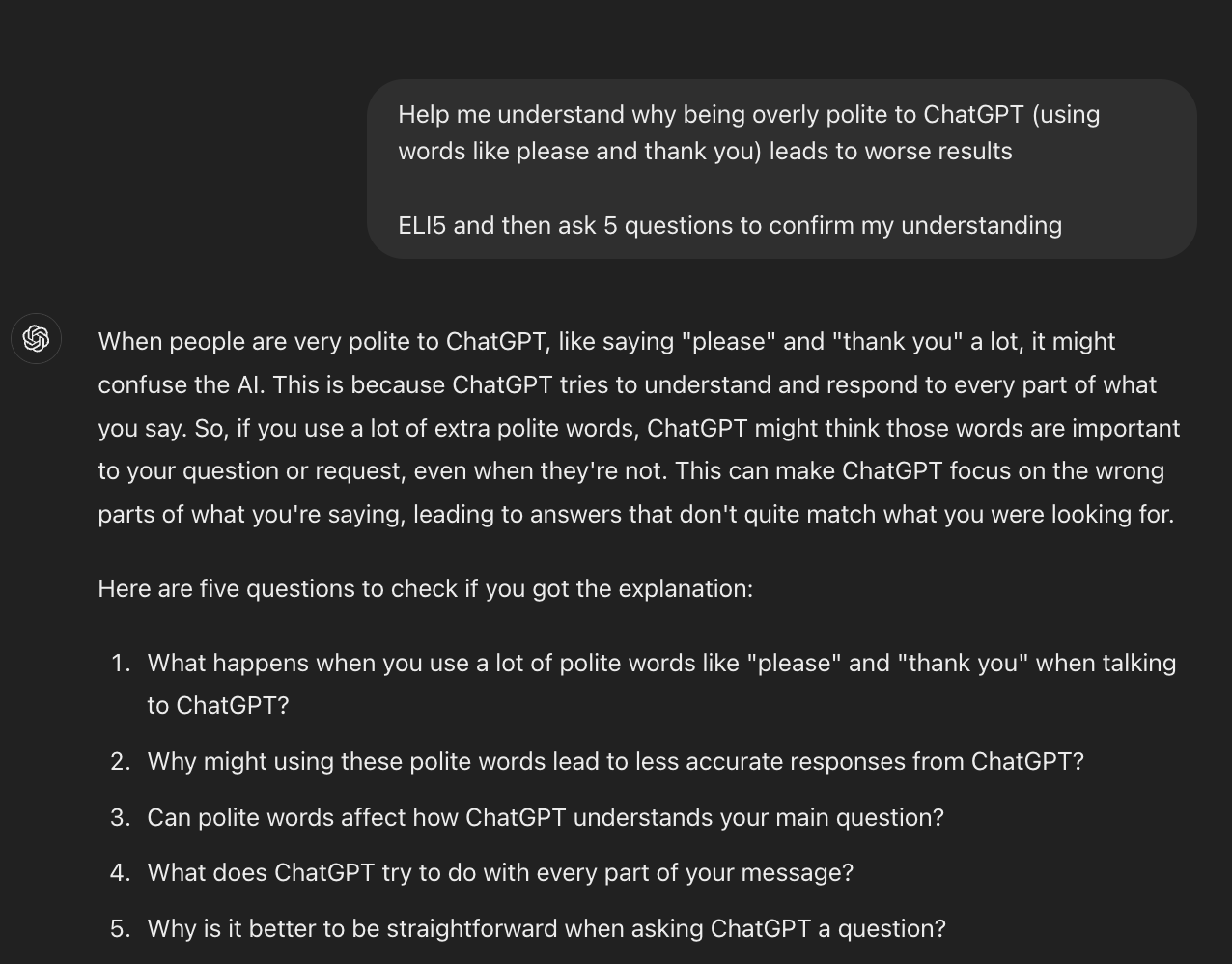
Use this as a sense check on topics where you yourself are not 100% clear. And of course ask more clarifying questions as needed.
If the topic is something recent (from the news) then make sure to tell your AI this so it know to check the latest information. For example if I ask about the recent EU ban on the rollout of Apple’s AI Apple Intelligence and explicitly tell the model to check the internet I get:
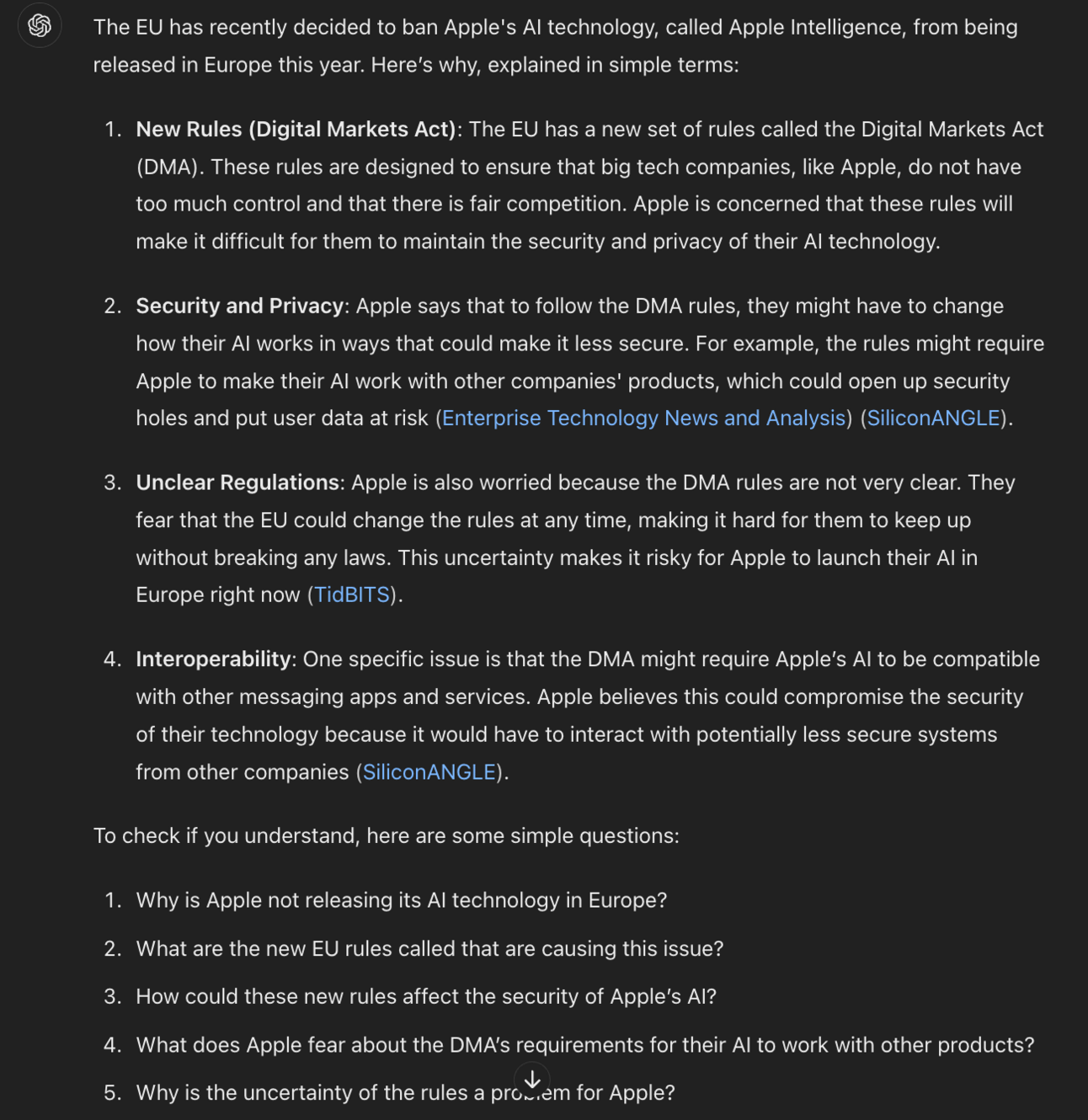
Again use the description and questions to make sure you understand the core concepts before we go onto teach and create guides.
Once we ourselves are happy with our knowledge let’s get our AI to begin constructing a teaching framework.
We’re going to use this framework in the next few Parts in different formats - text, video etc.
But for now we just want to prepare the information.
Use this prompt under the above or (if you skipped the clarifying questions step) with the topic itself.
Explain [topic] with the following framework

Surprising hook
What is the topic
Why is this important - give a story, historical, allegorical, anecdotal or personal
How to use or take advantage of this topic
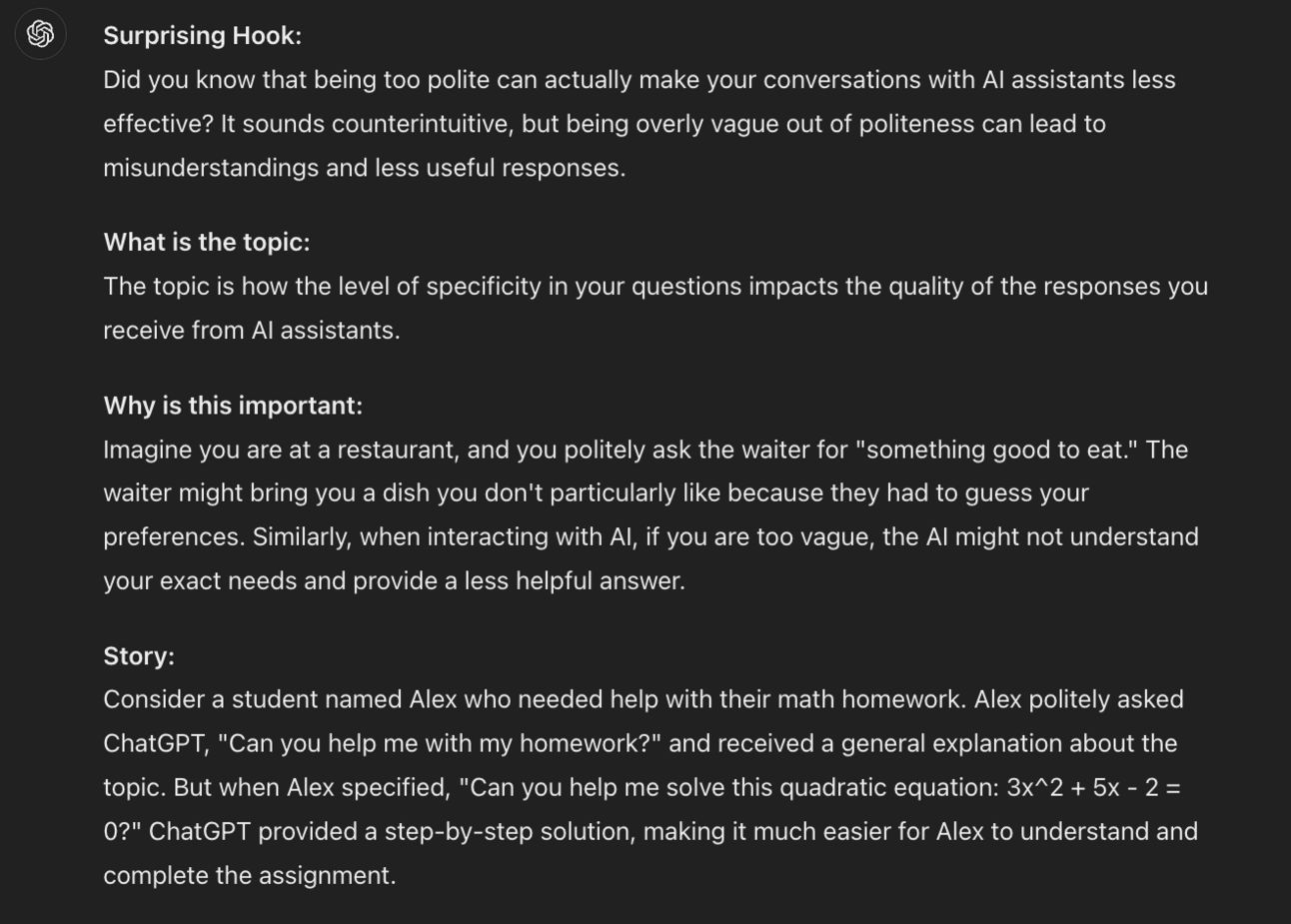
The response starts with a hook, what, why and a story:
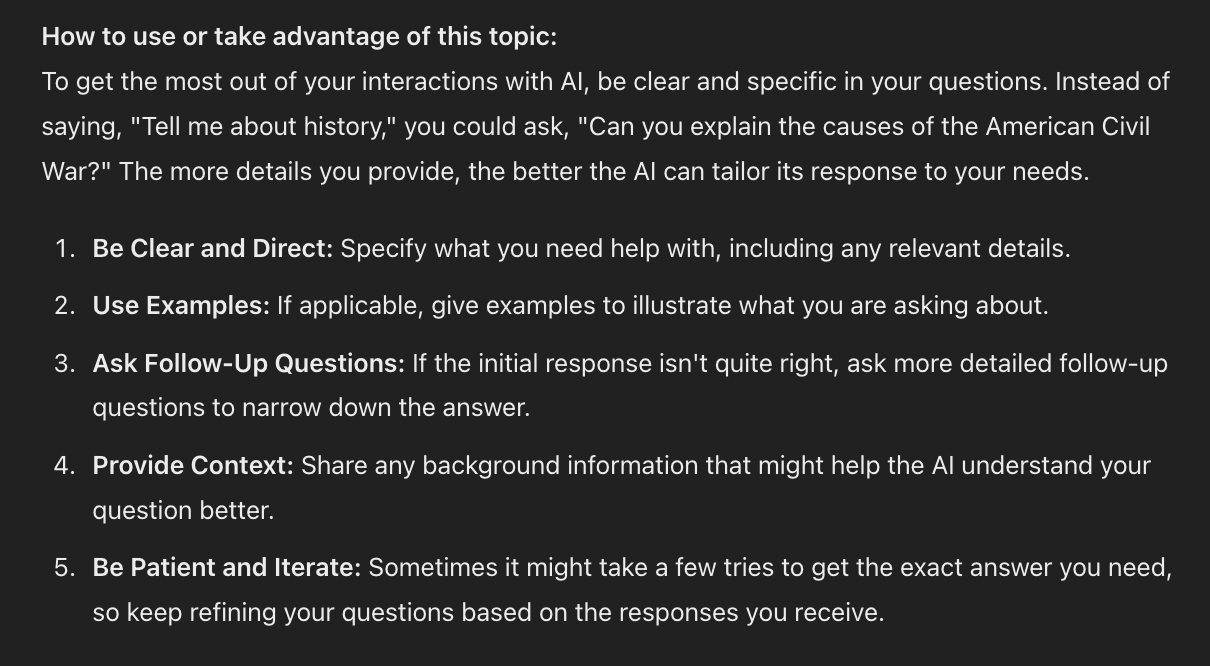
And then some actionable action points or how-tos:
Already this is shaping up into a great piece of expert content!
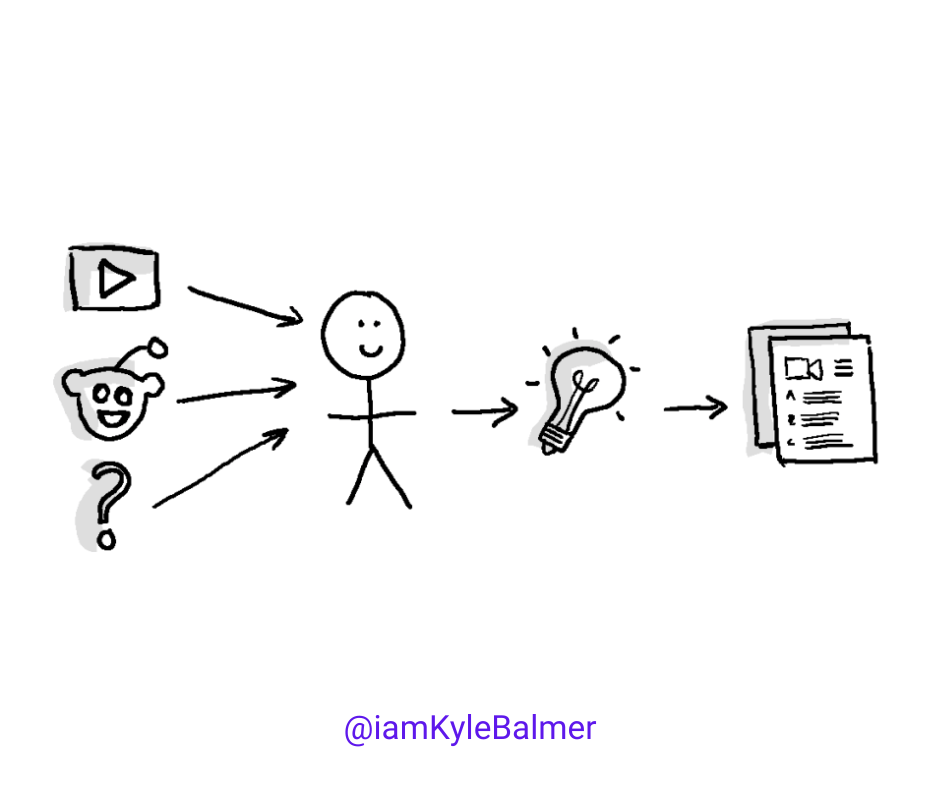
In the next Parts we’ll take this core “lesson” and from it create:
a blog article
Twitter thread
long form video guide
short form video tips
Allowing us to hit multiple platforms in multiple formats to spread our expertise far and wide.
Keep prompting,
Kyle
We’re now ready to start shaping up and publishing our expert guide content.
In this Part we’ll look at written content. In the next Part we’ll move to video.
Let’s get started:
Written Guides
long form written
short form threads
The whole purpose of the method we are exploring is to create middle of the funnel content for followers to show them our expertise and authority in our niche. From this we build trust and (subsequently) our business.
In the last Part we came up with ideas for our content and created the core message.
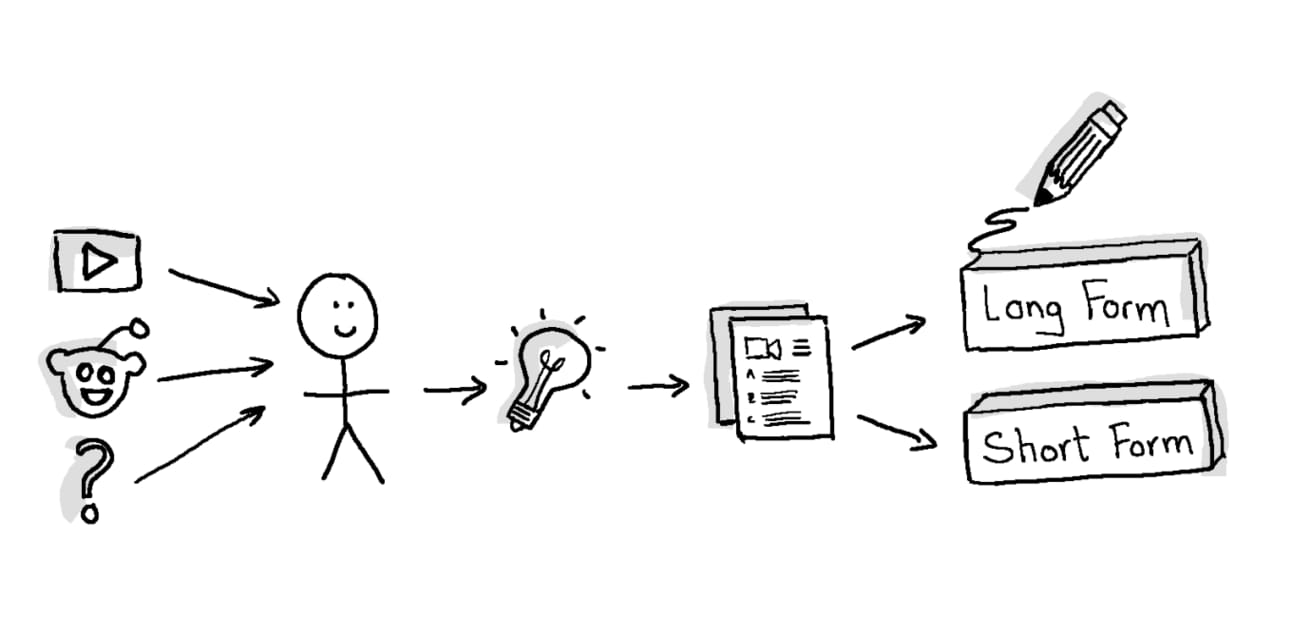
That core message can now be adapted into different formats.
We’ll look at both long form written content and short form written content.
Long form content can live in multiple places.
My favourite are:
a blog, for SEO (ie. getting seen on Google)
long form post on Twitter
LinkedIn articles
Basically anywhere where people are used to spending more time reading.
Here’s a prompt to convert our core message into a long form written content piece:
Act as an SEO writer

Analyse the above content outline and decide a keyword

Then prepare an article on the topic following the basic outline given

Provide 500-1000 words.

Do not use emojis or hashtags
Keep sentences punchy, keep paragraphs less than 3 sentences.
Rewrite the outline headings as optimised subheadings
Summarise takeaways as bullet points
ChatGPT will use this to generate a long form piece like so:
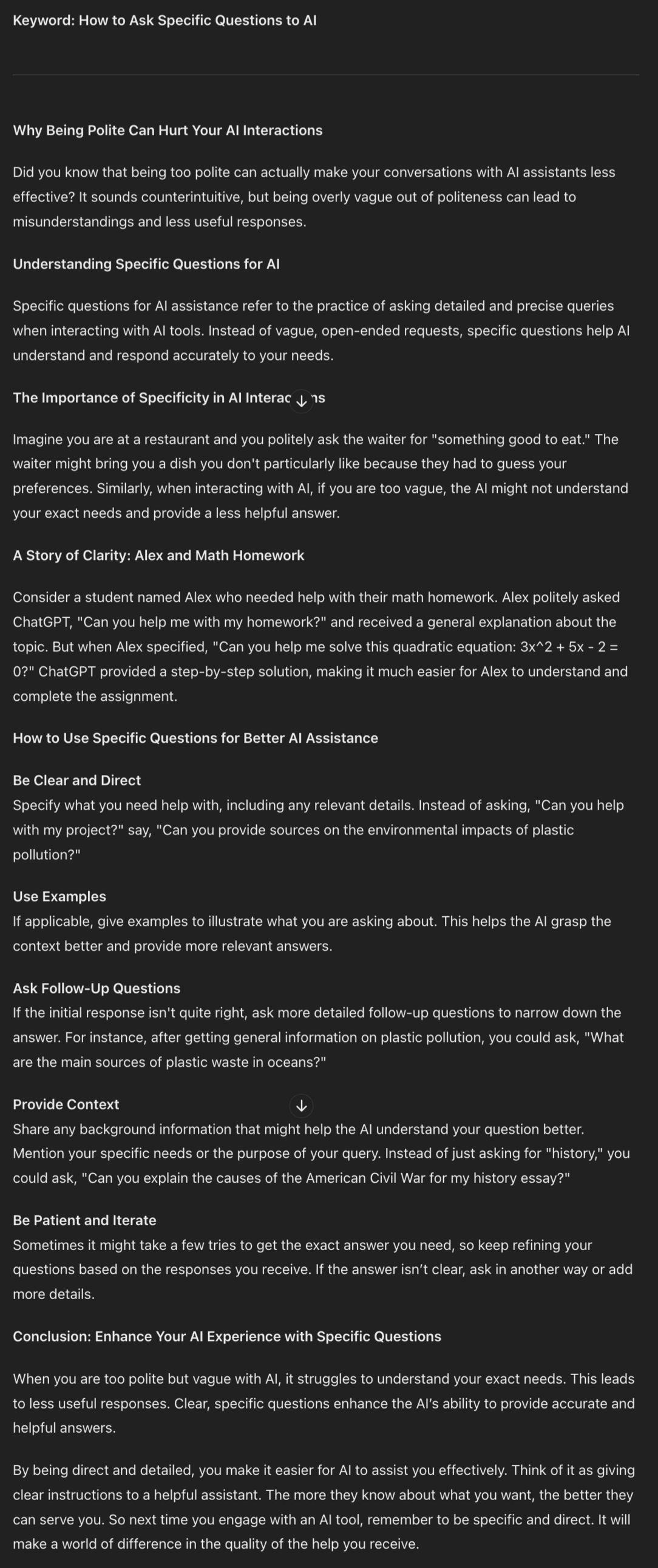
Make sure to add additional narrowing constraints to your prompt to better make it sound like you want.
We can also improve our article with this basic prompt:
Identify the phrases that sound AI-generated and suggest alternatives.ChatGPT will suggest alternatives like so:

Then just tell ChatGPT to apply the changes you agree with.
Funnily enough ChatGPT is better at capturing these after it produces them. If you prompt with “don’t sound too AI generated” ChatGPT can’t do it!
Alternatively:
use Claude for overall better written results
use Quillbot to analyse and provide fixes for AI-sounding text
rewrite manually
Once you are happy with the piece go ahead and publish it in all the locations you’ve selected for long-form written content. Don’t worry about placing the same article in multiple places. This just gives it more reach for different audiences.
Next up let’s convert out core message into a Twitter thread. Twitter threads do very well on Twitter (duh) for guide and education based content.
They are the right length to deliver the value needed to prove expertise without it being a solid block of text.
Let’s use this prompt:
 Act as a Twitter thread writer

Analyse the above content outline

Then prepare an Twitter on the topic following the basic outline given

Start with a hook intro tweet
Then break the content out over multiple tweets, each with one main point

Do not use emojis or hashtags
Keep sentences punchy. Brevity is key.
Do not include the outline headings.
Use the prompt below your initial core message, not the long form article. ChatGPT will format the core message into a thread:
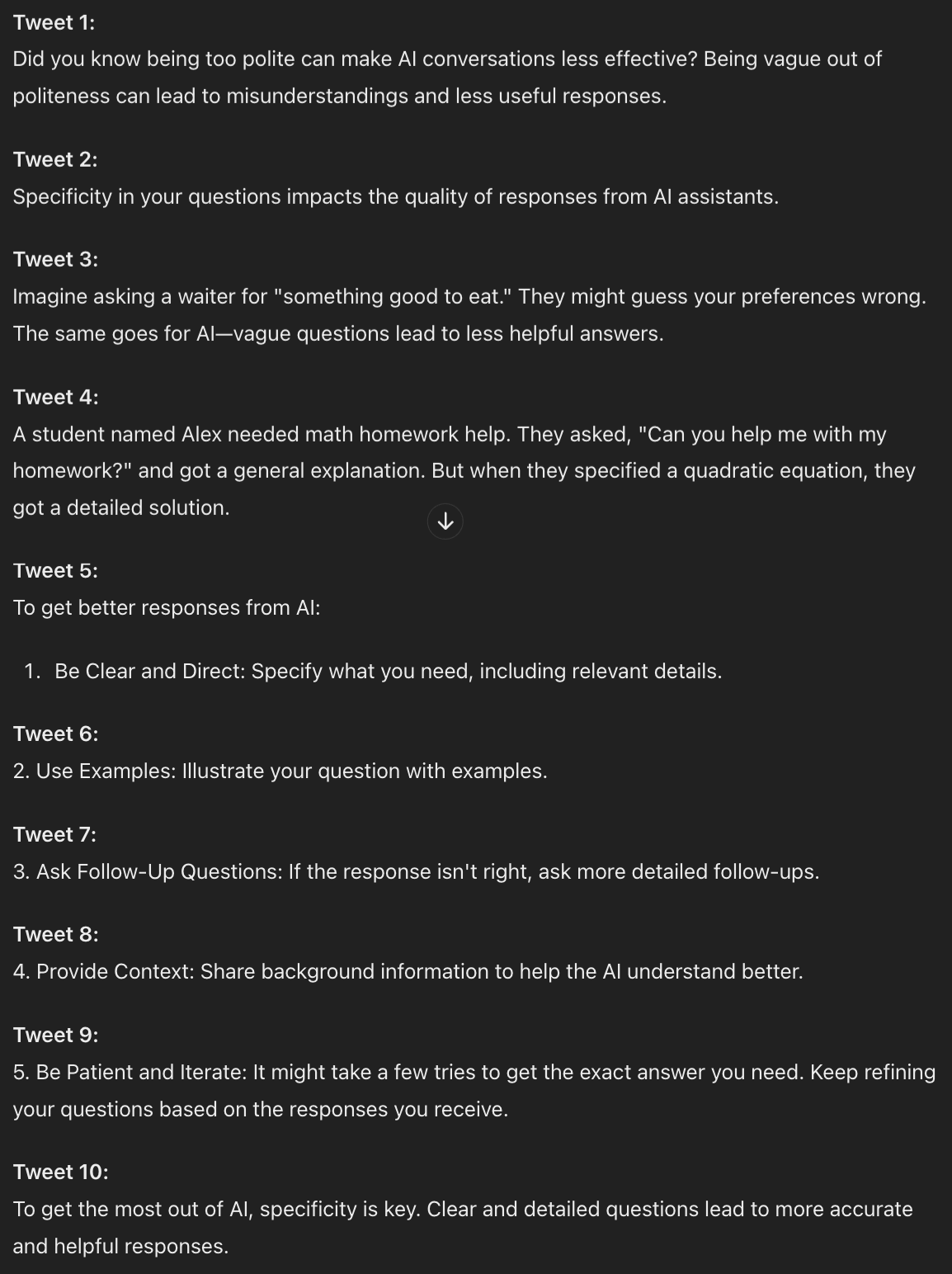
Adapt as required from this basic skeleton and you’ve got a solid thread ready to go.
You can also (optionally) link to the long form piece on your blog as a call to action at the end of the the thread.
These two prompts give you a strong foundation in written educational content. In the next Part we’ll add in video content and combine the two.
Keep prompting,
Kyle
In this Part we’ll adapt our core message into video. We’ll also talk about multimedia and starting to combine text and video.
Let’s get started:
Video Tutorials
long form video
combining long form with written
short form video
combining short form with written
Video gives us an extra edge when it comes to building trust via education. It’s not just the content that’ll show your expertise - it’s your delivery and presentation too.
Video is also (generally) the preferred format that most people like to consume educational content in.
We’ll look at how to convert our core message into different video formats and then combine everything (written and video) into multimedia posts.
Long form video lives primarily on YouTube. Other platforms allow you to upload it (and in fact encourage it) but YouTube remains the platform where audiences actually want to watch it.
Just because TikTok wants videos up to 60 minutes doesn’t necessarily mean their users do!
We can make scripts from our core message using AI. One variable here is how much detail you want in the script.
Some people will want every line written out. For instance if you are happy to memorise a script (more power to you!) or are using a teleprompter.
Others will be happy to ad-lib and talk on the fly. These people literally only need a short list of bulleted talking points and they are good to go.
Most of us are somewhere in-between.
Generally as you shoot more video you’ll transition from needing line by line to being able to talk off the top of your dome. This happened to me - the more I did the less scripting I needed. It’ll happen to you too.
To account for variations in speaking comfort we’ll use a prompt with a variable.
Analyse the content above and prepare a script for a Youtube video.

Use this variable: If 100 level of detail is a line by line script and 1 level of detail is simple bullet points of only the main points prepare a script with a level of detail = [1-100]

Do NOT include script or stage directions or b-roll suggestions. Do not provide speakers. Provide only the wording.
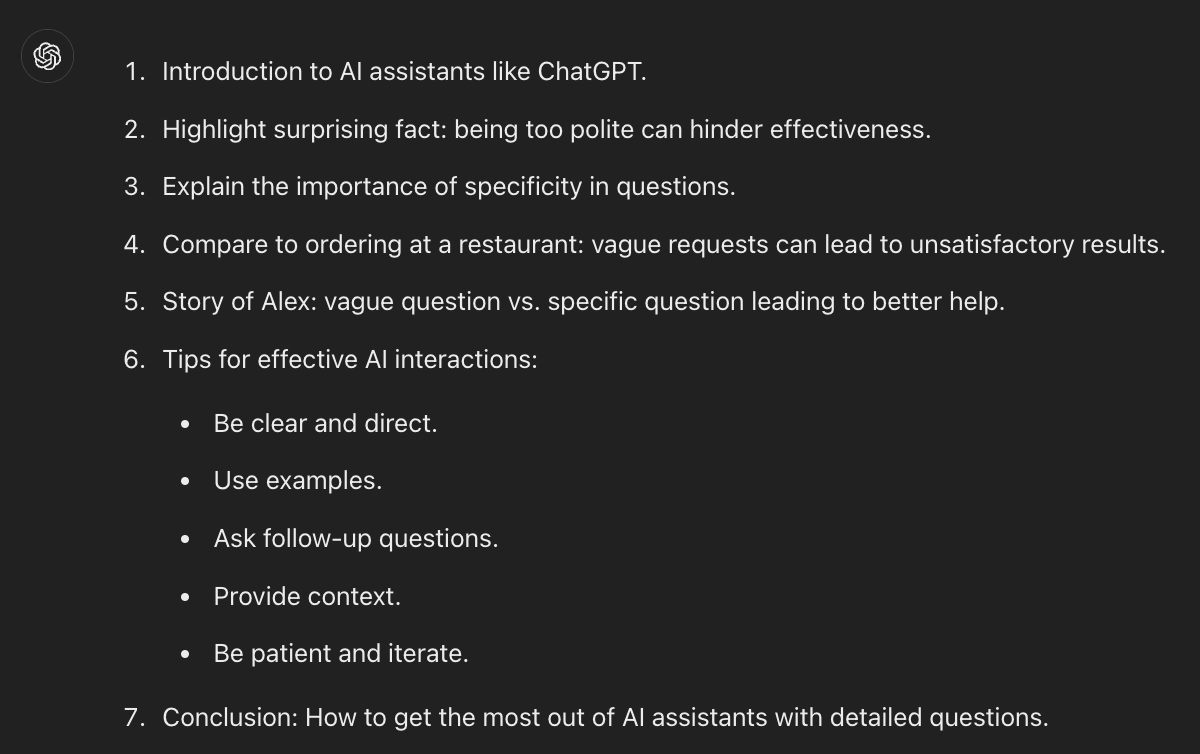
Here is an example of our previous core message with detail set to 1:
And with detail set to 100:
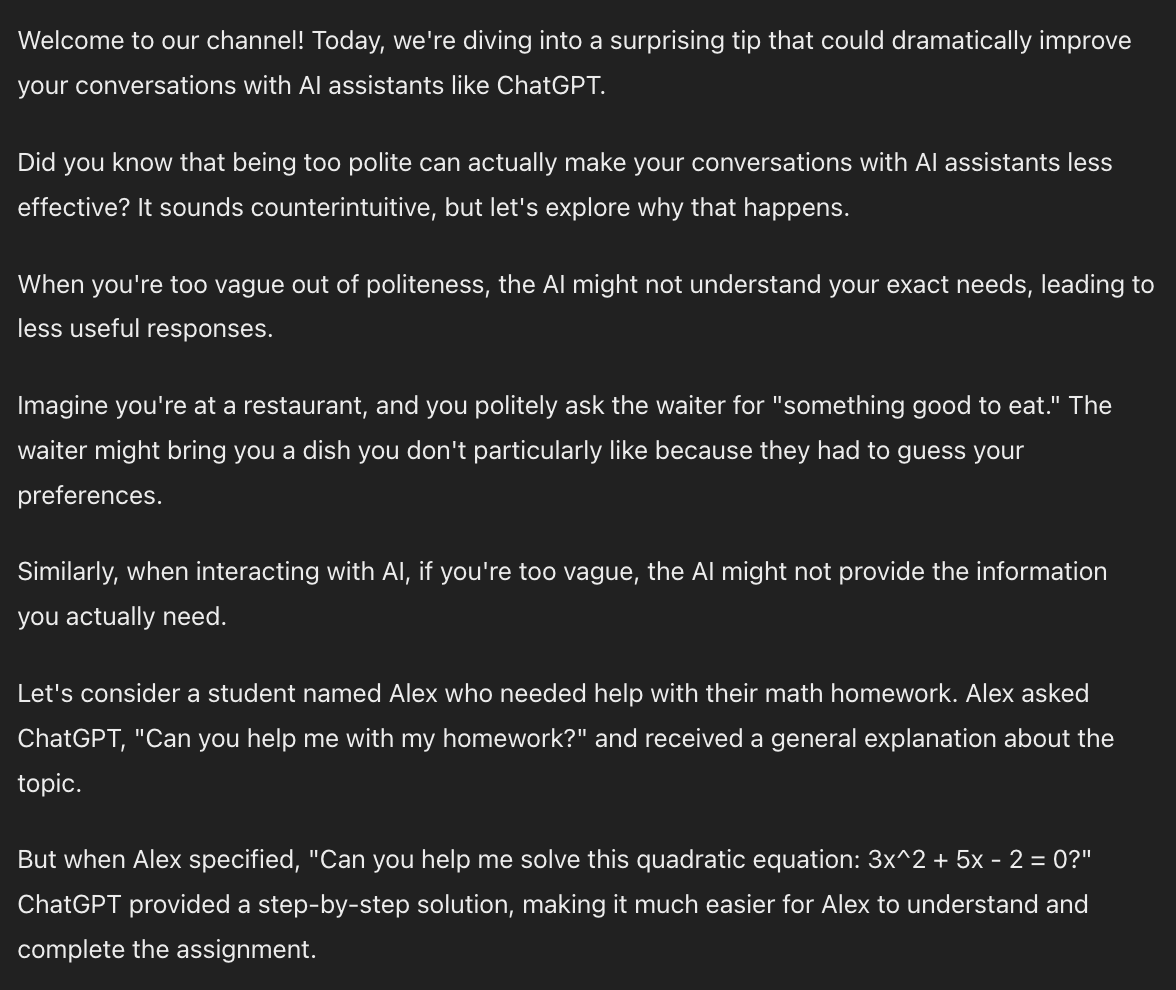
Use whatever level of detail you need to to get the job done. And then over time as you become more comfortable with on-camera delivery decrease the detail level. This allow you to flex the prompt as required.
Once you have your video uploaded to YouTube I recommend also embedding it in your blog.
Specifically:
use the long form blog article from the last Part as the text of the blog
and then embed the YouTube vid at the top of the article for those who prefer to watch
This gives you a double whammy of SEO - both Google search and YouTube (also owned by Google).
Second, in the description of your YouTube video link to the blog article. Then the circle is complete.
Short form video is the dominant online format - bar none.
It’s obviously the most powerful on native platforms like TikTok and Instagram Reels but it’s also taking over on YouTube via Shorts.
It’s the most accessible format because of its length and (let’s be honest) because people don’t like reading!
Shooting short form video is very similar to long form with the obvious exception of it being…shorter.
Because of this we’ll adapt the prompt to brevity.
Also, the hook is even more important for short form. In general, people will be shown your video on their feed rather than actively seek it out. Which means you need to absolutely nail the first second.
Here’s an adapted prompt:
Analyse the content above and prepare a script for a short 60 second TikTok video.

Use this variable: If 100 level of detail is a line by line script and 1 level of detail is simple bullet points of only the main points prepare a script with a level of detail = [1-100]

Do NOT include script or stage directions or b-roll suggestions. Do not provide speakers. Provide only the wording.

Provide 5 hook alternatives
The prompt will generate a much more concise script for you, again allowing you to adjust for detail.
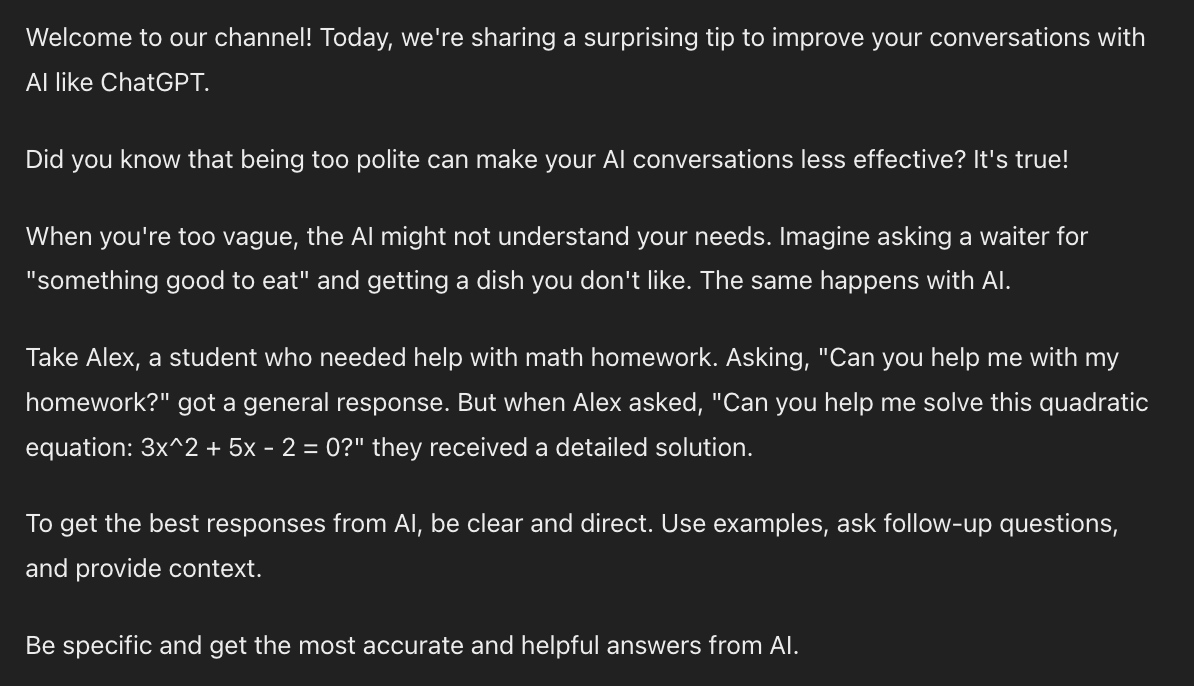
It will also generate multiple hooks:
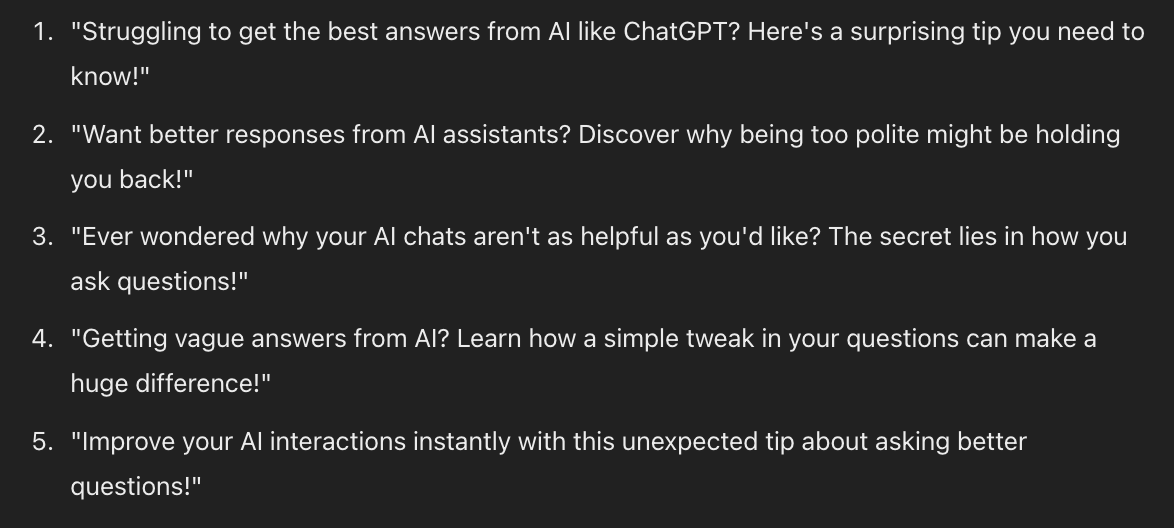
My advice when starting out - shoot all five hooks and try the video with each and every hook. Space them out if you worry about too many duplicates. In general though your followers won’t be seeing everything you post - especially early days.
Therefore use this as a chance to experiment - test hooks, see which holds audiences best and learn from this. It’ll tell you the type of hooks your audience responds to.
We can also go multi-format with short form video.
First of all insert your short form video into your Twitter threads as one of the individual posts, generally the first one (but experiment with where it sits).
Also insert the short form video into LinkedIn articles and any other places on social media you’ve used your long form text.
Second, for the caption of your short form video use the long form article on platforms that allow long captions. This works great for on-platform SEO. And some people (especially on Instagram) will actually read the article right there in your feed.
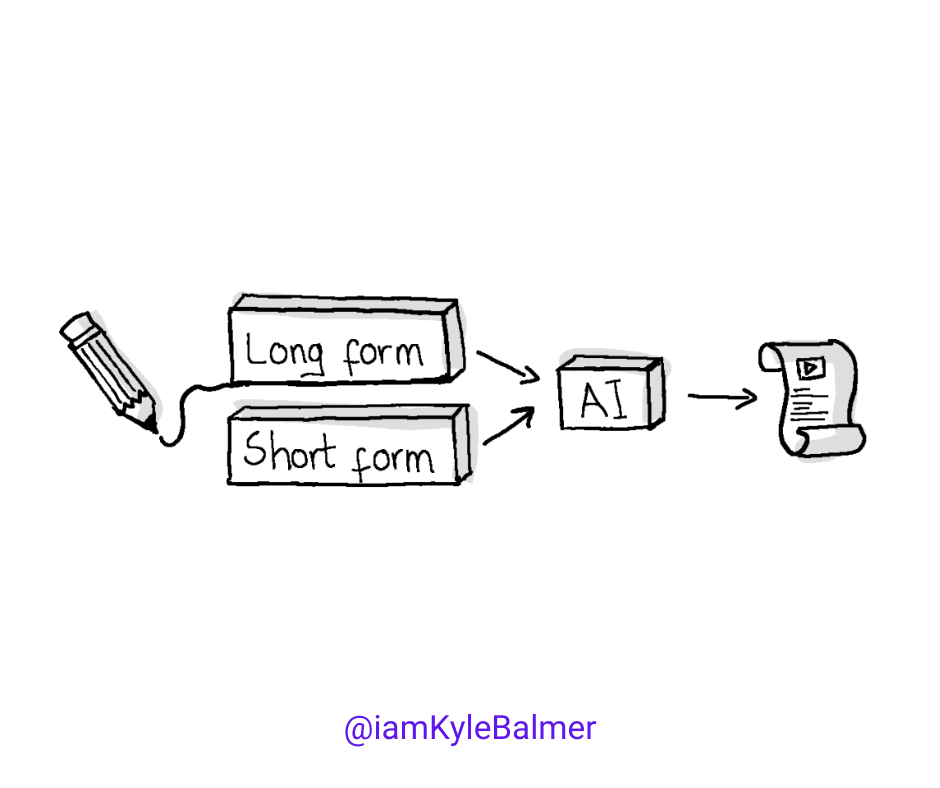
We’ve talked briefly in this Part about ways to combine video and text. In the next Part we’ll talk about taking this to the next level where we can start to compile all of this material into structured series and even courses.
Keep prompting,
Kyle
In this Part we’ll take expert educational content to the next logical step: structured series and courses.
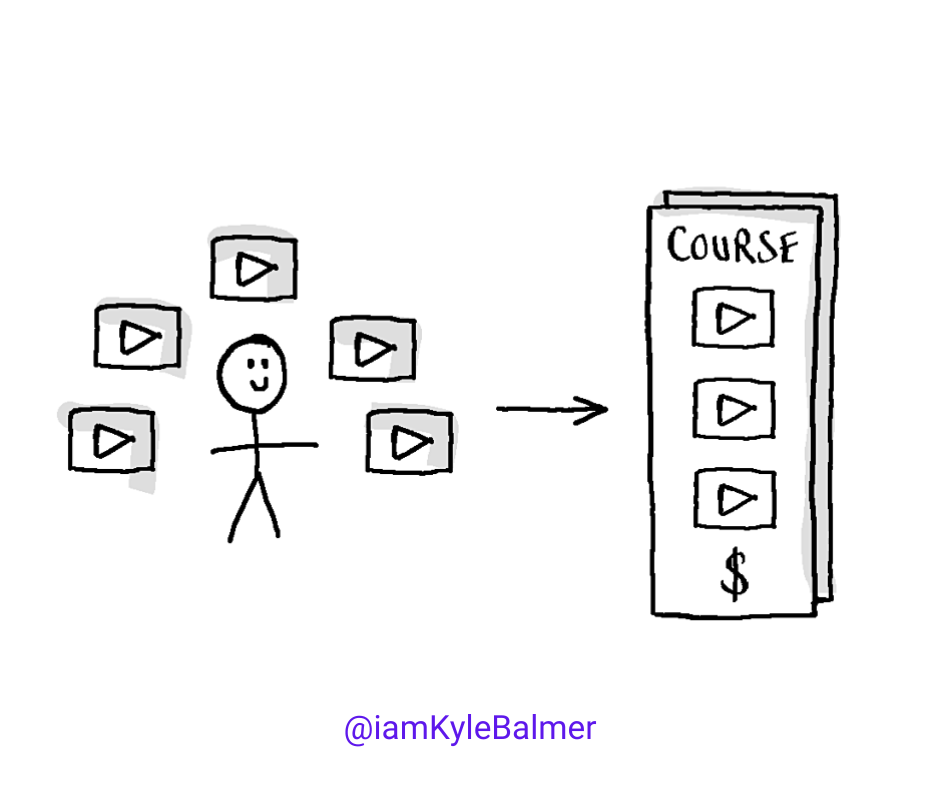
Let’s get started:
Course Compilations
plan content around longer term series
structured vs unstructured
converting to lead magnets
a course as final form
remember the sale
If your educational content is proving to be popular and (more importantly) bringing traffic to your products and services then you may want to formalise it into series and courses.
Series (or playlists) are basically lists of videos that people can work through. They can be structured - as in video 1, video 2, video 3 etc. Or they can be unstructured and merely revolve around a topic.
Courses are basically more of the same with supplementary content and are normally hosted on a course platform like Circle, Skool, Kajabi or similar.
Either way these can be build from your everyday educational expert content. Let’s explore how.
We can create our everyday content with series and course creation in mind.
Basically we plan content with our series as the end goal.
Here’s a very basic example series:
This particular series follows my RISENTM framework. But we can generally apply this concept with any topic.
To begin to construct a series like this use this prompt below your core message from previous Parts:
Act as a content strategist

Construct a series of content from this core message

The series should be 5 short videos of 1-2 minutes each
When I use this with the information about not being overly polite to ChatGPT I’m given multiple short videos like so:
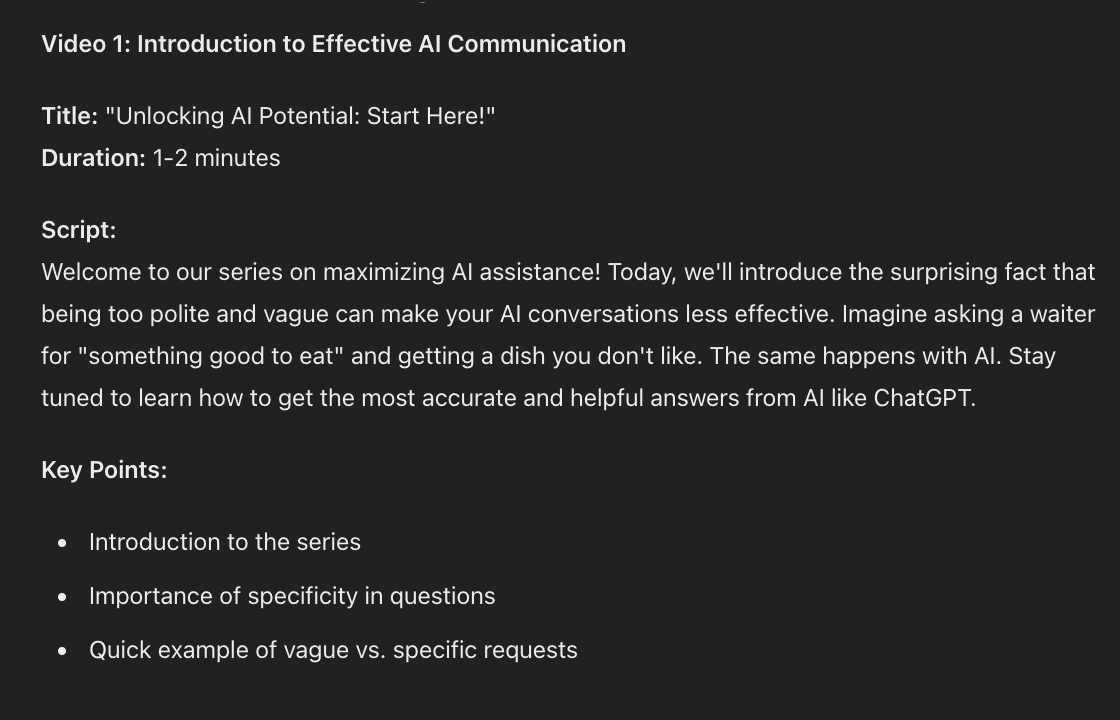
and video 2:
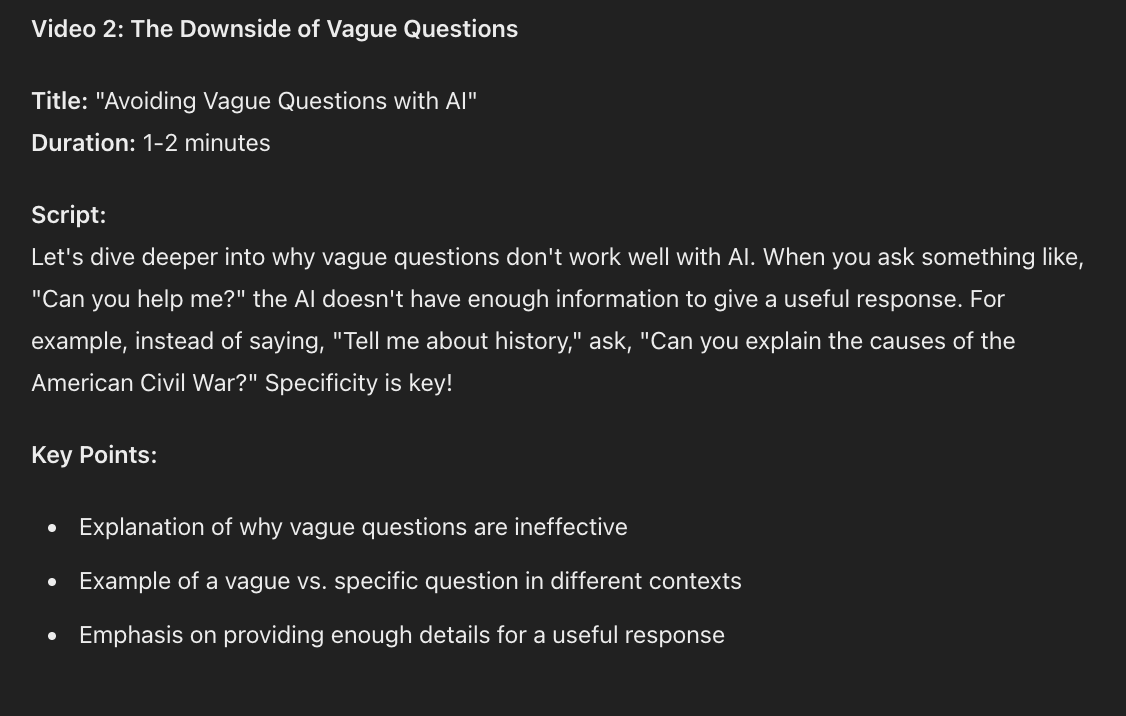
and so on…up to 5 videos in this case.
Basically we can expand a topic out to multiple content pieces, all in a sequence.
Importantly we’ll post each of these videos as normal - not as part of a series. They should also work as standalone videos.
And when they are all published we loop back and connect them all up into a series.
This allow us to not only consistently publish but also to later create something more comprehensive by pulling them all into a series.
Using the prompt above we end up with a structured series, each content piece going into more or revealing the next step.
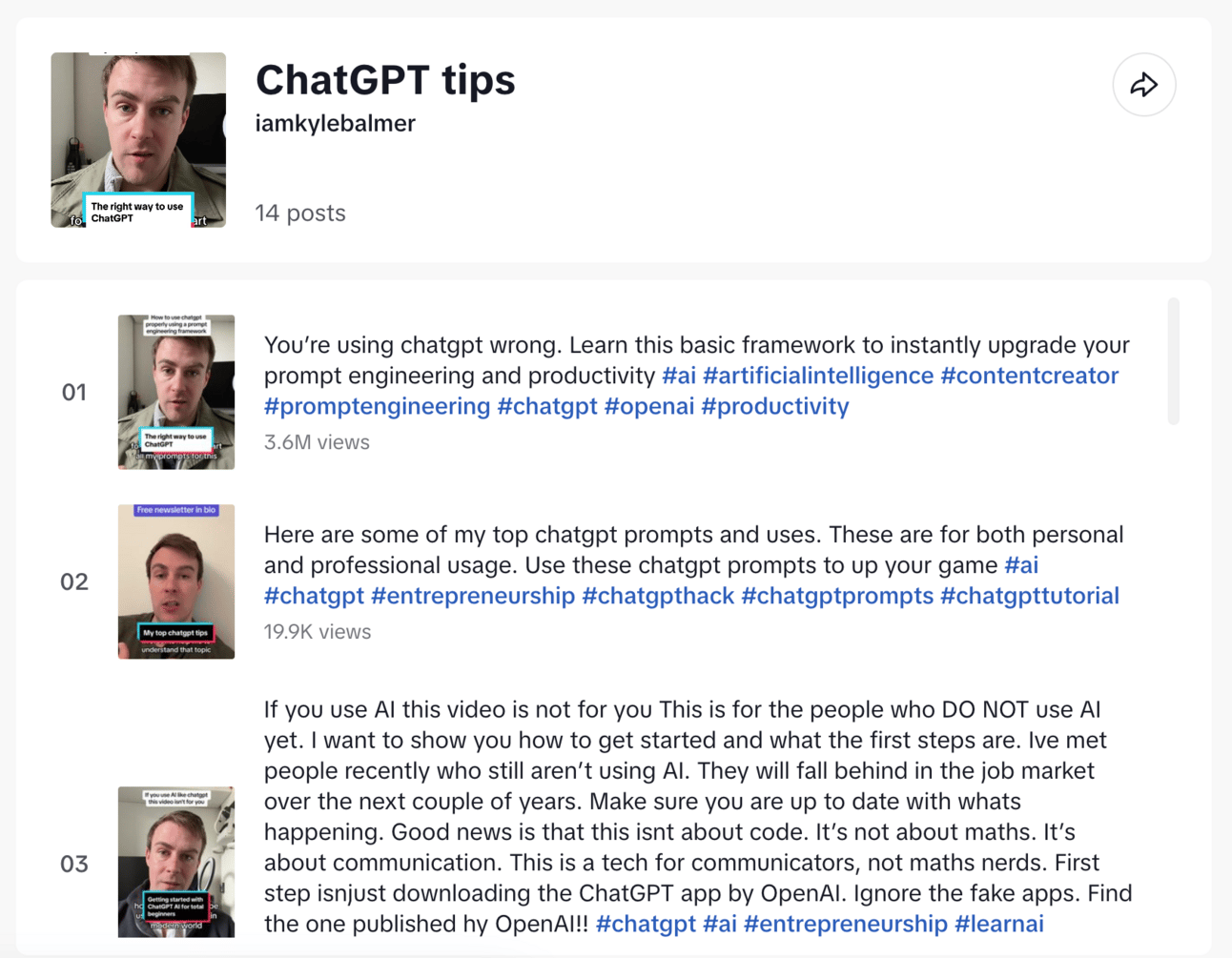
We can also have much less structured series like this one I have called “ChatGPT Tips”:
That’s literally a compilation of ChatGPT advice. In no particular order. Just themed around the same topic.
For this we’d look to our content pillars - the broad “buckets” of content you talk about on social media to build an audience.
Mine for example are ChatGPT tips, AI News and Entrepreneurial Advice.
Not sure what your content pillars are yet? Pay attention to the themes that do well when you post and build your pillars around this - listen to your audience rather than assume!
Once you’ve identified a content pillar let’s use this prompt:
Act as a content strategist

Suggest video ideas around the topic of [content pillar topic]

Give me 10 ideas for 1-2 minute videos on this topic
Feed these back into your potential guide topics (as we covered in Part 2) knowing that they will later be put together into a playlist or series.
If you have a series that is particularly popular you have additional options.
For example, if you are on TikTok you can make specific subscription only videos. You can use this to “lock” off content so that it’s only available for a fee.
Alternatively you can convert popular series into lead magnets which are given away in exchange for an email. This can be done in a number of ways:
embed all of the videos in a free Gumroad product which requires email to access.
convert the content into a drip fed email course where sign ups are sent one part per day
move the content into a proper course software (more on this shortly)
The series thus becomes a lead magnet asset or even a product you charge for.
If a lead magnet then it’s OK to also have the content freely available on your social media or blog. The lead magnet is just packaging it up nicely for them.
If charging for access then it’s recommended you remove the free versions of the content.
A step beyond simple series and playlists is a full course.
It’s a difference of scale and complexity more than anything.
I’ve written a whole Playbook on course creation available here on the subject.
The basic idea here is to simply sketch out your course content up front (use that Playbook to get the basic structure and lessons) and then produce all the content for social media first.
You’ll create the course content on the fly, in public. If a content piece flops you do it again. Until you know it’s engaging. And you carry on in this fashion putting each piece of the course together openly.
But won’t people “steal” the content and get it for free? Yes! But it’s going to be disjointed - they’ll get all the pieces but not the full picture.
Also remember that only you know all the content you are putting up and in what order. Most people will never see it all. And if they do they’ll see it in such a random order (based on the algorithm not publish date) that they won’t be able to piece it together.
When you’re close to completion you can un-publish the public content and port it into your course structure. In its proper order. With additional top and tail content and resources to flesh it out.
Or alternatively you leave your content up and instead re-record everything “clean” - using the first public videos as drafts that have let you perfect how to deliver the topic.
However we choose to compile the course we use public feedback and engagement to refine our educational content and make the end result far more valuable.
We are not just educators. We are running a business.
Remember that the purpose of this expert educational content is to bring people down our audience and sales funnels by providing value.
Educating our customers builds up trust. And trust leads to sales.
The sale is bottom of the funnel content that works after a prospect has followed and consumed our work for a period of time.
Sometimes this is fast. Sometimes it takes months. But as long as you are continuing to put out educational expert content and building up trust you will eventually get them to that sale.
Keep prompting,
Kyle
Unlock the secrets to transforming your marketing strategy with the 🧭 Expert Guide Marketing | AI Business Playbook. Dive into a comprehensive resource designed to equip you with the skills to create expert-level guides that not only educate your prospects but also convert them into loyal customers. Over five engaging parts, you will discover the art of teaching, breaking down complex topics, and utilizing various content formats to enhance your marketing efforts. Whether you're a seasoned marketer or just starting out, this playbook will empower you to build authority in your niche and drive business growth.
This playbook is designed for marketers, entrepreneurs, and content creators who are eager to elevate their brand's visibility and trustworthiness. If you find yourself struggling to connect with your audience or convert leads into customers, this resource is perfect for you. You'll gain insights into effective teaching methods, allowing you to share your knowledge and establish yourself as an expert in your field, ultimately boosting your business performance.
No prior marketing experience is required. The playbook is structured to guide both beginners and experienced marketers through the concepts and strategies.
Each part of the playbook can be completed at your own pace, with practical exercises that can be integrated into your daily routine. Expect to spend a few hours per week for the best results.
You don't need a teaching background! This playbook focuses on practical strategies for sharing your expertise in an engaging way, making it accessible for anyone.
Absolutely! The techniques covered in this playbook are versatile and can be adapted to various content formats, including blogs, videos, and social media posts.
Yes! By building trust and authority through educational content, you'll be more likely to convert leads into customers, ultimately increasing your sales.