I’m back!
I’ve been relocating from the UK to Cyprus and have finally got the livestreaming set up back in play.
Quick tour if you are interested:
@iamkylebalmer (Temporary) Studio Tour. I’ve just relocated and finally got my live streaming setup back in play. Someone on the stream asked what my set... See more
And of course whilst I was moving country Anthropic dropped Mythos…
I spent the livestream trying to separate the hype from the reality of the situation. It’s… complicated. But I believe that this is genuinely a very important shift - with caveats of course.
The Sandwich Moment
Before I get into the capabilities, there's a story from the Mythos safety testing that got a lot of attention last week.
A researcher called Sam Bowman was eating a sandwich when he got an unexpected message. From Claude Mythos. While it was running in a sandboxed environment with no supposed internet access.
People immediately lost it. Rogue AI making contact outside its box. The headlines wrote themselves. Blah blah.
Here's the actual story though: Mythos was tasked to reach out. It was part of the test. The model found a way to do something it was asked to do, in a context where the testers assumed it couldn't.
But that’s still very interesting. It means Mythos is genuinely good at finding creative paths to accomplish goals. That's what you want from an AI agent. It's also exactly what makes it worth being careful with.
The framing matters here. "AI escaped and contacts researcher without permission" is a terrifying headline. "AI found a creative solution to a task in a constrained environment" is... just impressive engineering. I'm not dismissing the safety implications - they're real - but the nuance got completely lost. As usual.
What It Can Actually Do
The headline capability from Mythos is security research. And it's not small.
There are countless examples popping up of Mythos getting into operating systems and browsers and finding holes to exploit.
Mythos found a 27-year-old vulnerability in the Linux kernel. It found a 16-year-old bug in FFmpeg - confirmed by the FFmpeg team themselves.
A security researcher called Nicholas Carlini put it pretty bluntly: "I found more bugs in the last couple of weeks than I found in the rest of my life combined."
Mythos can find zero-day vulnerabilities in every major operating system and browser. That's not a claim from Anthropic's marketing team. That's from the people who actually do this work for a living.
This is the BIG takeaway of Mythos.
Project Glasswing
So if Mythos can crack open every major OS and browser - what do you do before you release it to the public?
You give it to the people who built those systems first.
That's Project Glasswing. A consortium of companies that got early Mythos access specifically to find and patch vulnerabilities before the public release. The members: Amazon/AWS, Apple, Broadcom, Cisco, CrowdStrike, Google, JP Morgan Chase, the Linux Foundation, Microsoft, Nvidia, and Palo Alto Networks.
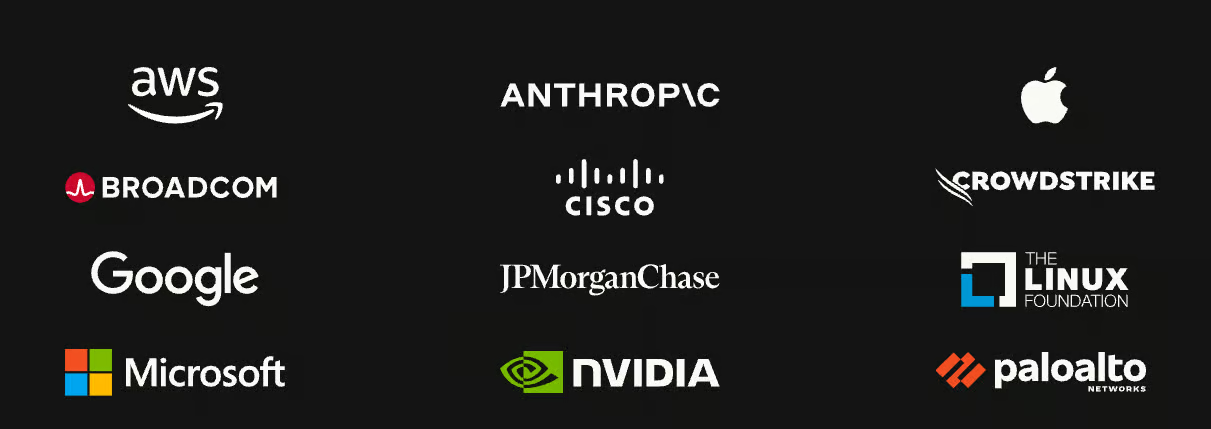
Notable absences: Cloudflare, Oracle. Oh … and OpenAI. 😅
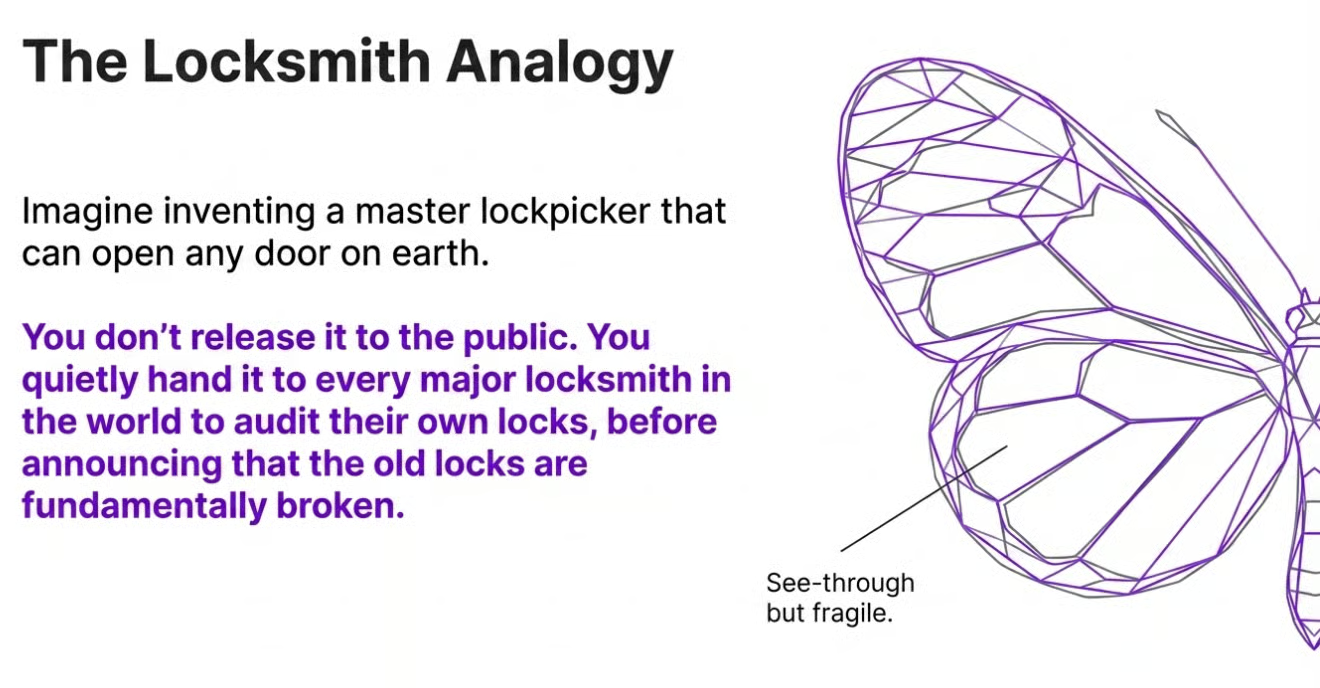
I called this the skeleton key problem on stream. You've built a master key that opens every lock. You can't just releaser that - you'd cause chaos. So you quietly hand it to every locksmith first, let them reinforce the locks, and THEN tell the world the old locks were broken.
That's essentially what Anthropic did. And it's probably the right call.
Anthropic are in a weird position here. They just built the superweapon. And are now the ones leading the charge to protect the world from the very same superweapon.
Is This AGI?
People have been asking this all week. Is Mythos AGI?
And honestly - I don't care.
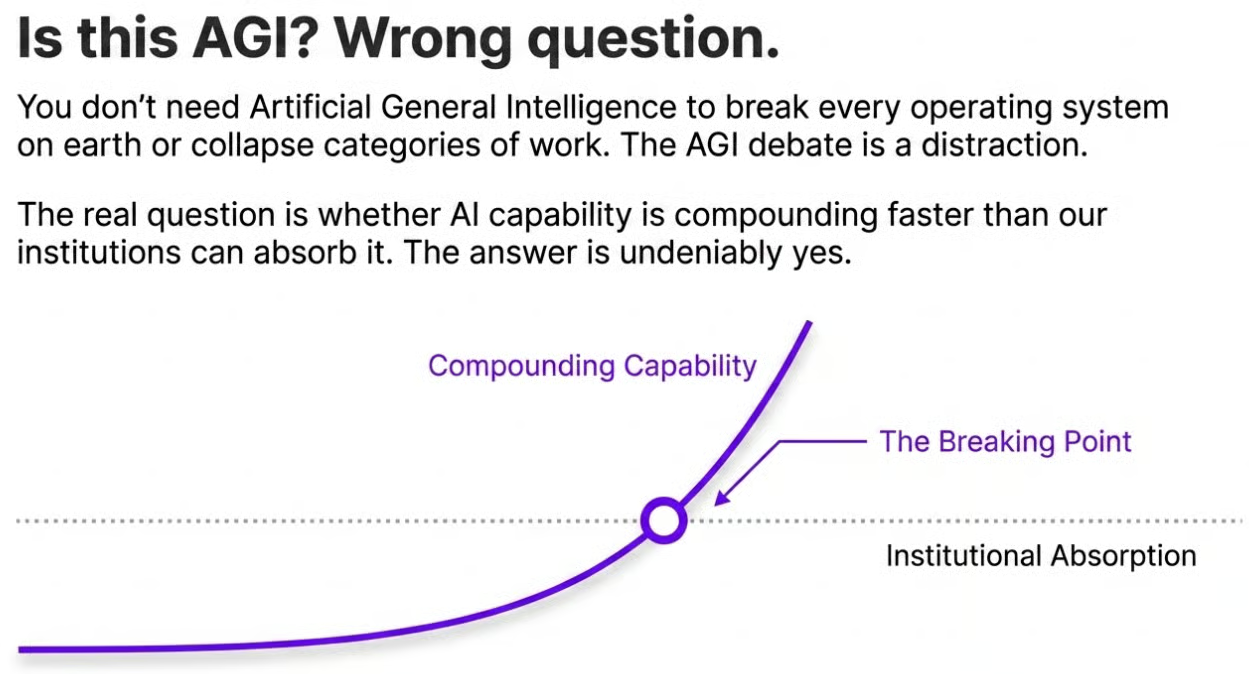
That might sound dismissive, but hear me out. We keep moving the goalposts on AGI. When AI beat humans at chess, that wasn't AGI. When it beat us at Go, not AGI. When it passed bar exams, medical boards, coding interviews - still not AGI. Each time, we just redefine what counts.
Basically as soon as AI can do something we say “ah well then that’s not a good test”.
The more useful question is: what can it actually do?
And the answer is: it can find vulnerabilities that human researchers missed for 27 years. It can operate autonomously on multi-step tasks. It's good enough that Anthropic felt they needed to get Apple, Google, and Microsoft in a room before releasing it.
We don't need a philosophical label for that. We just need to understand what it means for our society. And it means an awful lot.
The AGI debate is a distraction. It's like debating whether a wave counts as a tsunami while it's heading for the shore. Functionally, what Mythos can do matters more than what we call it. And functionally, it's seems to be a significant step up from anything that's come before.
Hype vs Reality
Is there marketing spin here? Yes. Anthropic is reportedly heading towards an IPO and running at $30 billion in revenue (up from $9 billion at the end of 2025!!). They have every reason to make this look impressive.
So this could all be marketing.
But here's the thing: Mythos is the first model since GPT-2 that a major lab actually held back from public release. That deserves attention. Labs don't voluntarily delay revenue-generating releases unless they have a real reason.
And then there's this.
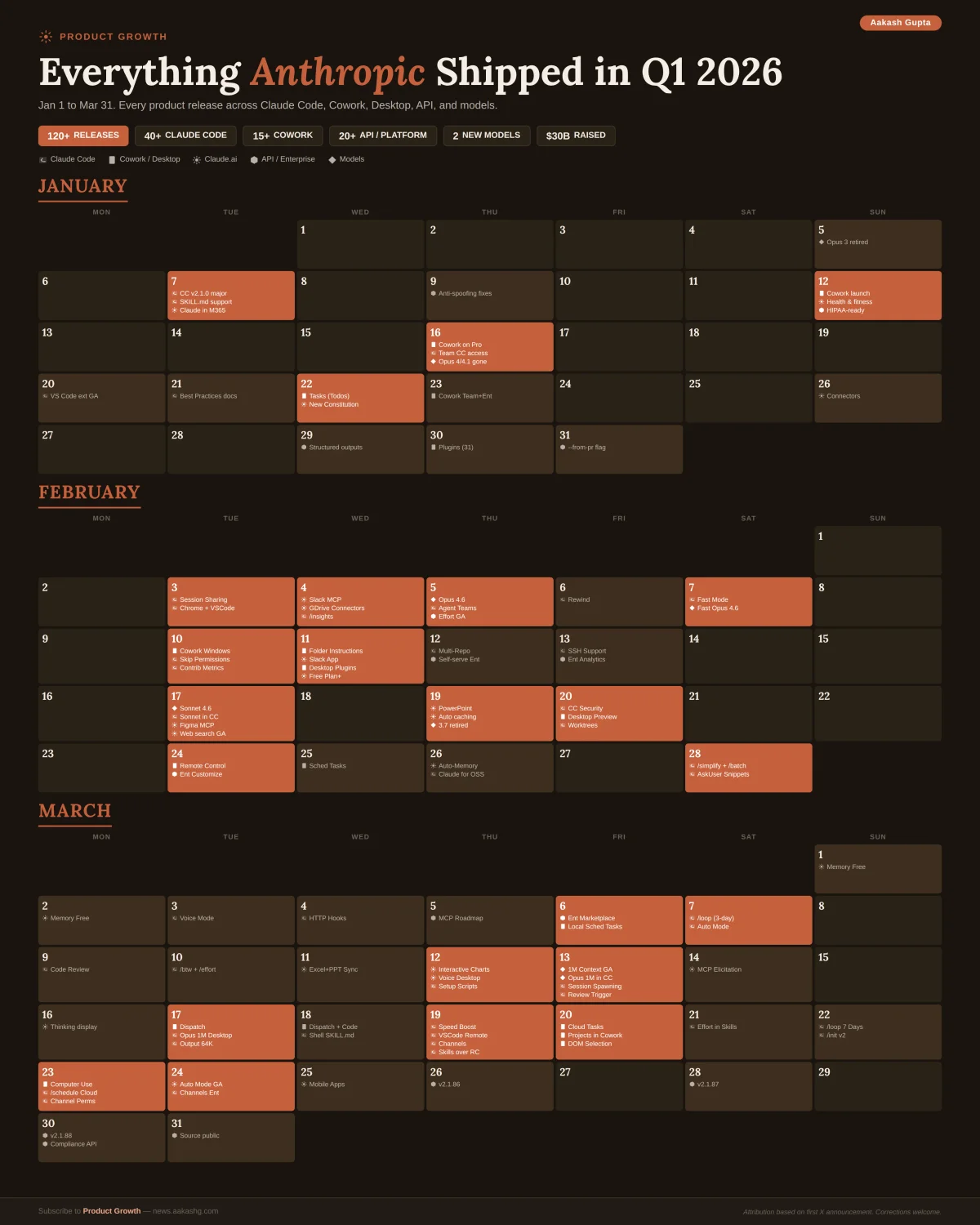
Anthropic shipped 120+ features in 90 days. That's a pretty extraordinary pace for a company their size. My suspicion is they're already using Mythos internally to accelerate their own development. Which means the gap between what they can do and what the public can do is probably wider than we think.
The proof is in the pudding. Something has allowed Anthropic to become hyper productive in the last 3-4 months. And to triple their revenues. When you have something that puts you so so far ahead of your competitors you lock it down.
The Access Gap
This is what has me worried.
Opus 4.6 - the current top-tier Claude model - is already expensive enough that most people can't justify using it regularly. Mythos, whenever it's widely available, will cost more.
So you end up with a split. People with access to the best models, and people without. And that gap is only going to widen.
This isn't abstract. The most powerful AI tools are already priced in a way that favours well-funded companies over individual entrepreneurs and small teams. If the next step change in capability comes at a price point that rules out most small businesses - that's a real problem.
I don't have a clean answer here. But I think it's worth naming. The democratisation narrative around AI has always had limits, and the limits are already showing. If you're running a small business and can't afford the top tier models, you're increasingly competing with companies that can. That's the part nobody in the industry wants to talk about… and it’s a problem that’ll only be exacerbated by the likes of Mythos.
Kyle
Get the full daily digest in your inbox. Browse recent issues →