
It’s been almost a week since the dust settled on Google I/O 2026.
I don’t like to breathlessly talk about every new announced release. Because it’s just pointing MORE noise and hype into the world. We need less of that!
Lots of people watched the keynote, saw the shiny video demos, shrugged at Gemini 3.5 Flash, laughed at the usual Google product-name soup, and decided Google had fumbled it.
So…after a few days I did a livestream on what I think was actually important. And it’s much less flashy…yet more important…than everyone thinks.
Google looked boring at I/O. That does not mean Google is weak.
The important (boring) move was Search.
Distribution Beats Favourite Products
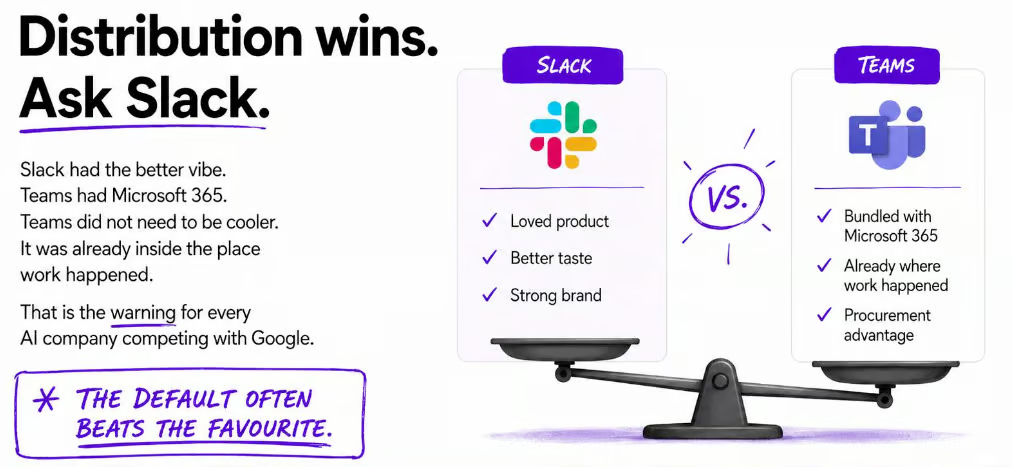
First up. Remember that distribution beats product.
You can have a terrific product with terrible distribution and you won’t get anywhere.
You can have a terrible product with terrific distribution and you’ll dominate.
Ahem, Microsoft Teams, ahem.
We all know that Slack is better than Microsoft Teams. Obviously.
I don't think this is controversial unless you work at Microsoft, in which case soz. Hell, you probably quietly know Teams is terrible regardless! Teams is still everywhere because Microsoft already had the distribution. It was bundled into 365. It was pushed through IT departments. It was the default.
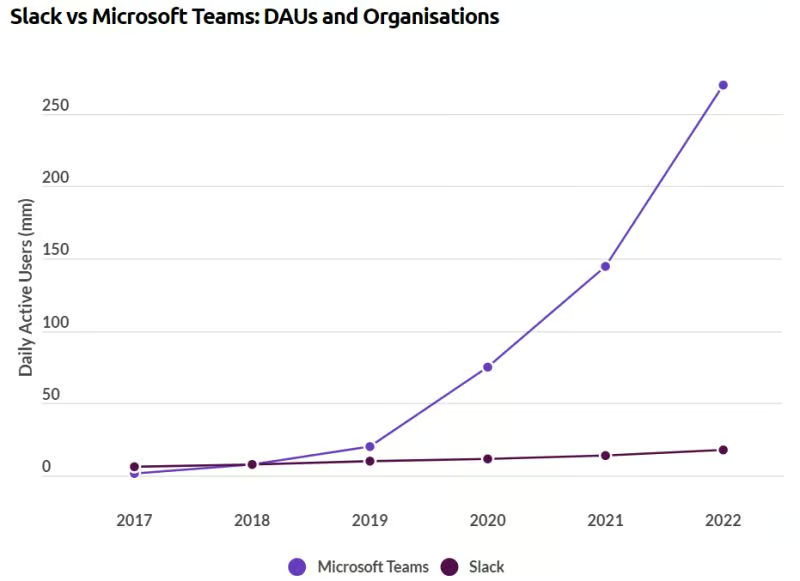
The default often beats the favourite. Remember this.
Why is this relevant to Google I/O?
Remember that Google doesn’t have to convince anyone to use it’s AI. They aren’t like Anthropic and OpenAI going head to head and scrapping with each other for dominance.
There’s no need.
Google can avoid asking you to choose Gemini from scratch because it already owns Google Search, Chrome, Android, Gmail, YouTube, Workspace, Maps and a whole lot more. If it wants Gemini in your life, it can just put Gemini in your life.
You don’t have to go to their AI. They’ll bring the AI to you. No pull, only push.
Google's own I/O roundup says AI Mode has passed 1 billion monthly users, and that AI Mode queries have more than doubled every quarter since launch. It’s taking over (quietly) from ChatGPT. Well yeah…because it’s already in ALL our devices and surfaces.
OpenAI and Anthropic may has a beloved product. Google has habits. And have had it for YEARS.
The Model Was Flat. The Surface Area Was Not.
Gemini 3.5 Flash did not blow everyone away.
It’s perfectly fine.
It came in at a perfectly reasonable place in the Artificial Analysis Intelligence rankings:
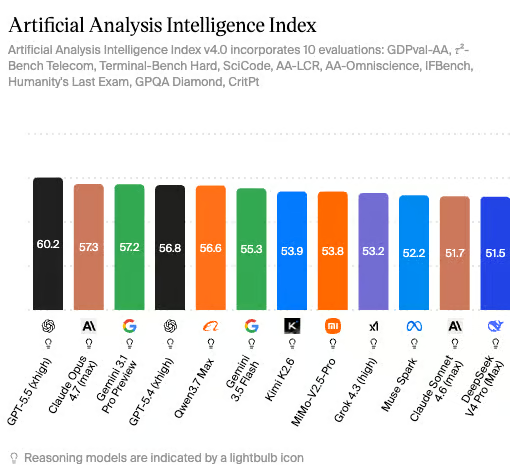
6th Place is…ok?
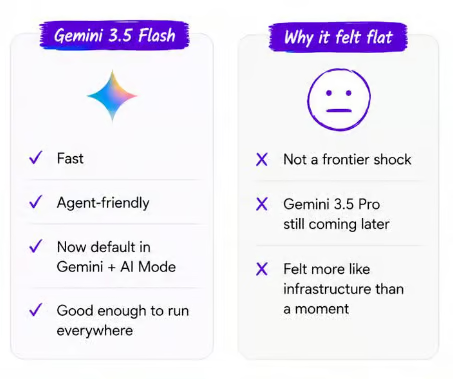
It is fast. It is agent-friendly. Google says it beats Gemini 3.1 Pro on some coding and agentic benchmarks. Hmm fine. But the reaction from a lot of people actually using it was basically: good model, not life-changing, coding maybe a bit meh.
And also…sorta irrelevant.
Because it’s the model that they are putting by default into everything you already use.
Search. Chrome. Android. Gmail. Docs. YouTube. Shopping. Maps. All the little doors people already walk through every day.
The model does not have to be everyone's favourite if it sits in everyone's default workflow.
Especially for the people (the MAJORITY remember) out there who don’t really care which model they are using. They don’t know the difference between Opus and Sonnet. Shit, they’ve probably got a fake ChatGPT app on their iPhone right now.
For the vast majority of the public Gemini being put into everything, having massive surface area, makes it the default.
Search Is Where The Money Gets Weird
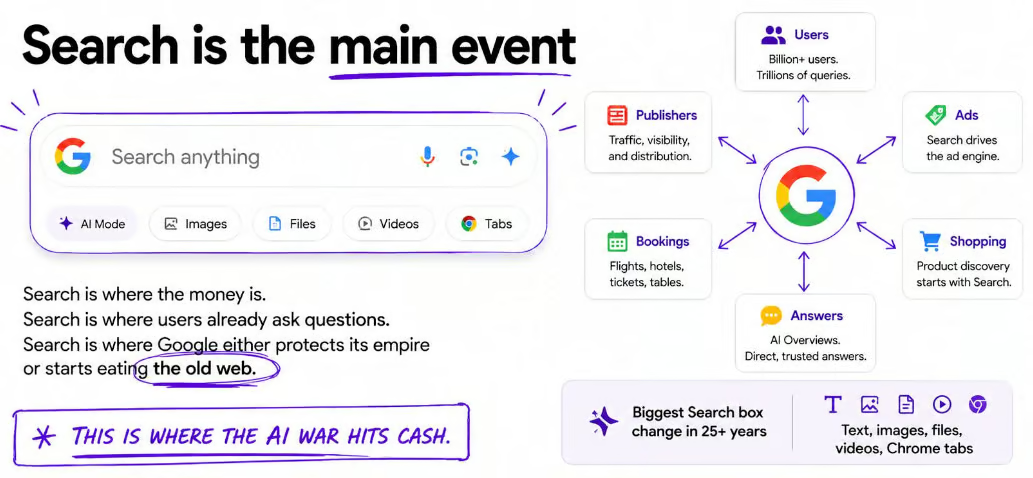
OK…on to the important part. We know Google have the habits. They have the surface area.
BUT previously this was at odds with their main business.
Search is where Google makes the money.
Study this chart. Really. It’s important:
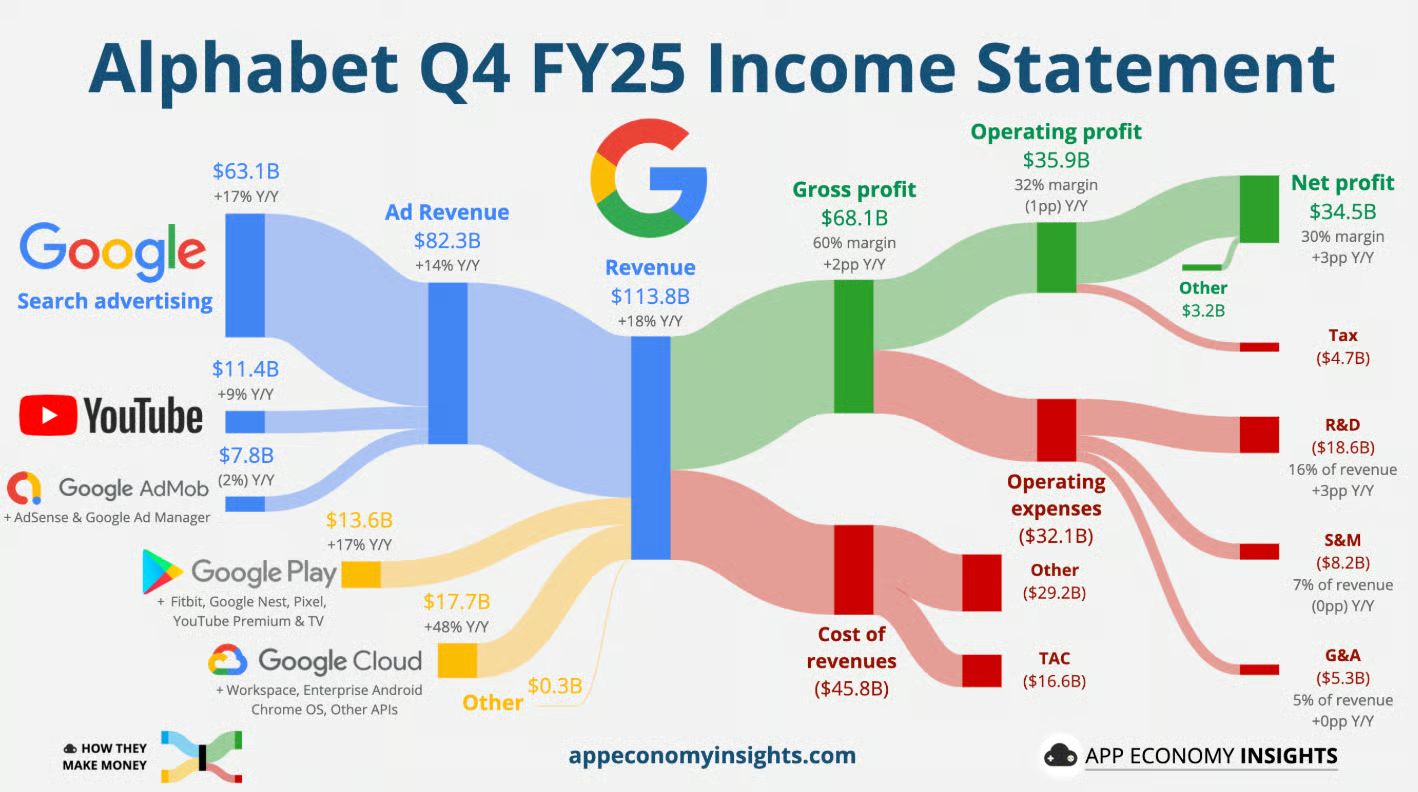
Alphabet's Q4 2025 results showed total revenue of about $113.8B. Google advertising was about $82.3B. Search and other advertising was about $63.1B. Google Cloud was about $17.7B. You can check the earnings release here if you enjoy investor PDFs (you sicko).
Repeat after me: Google are an advertising company.
This is where they make the vast majority of their money. And the vast majority of the ad rev comes from Search specifically.
Generative AI is a massive threat to Search. It’s a whole new way of accessing information. We’re shifting from search to generation. And that puts the entirety of Google at risk. Their Golden Goose is about to be cooked.
UNLESS….they eat it first.
This has been the dilemma Google has been facing for the last couple of years.
we make all our money from Search
genAI threatens Search existentially
do we fight it and retain our Search profits?
or lean into genAI and cannibalise our own business?
They’ve been pussyfooting around this decision for years.
This Google I/O though? They are all in.
Most of the important announcements were about this - bringing AI deeper and deeper into Search and changing the face of the internet. Eating their own model before someone else does.
BTW: That means AI ads are coming. I would bet on that very heavily. You do not replace a $63B quarterly Search ad machine with "good vibes and helpful answers", thank you very much…
Search Becomes A Standing Order
The first big shift is having search doing work after you leave.
Google's official Search update says AI Mode is getting agentic capabilities from Project Mariner, plus Deep Search, personal context, shopping, and custom charts. Its I/O list also talks about information agents that monitor blogs, news, social posts, finance, shopping, and sports in the background.
That sounds small.
It is not.
Old Search was: ask question, get links, leave.
New Search is: ask question, create an agent, let it monitor, let it report back, maybe let it act.
This transforms search (THE way we have used the internet for decades) into agentic AI.
That changes the relationship completely. Google stops being a place you visit and becomes something you set running. Track this. Watch that. Tell me when this price moves. Monitor these companies. Build me a dashboard. Keep an eye on the thing I cannot be bothered to check every day.
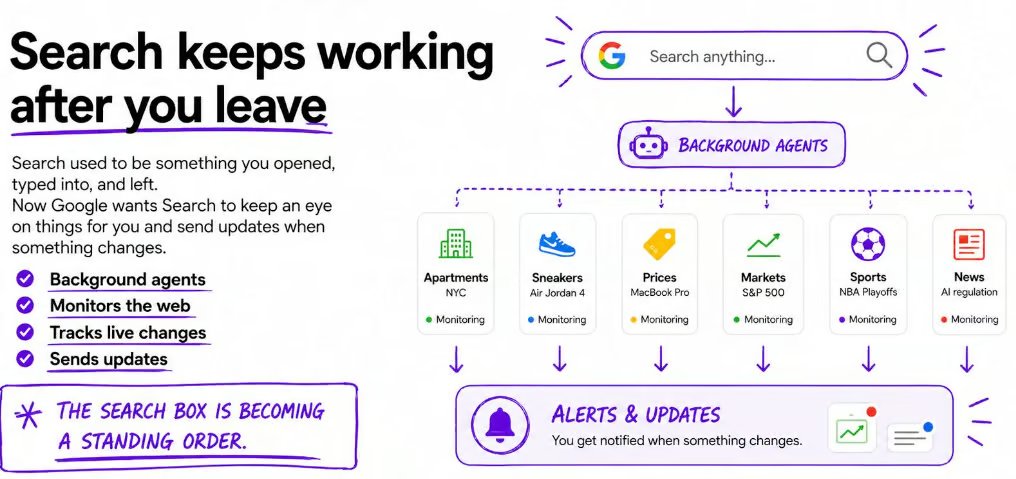
That is agent behaviour. But agents for people who have zero idea what an agent is. Because it is inside Search, most people will not think "I am using an autonomous agent now." They will think "Google got a bit better."
Lightweight Software Gets Absorbed
Google says Search will build custom layouts, tables, graphs, simulations, trackers, and interactive views on the fly. It also says some projects can become custom experiences or mini apps you return to later.
Imagine searching for protein goals and Google spins up a protein tracker, a shopping list, a supplement comparison, and a recurring purchase flow. Off the back of a simple search.
Imagine searching for a holiday and Google makes the itinerary, tracks flights, compares hotels, and builds the little travel dashboard. Off the back of a simple search.
Imagine asking for a QR-code generator, invoice tracker, savings calculator, local events board, meal planner, habit tracker, job-search dashboard, whatever. Off the back of a simple search.
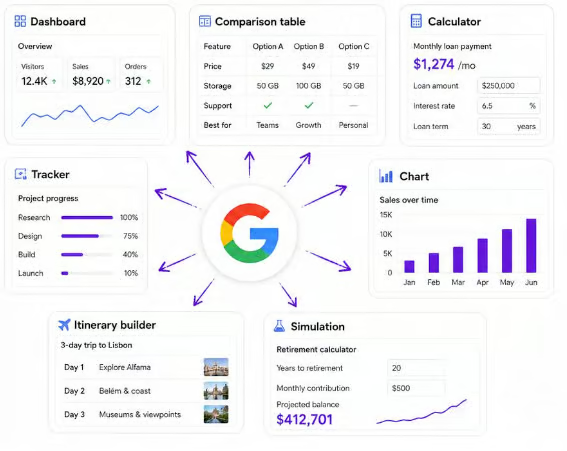
Small SaaS gets very awkward very fast. Google will just spin up the tool for the user. No need to go to a website. No need to sign up for a tool.
The threat here is that Google never needs to assign a team to clone your tiny tool. There’s no animosity. No poaching. No shenanigans. There doesn’t have to be!
The user asks a question, and Google creates enough of the tool inside the search experience that the user never goes looking for you.
That is a threat. Publishers already felt this with AI Overviews. Fewer clicks. More answers on Google. It’s making running a website as a business less and less viable.
Now take that same pattern and apply it to lightweight software.
Ruh roh.
To be fair, this will not kill every SaaS. Anything with deep workflow, customer data, a persistent database, team permissions, compliance, integrations, support, or actual business process is harder to replace with a throwaway mini app.
But disposable tools? Simple calculators? Thin wrappers? Tiny utilities charging $12.50 a month because nobody knew they could build one? About to get nuked from orbit.
Flat event but big implications
So yes, the keynote was dull.
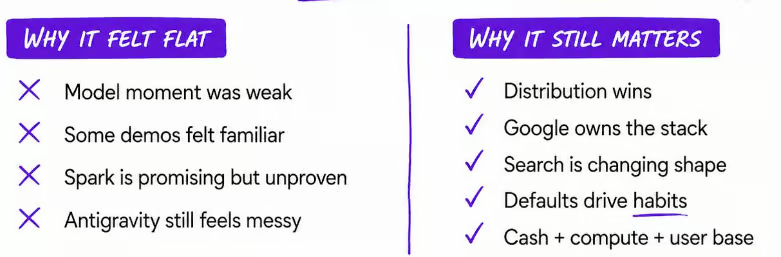
The model moment was weak. Spark (their OpenClaw) is promising but unproven. Antigravity still feels messy. Google's product naming remains a war crime. Some of these products will die…because Google kills things for sport and I for one am still mourning Google Reader 13 years later.
But.
Google owns distribution. Google owns the stack. Google owns the Search cash machine. Google knows AI is coming for that cash machine. So it is jamming AI directly into the thing before somebody else does it for them.
That is the important but rather boring narrative here.
If you run a business, the practical question is not "was Google I/O exciting?"
The question is: what part of your value gets swallowed when Search can answer, monitor, build, compare, track, and buy?
If the answer is "most of it", you have work to do.
Build something Google cannot spit out in a search panel.
To the Task
Kyle
Get the full daily digest in your inbox. Browse recent issues →