AI Business
Unlock the potential of AI in your fundraising efforts with the '🏧 Raising Cash with AI | Prompt Playbook'.
Start ReadingWe’ll be using AI to refine our fundraising, take over outreach and speed up pitching so we both have a higher chance of getting funding and can talk to more funders.
This process will be applicable whether you are raising cash for your side hustle, property investment, startup or even charity.
The basic steps will be the same - we’ll just be tweaking the details so as to fit your particular fundraising needs.
The plan for the week is:
Part 1: Nailing our funding requirements
Part 2: Writing a one pager
Part 3: Building a funding list
Part 4: Reaching out to funders
Part 5: Killer pitch decks
Prefer to watch?
How much cash and what you need it for determines how we raise it.
Different funding sources play in different investment ranges.
Very broadly we have:
Friends and family (<$50k)
Angels ($25k-50k)
Accelerators / Incubators ($10k-100k)
Crowdfunding ($10k-100k)
VCs ($500k+, median deal in the millions)
Banks (varies)
Corporate Investors (varies, but high)
Government / charity grants and loans (varies)
These are massive generalisations and will depend on both your niche and your geography. What’s important is that you know there are different levels of funding available and its important you aim at the right level.
If you approach a VC asking for just $10k you’ll be laughed out of the building. Or more likely ignored!
Let’s use a prompt to work out what sort of funding requirements we have.
If you run a charity adjust this accordingly - switch “business” to “charity” and any other relevant adjustments.
Act as a fundraising strategist for my business.

Ask me a series of question and then provide recommendations. Ask each question one at a time, collect my answer and move to the next question.

1. What is your business and what's the primary business model?
2. What country do you primarily operate in?
3. What's your business' annual revenue?
4. What do you need to raise funds for? What's the primary usage?
5. How much do you think you need to raise and why?

Use the information provided to
i) suggest what funding sources should be considered. Keep in mind the amount required and use this to exclude certain sources of funding that I fall outside of.
ii) challenge and provide suggestions for the amount requested - both the amount and usage. Ask user to clarify requirements based on suggestions
This prompt will guide you through a quick process and spit out some potetial funding sources like so:
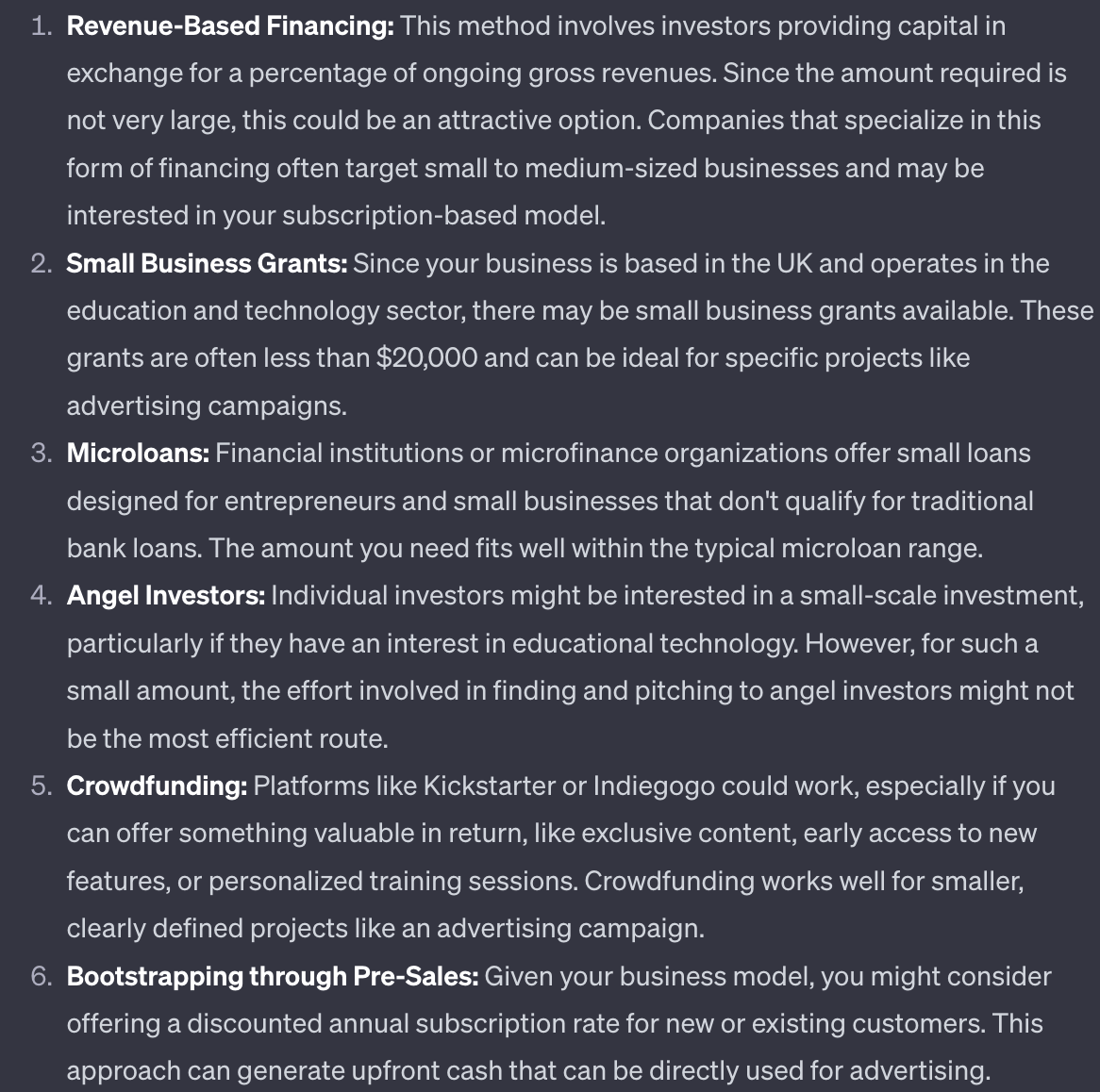
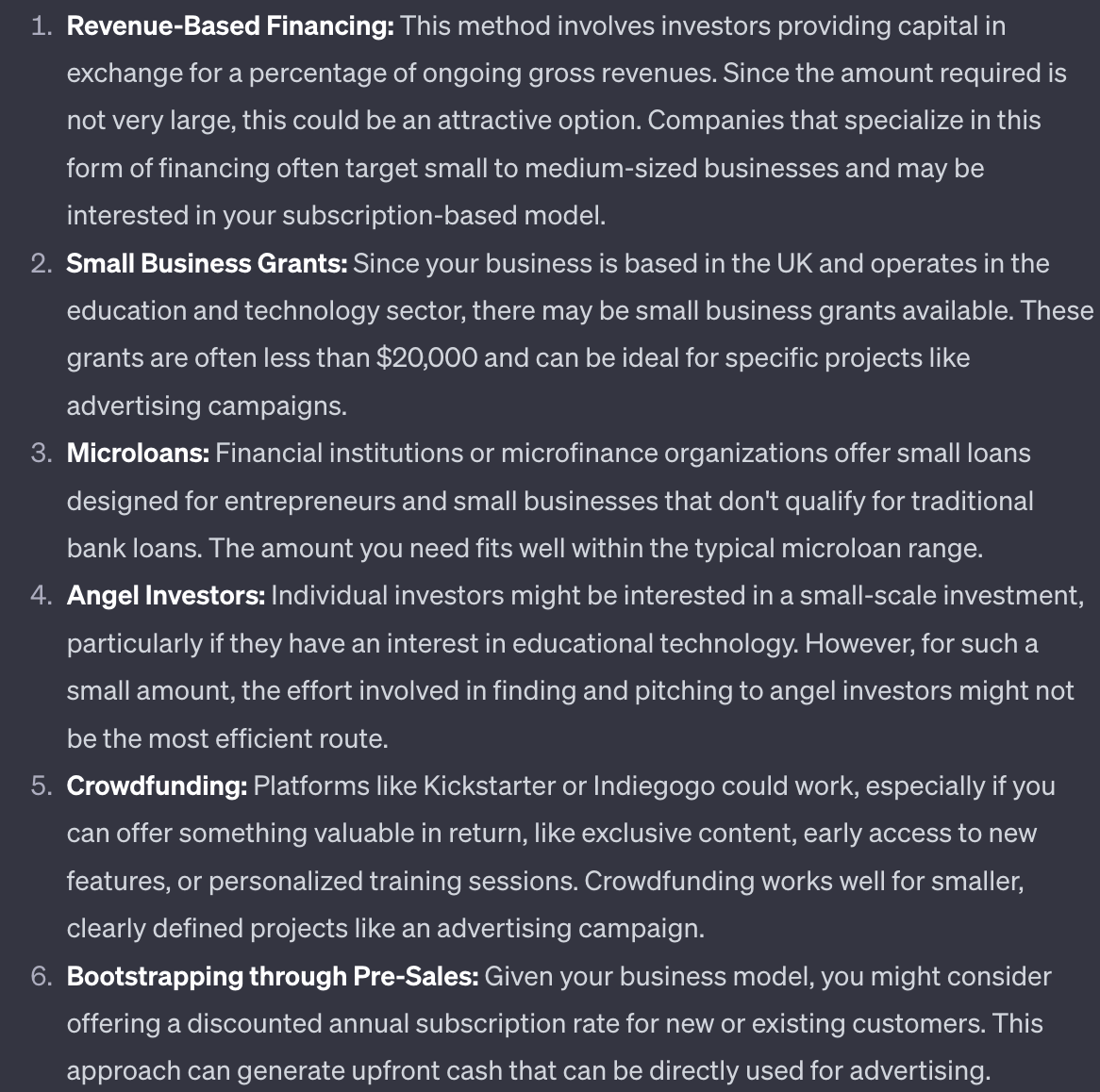
In this particular example I asked for just $15,000 funding.
As such you’ll notice options like VCs have been excluded and instead smaller funding sources like micro-loans, small business grants and bootstrapping are suggested instead.
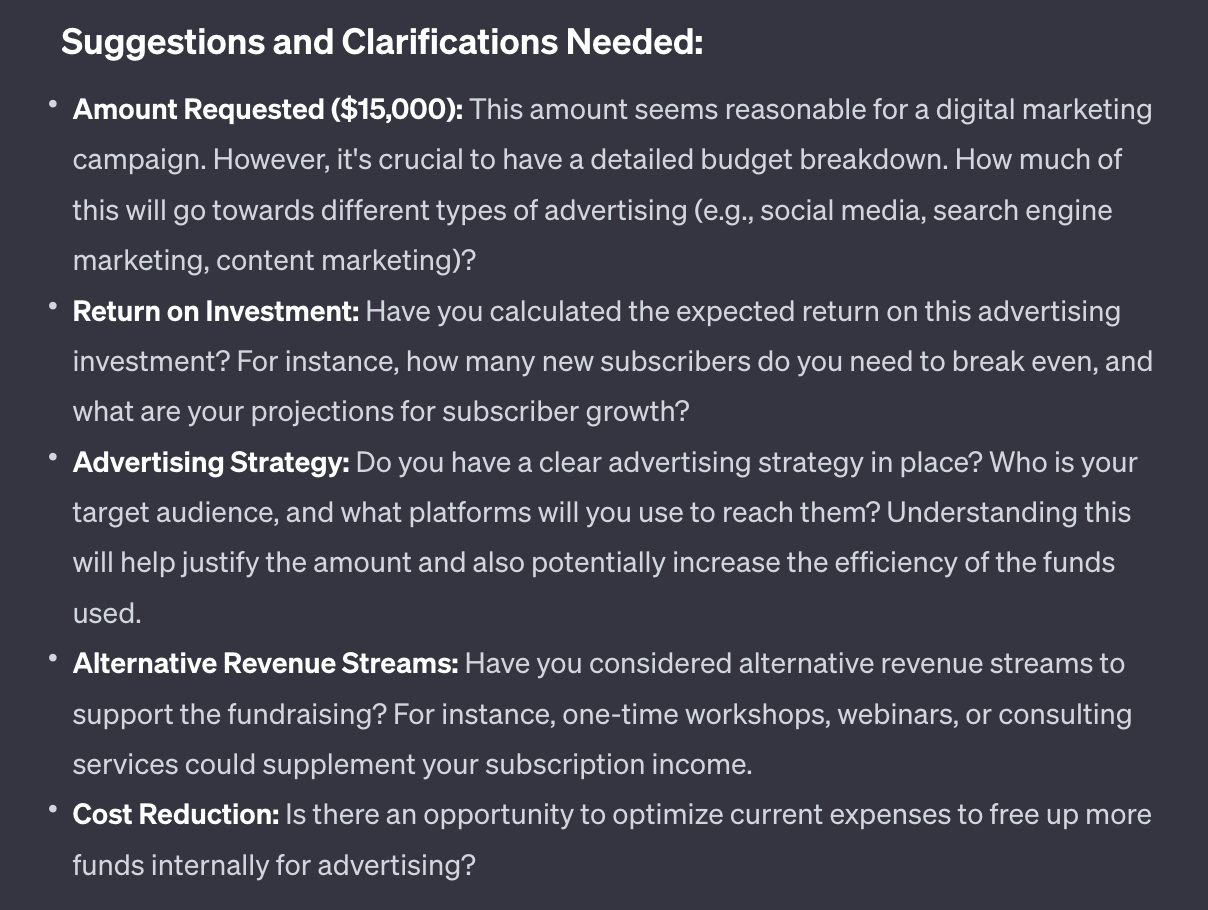
The prompt will also provide some pushback and ask for clarifications based on the information provided:
Use these pushbacks to refine your potential funding sources. For example here the pushback is actually suggesting not raising cash! That’s a perfectly valid option if you are already generating revenue and can bootstrap.
For now the main outcome you want is a list of potential funding sources - we’ll use this in the next Part to start researching potential funders.
We’ll extend the above work by using a ranking system.
Here’s the additional prompt:
Rank each of the funding options on Speed, Ease, Risk, Retention of Business Control.

Then use the rankings to order the funding methods from most to least attractive.

Return results in tabular format.
Use this under the previous output to generate rankings for Speed, Ease, Risk and retention of control:
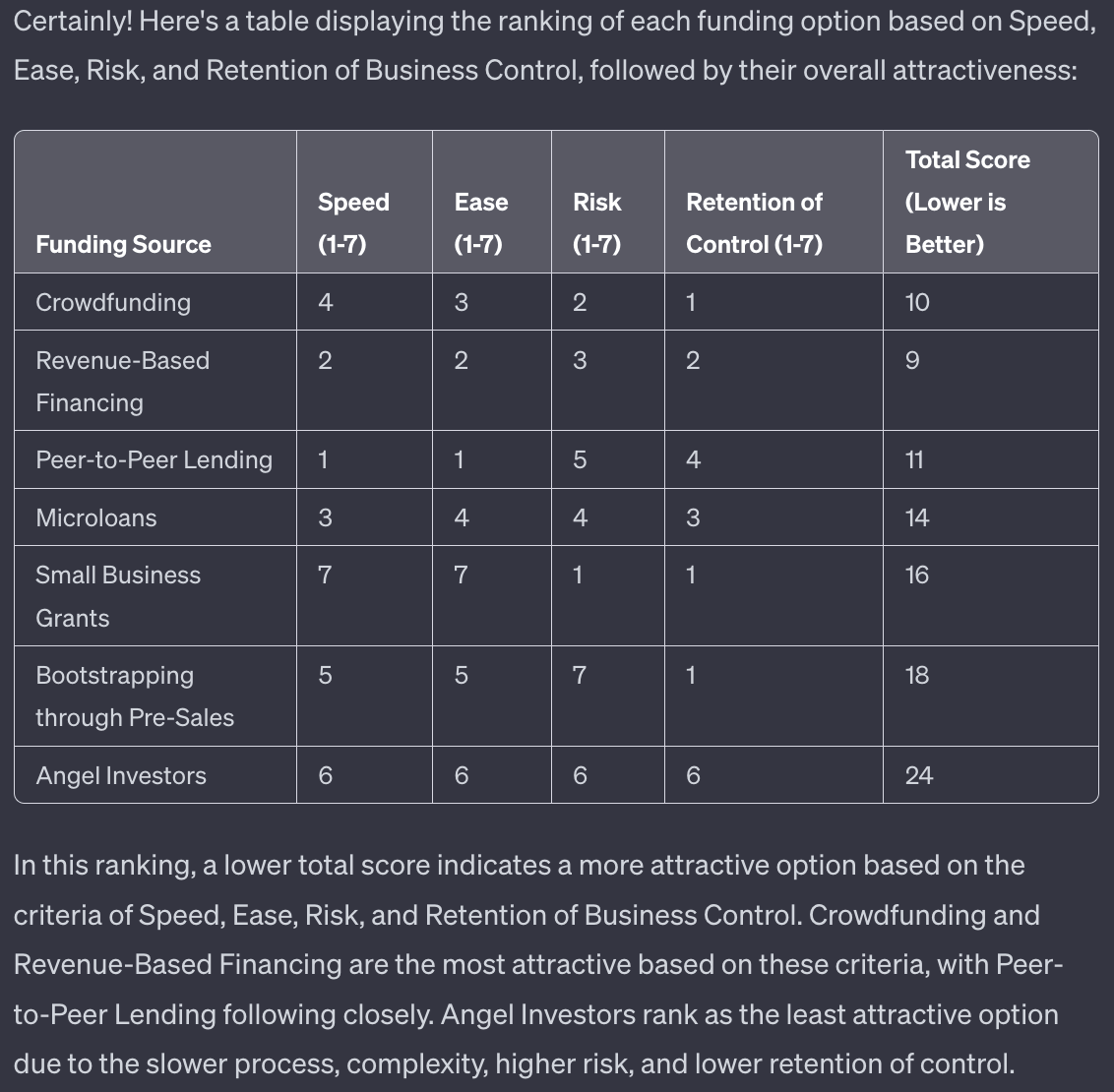
The prompt will also order the options from most to least attractive - in this case revenue based finance in being touted as the top option.
Obviously this is a rough pass so use it primarily to flag up possibilities for you to explore. The best funding routes will depend entirely on your business and personal situation!
Next up we’re going to convert our funding requirements into a one pager before moving onto researching the people we need to be talking to to raise some cash.
A reminder of what we’ll be covering this week:
Part 1: Nailing our funding requirements
Part 2: Writing a one pager
Part 3: Building a funding list
Part 4: Reaching out to funders
Part 5: Killer pitch decks
Until then, keep PROMPTING!
Kyle
In the last part we used ChatGPT to work out our funding requirements.
We’re going to now flip that work into a one-pager.
A one-pager is an extremely basic fundraising document that basically says:
what we do
why we need investment
what we’ll do with the investment
what they’ll get for their investment
It’s a one-pager because it should literally fit on a single sheet of paper. This should be something an investor can look at and immediately understand.
They should be able to say yay/nay after looking at your one-pager for a few moments.
Hopefully yay rather than nay!
Prefer to watch? No problem:
Here’s the prompt:
Act as a fundraising strategist for my business.

Prepare an investment one-pager to help me raise money

The funding source is [add funding source from previous prompt]

Draw on the above information about my business, funding needs.

Ask supplemental questions until you have enough information for a persuasive one-pager that sells a reader on the idea of my business. Make sure to include but not limit to: pitch, problem/opportunity, solution/product, business model, market, competitors, USP, current traction, plan for funds, return. Only ask about areas where you do not already have an answer

Then output the final one-pager. Be concise and emphasise readability. Rewrite my inputs to make it professional in tone.
Use this prompt under your previous prompt to pull in the information you’ve already given ChatGPT. That’s here if you need it.
I plugged in “peer to peer” as the funding source and received these follow up questions:
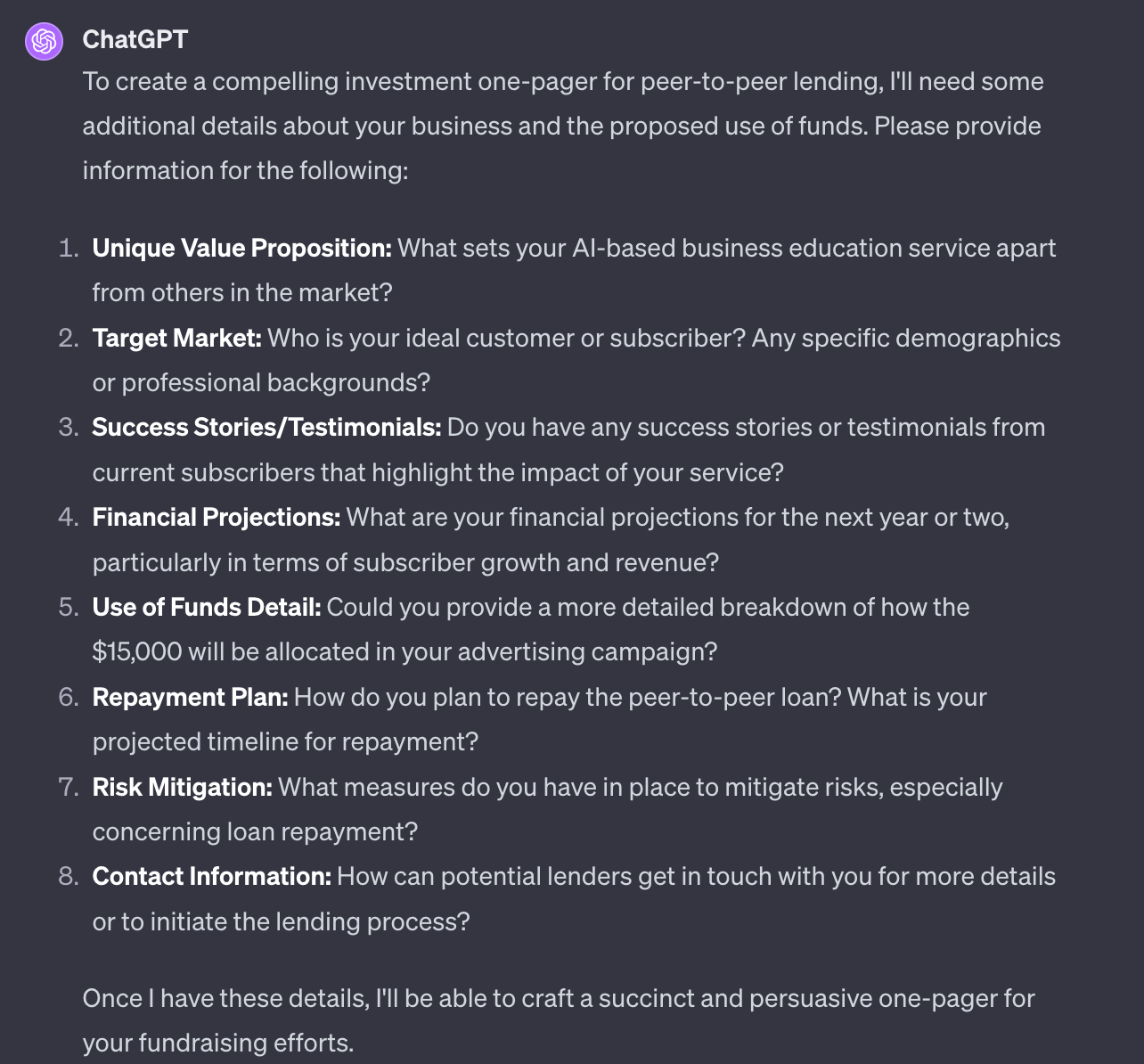
Answer whatever questions ChatGPT throws back at you. The more detail the better.
The prompt will then take all of your additional information and prepare the one pager. Here’s the beginning of the output for me:

As always go through and manually check for accuracy. This is important with any AI generated text but doubly so here because it’ll be an investment document!
Prefer this in a paragraphed format? No problem. Tell ChatGPT to “convert this into a one pager letter, paragraph format” to get an output more like this:
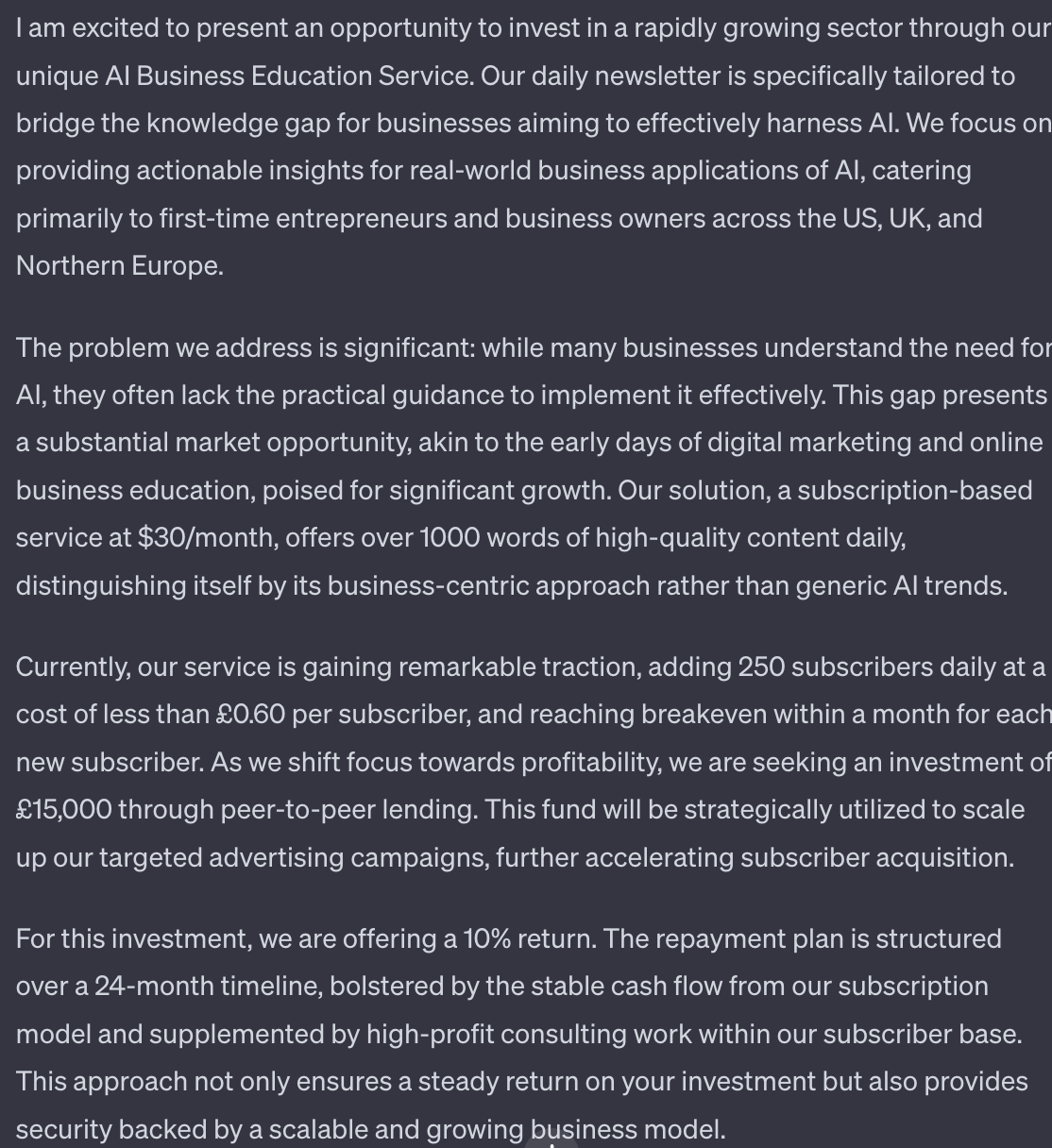
Not bad! That’s just built upon the outline we generated and reworked the format.

We’re going to tighten up our one pager.
Drop this prompt in underneath your one pager:
Act as an investor.

You have received this one pager and have rejected it.

Give 5 reasons why you've rejected it
This will put ChatGPT on “the other side of the table” from you - ChatGPT will take on the role of the investor.
Here’s an example output:
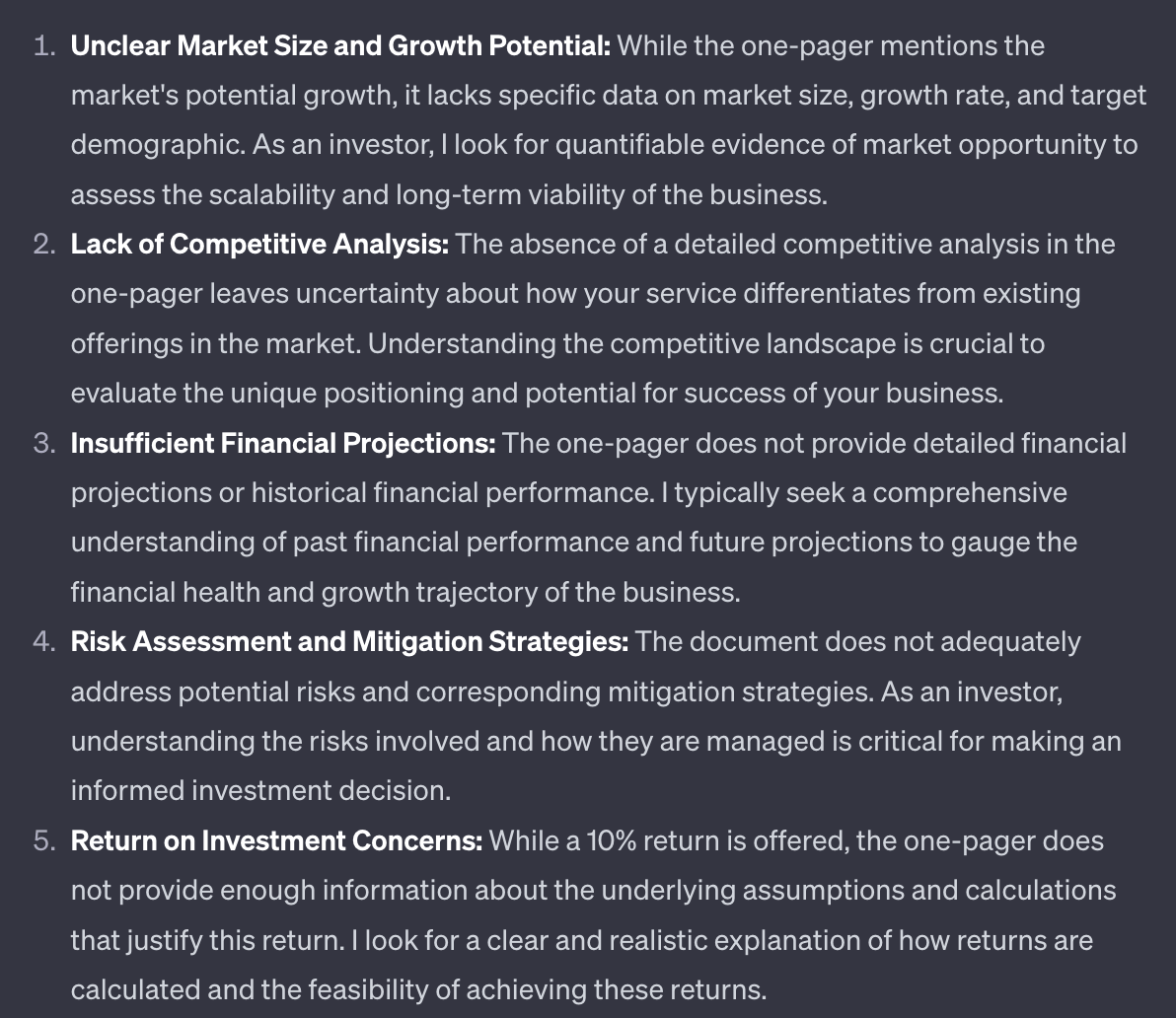
Good stuff - these are all valid reasons to not proceed.
Some of these elements (financial projections for instance) would normally be addressed later in the process - ie. after the one pager has piqued interest - but are still worth touching on.
We can use this critique to add refinements to the one pager.
OR, if we are being really smart we can now prompt ChatGPT with:
Based on these critiques ask for my responses and help me edit the original one pager to address these concerns. We’d then run through the process of adding these elements before once again asking for critiques.
We can continue this loop, iteratively improving the one pager with each pass.
Tomorrow we’ll start to research the people who need to see our one pager. We’ll use ChatGPT for research to build prospect lists.
A reminder of what we’ll be covering this week:
Part 1: Nailing our funding requirements
Part 2: Writing a one pager
Part 3: Building a funding list
Part 4: Reaching out to funders
Part 5: Killer pitch decks
Until then, keep PROMPTING!
Kyle
Continue under your previous work so that ChatGPT has all the context it needs. Alternatively copy and paste previous work into a new chat.
Here’s our prompt for the next step:
Act as a fundraising strategist for my business.

Read my one-pager

And generate a list of potential funding sources, specific to the funding sources previously agreed upon

Give me websites rather than general recommendations

My country is [region]

Provide results in a tabular format with name, website, description, general funding amount
I asked specifically for angel investors and ChatGPT did the research for me:
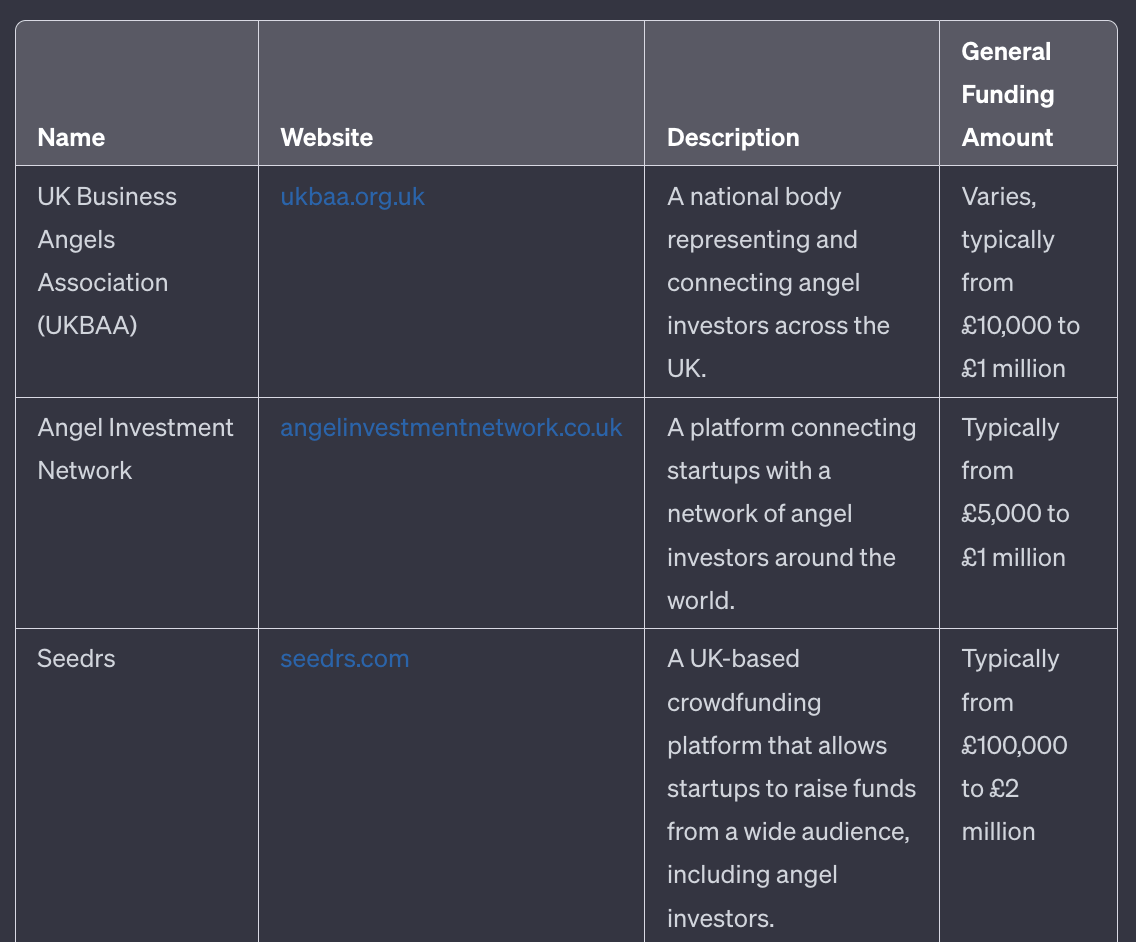
Make sure to add in your region because often funding is geographically limited. If this is not the case remove the region line and go global.
Use this basic prompt to research different funding opportunities that match your business’ requirements.
The exact results will obviously differ a lot depending on what type of investment (angels, VC, crowdfunding, bank…) you are looking for.
The prompt will get you in the right place though and do a lot of the heavy lifting for you.
Once you have a list make sure to go visit all the websites to check them out. Keep a list of the ones that seem most relevant to you - or use the Premium Prompt to do this for you.
We’ll be using your targets in the next Part.

The basic list above is a good start - but it’ll be based on ChatGPT’s training data rather than live information.
We want ChatGPT to go to the sites and collect the most recent information. We’ll use a prompt as a forcing function here:
For each source visit the page using your web capability

Based on my one-pager rate each funding source by its relevance for my fundraising requirements

Base this on the amount I need to raise and the types of sectors covered by the funder

Also find the application process - my preference is for easy application via an online form or direct contact.
This will ensure that ChatGPT gets an accurate gauge of i) the size and ii) type of investments covered by this funder.
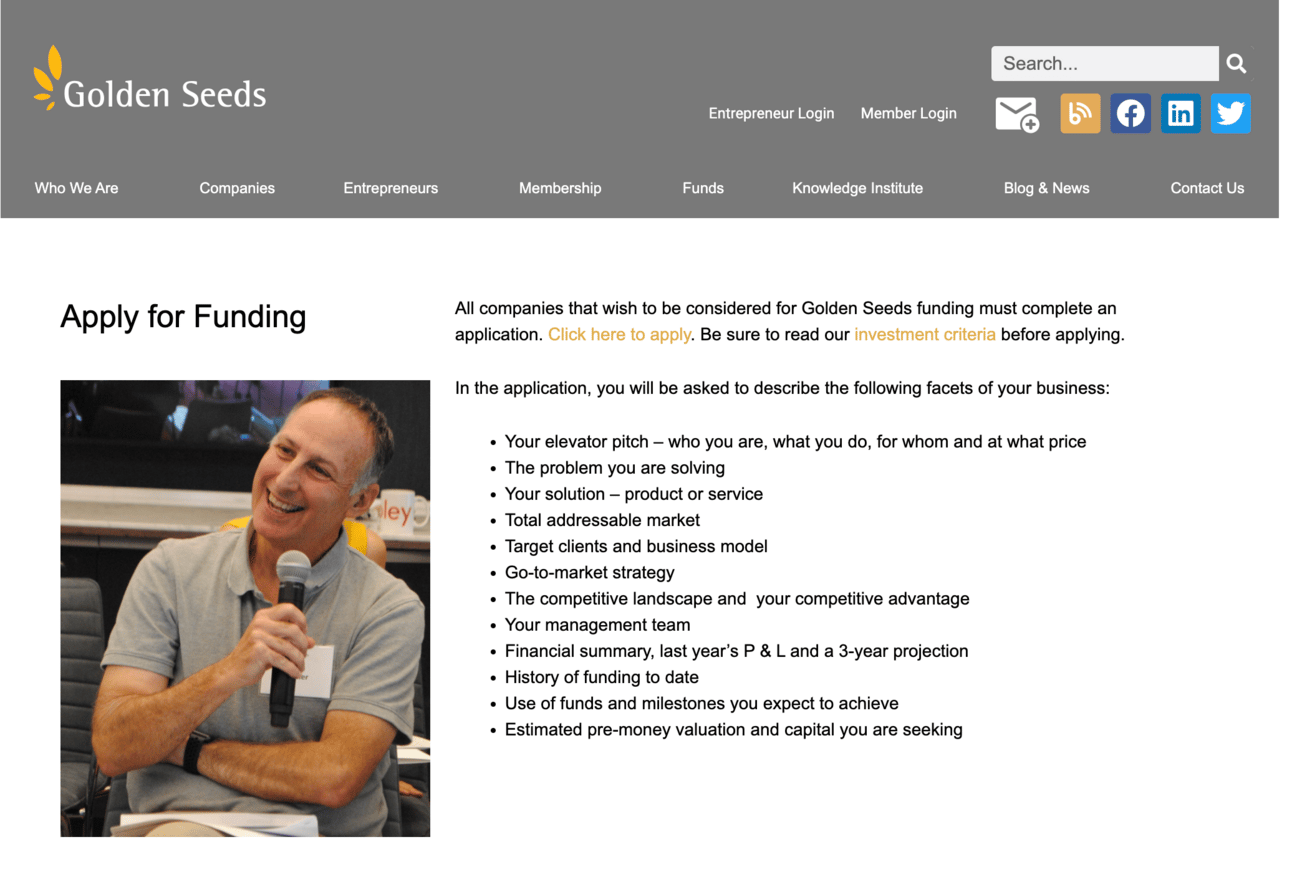
As an example a review of this website shows that the range covers the $15,000 that is covered in our one-pager.
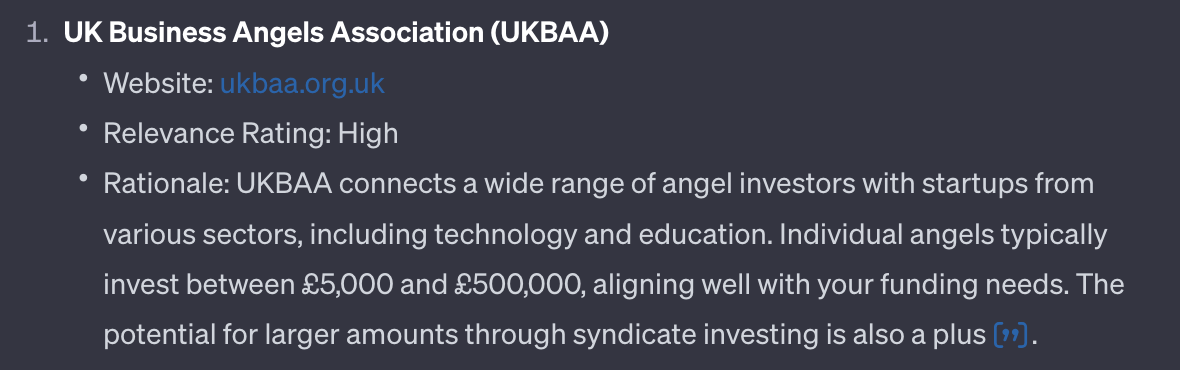
The prompt will also look for details on how investment can be requested.
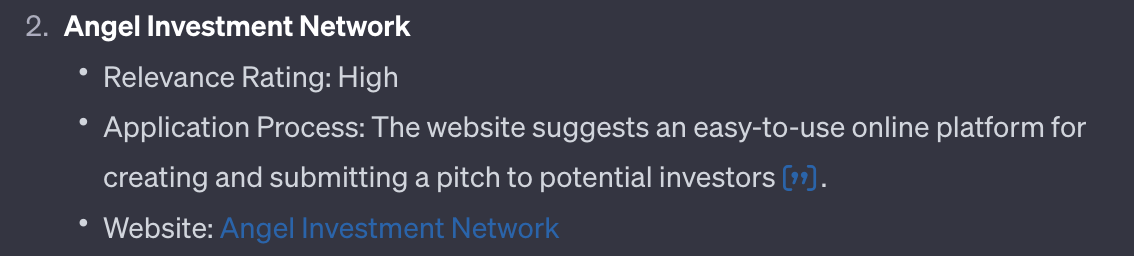
It’ll be looking specifically for funders that make the funding application systematic and open.
Why? Because these are the most suited for our AI driven processes as we’ll see in the next Part.
Tomorrow we’ll start to research the people who need to see our one pager. We’ll use ChatGPT for research to build prospect lists.
A reminder of what we’ll be covering this week:
Part 1: Nailing our funding requirements
Part 2: Writing a one pager
Part 3: Building a funding list
Part 4: Reaching out to funders
Part 5: Killer pitch decks
Until then, keep PROMPTING!
Kyle
Because of variations in application process we’ll be using a flexible prompt that takes into account the requirements.
First make sure you have your list of prospects from yesterday. For a particular prospect find their “how to apply” page or better yet their application form.
Here is an example of such a page:
You’ll find similar pages regardless of what source of funding you are pursuing - be it an angel, a bank, a government grant or whatever else. There will always be a page with details as a way for the funder to filter applicants.
Collect up these pages for your funding list from the last Part. You can ask ChatGPT to find these pages for you but I often find it faster to manually check.
Once you have this we’ll combine the information using this prompt:
Act as a fundraising strategist for my business.

Read my one-pager

And the funding instructions on this page: [webpage]

To generate the funding application

And a cover email

When you do not have specific information leave a placeholder for me to add the details later
If you don’t have internet access (ie no GPT Plus) then copy/paste the details from the page.
ChatGPT will align your one pager and the funding requirements like so:
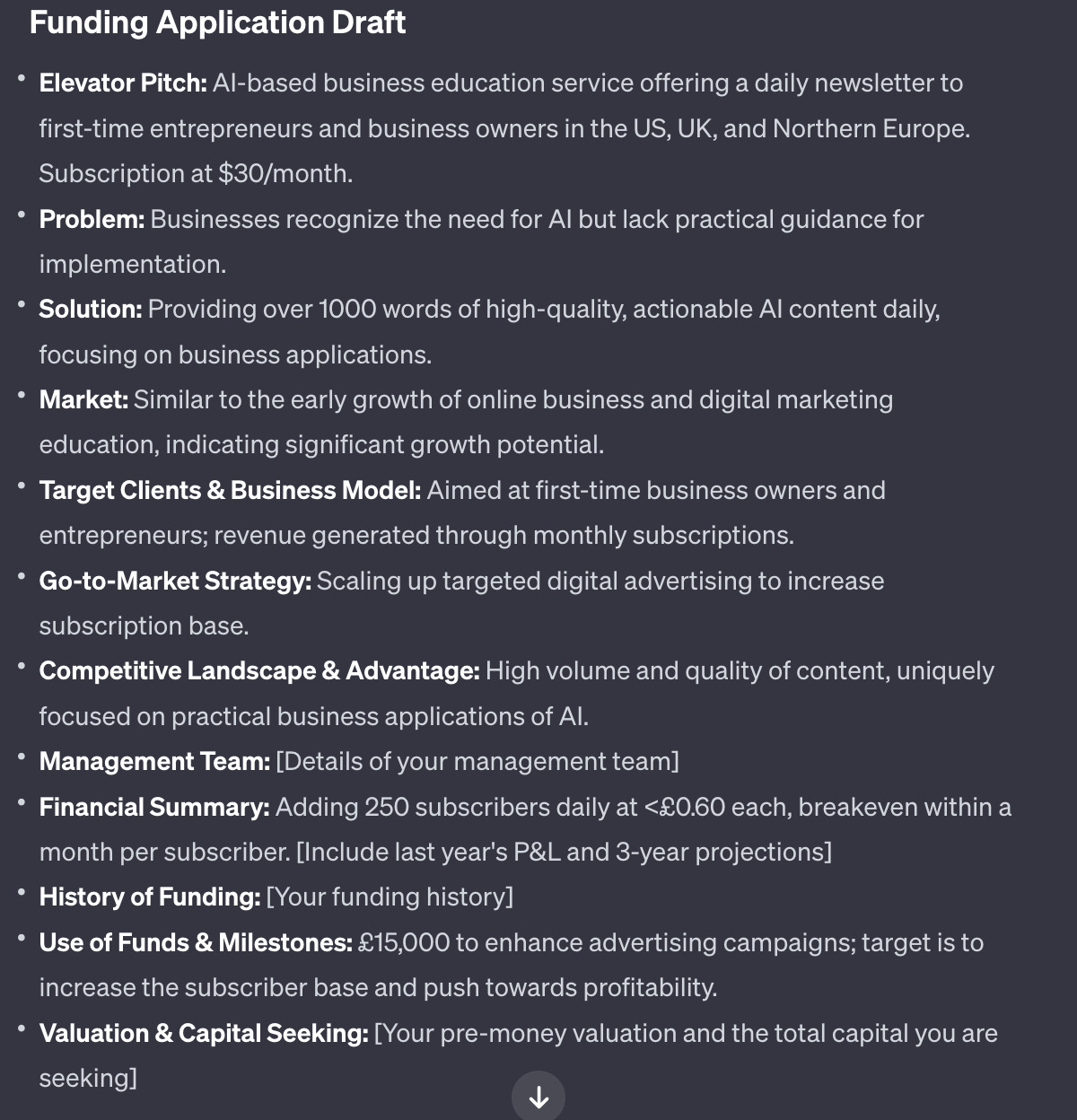
Notice how ChatGPT has aligned with the investment requirements mentioned on the website.
Importantly when it doesn’t have the information ChatGPT hasn’t just made things up - it’s left them blank so I can fill them in myself.
This is because we’ve specifically asked for ChatGPT to leave placeholders - otherwise it may have tried to make up details about my management team, funding history and more. We need to make sure to avoid this!
The prompt will also generate a cover letter:
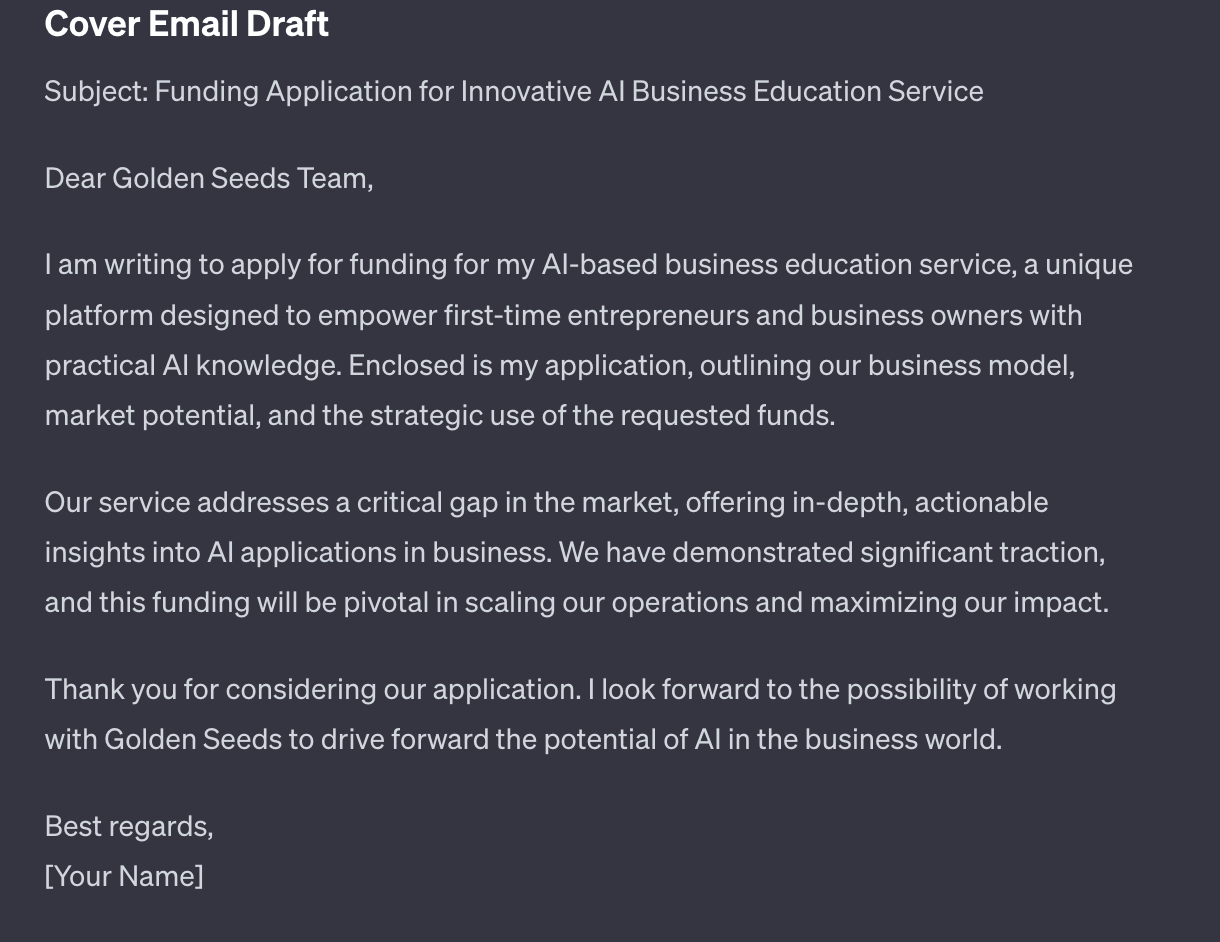
Most applications will have some form of cover letter or introduction requirement which this additional output will help you fulfil.
You job now is to work through each of the prospects you previously generated using your one pager and their application requirements.
We don’t want to automate this too much. Fundraising is still a big task and just spamming 100% AI generated applications is unlikely to work. Instead use AI and the method I’ve been teaching you to accelerate your process rather than replace it wholesale.

Once you have your basic pitch you can go ahead and simply send out your request.
An extra step though is to do some footwork learning about the funder and use this to add some personalisation.
We’ll do this after generating the application and cover letter using this prompt:
Act as a fundraising strategist for my business.

Read my cover letter

Refer to these pages for further details on the investor:
[pages]

And subtly adapt the cover letter accordingly by making one or two references maximum.
Give the prompt pages like the About Us or Mission/Vision page in order to collect the personalisation details you need. Or if it’s an individual grab details from their LinkedIn page.
ChatGPT will adapt your cover letter subtly:
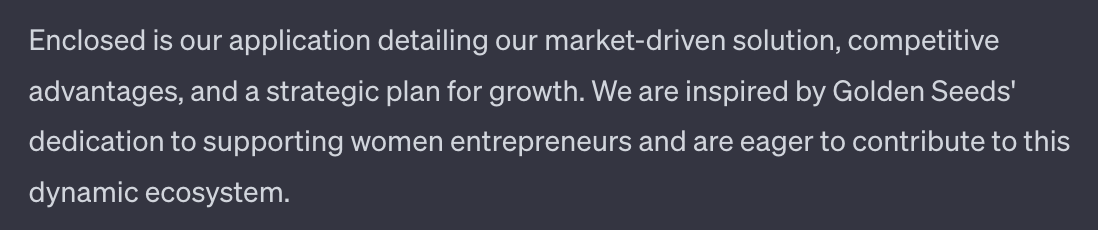
In this case ChatGPT picks up on the prospect’s focus on female entrepreneurship. I personally do work with mother and baby refugee charities here in the UK and would feed in details about this to strengthen the letter due to alignment.
You should also match your application to their requirements using a combination of ChatGPT and common sense.
Tomorrow we’ll start to research the people who need to see our one pager. We’ll use ChatGPT for research to build prospect lists.
A reminder of what we’ll be covering this week:
Part 1: Nailing our funding requirements
Part 2: Writing a one pager
Part 3: Building a funding list
Part 4: Reaching out to funders
Part 5: Killer pitch decks
Until then, keep PROMPTING!
Kyle
Sorry for the short notice but if we miss this window it will be 2024 in a blink of an eye.
And I want to give my readers an opportunity to go into 2024 with an plan for success in place.
So on Monday 11th December (yes next week!)…
We START!
What is included in this AI Accelerator?
I’ll show you my ‘Zero to AI Hero’ framework that anyone can use to start a digital business…
In fact because this will be live I’ll have the capacity to use the latest AI has to offer.
What else do you need to know?
It’s 5 days (Starts Monday 11th December - Ends Friday)
New video daily (Approx 30-minute sessions)
Live chat (Ask me or my team anything all week)
What if you can’t make the live sessions?
I’ve got readers from all over the world so it’s impossible for everyone to make it live. Believe me I’ve tried.
So I’ll be recording on the day, uploading and you’ll be able to access the recording at your leisure. No panicking to make a certain time.
And me and my team will be available for that week for live chat.
So any questions, challenges or wins you have — I’ll be there to chat in a dedicated space as via text and video.
How much to join?
I’m calling this AI Accelerator: Cohort ZERO.
Cool right?
Because this is my first ever accelerator you can join for almost free.
There is a nominal joining fee of $1.
There’s no catch.
I just don’t want people joining and then not showing up. It hurts my feelings.
Ok…
So if you’re ready to join next weeks AI Accelerator…
And become my most cherished Cohort ZERO.
>> Go ahead and join Cohort ZERO <<
There won’t be any recordings for sale. Once the Accelerator closes it closes.
See you on Monday!
Ok back to the issue!
We’re at the end of our fundraising using AI process.
The previous prompts we’ve covered should be up and running doing initial outreach for you.
The name of the game now is persistence and volume. Keep sending out (relevant, personalised!) applications for funding.
If you receive feedback from any investors make sure to apply it!
Just add their feedback into your previous prompts to tweak.
Keep on applying and improving and eventually you’ll get a show of interest.
At this point we move to the next part of the process.
We’re now going to use AI to prepare the next document: a pitch deck.
Importantly we can generate individual pitch decks for individual investors, specifically matching their investment requirements from previous Parts.
Prefer to watch? Here’s a video:
Let’s get started:
A pitch deck is basically a Powerpoint presentation given to potential investors.
But Powerpoint isn’t very sexy so the world of startups renamed it a “deck”.
Much cooler sounding - like a skateboard deck. Skateboards are cool right?

We have a couple of AI options here.
More than a couple to be honest - I’ve tried out a whole bunch of good (but mainly bad) AI tools for this job.
My two favourite are Tome and Gamma. Not affiliate links - these are just the ones I like!
Tome is more restricted (I find) when it comes to modifying the deck to your needs. But because they have a bunch of preexisting pitch deck templates this is less of an issue in this particular case.
Gamma is more flexible and I’ll be using it in this tutorial.
Try both, see what you like. Both have generous free trials.
Once you have a Gamma account go ahead and create a new presentation. You’ll get a screen like this:
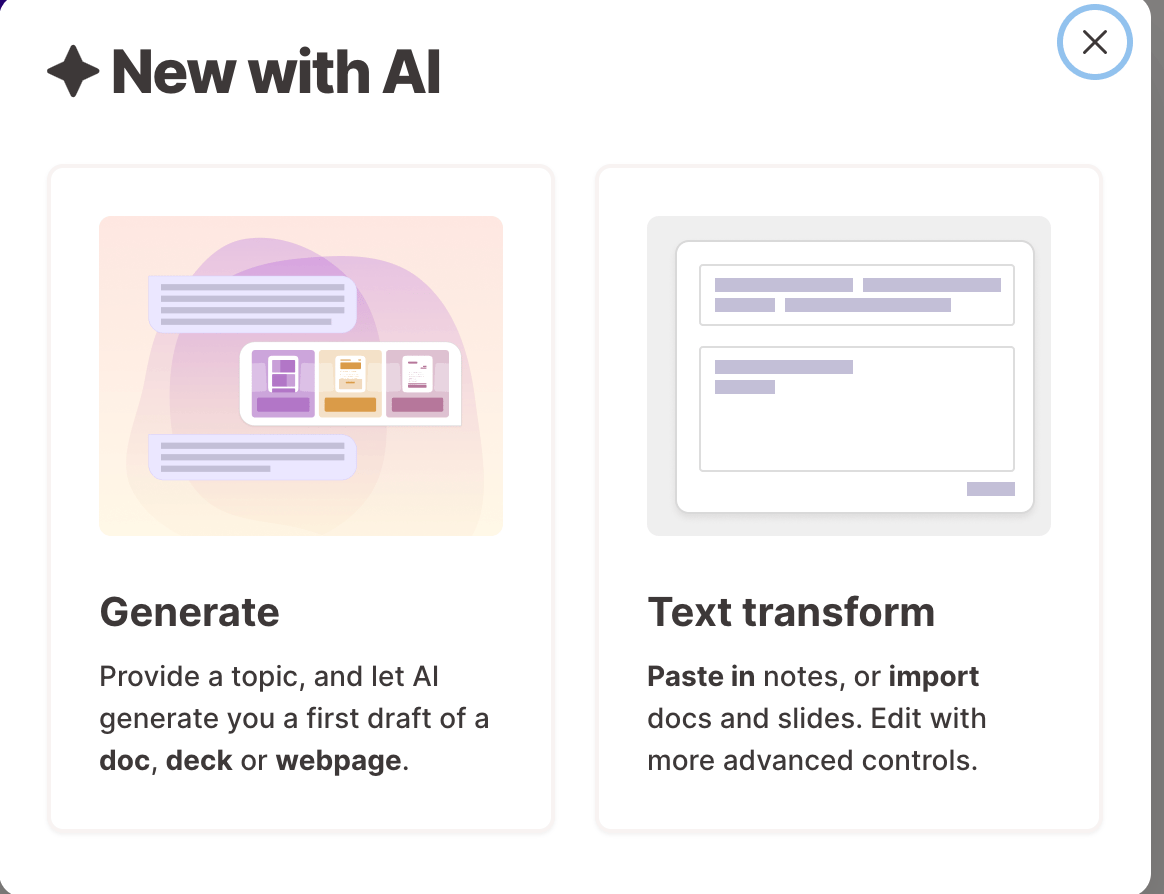
Generate is their fancy all-singing-all-dancing “chat” mode where you talk to their AI and prepare your deck. It’s great - you should try it!
But we’re going to save your credits by pre-processing our pitch deck contents in ChatGPT and then move it into Gamma using Text Transform.
Text Transform basically takes a set of notes and converts it into a deck. We’ll use ChatGPT to flesh out those notes.
Below your work from the last Part we’ll use this prompt:
Flesh this funding application draft into a pitch deck, slide by slide.ChatGPT will prepare everything in a slide by slide format:
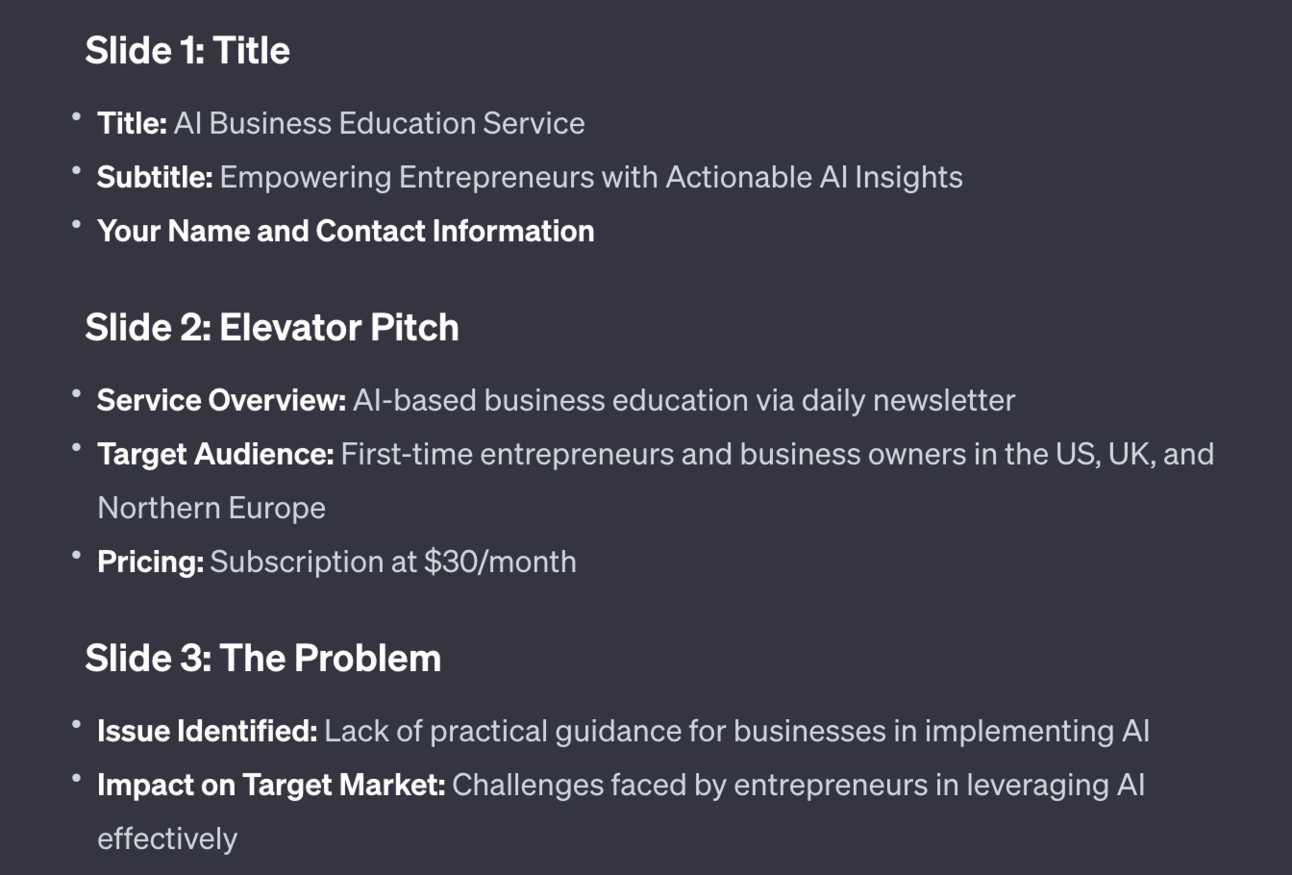
This is what we bring into Gamma’s Text Transform tool. Copy and paste it in like so:
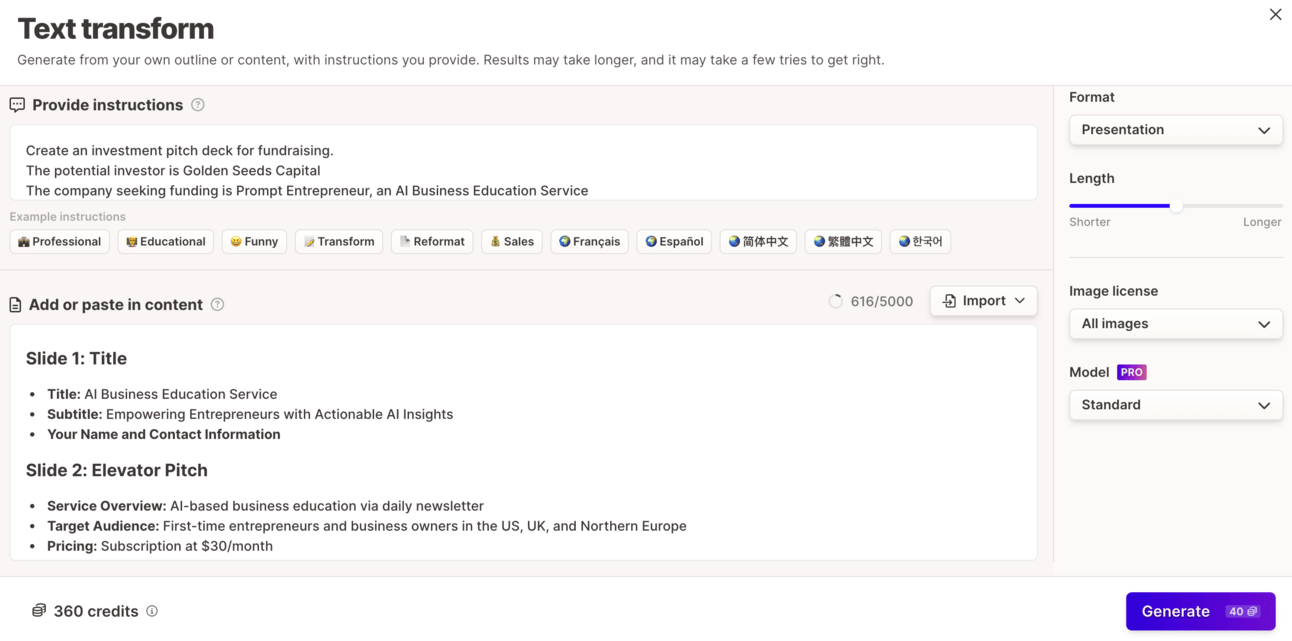
Go ahead and click Generate and Gamma will prepare the first draft. Voila, a professional looking pitch deck done for you:
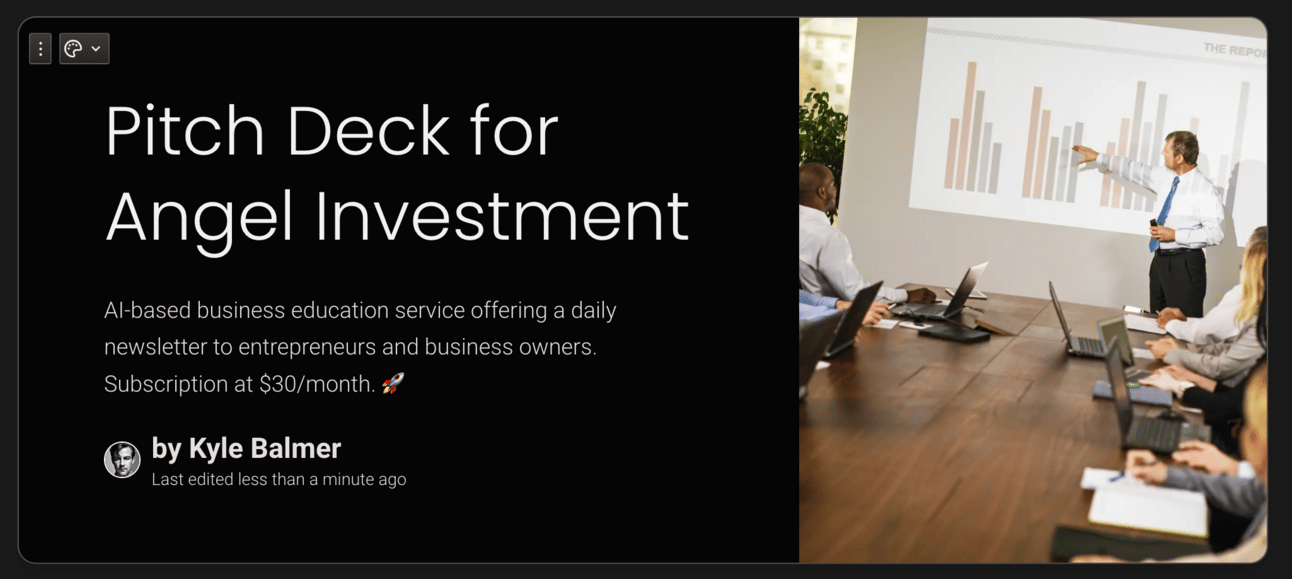
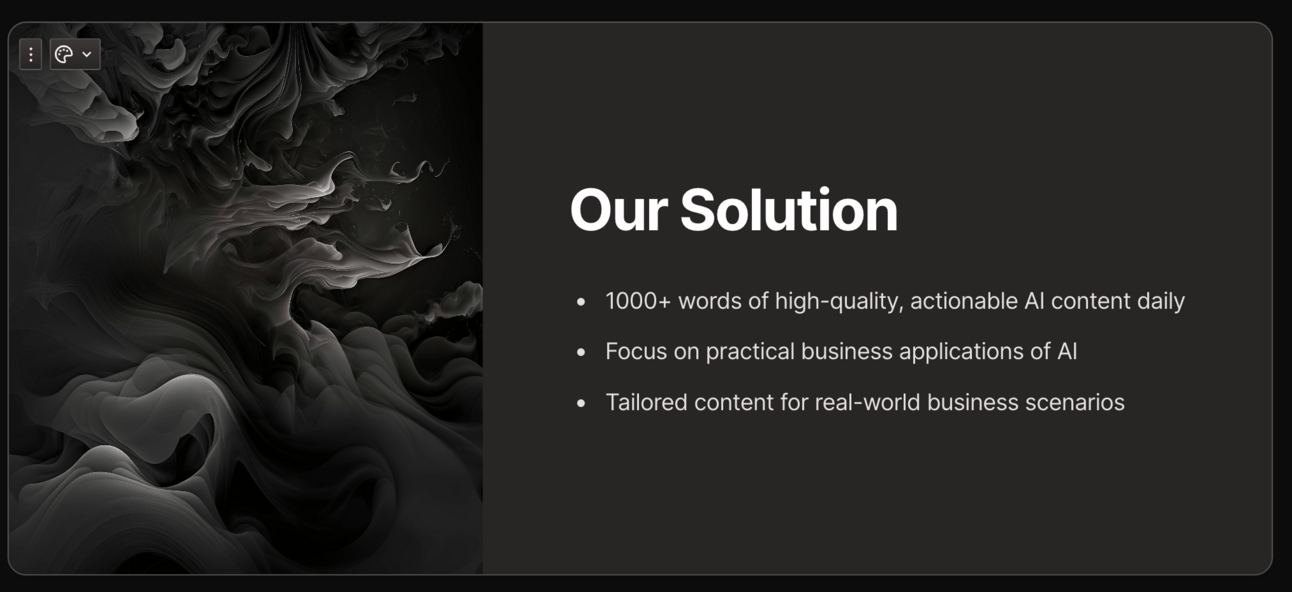
You can now ask Gamma’s AI to make edits or manually do so using their editor.
The main thing is that the first draft is done for you and already looks professional.
Certainly nicer than what 95% of us could knock up in Powerpoint! And for those 5% Powerpoint wizzes out there I bet it takes you more than 30 seconds!
We can use this method to rapidly prep our pitch decks en masse as investors start showing interest, each pitch deck hitting their specific requirements.

Having a pitch deck is one component of the pitch.
The other is the actual script and its delivery.
We’ll again use a prompt under our existing work:
Convert this into a spoken pitch script

Maximum length [x] minutes - provide timings on each section

Provide full script

Give each line on its own line for readability, no long paragraphs

Keep individual thoughts concise
Make sure to add the timing dependant on what you’ve been given to pitch. If in doubt go short - no-one was ever mad about a short pitch!
This generates a script outline like this:
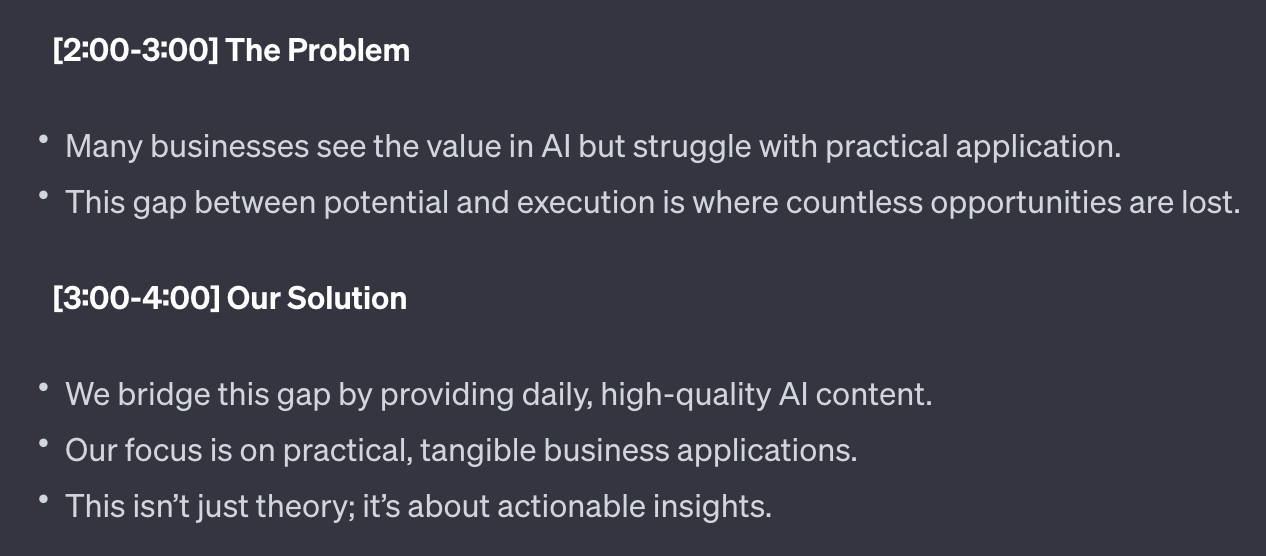
Each line is its own distinct point. Your job is to use these as jumping off points to talk - don’t just read the script out loud!
I’d recommending recording yourself going through your pitch deck. I personally use Tella for all my recording work.
This will:
help you find parts where it doesn’t flow
give you practice delivering it
allow you to record a video pitch
The last is particularly important. Less and less will investors invite you to their office to pitch.
Instead investors often want a short deck and video.
For these videos keep it short!
One way to get feedback is to record and transcribe the recording. Then feed the transcription back to ChatGPT and ask for feedback on how to improve the pitch.
This will only give feedback on the content of the pitch and not the delivery. But it’s still helpful.
If you want deeper feedback on your pitch use the AI Business Breakthrough Accelerator community as your sounding board- the community members and myself are here to provide feedback.
We’ve now completed the process from front to back - taking our work from one Part to the next and developing our funding application.
Repeat this for multiple prospects, refining your process and performance as you go. Use AI to speed your process so that you can put our far more applications than would have been possible without a fundraising team.
A reminder of what we covered this week:
Part 1: Nailing our funding requirements
Part 2: Writing a one pager
Part 3: Building a funding list
Part 4: Reaching out to funders
Part 5: Killer pitch decks
Until then, keep PROMPTING!
Kyle
Unlock the potential of AI in your fundraising efforts with the '🏧 Raising Cash with AI | Prompt Playbook'. This comprehensive guide is designed to help entrepreneurs, charities, and startups refine their fundraising strategies, streamline outreach, and accelerate pitch preparation. By leveraging AI tools and methodologies, you'll enhance your chances of securing the funding you need while effectively communicating with multiple investors. Whether you're raising cash for a side hustle, a startup, or a charitable cause, this playbook provides tailored insights and practical prompts to guide you through each stage of the fundraising process.
This playbook is designed for entrepreneurs, startups, non-profits, and anyone seeking to raise capital for their initiatives. If you're struggling to navigate the complexities of fundraising or feeling overwhelmed by the multitude of funding options available, this guide is perfect for you. It addresses common challenges such as identifying the right funding sources, crafting effective pitches, and maintaining investor engagement, providing you with the tools and confidence needed to pursue your funding goals successfully.
No prior experience is necessary. This playbook is designed for all skill levels, offering step-by-step guidance to help you navigate the fundraising process.
The timeline can vary based on your unique situation, but many users report seeing improvements in their fundraising efforts within weeks of implementing the strategies outlined in the playbook.
The playbook covers a wide range of funding sources, including friends and family, angel investors, VCs, crowdfunding, and grants, ensuring you find the right fit for your needs.
Absolutely! The strategies and prompts can be tailored to fit both for-profit ventures and charitable organizations, making it versatile for various fundraising needs.
While some AI tools are recommended for optimal results, many of the strategies can be implemented with minimal investment, allowing you to start fundraising without significant upfront costs.