
AI Building
Use AI to move faster than bigger, slower competitors.
Start ReadingOne of the biggest lies first-time entrepreneurs believe is that their idea has to be unique.
That they need to be revolutionaries. That they need to break the mould.
I blame Steve Jobs and the myth of the mad scientist-inventor style founder.
Do unique unicorn ideas exist? Yeah sure. But they are in the minority. That’s why people pay so much attention to them! They are fundamentally good stories because they are so unique!
People don’t write hagiographic (what a GREAT word) books about “normal” businesses. Businesses that don’t do anything revolutionary but still make a good chunk of money.
Because the truth is…most ideas are not new.
There’s very little new under the sun. And anyone who thinks they’ve got a brand new business idea probably just hasn’t looked hard enough!
We've all been sold this lie. That success means creating something entirely new. Finding that mythical "blue ocean" where there's no competition.
But here's what actually works: find something that's already succeeding and make it better for a specific group of people.
I know, I know. That sounds like copying. But stick with me here.
Think about the most successful businesses you know. Even the unicorns.
Uber didn't invent taxis—they made hailing one less terrible. Airbnb didn't invent room rentals—they made it less sketchy. Stripe didn't invent payment processing—they made it developer-friendly.
In this Playbook I'm going to show you how to systematically analyse what's already winning in your market and engineer something better. Not by adding more features or dropping your price, but by understanding exactly what customers actually want that they're not getting.
We’re going to look at competitors, work out what they are doing, and use that to leapfrog them.
Let’s get started:
Why chasing uniqueness is usually a trap
The "leapfrog" strategy that actually works
Learning from SEO: why better beats different
Cross-pollination: stealing what works from other industries
Setting up your competitive intelligence system
Every accelerator, every business book, every well-meaning advisor tells you the same thing: "What's your unique value proposition? How are you different?"
This sends entrepreneurs on wild goose chases trying to invent problems that don't exist. They create "solutions" so unique that they have to spend all their time educating the market about why they even need it.
Meanwhile, less creative entrepreneurs are quietly making fortunes by taking existing solutions and making them 10% better for specific audiences.
The market has already validated the problem. Customers are already spending money. You just need to serve them better than the current options.
One of the biggest red flags when I talk to someone who wants my assistance or investment is when they say that their idea is “brand new” or “totally different”.
Very (very) rarely will people come up with something actually unique.
More likely someone has come up with the idea before and the market just didn’t give a damn…
That’s market risk - a market that’s unreceptive to what you are offering.
Only HUGE companies can deal with market risk by spending (a lot) educating the market on the new offer. Think Coca Cola Vanilla…and even Coca Cola couldn’t spend their way into making people want that…
Dealing with market risk is almost impossible for small outfits. Instead we want to deal with competition risk - the existence of competitors. This is because the existence of competitors at least means that there is a market!
What we want to do is find something that works.
And do it better.
There's a concept in SEO that perfectly illustrates this. Brian Dean is an SEO guru guy - worth checking his stuff if you want to rank a site. If he wanted to rank for competitive keywords, he didn't try to create completely new types of content.
He found what was already ranking and made it better.
His "Skyscraper Technique" was simple: find popular content, make something superior, then promote it. Not different—better.
But here's where people misunderstand: "better" doesn't always mean bigger. Sometimes better means:
More concise (when everything else is bloated)
More actionable (when everything else is theoretical)
More comprehensive (when everything else is surface-level)
Different format (video when everything else is text)
Better support (community when everything else is DIY)
The key is understanding what "better" means to your specific audience.
And find out what better is will be the focus of this Playbook - we’re going to look at what our competitors offer, what their customers like and (importantly) what they don’t like. And we’ll use this to calibrate our own offer and leapfrog competitors.
Over the next four Parts, I'll show you exactly how to:
Choose the right competitor offer to analyze (not their whole funnel—one specific offer)
Systematically extract what makes it work using AI
Gather intelligence from their marketing and positioning
Mine customer feedback for what people really want
Engineer your leapfrog offer based on real gaps
We're not guessing what might work. We're reverse-engineering what already does, then making it better for our specific audience.
Before we dive deep, you need to set up your competitive intelligence system. This isn't complex—just organised. We don’t want to end up with reams of notes all over the place because eventually we’re going to pull everything together to construct our own offer.
Create a new ChatGPT or Claude project called something like "Competitive Intelligence - [Your Industry]".
Or “Super Secret Spying Project CLASSIFIED” if you want.
Are mine called things like that?…maybe…
This becomes your central repository for everything we discover. No more scattered notes or forgotten insights. Projects is perfect for this kinda of structured assessment without having to build a whole app, agent or workflow. (Although if you want to do this at scale, or for clients, you could do this too).
As we work through this process, you'll build a systematic understanding of what wins in your market. More importantly, you'll see the gaps that everyone else is missing.
Tomorrow, we'll dive into Part 2: deconstructing your first competitor offer. I'll show you how to legally and (sorta!) ethically get inside their actual product, map out exactly how it works, and use AI to extract insights you'd never spot manually.
The goal isn't to copy—it's to understand.
A (rare) corporate word I love for this is “best practices”. Fancy term for nicking ideas!
Keep Prompting,
Kyle
Last month, I helped a client completely reverse-engineer their competitor's £5,000 coaching program.
Without buying it.
"How is that even possible?"
"Because successful offers tell their entire story on the sales page," I said. "You just need to know how to read between the lines."
Within 48 hours of systematic analysis, we'd mapped out their entire offer structure, identified three positioning angles they were using, and spotted gaps they'd left wide open.
Here's the thing: if someone's been selling the same offer for months or years, then chances are it works.
Anything that sustains for that long is worth emulating because it has a track record of working.
The market has validated it thousands of times over. These aren't fly-by-night launches—these are proven offers that convert consistently.
Today I'll show you how to extract their DNA from their sales pages alone. Like Jurassic Park but less dino incursions I promise. Well…maybe some.
Let’s get started:
Finding offers that have stood the test of time
Mining sales pages for offer architecture
The hidden pages that reveal everything
Using AI to build your competitive intelligence
First, let's be smart about what we analyse. You want offers that have been selling consistently for at least 6 months, preferably years.
Think of offers like Dickie Bush’s in the copywriting world. Or Dan Koe’s in the domain of online writing. Offers that have selling. And selling. And selling.
You need to find these winners in your niche.
How to spot them:
They're always launching or (even better!) have it evergreen
Testimonials span different time periods
They keep the same core promise (minor tweaks only)
They’ve just been around a long time and you know their name! (this is the simplest - you probably know someone like that in your niche.)
If they're still selling it, it's still working. These are the offers worth deconstructing.
Conversely, skip the brand new launches, the constant pivots, the "revolutionary new method" stuff. Find the boring offer that just keeps printing money.
The sales page is where they've spent months (maybe years) optimising every word to convert visitors into buyers. It's their best pitch, refined by thousands of real customer interactions.
They’ve probably also spent thousands optimising the hell out of the page. Getting a bump of 0.5% conversion on a page like this amounts to tens or hundreds of thousands of extra revenue so you can bet they’ve invested in polishing the page.
But here's what most people do wrong: they skim it like a blog post. We need to read it like a detective examining evidence. We’re digging into it for stuff we can use. Hoard and study sales pages - they are gold dust.
The Systematic Scan
Screenshot the entire page with a full-page capture tool. There are browser plugins or in Chrome open Inspector (right click on page>Inspector) and press Command + Shift + P then type “screenshot” to get a “capture full size screenshot" option right in Chrome.
Download any videos and extract the scripts using NotebookLM or similar
Copy all testimonials into a document (you can ask your AI to pull them from the screenshor or copy paste)
Grab the entire FAQ section
We’ll be feeding all this initial intelligence into your AI project (from Part 1) to start building the foundation. Add it all as Project Knowledge.
The FAQ section deserves special attention. This is pure gold—it's literally the questions real customers ask before buying. Every question represents a friction point, a doubt, a need for clarification.
The very fact that the sales page has a FAQ is to help answer those recurring questions. Super important!
If they have 20 questions about delivery format, that tells you customers care deeply about how they'll consume the content. If half the FAQs are about time commitment, you know their audience is busy and worried about overwhelm. Very useful.
Study these patterns:
What topics dominate the FAQs? (main customer concerns)
What's explained in detail vs glossed over? (confidence vs weakness)
What guarantees or assurances appear? (risk reversal needs)
You could run the below prompt with the data we’ve just collected and you’ll still get a really solid picture. But we can go a little deeper and look at what they’ve changed over time.
That current sales page? It's just the surface layer. Successful offers evolve, and their evolution tells you what actually works.
By seeing what experiments they’ve run and what changes occurred we can save ourselves a tonne of time. We don’t need to do those experiments because our competitors have (very kindly!) done them for us.
The Sitemap
Go to their domain and add /sitemap.xml at the end.
For example https://aiwithkyle.com/sitemap.xml
leads to a page that looks like this:
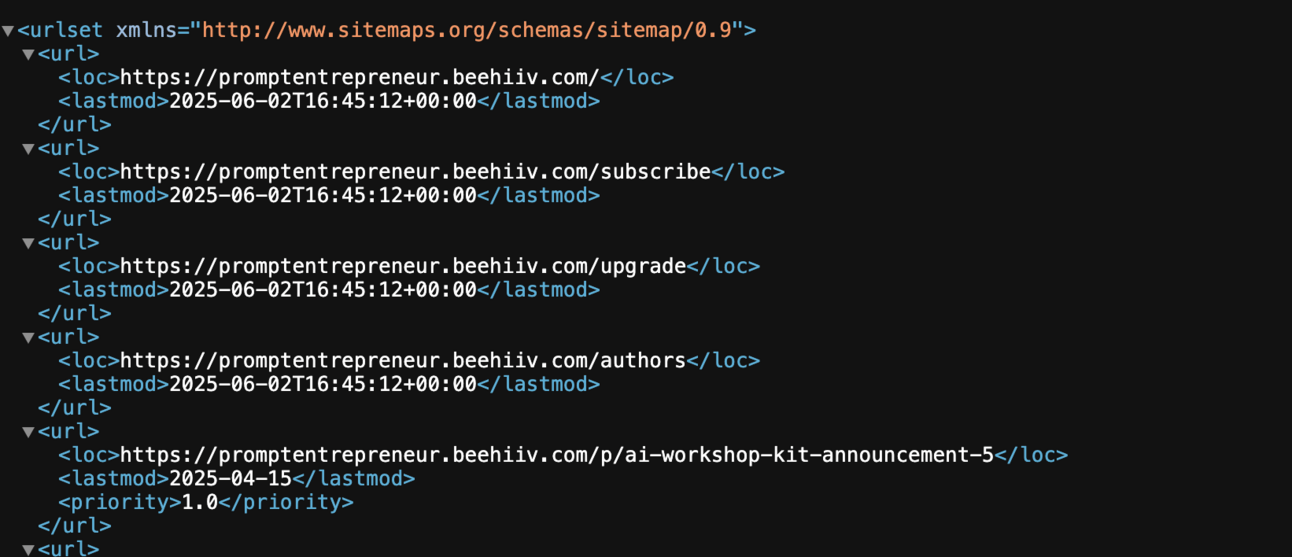
This often reveals:
Multiple versions of sales pages (salepage-v2, offer-2024)
Hidden thank-you pages that detail what's included
"Coming soon" pages for future offers (if published)
Different landing pages for different traffic sources
Each variation reveals testing and optimisation. If they have /offer-fb and /offer-email, they're positioning differently for different audiences.
Have a dig around and see what you come up with. Alternatively feed the whole list into an AI and ask which you should look into for offer variations. Then follow the recommendations and grab the screenshots as before.
Time Travel
Another option is to look at past versions of the sales page(s).
Take the primary sales page and plug it into the Wayback Machine at archive.org.
Now you can see how their offer evolved over time:
What features did they add? (customer demands)
What did they remove? (didn't work or too complex)
How did pricing change? (finding the sweet spot)
How did positioning shift? (market evolution)
This historical view is like having access to years of their split tests and customer feedback. We can look at each new version and work out what they’ve done in-between. Or … because we are smart (lazy?) we can feed the variations into our project and let AI do the heavy lifting. Let’s do that.
Feed everything into your AI project with this prompt:
I've collected sales page materials (current and historical) for a consistently successful offer. Help me reverse-engineer the complete offer structure from these pages.

Analyse everything to extract:

1. Core Offer Architecture
- What's definitely included based on descriptions
- Delivery format (self-paced, cohort, hybrid)
- Timeline and pacing promised
- Support level included

2. Value Stack Breakdown
- Main offer components
- Each bonus and its strategic purpose
- Price anchoring elements
- What features they emphasise most

3. Target Market Intelligence
- Who this is explicitly for (and not for)
- Skill level required
- Time commitment expected
- Resources needed to succeed

4. Transformation Promised
- Starting point of customer
- End result promised
- Timeline to achievement
- Success metrics mentioned

5. Strategic Insights
- What pain points get most attention
- What objections they preemptively handle
- What they DON'T promise (boundaries)
- How they differentiate from alternatives

Create a complete offer blueprint as if I needed to explain this offer to someone who's never seen it.
Once you have all the information stored in your Project you can ask a lot of questions about the offer. This prompt will get you started but I highly recommend digging deeper and holding a back and forth dialogue with your AI tool.
Yes, we’ll be pulling all this together at the end in Part 5 and having AI do the heavy lifting.
BUT it’s still very helpful for you to know and understand what you’ve competitor (and later you) are doing. And this will give you a crash course in best practices like no other.
By the end of this process, you'll have their complete offer blueprint without spending a penny. But remember: we're not copying. We're understanding what works in your market so we can do it better.
Every insight you extract goes into your AI project. By Part 5, you'll have enough intelligence to engineer something that makes their offer look outdated.
Next we'll expand beyond the sales page itself to analyse HOW they sell it. We'll dive into their email sequences and ad campaigns to understand the psychological journey they take prospects through.
Keep Prompting,
Kyle
In the last Part we ripped the offer from our competitor’s sales page.
Now, of course, the sale culminates at the sales page.
But (if they are doing the right thing!) sale begins far earlier than this!
In reality an online sale is a multitouch journey. It’ll be a combination of advertising, organic content, marketing automation and so much more.
All combining to finally bring the prospect to a sale page to seal the deal.
In this Part I'll show you how to extract the offer at source —every email, every ad, every psychological trigger your competitor uses to turn cold traffic into eager buyers.
Let’s get started:
Why the sales page is just the tip of the iceberg
Extracting their complete email persuasion sequence
Mining Facebook ads for what actually converts
Finding the psychological triggers that drive sales
Building your marketing intelligence database
While everyone obsesses over sales pages, the real money is made in the marketing that happens before anyone lands there. By the time someone lands on a sales page (ie. one that has a BUY NOW button) they should already be close to buying.
The sales page acts as the final nudge (or shove, depending on how heavy handed!)
But it’s prior to the sales page where trust is built, objections are handled, and desire is cultivated. All the good stuff.
Think about it: would you drop £2,000 on something from a cold sales page? Probably not. But after receiving two weeks of valuable emails that solve real problems? After seeing testimonials in your Facebook feed from people just like you? That's when credit cards come out.
Don’t believe me? Trying running cold traffic ads to a £2,000 offer sales page. I’ll wait. Tell me how it goes! 😛
Email sequences are where competitors reveal their true persuasion strategy. This is their chance to build a relationship over time, and how they do it tells you everything.
Getting Their Emails
The easiest method? Just sign up.
Worried about competitor seeing you snooping? Create a dedicated email address and opt in for their lead magnet.
Then tag/filter their emails in your inbox so you can easily collect them all up together.
Alternative approach: Search "[competitor name] email swipe file" or check copywriting forums. Marketers love sharing successful sequences.
What to Capture
Screenshot every single email. Don't just save the text—the design, formatting, and visual hierarchy matter too.
Add it all into your Project. Make sure the date is visible in the screenshot or add it in the file name so your AI knows the order.
Then let’s pull a report on the sequence:
I've collected a complete email sequence from a successful competitor. Analyse the psychological journey they create and extract their persuasion architecture.

For each email, identify:

1. Primary Purpose
- Value delivery, relationship building, or selling
- Emotional state they're creating
- Specific action they want

2. Persuasion Elements
- Stories used and why
- Social proof placement
- Authority building tactics
- Objection handling method

3. Sequence Strategy
- How each email builds on the previous
- When they shift from value to selling
- How they escalate urgency
- Where they position bonuses

4. Psychological Triggers
- Pain points emphasised
- Desires amplified
- Fears addressed
- Identity statements used

Map out their complete email strategy as a journey from subscriber to buyer. Note what's notably missing or different from their sales page messaging.
Use this in the same Project so you can start comparing to the sales page.
While emails show their nurture strategy, ads reveal what actually stops the scroll and gets clicks. This is pure, expensive market feedback.
Often these ads are what runs into the email sequence we just looked at. So it’s an earlier touchpoint.
The Facebook Ad Library Gold Mine
We’ll start with Facebook ads because there is an open library. Horray!
Go to facebook.com/ads/library. Search for their page. Every active ad is right there, free to analyse.
Pay careful attention to run dates. Ads running for months? Those are the winners and the targets for analysis. If the ads don’t work they get stopped - they are too expensive to allow to run without some return on ad spend (ROAS).
Conversely new ads appearing and disappearing? Those are tests that failed.
Advanced Ad Intelligence
For deeper insights, premium tools like SpyFu (for Google Ads) or AdSpy (for Facebook and Instagram) show additional data like estimated spend and audience targeting. But honestly? If they are active on Meta then the free Facebook library gives you 90% of what you need.
Screenshot the winners and throw them into your Project as before. Give supplementary info if required.
What we’re going to extract from Ads
Which pain points they lead with
What promises get repeated
Visual styles that persist (what resonates)
Call-to-action variations
How they pre-frame the offer
Once you've collected ads, use this analysis prompt:
I've collected multiple Facebook ads for the same offer. Help me identify what messages and angles consistently convert.

Analyse across all ads:

1. Message Patterns
- What pain points appear most frequently?
- Which promises are in every ad?
- What words/phrases repeat?
- How do they describe the transformation?

2. Angle Variations
- Different ways they position the same offer
- Which demographics get which message
- Emotional triggers by audience
- Authority vs empathy positioning

3. Visual Intelligence
- What types of images/videos persist
- Color schemes and design patterns
- Text overlay strategies
- Social proof presentation

4. Pre-Frame Analysis
- How do they set expectations?
- What beliefs do they challenge?
- How do they qualify prospects?
- What do they promise before the click?

Identify their "control" - the core message that appears across variations. Then show how they adapt it for different angles.We’ve been working backwards up until now. Now let’s flip it and reverse it. (Ti esrever dna ti pilf nwod gnaht ym tup i)
Pay special attention to how messaging evolves:
Ads (attention) → Emails (trust) → Sales Page (conversion)
Each stage has different psychological objectives. Ads need to stop scrolls. Emails need to build relationships. Sales pages need to close deals.
Each (should!) be focused on one goal and one goal only.
If their ads scream "LOSE 30 POUNDS IN 30 DAYS" but their emails teach sustainable lifestyle changes, that tells you something important about what actually converts vs what actually delivers…
We’ll be pulling all this together in Part 5 once we’ve collected our last vital set of competitive data.
Next we go straight to the source—actual customers. We'll mine reviews, testimonials, and feedback to understand what people really value versus what marketers think they want.
This is where you'll discover the gaps between what's promised and what's delivered—and those gaps are where your opportunity lives.
Keep Prompting,
Kyle
So far we’ve been looking at what our competitor wants us to think about their offer.
Marketers tell you what they think you want to hear. Can’t blame ‘em.
But customers? They tell you what actually matters. They reveal the gap between promise and reality—and that gap is where opportunities hide.
We’re switching gears today and looking not at what our competitors say about themselves. But what their customers say about them.
I'll show you how to systematically mine customer feedback to understand what people actually value, what frustrates them, and what they wish existed.
Let’s get started:
Why customer feedback beats any marketing message
Mining reviews for pain points and desires
Extracting insights from video testimonials
Finding patterns humans miss
Discovering the gaps competitors leave open
Marketing messages are crafted to persuade. Customer feedback is raw truth. When someone's angry enough to leave a 1-star review or thrilled enough to record a video testimonial, they're showing you what actually matters.
This feedback reveals:
What people really struggle with (vs what marketers assume)
What actually delivers value (vs what sounds good)
What's missing from current solutions
What would make people switch providers
Think of every review of your competitor as a free consulting session with your target market. And you didn’t even need to convene a focus group!
Let’s gather up some truth bombs then. Start with the obvious places:
The competitor’s website testimonials
Google reviews
Facebook page reviews
Trustpilot or industry-specific review sites
Course platforms (if applicable)
You can use an agent like Manus to go get all this if easier.
But also check:
Reddit discussions about the company
Facebook group mentions
Twitter conversations
YouTube comments on their videos
Collect everything for now. Yes, even the glowing 5-star reviews that feel like they were written by their mom. Patterns matter more than individual opinions.
Now it gets a bit Goldilocks…
5 star reviews don’t tell us that much because they are too glowing.
1 star reviews don’t tell us that much because they are too angry.
3 or 4 star reviews though?
Ooo I love a 3/4 star review.
Why? Because for someone to give a 3 or 4 star review actually means they’ve thought about it. “It’s good but…” or “It’s terrible but…”.
We get far more insight here than at the extremes.
Before AI I’d have said only collect the 3 and 4 star reviews and focus here. But we can get AI to filter and sort for us so collecting everything remains valid. Just be aware for yourself that the gold is in the 3 and 4 stars.
Feed all reviews into your AI project with this prompt:
I've collected customer reviews for a competitor's offer. Help me extract deep insights about what customers actually experience versus what's marketed.

Discard overly negative or overly positive reviews where nothing substantial is said. Instead focus attentions on 2-4 star reviews where there are substantial points made about the company and their product and services.

Analyse all reviews to identify:

1. Satisfaction Patterns
- What consistently delights customers
- What repeatedly disappoints
- What surprises people (good and bad)
- What expectations aren't met

2. Value Perception
- What features get praised most
- What people say is "worth the price"
- What they wish was included
- What they don't use or mention

3. Hidden Pain Points
- Problems people didn't expect
- Struggles not addressed in marketing
- Support issues that arise
- Technical or delivery frustrations

4. Transformation Reality
- Actual results people achieve
- Timeframes versus promises
- What success really looks like
- Who succeeds vs who struggles

5. Language Patterns
- Exact words customers use
- How they describe their problems
- How they describe solutions
- Emotions they express

Provide everything in a report for me.

And create a "Voice of Customer" document that contrasts marketing promises with customer reality.
Video testimonials are a completely different beast. People reveal so much more when they're talking versus writing.
If testimonials are on YouTube, NotebookLM becomes your secret weapon. Upload the video URLs and it can analyse the transcripts at scale.
Use this prompt with NotebookLM:
Analyse these video testimonials for deeper insights:

1. What specific moments or features do people get emotional about?
2. What stories do they tell unprompted?
3. What results do they emphasise vs downplay?
4. What do they say they struggled with before finding this solution?
5. What words/phrases appear across multiple testimonials?

Look for what's NOT said as much as what is. What aspects of the offer do they not mention?
This is supplemental to the text reviews. Go for quality over quantity here too - look for videos where customers really go into details rather than just “I love it.” That tells us diddly squat.
Finally we bring it all together. We'll synthesise everything—offer structure, marketing messages, and customer reality—into your leapfrog strategy.
You'll learn how to position against established competitors without competing directly, and how to build something that makes their offer feel outdated.
Keep Prompting,
Kyle
So here you are, sitting with pages and pages of competitive research. Screenshots of sales pages, email sequences, ads, customer reviews, testimonials. Your AI project is bursting with intelligence. The CIA/M15 would be proud of you!
Your instinct right this second might be: "I need to build something that has everything they have, plus more features, minus the complaints, and maybe throw in some bonuses too."
Stop right there.
This is the first impulse. But it ain’t the right impulse.
Look at PayPal and Stripe. In 2010, PayPal was the undisputed king of online payments. No-one could touch them. Massive market share, hundreds of features, global reach, trusted by millions. Hell it was (and is) integrated into eBay.
Then Stripe launched with... seven lines of code.
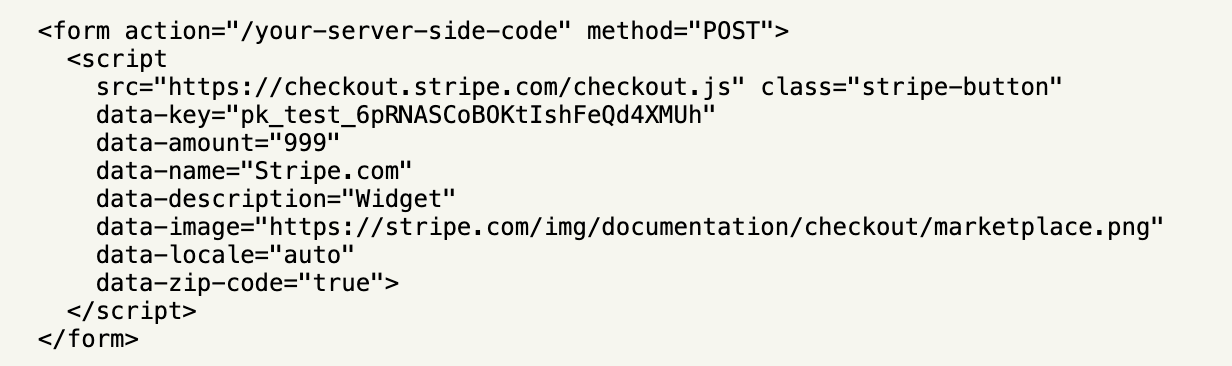
Well, OK 12 lines with the enclosing tags…
That's it. While PayPal required complex integration, merchant accounts, and days of setup, Stripe let developers accept payments with seven lines of code they could implement in minutes.
Stripe didn't out-feature PayPal. Quite the opposite. They out-focused them. And PayPal, the incumbent giant, got completely disrupted by this "simpler" solution.
Today I'll show you how to use all your research to develop multiple leapfrog approaches—then systematically choose the one that can make your competitor's offer feel outdated.
Let’s get started:
Why "more" isn't always better in offer design
The four leapfrog strategies that actually work
Turning complaints into competitive advantages
Your complete synthesis framework
Testing your positioning before you build
You've now got:
Their complete offer structure (Part 2)
Their marketing and persuasion tactics (Part 3)
What customers actually experience (Part 4)
The temptation is to build something that has everything they have, minus the complaints, plus extra features. That's how you end up with a bloated offer that's impossible to deliver and confusing to sell. More is not better.
Instead, we're going to be strategic. Based on your intelligence, you'll typically pursue one of these angles:
1. The Focus Play Strip away everything except what customers actually value. If reviews show 80% of results come from 20% of the content, build the 20% and make it exceptional.
Example: They have 52 modules. You have 8 that get better results.
I was chatting to a founder who just exited his company for $3.5M. He ran a community for years that hinged on live webinars with various experts. He thought they were the key to success. But in 2024 he killed the live lectures off and… no-one cared. They were not what the community genuinely valued. Don’t assume anything - we want to focus in on what customers genuinely value
2. The Format Shift Same transformation, completely different delivery. They do self-paced? You do cohort. They do group? You do 1-1. They do video? You do text. They want the customer to do the work? You do a Done-For-You service.
Example: They sell a course on Facebook ads. You sell a service that implements Facebook ads.
3. The Support Differential If reviews consistently mention lack of support, make support your cornerstone. If they complain about too many Zoom calls, go async. Change the “touch level” to fit what the customers are looking.
Example: They offer "lifetime access." You offer "90 days of intensive implementation."
4. The Depth vs Breadth Play They go wide? You go deep on one specific outcome. They go deep? You create the "essentials only" version.
Example: They teach "everything about AI." You teach "AI for accountants' daily workflows."
Now it's time to transform your intelligence into strategy. We'll explore all four approaches systematically, then let AI help you choose the best path. Plus mix in your own judgement of course!
First Prompt: Generate All Four Strategies
Use a reasoning model if available. Use all your existing Project work and run this prompt:
Based on all the competitive intelligence I've gathered, create four distinct leapfrog strategies. For each strategy, develop a complete brief:

STRATEGY 1: THE FOCUS PLAY
Design an offer that strips away everything except what customers value most. Make it 80% less but 10x better.

STRATEGY 2: THE FORMAT SHIFT
Same transformation, completely different delivery method. If they're self-paced, consider cohort. If they're group, consider 1-1. If they're course, consider done-for-you.

STRATEGY 3: THE SUPPORT DIFFERENTIAL
Make support your core differentiator based on what customers say is missing. This could mean more support OR less support but better designed.

STRATEGY 4: THE DEPTH VS BREADTH PLAY
If they go wide, go deep on one outcome. If they go deep, create the essentials version.

For each strategy brief, include:
- Core positioning statement
- Specific target customer
- What's included (and what's NOT)
- Key differentiator
- Price point rationale
- Why this beats the status quo
- Main risk to consider

Use all intelligence from the project to inform each strategy. Make each brief compelling and distinct.
Second Prompt: Strategy Evaluation
Start a fresh chat in your Project (no preconceptions) and use this prompt:
I have four potential strategies for a new offer in the [your market] space. Please evaluate each objectively and rank them by market attractiveness.

[Paste all 4 strategy briefs]

Evaluate each strategy on:
1. Market demand (based on complaints/desires mentioned)
2. Competitive differentiation
3. Delivery complexity
4. Scalability potential
5. Risk level

Rank them 1-4 with detailed reasoning. Which would you bet on succeeding and why?

Then suggest which type of entrepreneur would best suit each strategy (resources, personality, expertise needed).
Importantly we are giving the model multiple options and asking it to assess them all. If we were to simply give it one option and ask “is this a good idea?” then guess what: it would probably say yes! AI is agreeable and wants to make us happy.
By providing all of our strategies and asking it to give a comparative assessment we can get a more objective take.
OK! We’ve come a long way and now have a strategy to roll with.
It’s worth remembering that this is the outcome of stripping down a successful competitor offer and rebuilding the best practices into something new.
Before you build anything, you need to validate that your angle resonates. This isn't about perfecting your offer—it's about proving demand for your specific approach.
I've written entire Playbooks on testing and validation. Here are the essentials:
The Smoke Test Create a simple landing page with your positioning. Run $100 in ads. Are people more interested in your angle than the incumbent's?
The DM Test Message 20 people in your target market with your positioning. Do they immediately get why yours is different/better?
The Presale Test If you get interest, offer founding member pricing. Even 3-5 sales prove people will pay for your approach.
You're not testing features here—you're testing whether your positioning resonates. Does "learn by doing, not watching" get people excited? Does "90 days of intensive implementation" beat "lifetime access"?
We can test all of this via the marketing rather than the full product. Do so before building the product out!
Once validated, you have three paths for execution:
Path 1: Full Delivery Build exactly what you positioned. If you promised "8 focused modules," deliver exactly 8. Honour your differentiation precisely. Follow this route if you can build the offer quickly. If it’s going to take months do not do this! Move faster using one of the other paths.
Path 2: MVP Approach Deliver the core transformation first, add the bells and whistles later. Strip the offer back to its essence and deliver that. If it works then flesh it out.
Path 3: Beta Co-Creation Run a founding cohort where you build with your first customers. This works especially well for support-differentiated offers where you're still figuring out the optimal format. I’ve written an entire Playbook on the cohort launch method.
Your competitive intelligence tells you what to avoid. Your validation tells you what resonates. Your build strategy brings it to life. Move through these step by step rather than jumping immediately to a lengthy and costly build!
You now have a complete system for competitive intelligence and offer design. But knowing and doing are different beasts.
Your next step: Pick ONE competitor's ONE offer and run this process. Give yourself a week to complete all five Parts.
The market is full of "me too" offers. Yours won't be one of them.
Keep Prompting,
Kyle
Are you ready to leapfrog your competition using the power of AI? This playbook, "🐸 Leapfrogging Competitors using AI," is designed to transform your approach to business strategy. Instead of chasing after unique ideas, you'll learn how to analyze what's already working in your market and improve upon it. Discover how to leverage competitive intelligence to not only stand out but to offer more value to your customers, ensuring that your business thrives in a crowded landscape. This playbook is your guide to systematically engineer a winning offer that resonates deeply with your target audience and disrupts established players in your industry.
This playbook is crafted for first-time entrepreneurs, small business owners, and innovators who feel overwhelmed by the pressure to create something entirely unique. If you're struggling to differentiate your offer or find yourself stuck in analysis paralysis, this guide is perfect for you. You'll benefit from learning how to pivot your thinking from inventing groundbreaking ideas to optimizing existing solutions, enabling you to build a successful business with confidence and clarity.
No previous AI experience is required. The playbook provides practical steps and insights to help you leverage AI effectively, regardless of your technical background.
The playbook is structured to be flexible; you can go through it at your own pace. On average, readers may spend 4-6 hours to fully implement the strategies outlined.
Even unique ideas can benefit from this playbook. You'll learn how to enhance your offer based on market realities and customer needs, ensuring long-term success.
Yes! The strategies discussed are applicable across various industries, allowing you to adapt the insights to your specific market.
Basic tools like project management software and data analysis tools will be helpful. The playbook also discusses how to set up a competitive intelligence system, which can be done with minimal investment.