
AI Authority
Welcome to the '🙌 Defeating Imposter Syndrome | AI Business Playbook', a transformative resource designed to help you conquer the self-doubt that holds you back.
Start ReadingWelcome to a brand new Playbook that's been requested a LOT: Overcoming Imposter Syndrome. Specifically getting AI to help you recognise and combat your self-doubt.
Let’s get started:
Slaying the Imposter Dragon
Why imposter syndrome matters
The Imposter Detector: Your new AI tool
What's coming up this week
Putting the Imposter Detector into practice
Imposter syndrome is a major roadblock for many entrepreneurs. I ran a poll in my newsletter about what personal blocks are holding my readers back and it was by far the top problem:
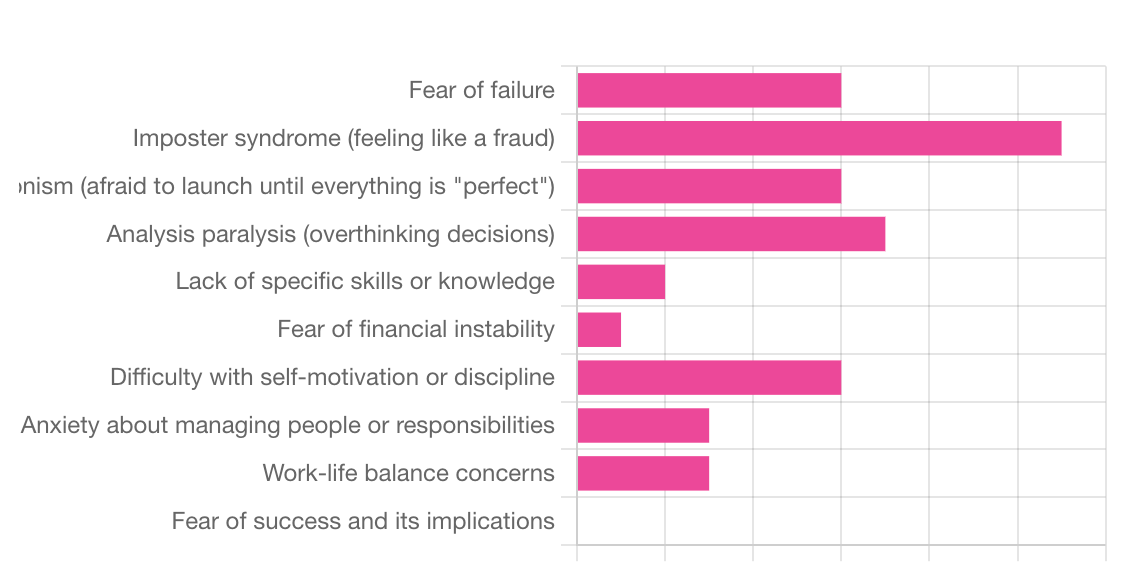
Imposter syndrome is that nagging feeling that you don't belong, that you're not good enough, or that you're about to be exposed as a fraud.
Sound familiar? You're not alone. For real. Even the most successful people you admire have likely grappled with these feelings.
So why bother fighting it?
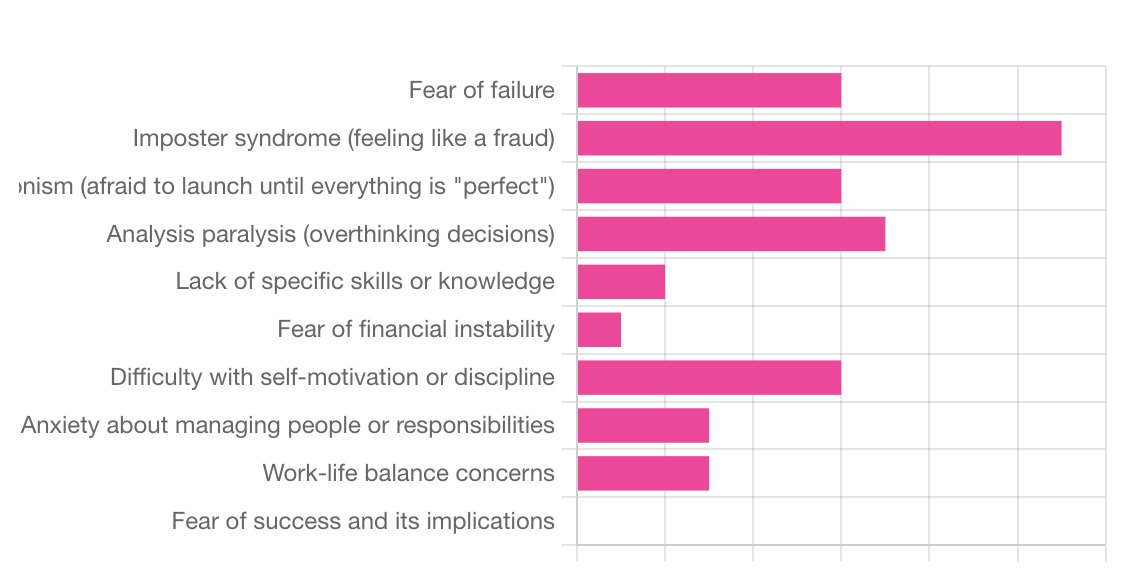
Because imposter syndrome can hold you back from reaching your full potential. It can prevent you from taking risks, sharing your ideas, or stepping up. Even though it’s in all in your head it’s a real barrier.
Before we dive into our week-long journey, let's get clear on what we're dealing with. Imposter syndrome isn't just a buzzword - it's a real psychological pattern that affects millions of people, including some of the most successful entrepreneurs and professionals.
Dr. Valerie Young, author of "The Secret Thoughts of Successful Women: Why Capable People Suffer from the Impostor Syndrome and How to Thrive in Spite of It", defines imposter syndrome as:
"The inability to internalise and own your successes... It's feeling like an intellectual fraud."
In other words, it's that persistent belief that you're not as competent as others perceive you to be, despite evidence to the contrary.
For entrepreneurs, imposter syndrome can be particularly crippling. It can manifest in various ways:
Hesitating to launch: You've got a brilliant idea, but you keep postponing the launch because "it's not perfect yet" or "who am I to start a business?"
Undervaluing your services: You consistently undercharge for your products or services because you don't believe they're worth as much as your competitors'.
Avoiding networking opportunities: You skip industry events or decline speaking engagements because you fear being "exposed" as a fraud.
Overworking: You pull all-nighters and work weekends, convinced that if you don't, everyone will realise you're not cut out for this.
Attributing success to luck: When you do succeed, you chalk it up to timing, connections, or sheer luck - never your own skills or hard work.
Perfectionism: You obsess over every detail, refusing to release anything until it's "perfect" (which, of course, it never is). This often leads to missed opportunities and unnecessary stress.
Downplaying achievements: When someone compliments your work or achievements, you brush it off or explain why it's not really that impressive.
Comparing yourself to others: You constantly measure yourself against other entrepreneurs, always finding ways in which you fall short, regardless of your own progress or success.
Do any of these sound familiar? If you're nodding along, you're not alone! Even tech titans like Sheryl Sandberg and Howard Schultz have admitted to feeling like imposters at times.
The good news? Recognising these patterns is the first step to overcoming them. And that's exactly what we're going to do this week.
We've got a Playbook of imposter syndrome-busting content lined up. Here's are the steps we’re covering:
Part 1 : The Imposter Detector - We're building an AI tool to help you recognise when imposter syndrome strikes.
Part 2: Success Archaeology - We'll uncover your past achievements and reframe them with current perspective.
Part 3: Strength Amplifier - We'll identify and amplify your current strengths and positive attributes.
Part 4: Thought Reconstruction - We'll work on reconstructing negative thoughts using evidence from past successes and current strengths.
Part 5: Future Self Interview - We'll project confidence based on past successes, present strengths, and reconstructed thoughts.
By the end of this process you'll have a complete AI-powered toolkit to combat imposter syndrome.
We're talking about a system that can identify your doubts, remind you of your accomplishments, amplify your strengths, reframe your thoughts, and project your future success.
Now, let's dive into our first step: building an AI-powered Imposter Detector. Think of it as a personal radar system for your self-doubt.
We start with diagnosis. Uncovering where imposter syndrome is sneaking in.
The Imposter Detector is all about recognising when those feelings of inadequacy are trying to take over. Because once you can spot it, you can start to combat it more effectively.
Here are the basic steps used to build this tool:
Trigger Identification: We'll create a list of situations that typically activate your imposter syndrome.
Thought Pattern Analysis: We'll decode the negative self-talk that comes with those triggers.
Physical Response Mapping: We'll pinpoint how your body reacts when imposter syndrome strikes.
Behaviour Pattern Recognition: We'll identify the actions (or inactions) you take when feeling like an imposter.
By the end of this, you'll have a personalised Imposter Detector that makes recognising your self-doubt patterns much easier and more systematic.
Let's get practical and build your Imposter Detector. Here's a prompt you can use with your favourite AI assistant to create your personalised doubt-detection system:
You are an AI assistant specialised in analysing patterns of imposter syndrome. Your task is to help the user create a personalised Imposter Detector. Follow these steps:

1. Ask the user to describe 3-5 recent situations where they felt like an imposter.

2. For each situation, prompt the user to share:
   a. The trigger (what sparked the feeling)
   b. The negative thoughts they had
   c. Any physical responses they noticed (e.g., sweating, rapid heartbeat)
   d. How they behaved as a result

3. Analyse the provided information to identify:
   a. Common triggers across situations
   b. Recurring thought patterns
   c. Consistent physical responses
   d. Typical behavioural reactions

4. Create a personalised Imposter Detector guide that includes:
   a. A list of the user's imposter syndrome triggers
   b. Common negative thought patterns to watch out for
   c. Physical "tells" that signal imposter feelings
   d. Behavioural red flags that indicate imposter syndrome is at play

5. Provide 2-3 quick strategies the user can employ when their Imposter Detector goes off.
Don't just read this prompt - put it to use! This isn’t academic but practical.
Fire up your AI of choice and copy/paste the prompt it to get rolling on the process.
Remember, awareness is the first step towards change. The more you understand your imposter syndrome patterns, the better equipped you'll be to challenge and overcome them.
This is just the first step. We’re going to build on this prompt and process over the week - taking discoveries from one step onto the next.
If you are subscribed to Premium (or on your 4 week trial) I’ll see you in the next Part!
You are currently on the free plan or trial.
The email you just read is Part 1 of a 5-part series.
Every week I write an AI Business and Entrepreneurship series to help you:
Start a business using AI
Grow your existing business using AI
Up-skill and use AI for your career progression
But, when you upgrade, you don’t just get the premium email newsletter…
You also get : AI business courses, private community, video playbooks, expert talks and instant access to 40+ AI Business Playbooks.
(Price increase after 200 members).
If you feel this is not for you — Unsubscribe here.
Keep prompting
Kyle
Welcome back to our Playbook on Defeating Imposter Syndrome. In the last Part, we built your Imposter Detector and started to diagnose triggers.
Now, we're going to dig into your past and unearth some valuable insights. It's time for some Success Archaeology.
Let’s get started:
Unearthing Your Achievements
Why recognising past successes matters
The archaeological process
Get digging
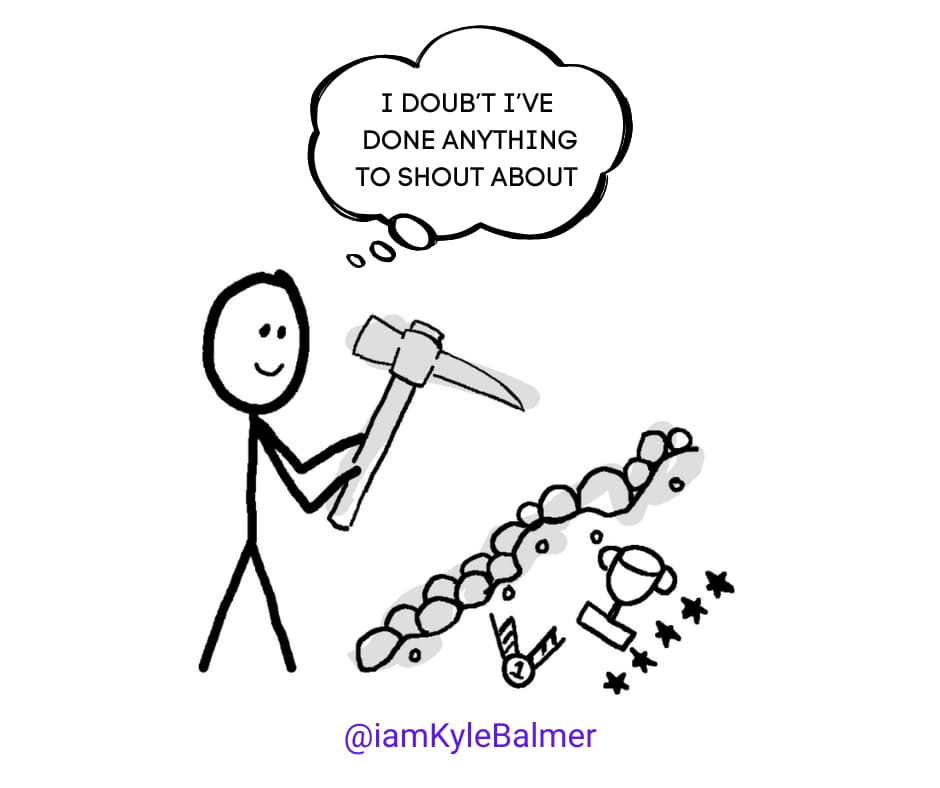
Remember when we talked about how imposter syndrome can make you attribute your success to luck or external factors? Well, Success Archaeology is the fix to that thinking.
Here's the deal: You've accomplished more than you give yourself credit for.
But over time, these achievements get buried under layers of self-doubt and negative thinking. So much crud. Success Archaeology is about digging them up and giving them the recognition they deserve.
We’re going to dig up that treasure and stick it in a museum so we can properly appreciate it.
Why is this important? Let's break it down:
Evidence Against Self-Doubt: Having concrete evidence of your capabilities is a powerful weapon against imposter syndrome. It's hard to feel like a fraud when you're literally staring at a list of your own accomplishments. We’re hoping for a (begrudging!) “huh…I’ve done a lot…”
Pattern Recognition: By examining your past successes, you start to see patterns in your skills and problem-solving abilities. This helps you recognise your strengths and how you've applied them across different situations.
Confidence Building: Understanding what you've already achieved can boost your confidence in tackling new challenges. It's a reminder that you've overcome obstacles before and can do it again.
Skill Inventory: This process helps you create an inventory of your skills and experiences. This is valuable not just for combating imposter syndrome, but also for career planning and personal development.
Reframing Your Narrative: Success Archaeology allows you to rewrite the story you tell yourself about your capabilities. Instead of focusing on perceived shortcomings, you're focusing on proven successes.
By engaging in this process, you're not just reminiscing about past glories. Think of this more like an inventory. It's a practical step towards changing how you view yourself and your abilities, not just pointless self-congratulation.
Here's how we're going to unearth your past successes:
1. Excavation: We'll dig deep into your past to identify achievements you've forgotten or downplayed.
2. Analysis: We'll examine each achievement to understand the skills and qualities that made it possible.
3. Reframing: We'll look at these past successes through the lens of your current knowledge and experience.
4. Cataloguing: We'll create a comprehensive record of your achievements and the skills they demonstrate.
5. Application: We'll identify how these past successes relate to your current challenges and goals.
By the end of this process, you'll have a treasure trove of evidence that counters your imposter syndrome thoughts. Ready?
Let's get practical and start our archaeological dig. Here's a prompt you can use with your AI assistant to unearth and analyse your past successes:
You are an AI assistant specialised in helping individuals recognise and appreciate their past achievements. Your task is to guide the user through a Success Archaeology exercise. Follow these steps:

1. Ask the user to list 5-7 achievements from their past. Encourage them to include a mix of professional and personal accomplishments, big and small. Give some examples. Once they've given a few use these to suggest related wins and see if they also apply.

2. Then for each achievement, prompt the user to describe:
   a. What specifically they accomplished
   b. The challenges they overcame
   c. The skills or qualities they demonstrated

3. Analyse the provided information to identify:
   a. Common skills or qualities across achievements
   b. Growth patterns or learning curves
   c. Instances where the user overcame self-doubt or imposter syndrome

4. Create a Success Catalogue that includes:
   a. A summary of each achievement
   b. The skills and qualities demonstrated in each
   c. How these achievements relate to the user's current goals or challenges
   d. A section on recurring strengths and capabilities

5. Provide 3-4 insights on how the user can apply these past successes to current or future situations where they might feel like an imposter.

6. Suggest a positive affirmation based on the user's achievements that they can use when facing self-doubt.
Once you've completed the exercise, take some time to reflect on what you've uncovered. Were you surprised by any of your achievements? Did you spot any patterns in your successes?
Keep your Success Catalogue handy. It's not just a record of your past - it's ammunition against future bouts of imposter syndrome. And we’re going to feed it into the next Prompt in the next Part.
In the next Part, we're going to build on these discoveries with our Strength Amplifier. We'll take the skills and qualities we've unearthed and crank them up to eleven.
Remember, this Playbook is a process. Each step builds on the last, creating a comprehensive system for combating imposter syndrome. So please don't skip steps!
Keep prompting
Kyle
Welcome back to our Playbook on Defeating Imposter Syndrome. In the last Part, we did some Success Archaeology and dug up evidence of your past wins.
Now, we're going to take those unearthed strengths and build on them. It's time for some Strength Amplification.
Let’s get started:
Amplifying Your Strengths
Why amplifying your strengths matters
The Strength Amplifier process
Get amplifying
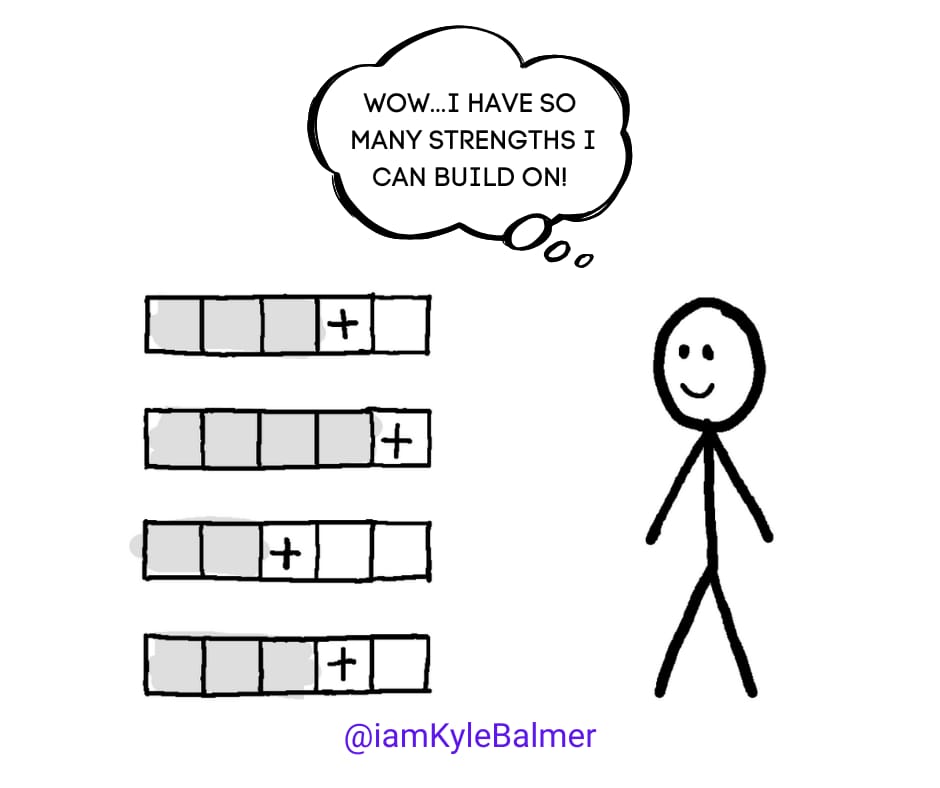
Remember how we dug up all those past successes? Well, now we're going to put them to work. Because knowing your strengths is one thing, but actively leveraging is how we’re going to bust on through imposter syndrome.
Your strengths are your secret weapons against imposter syndrome. But like any weapon, they're useless if they're sitting in a drawer gathering dust.
For me personally I have to regularly remind myself of this stuff. I will literally forget that I can (at times) be quite competent. And need a basic refresher - I legit have a list I look at.
Sounds simplistic and it sorta is. But our brains layer in so much complexity (including self-doubt, negative self-talk and negativity) that having a super simple “hey here’s what you are good at idiot” reminder is useful!
The process and prompt today is about taking those strengths out of storage, polishing them up, and figuring out how to use them in your day-to-day battles with self-doubt. We’re building up our arsenal basically.
We’ll end up with a handy list we can look at anytime to act as a reminder.
Why is this important? Let's break it down:
1. Confidence: When you're actively using your strengths, you're operating in your zone of excellence. It's hard to feel like an imposter when you're absolutely nailing it.
2. Unique Value Proposition: Understanding and leveraging your strengths helps you recognise your unique value.
3. Resilience Building: Knowing you have these amplified strengths gives you a safety net. When imposter syndrome strikes, you can remind yourself of your concrete, proven capabilities.
This isn't about becoming arrogant or overconfident. It's about having an accurate, appreciative view of what you bring to the table. We're aiming for quiet confidence here, not a strutting peacock a**hole vibe!
Here's how we're going to amp up those strengths:
1. Identification: We'll review the strengths we uncovered in our Success Archaeology.
2. Analysis: We'll examine each strength to understand how it's served you in the past.
3. Application Expansion: We'll brainstorm new ways to apply these strengths in your current work and life.
4. Combination: We'll look at how different strengths can work together for even more impact.
5. Action Planning: We'll create specific plans for regularly exercising and showcasing your strengths.
By the end of this process, you'll have a supercharged set of strengths and a game plan for using them to keep imposter syndrome at bay.
Time to fire up our AI again. Here's a prompt to help you amplify your strengths:
You are an AI assistant specialised in helping individuals recognise, amplify, and leverage their strengths. Your task is to guide the user through a Strength Amplification exercise. Follow these steps:

1. Ask the user to list 3-5 key strengths they identified in their Success Archaeology exercise. If they haven't done that exercise, ask them to list strengths they believe they possess.

2. For each strength, prompt the user to describe:

   a. A specific instance where they've successfully used this strength

   b. How this strength has helped them overcome challenges in the past

   c. Areas of their work or life where they currently use this strength

3. Analyse the provided information to:

   a. Suggest 2-3 new ways the user could apply each strength in their current role or projects

   b. Identify potential combinations of strengths that could be particularly powerful

   c. Highlight any underutilised strengths and propose ways to leverage them more

4. Create a Strength Amplification Plan that includes:

   a. A summary of each strength and its potential applications

   b. Specific actions the user can take to exercise and showcase each strength regularly

   c. Potential projects or tasks that would allow the user to leverage multiple strengths

   d. A section on how these amplified strengths counter common imposter syndrome thoughts

5. Provide 3-4 daily or weekly practices the user can implement to consistently amplify and utilise their strengths.

6. Suggest a power phrase for each strength that the user can use as a reminder of their capability when facing self-doubt.
Once you've run through this exercise, take some time to reflect on the results. Are there strengths you've been underutilising? Any surprising combinations of strengths you hadn't considered before?
I’d recommend saving a list of your uncovered strengths on your phone or printing them out. Or, hear me out here, writing them down by hand!! The main thing is to have a readily accessible copy somewhere that you can check easily.
Also keep your Strength Amplification Plan handy. It's not just a feel-good exercise - it's a practical tool for boosting your performance and keeping imposter syndrome in check - AND we’re going to be pulling all our work together in the next Part.
Specifically we're going to tackle those negative thoughts head-on with our Thought Reconstruction process. We'll take the amplified strengths we've just identified (and previous work) and use it all to challenge and reframe self-doubting thoughts.
Keep prompting
Kyle
I remember the last time I really felt like an imposter. It still happens. A lot!
I was about to go on stage for a big talk about AI and entrepreneurship. As I stood backstage, my heart racing, a voice in my head kept saying, "Who do you think you are? Ya idiot! These people are going to see right through you."
But then I caught myself. I took a deep breath and started to challenge that thought.
I reminded myself of all the preparation I'd done, the experiences I'd had, the fact I’ve been researching and writing about this stuff daily for a year and the value I could bring to the audience. By the time I stepped on stage, I wasn't just pretending to be confident - I actually felt it.
That's the power of reconstructing your thoughts. Confidence is all in your head. It’s there. Just…more locked away for some of us than for others.
I’m naturally introverted and lack confidence so had to work through all this myself.
That's what we're diving into today.
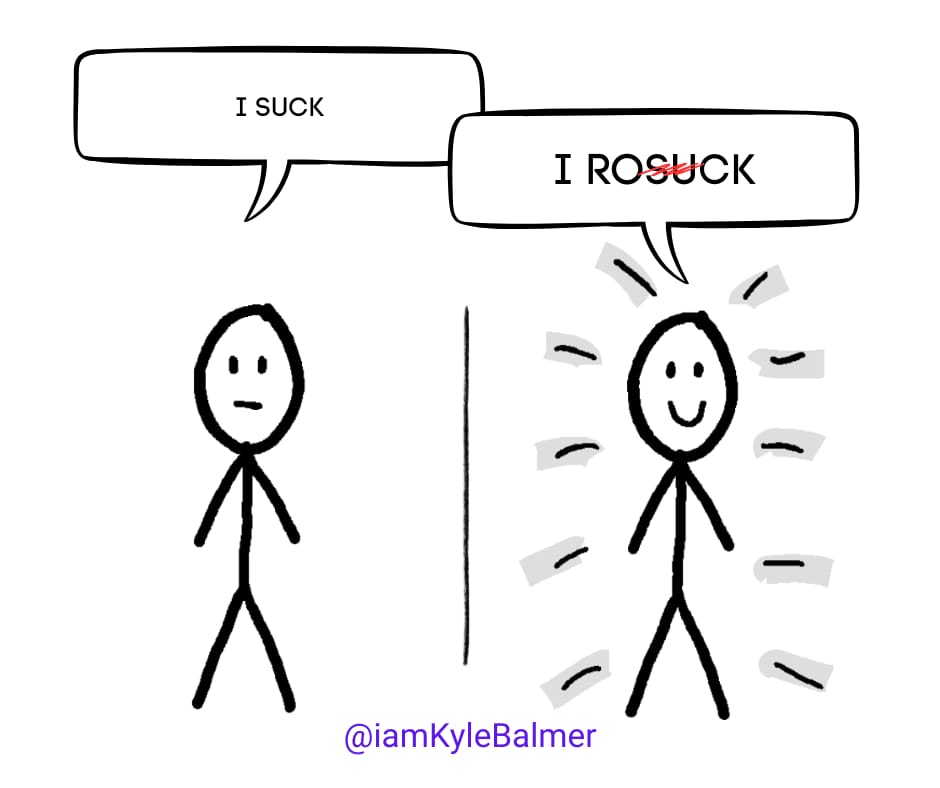
Let's get started:
Rebuilding your Mental Framework
Why reconstructing thoughts matters
The Thought Reconstruction process
Get reconstructing
Remember all those negative thoughts we identified with our Imposter Detector in Part 1?
Now we're going to renovate them. We’re not going to eliminate them. They are too valuable for that - it’s a waste just to get rid of them!
Instead we’ll use them as a foundation. We’ll hook new beliefs to these already powerful emotions. Just reworked to be helpful rather than a hindrance.
Here's the deal: Your thoughts shape your reality. When you're constantly thinking "I'm not good enough" or "I don't belong here", you're essentially programming yourself for self-doubt.
There’s a lot of truth to the old saw from Henry Ford: “Whether you think you can, or you think you can't - you're right.”
Thought Reconstruction is about catching those negative thoughts, challenging them with evidence (hello, Success Archaeology!), and rebuilding them.
Why is this important? Well, think of it this way: Many of our imposter thoughts aren't based on facts. They're just habitual narratives we've picked up along the way. By reconstructing them, we're doing a reality check, seeing situations more objectively.
This process isn't just about feeling better (although that's a nice bonus, not going to lie!). Instead it's about building genuine confidence based on evidence, not wishful thinking. This isn’t just vague manifesting or fake it until you make it. This is based on fact.
Moreover, learning to reconstruct thoughts gives us a powerful tool for resilience. It helps us bounce back from setbacks more quickly, because we can challenge the negative interpretations that often follow failure.
Over time, thought reconstruction helps us develop a more accurate (and usually more positive) view of ourselves and our capabilities. We start to see ourselves as we truly are - imperfections and all - rather than through the distorting lens of imposter syndrome.
Oh and this isn't about toxic positivity or ignoring real areas for improvement. It's about truthfulness and seeing yourself and your abilities clearly, without the fog of self-doubt clouding your vision.
Here's how we're going to renovate those thoughts:
Identification: We'll pinpoint specific negative thoughts that fuel your imposter syndrome.
Analysis: We'll examine these thoughts to understand their origins and impact.
Evidence Gathering: We'll collect evidence that challenges these negative thoughts, drawing from our Success Archaeology and Strength Amplifier exercises.
Reframing: We'll reconstruct the negative thoughts into more balanced, evidence-based alternatives.
Practice: We'll create a plan for catching and reconstructing these thoughts in real-time.
By the end of this process, you'll have a toolkit for challenging and reconstructing the thoughts that feed your imposter syndrome.
Now you could do all of this yourself but it’s hard! Having a coach to guide you through it is a wonderful idea but I understand it’s not an option for everyone.
So… let’s hop over to our AI once more.
Use this below the previous prompts (same chat) to pull in details from before.
Here's a prompt to guide you through the Thought Reconstruction process:
You are an AI assistant specialised in cognitive behavioural techniques and thought restructuring. Your task is to guide the user through a Thought Reconstruction exercise to combat imposter syndrome. Follow these steps:

1. Ask the user to list 3-5 common negative thoughts they have related to imposter syndrome. Provide examples if needed.

2. For each thought, prompt the user to describe:
   a. When this thought typically occurs
   b. How it makes them feel
   c. How it affects their behaviour

3. For each thought, guide the user to:
   a. Identify any cognitive distortions present (e.g., all-or-nothing thinking, overgeneralisation)
   b. Recall evidence from their Success Archaeology that contradicts this thought
   c. Consider how they might view the situation if it were happening to a friend

4. Help the user reconstruct each thought by:
   a. Crafting a more balanced, evidence-based alternative
   b. Incorporating their identified strengths into the new thought
   c. Ensuring the new thought is realistic and believable

5. Create a Thought Reconstruction Plan that includes:
   a. The original negative thoughts and their reconstructed versions
   b. Specific triggers to watch out for
   c. A step-by-step process for catching and reconstructing thoughts in real-time
   d. Daily or weekly practices to reinforce the new thought patterns

6. Suggest 2-3 strategies the user can employ to make thought reconstruction a habit (e.g., journaling, mindfulness exercises).

Remember, the goal is to help the user develop a more realistic and self-compassionate thinking style, not to ignore genuine areas for growth.
Once you've completed this exercise, take some time to reflect on the results. How do the reconstructed thoughts feel compared to the originals? Can you see how they might change your approach to challenges?
More than reflection though this is where action comes in. The prompt will create a Thought Reconstruction Plan. Sounds a bit 1984 doesn’t it…feel free to use a friendlier name!
Keep your plan handy. Printed or on your phone where it’s accessible. Like any skill, catching and reframing negative thoughts takes practice. But with time, it'll become second nature.
In the next Part, we're going to tie everything together with our Future Self Interview. We'll use all the tools we've developed to project a more confident, imposter-free version of yourself.
Keep prompting
Kyle
Picture this: You're sitting across from yourself, but it's you from the future.
This version of you exudes confidence, speaks with authority about your accomplishments, and doesn't flinch when talking about challenges.
But it’s still you.
Sounds impossible? Well, that's exactly what we're going to do today.
Welcome to the final part of our Playbook on Defeating Imposter Syndrome. We've come a long way, building tools and strategies to combat self-doubt.
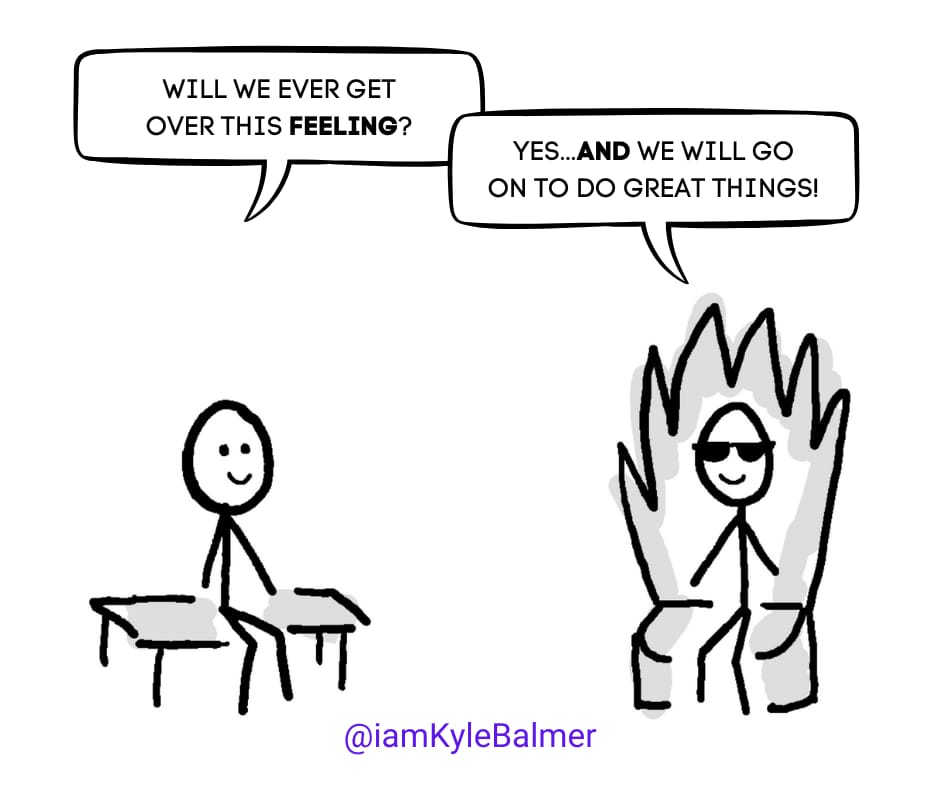
Now, it's time to bring it all together with our Future Self Interview.
Meeting your Future Self
Fast forward to the future
Chat with your future self
Remember all the various tools we've built over the past week? The Imposter Detector, Success Archaeology, Strength Amplifier, and Thought Reconstruction? Well, now we're going to use all of them to create a roadmap for your future confident self.
Our brains are very smart and very dumb. We have fancy new modern brain structures on top of old lizard brain parts. We can use the modern part to trick the older parts.
Your brain doesn't really distinguish between vividly imagined experiences and real ones. When you engage in a detailed visualisation of your future self, you're actually laying down mental pathways that make that future more achievable.
We’re going to do this by having a chat with a future version of ourself.
Again, this isn't about creating an unrealistic, perfect version of yourself. It's about envisioning a version of you that has learned to manage imposter syndrome effectively. And then bringing our current self towards that future self.
Here's how we're going to meet and interview your future self:
Visualisation: We'll start by vividly imagining your future self, 5 years from now.
Character Development: We'll flesh out the details of this future you - their achievements, mindset, and how they've overcome imposter syndrome.
Interview Preparation: We'll craft questions to ask your future self about their journey and successes.
The Interview: We'll conduct the interview, allowing your imagination to provide the answers.
Action Planning: We'll create a plan to start embodying aspects of your future self today. It’s got to be actionable.
Here's a prompt to guide you through the Future Self Interview process. Use th same chat as you have been for the whole Playbook:
You are an AI assistant specialised in guided visualisations and future self exercises. Your task is to guide the user through a Future Self Interview to combat imposter syndrome, drawing on all the information and exercises completed in previous parts of this Playbook. Follow these steps:

1. Review the user's previous results:
   a. Recap the key triggers and patterns identified in the Imposter Detector exercise
   b. Summarise the main achievements and skills uncovered in the Success Archaeology
   c. List the amplified strengths from the Strength Amplifier exercise
   d. Recall the reconstructed thoughts from the Thought Reconstruction process

2. Help the user visualise their future self 5 years from now:
   a. Ask them to describe their future self's appearance, demeanour, and surroundings
   b. Prompt them to imagine how this future self feels about their accomplishments
   c. Guide them to envision how this future self handles challenges and self-doubt, using their amplified strengths and reconstructed thoughts

3. Assist the user in developing interview questions for their future self, such as:
   a. "How did you overcome the imposter syndrome triggers we identified 5 years ago?"
   b. "How have you built upon the successes and skills we uncovered in our Success Archaeology?"
   c. "How are you now leveraging the strengths we identified and amplified?"
   d. "How do you now handle situations that used to trigger self-doubt, using our reconstructed thoughts?"

4. Conduct the interview:
   a. Ask the prepared questions, allowing the user to respond as their future self
   b. Encourage detailed, specific answers that reference the work done in previous exercises
   c. Follow up on interesting points to draw out more insights

5. After the interview, guide the user to reflect on:
   a. The most surprising or insightful answers from their future self
   b. Specific strategies or mindset shifts their future self employed, building on previous exercises
   c. How their future self's confidence differs from their current self-perception

6. Help the user create an action plan:
   a. Identify 3-5 key strategies or behaviours of their future self to start implementing now, drawing from all previous exercises
   b. Develop a timeline for adopting these strategies
   c. Create accountability measures to stay on track

7. Suggest 2-3 daily practices to help the user connect with and embody their future self regularly, incorporating elements from all previous exercises.
This prompt pulls everything else together so again make sure to use it below the previous work. And the more thought and care you’ve put into the previous prompts the more this one will shine.
Take your time with your answers here. Unlike when working with a coach (or even a therapist!) you aren’t on the clock here. AI is infinitely patient. So if you need to close out the chat, have a think and come back later that’s all good. Main thing is to work through this so that it helps you - this isn’t just a tickbox activity!
We've covered a lot of ground in this Playbook:
We built an Imposter Detector to recognise when self-doubt is creeping in.
We did some Success Archaeology to uncover evidence of our capabilities.
We amplified our strengths, learning to leverage them more effectively.
We reconstructed our thoughts, challenging and reframing negative self-talk.
And now, we've interviewed our future selves, creating a vision and roadmap for success.
These tools and strategies aren't a one-and-done solution. Defeating imposter syndrome is an ongoing process.
So, keep these tools handy and rerun the process as and when needed. Once you’ve fed everything in you can return to the same chat and simply say “let’s run the process from the beginning”. Pretty slick eh?
Remember, you're not alone in this journey. Imposter syndrome affects even the most accomplished entrepreneurs and professionals. The difference is in how you choose to respond to it.
Keep prompting
Kyle
Welcome to the '🙌 Defeating Imposter Syndrome | AI Business Playbook', a transformative resource designed to help you conquer the self-doubt that holds you back. This playbook guides you through a structured approach to identify, understand, and combat imposter syndrome using powerful AI tools. Whether you're an entrepreneur, a freelancer, or a professional striving for growth, this playbook empowers you to reclaim your confidence and unleash your full potential. Dive in and discover how to turn your self-doubt into self-assurance, enhancing both your personal and professional life.
This playbook is designed for entrepreneurs, freelancers, and professionals who struggle with self-doubt and feel overwhelmed by imposter syndrome. If you've ever hesitated to launch a project, undervalued your skills, or avoided networking opportunities due to fear of being exposed as a fraud, this resource is perfect for you. It provides the tools and strategies necessary to combat these feelings, helping you to step into your true potential and succeed in your endeavors.
Imposter syndrome is the feeling of self-doubt and inadequacy that can prevent you from recognizing your achievements and potential. It can lead to anxiety, perfectionism, and avoidance of opportunities, impacting your career growth and personal fulfillment.
No prior knowledge is required! This playbook is designed to guide you step-by-step through the process of understanding and overcoming imposter syndrome. All you need is a willingness to engage with the exercises.
The playbook is structured into five parts, which can be completed at your own pace. Each part is designed to be engaging and can typically be finished in about an hour, making it easy to fit into your schedule.
Absolutely! The tools and strategies provided in the playbook are meant to be revisited as needed. You can run the process multiple times to continually reinforce your confidence and combat self-doubt.
The AI tools in this playbook help you to systematically identify patterns of self-doubt, analyze your thoughts, and develop actionable strategies to combat these feelings, making the journey to self-acceptance more structured and effective.