
AI Authority
Welcome to '🤩 Building your AI Expert Brand | AI Business Playbook', your ultimate guide to becoming a sought-after AI consultant.
Start ReadingWelcome to the Playbook that's going to transform you into an AI consulting powerhouse.
Right now a huge amount of money is being spent by businesses who need to know how to deal with AI.
Businesses across every industry are scrambling to understand and implement AI solutions. But here's the kicker - most of them don't know where to start. That's where you come in.
This Playbook is your roadmap to becoming the bridge between cutting-edge AI technology and real-world business applications. We're not just talking about understanding the tech (although that's important too). We're talking about becoming the go-to expert who can translate AI capabilities into tangible business results.
Here's what we're going to cover:
Finding Your AI Consulting Niche: We'll help you carve out your unique space in the AI consulting world, leveraging your existing expertise and passions.
Communicating AI Concepts for Your Niche: You'll learn how to explain complex AI ideas in ways that resonate with your specific audience.
Creating Frameworks and Intellectual Property: We'll show you how to develop teachable frameworks and build IP that sets you apart in the industry.
Building Your Platform: You'll learn the basics of social media strategy and newsletter creation, with a focus on the power of building in public.
Expanding Your Reach: We'll explore networking strategies and podcast guesting to leverage other people's audiences and grow your influence.
Let’s get started:
Carving Out Your AI Territory
Identifying your AI expertise sweet spot
Understanding your ideal clients and their headaches
Crafting your irresistible unique value proposition
Developing your brand story that resonates
I remember when I first started giving advice about AI and ChatGPT. I thought I had to be the expert for everyone - students, employees, Fortune 500 CEOs, entrepreneurs, creatives and more.
It didn’t work. At all.
As someone who had never been “traditionally” employed, I found myself fumbling when trying to address the needs of staff members or workers in typical office environments.
What do I know about how AI can help employees? Nada.
But then it hit me. Why was I trying to be an expert in areas I had no real experience in? That's when I decided to narrow my focus. I combined AI with something I knew inside and out: entrepreneurship.
It’s something I’ve been doing for a decade plus personally and have helped thousands of others through courses, coaching and products.
Suddenly, I was talking to an audience I understood - people starting and growing businesses. It was a world I was familiar with, having built my own businesses and helped others do the same.
That's when Prompt Entrepreneur really took off.
This shift wasn't just a small pivot - it was the key that unlocked everything.
My content resonated more, my audience grew faster, and most importantly, I felt confident in the value I was providing.
And, as a bonus, we went from making $0 to having 6 figures months!
Today, we're going to help you find your own key - your unique AI expert niche. Let's get started.
Here's the deal: In the vast ocean of AI, trying to be everything to everyone is a fast track to being nothing to no one. You need to plant your flag somewhere specific.
Why? Well, let's break it down:
Focus: When you specialize, you can dive deep. You become the go-to expert in your specific area, not just another generalist in the crowd. There are a LOT of AI generalists out there - don’t drown in that ocean!
Clarity: A clear niche makes it easier for potential clients to understand what you offer and whether you're the right fit for them.
Competitiveness: In a specific niche, you're competing with fewer people, and you can differentiate yourself more easily. You can basically become the AI person for that niche.
Now, let's kick off this Playbook by finding your niche. We'll start by taking stock of your knowledge and experience, then we'll match that with your passions and market demand. We'll craft a unique value proposition that sets you apart, and develop a brand story that resonates with your ideal clients.
Here's a prompt to guide you through the niche-finding process:
You are an AI assistant specialised in helping consultants define their niche and unique value proposition. Your task is to guide the user through a process of identifying their ideal consulting niche that leverages both their existing expertise and AI. Follow these steps:

1. Background and Expertise Audit:
   a. Ask the user to describe their professional background, including industries they've worked in and roles they've held.
   b. Prompt the user to list their top 5-7 areas of expertise outside of AI.
   c. For each area, ask the user to rate their level of expertise from 1-10 and provide a brief example of a project or achievement.

2. AI Knowledge Assessment:
   a. Ask the user to describe their understanding of AI and its potential applications.
   b. Prompt the user to list any AI-related skills or knowledge they possess.

3. Passion and Interest Check:
   a. Ask the user to rank their listed areas of expertise based on their passion and interest.
   b. Prompt the user to explain why they're passionate about their top 2-3 choices.

4. Market Analysis:
   a. Based on the user's background, expertise, and interests, research and suggest 3-5 potential niche markets where AI could be applied.
   b. For each niche, provide a brief overview of the market demand and potential AI applications.

5. Intersection Identification:
   a. Analyse the information gathered to identify the intersection of the user's expertise, passion, and potential AI applications.
   b. Suggest 2-3 potential niches that align with this intersection.

6. Niche Definition:
   a. Guide the user to select their preferred niche from the suggestions.
   b. Help the user clearly define their chosen niche, including their specific expertise and how AI can be applied to it.

7. Unique Value Proposition:
   a. Based on the chosen niche, help the user craft a unique value proposition that highlights their industry expertise and how they can leverage AI to solve problems in that industry.
   b. Refine the UVP to ensure it's clear, compelling, and differentiates the user from potential competitors.

8. Brand Story Development:
   a. Using the information gathered, help the user craft a brief brand story that explains their journey in their industry and how they've come to incorporate AI into their expertise.
   b. Ensure the brand story aligns with the chosen niche and unique value proposition.
Now, here's where it gets interesting. Once you've worked through this prompt and identified your niche, remember this crucial point:
You're not an AI expert who happens to know about your industry. You're an industry expert who's leveraging AI to solve problems.
This distinction is vital.
Your value lies in your deep understanding of your niche, combined with your ability to apply AI solutions to that niche's specific challenges. You're not selling AI; you're selling better outcomes for your industry using AI as a tool.
Let's look at some examples of how this shift in perspective changes the language you use:
Finance Industry: Instead of: "I teach financial institutions about machine learning algorithms." Say: "I help banks understand how AI can reduce fraud risk, potentially saving millions in losses."
Healthcare: Instead of: "I explain natural language processing to medical professionals." Say: "I show doctors how AI can free up to 2 hours a day from paperwork, allowing more patient care time."
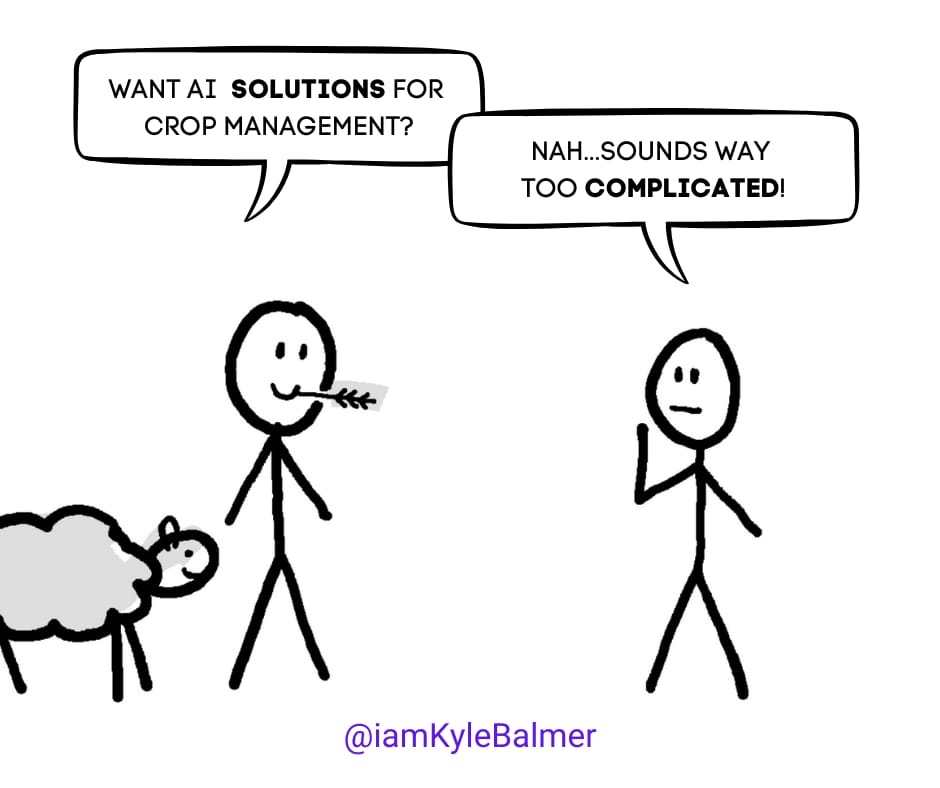
Agriculture: Instead of: "I educate on IoT and AI solutions for crop management." Say: "I show farmers how precision agriculture, powered by AI, could increase crop yields while reducing resource usage."
Notice how each of these examples focuses on the outcomes and benefits specific to the industry, rather than the AI technology itself. Your job is to translate AI capabilities into the language and priorities of your niche.
In the next Part, we're going to dive deep into this skill of communicating AI concepts in your niche's language.
We'll explore how to explain complex AI ideas using analogies and metaphors that resonate with your specific audience. Your unique value isn't just in understanding AI – it's in your ability to bridge the gap between AI's capabilities and your industry's needs.
We’ll get into it in the next Part!
Keep Prompting,
Kyle
I've sat through countless talks by AI experts with more PhDs than you can shake a stick at. These are brilliant minds, no doubt. But here's the thing - brilliance doesn't always translate to clear communication.
I've watched audiences' eyes glaze over as speakers dive into the intricacies of neural networks, throw around terms like NLP and RAG, and get lost in the weeds of technical jargon. You can almost see the moment people mentally check out.
That's when I realised: in the world of AI consulting, your ability to communicate clearly is just as important as your technical knowledge - maybe even more so.
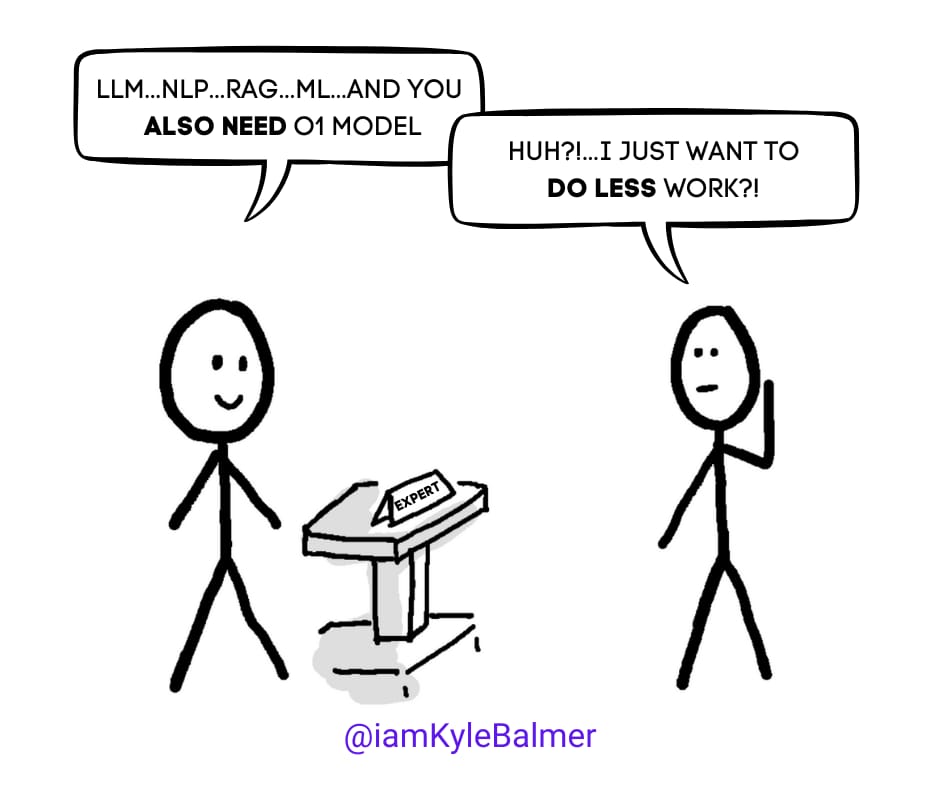
When I teach about AI, I steer clear of technical language and acronyms. Instead, I say things like, "If you can use WhatsApp, you can use ChatGPT." Suddenly, I see eyes light up. People lean in. They're excited because now AI feels accessible to them.
Think about it. Who are some of the most famous scientists? Carl Sagan, Richard Feynman, Neil deGrasse Tyson. What do they all have in common? They're not just brilliant scientists; they're incredible communicators. They can take complex topics and make them understandable and exciting for the average person. That's why they have massive followings.
As an AI consultant, that's exactly what you need to do for your audience. Your job isn't to impress them with your technical knowledge. It's to excite them about the possibilities of AI and help them understand how it can transform their business.
Let's dive into how you can become the Carl Sagan of AI for your niche.
Let’s get started:
The Art of AI Translation
Why clear communication matters in AI consulting
Techniques for translating AI concepts into niche-specific language
Creating powerful analogies and metaphors
Practicing your AI communication skills
Here's the deal: AI is complex. It's a field that's advancing at breakneck speed, filled with intricate concepts and technical jargon. But your clients? They don't need to understand the inner workings of a neural network. They need to understand how AI can solve their problems and transform their businesses.
That's where you come in. Your role as an AI consultant isn't just about knowing AI - it's about bridging the gap between AI capabilities and your clients' needs. It's about translation.
So how do you master this art of AI translation? Start by really getting to know your audience. Understand their level of technical knowledge, their industry jargon, and their primary concerns. This knowledge is your foundation. Whenever I go in and do workshops I’ll always send out a pre-workshop survey to get their level so I can adjust my content.
Use analogies from their world to make AI concepts relatable. If you're talking to farmers about predictive maintenance for tractors, you might say, "AI is like a super-experienced farmer who can tell when a tractor is about to break down just by listening to its engine, but it can do this for every tractor in your fleet, all the time."
Focus on outcomes, not processes. Your clients care more about what AI can achieve for them than how it works. Instead of explaining the intricacies of natural language processing, talk about how it can help them respond to customer inquiries 24/7, improving satisfaction and reducing support costs. They are running a business - this is where you meet them.
When you do need to use technical terms, always follow them with a plain language explanation. Think of it as simultaneously speaking two languages, with the plain language version being the more important one. Show you know the deeper technical side but are choosing not to rely on jargon to make yourself look smart.
Sure you can go there - but you know it’s not what’ll help the client. I’ll often have to slip into this language to shut down an “IT guy” who is being difficult (it happen a lot!) but after I immediately go back to plain language.
Stories and case studies are your secret weapons. They help clients visualise how AI can be applied in their industry. Share examples of similar businesses that have successfully implemented AI, detailing the challenges they faced, the solutions they implemented, and the results they achieved. Don’t have any yet? Go and research them - companies love to boast about this stuff so there are lots of case studies available.
Lastly, always encourage questions and dialogue. Make it clear that there are no "dumb" questions. Creating an open, curious atmosphere helps clients engage with the material and gives you valuable insights into their concerns and priorities. Straight up say “hey I know this stuff is new. If I’m going too fast I want you to stop me and say”.
Here’s the most powerful tactic when talking to non-techie business people: analogies and metaphors.
Here are some examples:
Machine Learning is like a child learning to recognise dogs. At first, they might call every four-legged animal a dog. But with more examples and correction, they get better at distinguishing dogs from cats, cows, and other animals.
Big Data is like the ingredients in a master chef's kitchen. Having a lot of ingredients doesn't automatically make a great meal. It's about knowing which ingredients to use, in what combinations, and how to prepare them.
AI Models are like recipes. They provide instructions for how to process inputs (ingredients) to produce desired outputs (the finished dish).
Now, let's create some niche-specific examples. This will be a starting point for you having a library of go-to metaphors for your niche:
You are an AI assistant specialised in creating industry-specific analogies for AI concepts. Your task is to help the user create relatable analogies for key AI concepts within their niche. Follow these steps:

1. Ask the user to specify their niche or industry.

2. Provide a list of at least 20 key AI concepts that are relevant across various industries. This list should include both fundamental AI concepts and more specialised applications.

3. For each concept, create an analogy that:
   a. Uses terminology and scenarios familiar to professionals in the user's industry
   b. Accurately represents the core idea of the AI concept
   c. Is simple enough for a non-technical person to understand

4. Provide a brief explanation of how to use each analogy effectively when communicating with clients.

Provide a tabular output.
This prompt will give you a whole range of AI concepts and terminology that will be helpful for your niche to grok. But it’s all in their language.
You are now going to practice communicating these concepts. Becoming a great AI communicator doesn't happen overnight. It takes practice - lots of it. Personally I’m not naturally gifted at this stuff - I had to practice.
The key is to put in the reps, and one of the best ways to do this is by creating short, focused videos explaining AI concepts for your niche.
Here’s a challenge: Create an "AI Glossary for [Your Niche]" video playlist. It’ll be incredibly helpful for people in your niche and act as a calling card. It’s also the perfect project for you to do before running workshops or giving keynote speeches.
Here's how to approach it:
Start Small: Begin with 1-2 minute videos for each concept. Keep it short and sweet.
Use Your Analogies: Leverage the analogies you created with the prompt. These will form the core of your explanations. Try out different analogies for one concept if you want - that’ll help work our what resonates best.
Focus on Relevance: Always tie the concept back to how it's useful or applicable in your niche.
Seek Feedback: Encourage comments and questions. Use this feedback to improve future videos.
Iterate and Improve: As you create more videos, you'll naturally get better. Don't be afraid to remake earlier videos as your skills improve.
Remember, the goal here isn't perfection. It's practice. Each video you make is a rep, strengthening your AI communication muscles. Over time, you'll find yourself explaining complex concepts with ease and confidence.
This video series serves multiple purposes:
Practice for you
A valuable resource for your clients and prospects
Content that showcases your expertise and communication skills
The beginnings of your personal brand as an AI consultant for your niche
In Part 4, we'll dive deeper into leveraging these videos across various platforms to build your brand and attract clients. For now don’t worry about that. Just focus on creating clear, concise, and valuable short videos for your niche.
In the next Part, we're going to build on these communication skills to create larger frameworks and intellectual property that will establish you as a thought leader in your niche. We'll move from explaining individual concepts to structuring comprehensive AI education for your industry.
Keep prompting
Kyle
I remember the day I realised that explaining AI concepts to businesses wasn't enough. I was at a conference, surrounded by other AI consultants, all of us saying pretty much the same things.
That's when it hit me: to actually stand out, I needed to go beyond explanation. I needed to create frameworks that would help businesses not just understand AI, but implement it effectively.
That realisation led me to develop the RISEN™ prompt engineering framework. Little did I know then how much of a game-changer it would be.
Within weeks of launching, two videos explaining RISEN™ exploded on social media, racking up 3.7 million and 2 million views respectively. My TikTok following shot up to 100,000, and more importantly, it drove over $200,000 in revenue. Not bad for a couple of 2 minute videos!
But here's where it gets really interesting. ClickUp, a project management company valued at $4 billion with over 800 employees, used RISEN™ in their content without permission. Oopsie!
Now, normally, this would be frustrating. But because I had created a distinct, branded framework, I was able to call them out publicly. The result? They not only added a backlink to my site but their CEO personally reached out to chat.
This experience drove home a crucial lesson: when you encapsulate your expertise in a protectable and marketable unit like a framework, you're not just sharing knowledge – you're building a brand asset. It's something distinctly yours, something that sets you apart in a crowded market.
If building your brand as an AI expert it is vitally important you start building these assets ASAP.
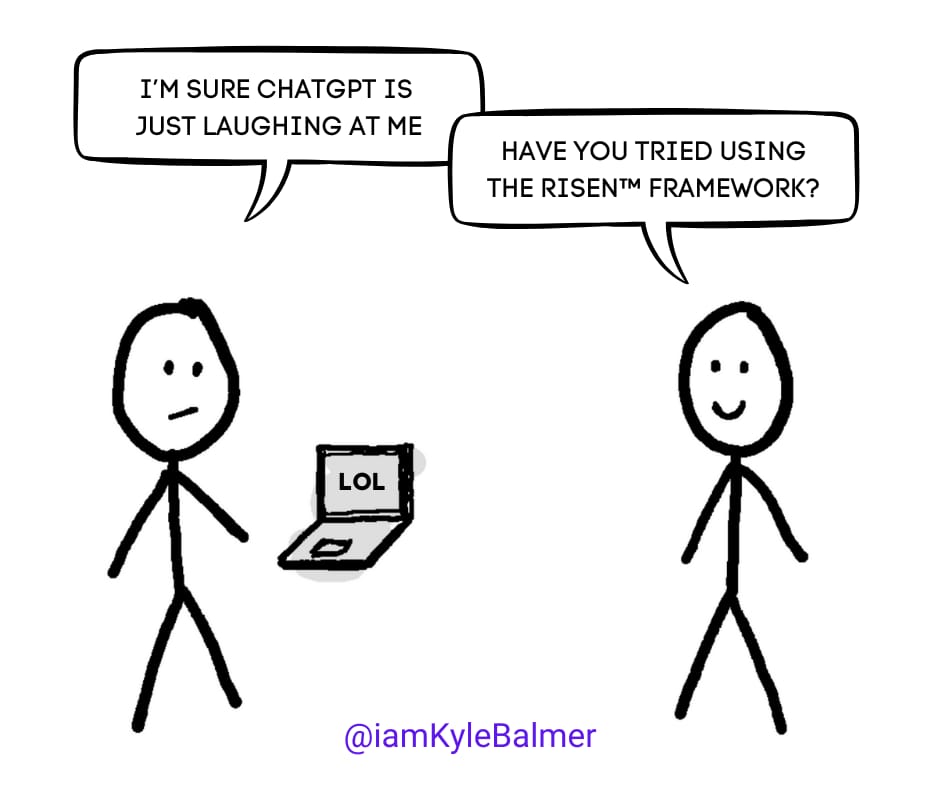
Today, we're going to talk about how you can do the same. Welcome to Part 3 of our Playbook, where we're diving into the art of creating frameworks and intellectual property (IP) that will establish you as a thought leader in your niche.
Let's get started!
Creating Frameworks: Your Path to Thought Leadership
Why frameworks are crucial for AI consultants
The process of crafting your own framework
Turning your framework into valuable IP
Leveraging your framework to build your brand
Think of frameworks as your Bat-Signal in the noisy night sky of the AI world. They're not just fancy diagrams (they can be!) - they're your expertise distilled into something tangible.
Lots more people know the RISEN™ framework than know me. Hell, it’s more memorable than my stupid face!
And that’s fine! Because RISEN™ traces back to me.
A good framework sticks in people's minds like an annoying ear worm song. When your client is lying awake at 3 AM, panicking about their AI strategy, we want it to be your framework they are humming.
Plus, frameworks are time-savers. Once crafted, they're your Swiss Army knife, ready to be adapted for all sorts of client scenarios. You go in, show them your framework and then hang your ongoing work around it as your “system”.
But the real power move? When people start saying, "Let's use the [Your Name] Method," that's the jackpot. Your framework becomes your brand, your ticket to the thought leadership big leagues.
Think:
Eric Ries' "Lean Startup" methodology has become the go-to approach for entrepreneurs and intrapreneurs alike.
The "Blue Ocean Strategy" by W. Chan Kim and Renée Mauborgne has shaped how businesses approach market creation and competition.
Simon Sinek's "Start With Why" framework has transformed how organizations think about leadership and communication.
Basic frameworks that have become the core of their books, businesses and beyond.
Are frameworks a magic bullet? Nah. But are they your secret weapon for standing out and becoming the go-to expert in your niche? Damn straight.
Creating a framework isn't about reinventing the wheel. It's about organising your knowledge and experience in a way that's uniquely valuable to your niche.
Importantly this doesn’t mean it has to be a “prompt engineering” framework like RISEN™. It might be. But it could also be a framework for helping companies in your niche to choose what sort of tasks to apply AI to. Or, indeed, anything valuable for people in your niche!
Here's a process to help you develop your own framework:
Identify the Problem: What's a common challenge in your niche that AI can solve?
Break It Down: What are the key steps or components involved in addressing this challenge?
Create a Structure: Organise these steps into a logical flow. This could be a cycle, a pyramid, a matrix, or any other structure that makes sense for your approach. I personally love acronyms like RISEN™ and BATON (Business, Audience, Tribe, Offer, Network) but you can use other formats.
Name It: Give your framework a catchy, memorable name that resonates with your niche.
Test and Refine: Apply your framework to real-world scenarios and refine it based on feedback and results.
Let's use a prompt to help you start developing your framework:
You are an AI assistant specialised in helping consultants create frameworks for AI implementation in specific industries. Your task is to guide the user in developing a unique framework for their niche. Follow these steps:

1. Ask the user to specify their niche and a common AI-related challenge in that industry.

2. Based on the user's input, suggest 5-7 key components or steps that could form the basis of a framework to address this challenge.

3. Propose 3 different structural approaches for organising these components (e.g., cycle, pyramid, matrix, linear).

4. For each structural approach, provide a brief explanation of how it could work and its potential benefits.

5. Suggest 3-5 catchy names for the framework that incorporate industry-specific language.

6. Outline potential ways to test and refine the framework, including specific metrics or feedback to look for.

7. Propose 3-5 ways the consultant could use this framework in their business (e.g., basis for a workshop, consultation tool, content series).

Remember, the goal is to help the user create a unique, valuable framework that positions them as a thought leader in their niche.
Use this prompt to start developing your framework. Remember, this is just a starting point. The real value comes from refining your framework based on your unique insights and experiences.
As before start to make content around your framework and see how your audience respond. Do more of what they like and less of what they don’t!
Once you've developed your framework, it's time to lock it down as an IP asset and start putting it to work.
Doing so is honestly a business in and of itself. I could (and might!) write a whole course about this. For now here’s a pretty extensive step by step:
Trademark: Check out the local laws on trademarking in your country. Simplest way - ask your AI after the previous prompt and tell it your location.
Create a One-Pager: Distill your framework into a single, visually appealing page. This is your framework's elevator pitch.
Develop a Blog Post Series: Break down each component of your framework into individual blog posts. This helps establish your online presence and SEO.
Design Visual Assets: Create infographics, slides, or other visual representations of your framework. These are shareable and can help your ideas spread.
Use it in Your Social Media: Start sharing insights from your framework on platforms like LinkedIn, Twitter, or TikTok.
Write a Detailed Guide or Ebook: Flesh out each step of your framework into a comprehensive guide. This can be a lead magnet or a paid product.
Produce a Video Series: Create a series of videos explaining each component of your framework in depth. This caters to visual learners and can be hosted on YouTube or your website.
Develop Workshop Materials: Turn your framework into a workshop that you can deliver to clients or at industry events. This starts to position you as an educator in your field.
Offer Framework-Based Consultations: Structure your client engagements around your framework. This ensures consistency in your approach and reinforces your brand.
Build Assessment Tools: Develop questionnaires or interactive tools that help businesses assess where they stand in relation to your framework. This can be a powerful lead generation tool.
Pitch Speaking Engagements: Use your framework as the basis for talks at industry conferences or webinars. This expands your reach and authority.
Write a Book: Expand your framework into a full-fledged book. This is a powerful credibility booster and can open doors to larger opportunities.
Create Online Courses: Develop in-depth courses based on your framework. This can become a significant revenue stream and further establishes your expertise.
License Your Framework: Allow other consultants or companies to use your framework for a fee. This expands your reach and creates passive income.
Develop a Certification Program: Train others in your methodology and offer certification. This not only generates revenue but also creates a network of professionals advocating for your framework.
Build a Software Tool: If applicable, turn your framework into a software tool or app. This can be a major differentiator and revenue generator.
The key is to create multiple touch-points that reinforce your framework and establish it as a valuable methodology in your niche. Each time you do so you’re reinforcing your intellectual property and expertise in the niche.
In the next Part, we'll explore how to use various platforms to share your framework and build your brand. We'll dive into social media strategies, content creation, and the power of building in public.
Keep prompting
Kyle
Remember when I told you about my RISEN™ framework taking off? Well, that was just the beginning. The real magic happened when I decided to take my brand-building efforts to TikTok and embrace the concept of building in public.
I'll be honest, I was skeptical about TikTok at first. Wasn't it just for dance trends and lip-syncing teens? Well yes it is that. But there’s a lot more to it.
Those framework videos we talked about in Part 3? They didn't just go viral; they catapulted my TikTok following to 100k and drove 6 figures of revenue. Suddenly, I had a platform and an audience hungry for AI insights.
But here's where it gets really interesting. I didn't just use TikTok to share polished, finished products. Quite the opposite. I started sharing my journey - the good, the bad, and the ugly. I talked about building my newsletter, the ups and downs of creating and licensing workshops, the revenues (yes, actual numbers), the wins, and yes, even the failures.
The shorthand term for this is “build in public” - sharing your journey as you build a company.
Every milestone, every setback became content. And you know what? People love it. They won’t just be interested in your AI knowledge; they’ll be invested in your journey.
This transparency did more than just grow my following; it built trust. When I launched new products or services, I had an audience that already knew me, trusted me, and wanted to support me. It turned followers into customers and customers into advocates.
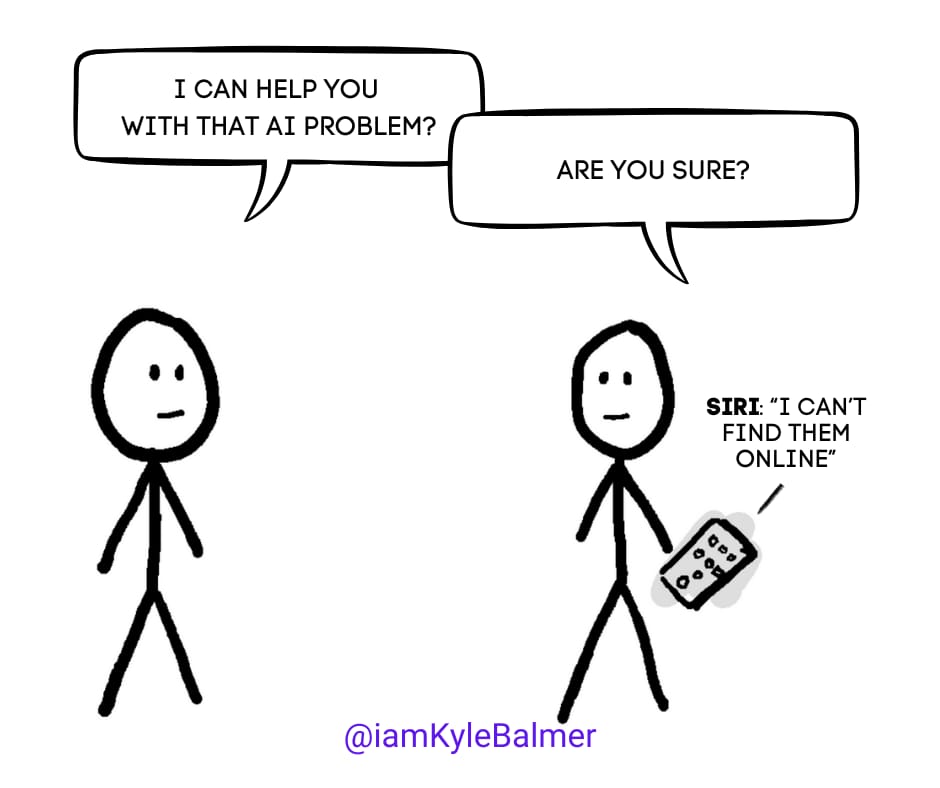
Now, I'm not saying it was always easy. Sharing failures publicly? That's scary. Talking about revenue numbers? That can feel uncomfortable. But the connections and opportunities it created were worth every moment of discomfort.
In this part of the playbook, we're going to dive into how you can leverage social media platforms and the power of building in public to grow your AI consulting brand.
Let’s get started:
Platforms and Public Building: Your Brand's Launchpad
Choosing the right platforms for your AI consulting brand
Crafting content that resonates with your audience
The power of building in public
Balancing professional insights with personal journey
Turning visibility into business growth
Not all platforms are created equal, especially when it comes to AI consulting. Here's a quick rundown of where you might want to focus your efforts:
TikTok: Don't underestimate it. Short, punchy videos explaining AI concepts or sharing quick tips can go viral fast. Also very forgiving for new accounts - you can immediately grow.
LinkedIn: The professional's playground. Great for longer posts, articles, and connecting with potential clients.
Twitter: Perfect for sharing quick insights, engaging in AI discussions, and building a network.
YouTube: Ideal for in-depth tutorials, framework explanations, and thought leadership content.
Instagram / Facebook: far more “popular” based content but can still work with a more B2C audience.
The key? Pick 1-2 to focus on initially. It's better to do a great job on one platform than a mediocre job on five. Personally I’d go with Tiktok and LinkedIn for AI consulting specifically.
I’ve written extensively about the different platforms, which to focus on and how to grow in other Playbooks.
Creating content for these platforms isn't about showing off how much you know about AI. It's about making AI accessible, exciting, and relevant to your audience. Here are some content ideas:
AI Concept Breakdowns: Explain complex AI ideas in simple terms.
Real-World AI Applications: Show how AI is being used in various industries.
AI News Commentary: Offer your take on the latest AI developments.
Behind-the-Scenes Glimpses: Share your process of developing AI solutions.
Q&A Sessions: Answer common questions about AI.
Success Stories: Share case studies of successful AI implementations.
Remember, consistency and volume are key. Set a content schedule and stick to it. And don’t expect to do one content piece a week and grow.
To help you develop a structured content strategy, let's use an AI prompt to generate content pillars based on your customers' problems and your AI expertise:
You are an AI assistant specialising in content strategy for AI consultants. Your task is to help the user create content pillars for their social media and content marketing efforts. Use the following steps:

1. Ask the user to list 3-5 main problems their clients typically face in implementing or understanding AI.

2. Ask their primary platform.

3. Request the user to briefly describe their key areas of AI expertise and any frameworks or methodologies they've developed.

4. Based on the user's input, generate 5-7 content pillars that address both client problems and showcase the user's expertise. Each pillar should:
   a. Have a catchy, memorable name
   b. Address a specific client problem or need
   c. Align with the user's AI expertise
   d. Be broad enough to generate multiple pieces of content

5. For each content pillar, suggest:
   a. 3 potential topics for in-depth articles or videos
   b. 5 ideas for quick tips or short-form content (e.g., tweets, TikTok videos)
   c. A way to incorporate the user's personal journey or "building in public" aspect

6. Propose a content mix strategy, suggesting how often to post about each pillar.

7. Provide ideas for how to repurpose content across different platforms (e.g., turning a long-form article into a series of tweets or TikTok videos).

The goal is to create a content strategy that consistently provides value to the audience while positioning the user as an AI expert and thought leader.Building in public isn't just about sharing your successes. It's about bringing your audience along for the entire journey - warts and all. I’ve built this into the prompt already but here's a quick run down of how to do it effectively:
Share Your Process: Talk about how you develop AI solutions or frameworks.
Be Transparent: Share your revenue numbers, subscriber counts, or client wins. This stuff fascinates people - especially learning about income.
Discuss Challenges: Don't shy away from talking about obstacles you face.
Ask for Input: Involve your audience in decision-making processes. People LOVE to answer questions online.
Celebrate Milestones: Share your achievements, no matter how small.
Learn in Public: Share what you're learning as you grow your AI knowledge.
The goal is to make your audience feel like they're part of your journey, not just spectators.
Basically whilst it's important to showcase your AI expertise, don't forget to let your personality shine through. There are many (sorry!) people in the industry who focus too much on the dry stuff. By adding a little personality you’ll stand out easily.
Share personal anecdotes, your thoughts on the AI industry, or even glimpses of your life outside of work. This helps your audience connect with you as a person, not just an AI expert.
Ready to start building in public? Here's a challenge to kick things off:
Choose one platform (TikTok, LinkedIn, Twitter, etc.).
Commit to posting once a day for the next 30 days.
Mix up your content: ie. 40% educational AI content, 30% behind-the-scenes glimpses, 20% personal insights, 10% soft promotion.
At the end of each week, share a recap of what you've learned, any wins or challenges, and your goals for the next week.
After 30 days, do a public review of your experience, sharing metrics and lessons learned.
This challenge will jumpstart your building-in-public journey and help you establish a consistent online presence.
In the next Part, we'll explore how to expand your reach through networking and leveraging other people's audiences. We'll dive into strategies for getting on podcasts, speaking at events, and collaborating with other AI professionals.
Keep prompting
Kyle
Let me share a game-changing realisation I had on my AI consulting journey: success in this field requires building bridges in two directions.
When I first started, I applied the Dream 100 method I learned from Russell Brunson (more on this shortly!) to the AI community. Primarily on Twitter/X. I connected with fellow AI enthusiasts, researchers, and innovators. The warmth and collaborative spirit I found was unexpected and invaluable. It’s a lovely group.
But here's the kicker: I soon realised that to truly succeed, I needed to apply the same method to my specific industry niche.
As an AI consultant, you're not just part of the AI world; you're the crucial link between AI and your chosen industry.
This dual application of the Dream 100 method - one foot in the AI community and one in your industry niche - is what sets successful AI consultants apart. It's about being the person who can speak fluently about both the latest AI developments and the specific challenges of your industry.
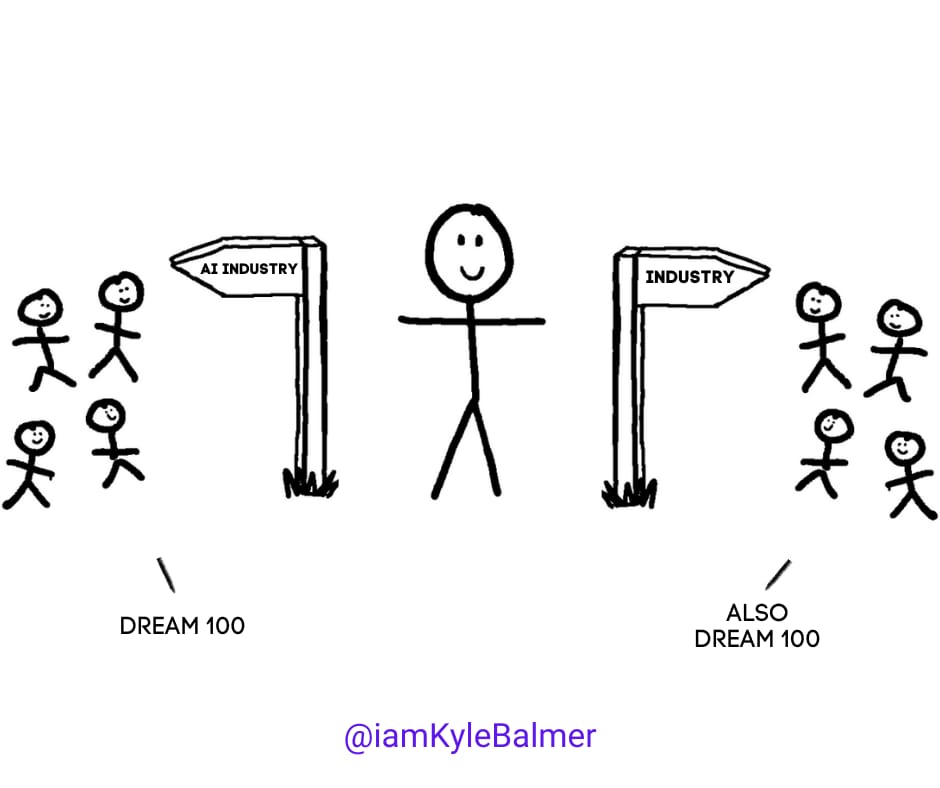
Today, we're going to explore how to master this two-pronged networking strategy using the Dream 100 method. Let's dive in and learn how to become the bridge between AI and your industry.
Let’s get started:
Dual-Direction Networking: Your Path to AI Consulting Success
Understanding the Dream 100 method
The importance of dual-direction networking
Applying Dream 100 to the AI community
Implementing Dream 100 in your industry niche
Strategies for value exchange in both directions
Creating your Dual Dream 100 outreach plan
I personally got the Dream 100 method from Russell Brunson’s Traffic Secrets. It’s a way to systematise your networking efforts.
The Dream 100 method is a strategic approach to networking that focuses on identifying and connecting with the 100 most influential people in your field. The goal is to access their audiences and leverage their influence to grow your own brand.
Here's the basic Dream 100 process:
Identify: Create a list of 100 key influencers in your target area.
Follow: Start following their content across all platforms.
Engage: Consistently interact with their content in meaningful ways. Don’t spam them. Contribute.
Converse: Begin direct conversations through comments or messages. Don’t sell, don’t push. Just talk to them like, you know, a person!
Ask: Once a relationship is established, explore collaboration opportunities. Don’t rush this.
The key is to meet these influencers where they are. This could be Instagram, TikTok, LinkedIn, or even in-person events. Go to them. Don’t expect them to come to you. At least not initially. The platform is less important than your consistent, value-adding presence.
There’s a tweak for you though as an AI expert though - we’ll need to adjust the basic method.
As an AI consultant, your unique value lies in being the bridge between two worlds: the cutting-edge AI community and your specific industry niche. This requires applying the Dream 100 method in two directions:
AI Community Dream 50: This list focuses on AI researchers, innovators, and thought leaders who keep you at the forefront of AI developments.
Industry Niche Dream 50: This list targets leaders, decision-makers, and influencers in your specific industry who need AI expertise.
By mastering both, you position yourself as the go-to expert who can translate AI capabilities into real-world industry solutions.
In the AI world, for example, your Dream 50 might include:
Leading AI researchers
AI creators and influencers
Founders of innovative AI startups
Organisers of major AI conferences
Popular AI bloggers or vloggers
Your goal is to become a recognised part of the AI community, known for your unique industry perspective.
Your industry Dream 50 could include:
C-suite executives of major companies in your industry
Editors of influential industry publications
Hosts of popular industry podcasts
Leaders of industry associations
Renowned consultants in your field
Here, your aim is to be seen as the AI expert that industry leaders turn to for insights and solutions.
And remember the end goal here is audience. We want to build these links so we can access their audiences and leverage our own brand.
But that doesn’t mean this is a one-way exchange! Don’t make this mistake.
What we're after is building genuine, mutually beneficial relationships. Here's the harsh truth: I get 2-3 people a day asking me to promote their AI product. Don't be one of those people.
Approaching someone with your hand out immediately puts you in a subordinate position. You're essentially begging for attention. Instead, your goal should be to prove your worth and build a relationship as equals. Here's how:
Add Genuine Value: Don't just leave generic comments. Provide insightful feedback, share relevant experiences, or offer a unique perspective on their content.
Be Consistent: Show up regularly in their digital spaces. Be a familiar name they see adding value time and time again.
Demonstrate Expertise: Share your own content and insights. The goal is for them to start seeing you as a peer in the field.
Engage in Real Conversations: Move beyond surface-level interactions. Ask thoughtful questions, share relevant anecdotes, and engage in meaningful dialogue.
Be Patient: Building real relationships takes time. Don't rush to "ask" for anything.
When you do reach out for collaboration, frame it as a mutual benefit. For example:
"I've been loving your content on AI ethics. I'm writing a piece on its application in healthcare and would love to feature your perspective. Would you be interested in a quote swap for our respective newsletters?"
"Your recent video on AI in supply chain management was fascinating. I have some unique insights from my work in the automotive industry. Would you be interested in a joint livestream where we could dive deeper into this topic?"
"I noticed you often discuss AI startups. I'm connecting with some exciting founders in the AI for sustainability space. Would you be interested in some introductions for potential podcast guests?"
Remember, the goal is to give far more than you take. By consistently providing value and engaging as a peer, you'll naturally build relationships that lead to organic collaborations and mutual growth.
This approach takes more time and effort than simply asking for a shoutout. But the relationships you build will be far more valuable. You're not just looking for a quick promotion; you're becoming part of a community of peers who support and elevate each other.
Let's use an AI prompt to help you create a structured outreach plan for both the AI community and your industry niche:
You are an AI assistant specialising in networking and outreach strategies for AI consultants. Your task is to help the user create a Dual Dream 100 outreach plan, targeting BOTH the AI community and their specific industry niche. Follow these steps:

1. Ask the user to specify their industry niche and their area of focus within AI.

2. Create two separate Dream 50 lists:
   a. AI Community Dream 50
   b. Industry Niche Dream 50

3. For each list, create a template spreadsheet with columns:
   a. Name
   b. Category (e.g., researcher, executive, blogger)
   c. Main Platform/Channel
   d. Audience Size
   e. Relevant Topics
   f. Outreach Status (Followed, Engaged, Conversing, Asked)
   g. Notes

4. Provide a suggested breakdown of different categories to include in each Dream 50 list.

5. Suggest 5 specific engagement ideas for the AI Community list and 5 for the Industry Niche list, tailored to the user's focus.

6. Provide tips for balancing efforts between the two lists and leveraging connections in one list to build relationships in the other.

7. Suggest metrics to track the success of this dual networking strategy.

The goal is to create a structured, actionable plan for the user to build meaningful connections in both the AI community and their industry niche, positioning them as a valuable bridge between the two.
Use this prompt to generate your Dual Dream 100 strategy.
Importantly it’ll create a spreadsheet - get that into Notion, Google Sheet, print it off or do whatever you need to to make it accessible. Actually doing it is the main thing! You don’t need a fancy system. Just… start talking to people!
This approach will help you build a network that not only keeps you at the cutting edge of AI but also deeply connected to the real-world needs of your industry.
Ready to put this into action?
Here's your challenge: for the next 90 days to work through your entire Dual Dream 100:
Week 1: Use the prompt to create your Dual Dream 100 list (50 AI community, 50 industry niche).
Weeks 2-4: Follow all 100 people across their main platforms. Aim to follow about 5 people from each list every day.
Weeks 5-8: Engage meaningfully with at least 3 people from each list daily. By the end of week 8, you should have engaged with everyone on your lists at least once.
Weeks 9-12: Initiate deeper conversations with 2 people from each list every week. This could be through comments, DMs, or email, depending on the platform and person.
Week 13: Review your progress. Identify the 10 most promising connections from each list (20 total) for potential collaboration.
Throughout: Keep a log of your interactions, noting any particular interests, projects, or needs each person mentions.
By Day 90: Aim to have proposed mutually beneficial collaboration ideas to at least 5 people from each list (10 total).
Remember, as an AI consultant, your superpower is being the bridge between AI innovation and industry application. So make sure to balance your networking!
Phew! Lots covered. Over the last 5 Parts we’ve talked about:
Finding your AI consulting niche
Communicating complex AI concepts effectively
Creating frameworks and IP
Building in public
Mastering dual-direction networking with the Dream 100 method
These elements combine to create your unique AI consulting brand. You're now positioned as the essential bridge between AI innovation and your industry's needs.
Remember, this is just the beginning. Keep refining your niche, improving your communication, developing your IP, sharing your journey, and expanding your network. The AI field is constantly evolving, and so should you.
Keep prompting.
Kyle
Welcome to '🤩 Building your AI Expert Brand | AI Business Playbook', your ultimate guide to becoming a sought-after AI consultant. In a world where businesses are racing to harness the power of AI, your expertise can bridge the gap between cutting-edge technology and real-world applications. This Playbook is designed to equip you with the knowledge and strategies to carve out your niche, communicate effectively, and dominate the AI consulting landscape. By the end of this journey, you'll not only understand AI but also how to leverage it for business transformation and personal brand elevation.
This Playbook is tailored for aspiring AI consultants, business coaches, and entrepreneurs looking to establish themselves as thought leaders in the AI space. If you've ever felt overwhelmed by the rapid advancement of AI or uncertain about how to position yourself in this emerging market, this Playbook is perfect for you. It addresses the common challenges faced by individuals who want to capitalize on AI but lack the clarity and direction to do so effectively.
No prior AI experience is necessary! This Playbook is designed for anyone eager to learn how to incorporate AI into their consulting practice, regardless of their technical background.
The Playbook is structured to be flexible; you can progress at your own pace. We recommend dedicating at least a few hours each week to get the most out of the exercises and insights provided.
We've included comprehensive exercises and prompts to guide you through the niche-finding process, ensuring you can identify your unique value proposition with ease.
Absolutely! Even if you have AI knowledge, this Playbook will help you refine your consulting approach, enhance your personal brand, and expand your client base.
While the Playbook is self-contained, it offers resources and strategies for building a community and networking, which can lead to ongoing support and collaboration opportunities.