
AI Building
Are you ready to dive into the world of AI app development and transform your entrepreneurial journey?
Start ReadingNow, before you start thinking I'm some sort of business prodigy, let me break it down for you:
2 were very successful and eventually sold (cha-ching!)
3 paid the bills and kept me out of the 9-5 grind (woot woot!)
But here's the kicker: 25+ crashed and burned, died on the branch, or failed to launch.
The vast majority fail.
You might be thinking, "Kyle, mate, that sounds like a lot of failure." And you know what? You're absolutely right.
But here's the thing – it's all part of the game. Each of those 'failures' was a stepping stone, a lesson learned, a notch in my entrepreneurial belt.
What we’re covering in this Playbook is how we can rapidly ideate and deploy AI apps for fun and profit. The name of the game is speed and movement - so we’ll cover a process for getting from 0 to 1 ASAP.
Prefer to listen? Here’s the topic being discussed in podcast format:
Let’s get started:
Speed and volume
The power of speed and volume in AI app development
Why your first idea (probably) won't work (and why that's okay)
Leveraging your existing knowledge and skills
Idea generation strategies
Market size and potential revenue estimation
Right now there’s a mad opportunity in deploying AI apps for businesses.
Here AI is enabling us to solve problems for businesses and individuals in ways we never could before. And the best part? You don't need to be a tech wizard to get in on the action. The barrier to entry has never been lower.
Think about it – we're at a point where non-technical people (yes, you too) can create powerful, problem-solving tools with minimal coding knowledge. The learning curve for building AI apps is probably the lowest it's ever been in the history of software development. Hell, calling it “software development” even is a bit much - sounds too complex.
Here’s a video of an 8 year old building a chatbot in 45 minutes. Worth a watch:
What can an 8-year-old build in 45 minutes with the assistance of AI?
My daughter has been learning to code with @cursor_ai and it's mind-blowing🤯
Here are highlights from her second coding session. In 45 minutes she built a chatbot powered by @CloudflareDev Workers AI 👀
— Ricky (@rickyrobinett)
5:12 PM • Aug 19, 2024
And the methods we’ll cover are actually even less “techie” than this…
But (and it's a big but), being able to build something cool isn't enough! And the falling barriers to entry actually make this worse - if anyone can build then there’s more competition and noise.
I've seen countless brilliant tools languish in obscurity because their creators didn't know how to get them in front of the right people. Go on any AI tool directory and you are basically exploring a graveyard.
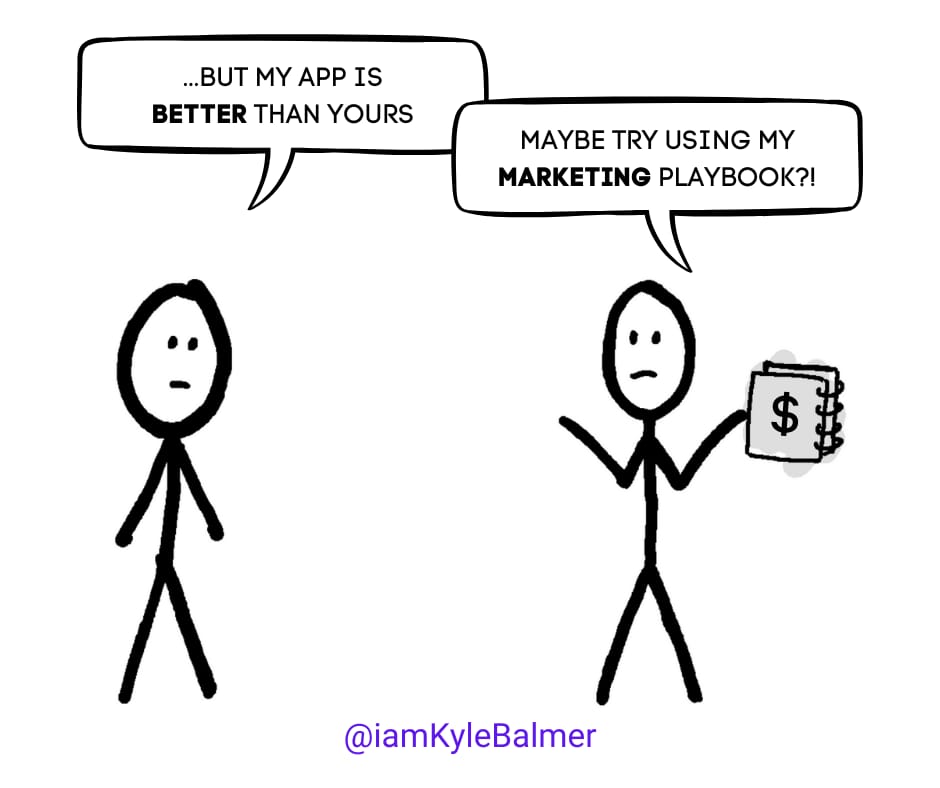
On the flip side, I've seen simple apps absolutely explode because their creators nailed the marketing aspect.
This is where most guides fall short. They'll teach you how to build an AI app, sure. But then they leave you hanging when it comes to actually marketing the thing.
That's why this Playbook is different. We're not just going to cover the 'how' of building AI apps – we're going to actually sell the damn thing.
What does the market actually want? Who are we building this for? How do we get it in front of them?
We'll walk through the entire process:
Identifying market needs
Building based on those requirements
Taking your creation to market effectively
My goal? To give you a comprehensive framework that covers both building AND marketing. Because let's face it – a brilliant app that no one knows about is just a really cool personal project. We're here to build businesses, not hobbies.
In the world of entrepreneurship generally and AI apps specifically, speed and volume are your best friends. Think of each app idea as an experiment. Your job isn't to get it right the first time (spoiler alert: you probably won't). Your job is to keep the momentum going.
Could you launch a new idea every month? Every week, even? It might sound bonkers, but that's exactly the mindset we're aiming for. Because here's the truth – you cannot predict which idea will be the winner. Only the market can tell you that.
So our job is simple: build, ship, evaluate. Then do it all over again. Rinse and repeat.
"But Kyle," I hear you say, "what if it takes 12 attempts and over a year before I hit gold?"
To which I say: brilliant!
Because that one hit can be life-changing. It can be the thing that pulls you out of the 9-to-5 grind and into the world of true entrepreneurial freedom. Yes, it'll take work. But put in the effort, and I promise you, your life will change.
Now, let's talk about where to begin. The temptation is to look for the next big, revolutionary idea. But here's a pro tip: start with what you know.
Are you a marketer by day? A teacher? A plumber? Whatever your background, you've got a goldmine of industry knowledge just waiting to be tapped. The key is to identify problems within that market. Talk to people in your field. Interview them. You've already got a foot in the door – use it!
Hell, if you're still in the 9-to-5 grind, start by making something useful for YOU right now. If you're having an issue in your day job, chances are everyone else with a similar role is too. There's your market, served up on a silver platter!
Let's use a bit of AI magic to help spark some ideas. Here's a prompt you can use:
You are an AI specialising in business innovation. Based on the following information about me, generate 5 marketable AI tool ideas:

My background: [Your professional background]
Skills: [Your key skills]
Industry: [Your industry]
Problems I see: [List 2-3 time-consuming, repetitive, or leverageable issues in your field]

For each idea, identify a potential market and calculate rough potential revenue.
Go ahead and run this prompt, filling in your own details. We’ll be refining from here over the course of the Playbook - this is primarily to get us facing in the correct direction.
Over the next four Parts of this Playbook, we're going to take one of these ideas and run with it. Here's a sneak peek at what's coming:
Part 2: We'll refine your idea, focusing on the power of doing one thing exceptionally well. Ever heard the phrase "riches in the niches"? That. But, you know, practical.
Part 3: Time to validate. We'll explore strategies to ensure there's a market for your idea before you write a single line of code.
Part 4: Building time. We'll look at different approaches to bringing your AI app to life, from no-code solutions to custom builds.
Part 5: Launch. We'll cover pricing, sales pages, and how to get that all-important first sale.
Remember, the goal isn't to build the perfect AI app on your first try. It's to start building, start learning, and start moving. Because in the world of AI entrepreneurship, momentum is everything.
Homework for now: Run that idea generation prompt at least three times. Play with different aspects of your background and skills. Then, pick the idea that excites you the most – that's what we'll be working with for the rest of the week.
And before you go. This Playbook is the outline of a potential AI app building/marketing business programme I’m potentially making (in collaboration with an expert builder). We’re gauging interest and working out the format. If you’d like to do something like this please drop your details so we can gauge interest. Form here thanks!
You are currently on the free plan or trial.
The email you just read is only Part 1 of a 5.
Every week I write an AI Business and Entrepreneurship series to help you:
Start a business using AI
Grow your existing business using AI
Up-skill and use AI for your career progression
But, when you upgrade, you don’t just get the premium email newsletter…
You also get : AI business courses, private community, and instant access to 40+ AI Business Playbooks.
(Price increase after 200 members).
If you feel this is not for you — Unsubscribe here.
Keep Prompting,
Kyle
Let me let you in on a little secret. In all my time consulting with folks building AI apps and assistants, I've noticed something fascinating. Want to know how I solve about 90% of the problems that come my way? With one simple question:
"What is the scope?"
That's it. Four words.
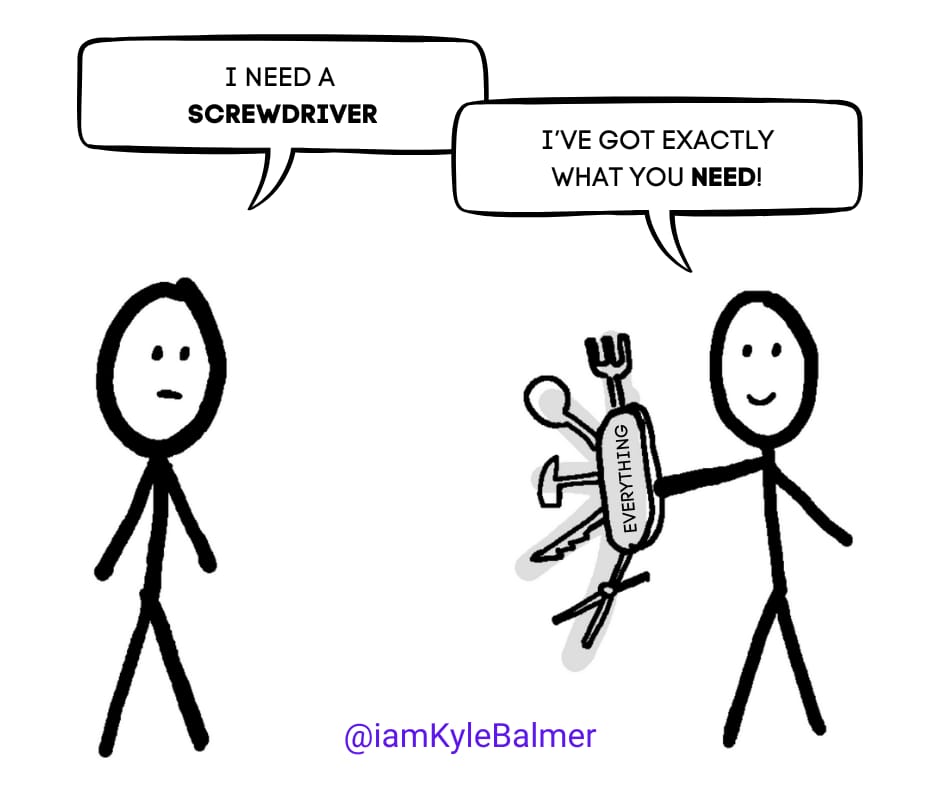
More often than not, when people come to me with their AI projects in shambles, it's because they've tried to boil the ocean. They're building the AI equivalent of a Swiss Army knife when all they really need is one really sharp blade.
We’re going to avoid this mistake by starting out with simplicity in mind.
Here’s the podcast version:
Let’s get started:
Razor Sharp
Resisting the temptation to over-complicate
The riches in the niches: Peter Thiel's "Zero to One" concept
Narrowing down your idea
Analysing ideas for marketability and complexity
Here's the thing: AI is powerful. Real powerful. It can do an awful lot. And it's tempting to want to do it all. After all, these models are incredibly powerful, right? Surely we should leverage them to solve ALL THE PROBLEMS!

But here's a little secret I've learned the hard way: the most successful AI apps aren't the ones that do everything. They're the ones that do one thing exceptionally well.
Think about it. When was the last time you used a Swiss Army knife to do anything other than open a bottle? Exactly.
Now, when was the last time you used a specialised tool that made a specific task infinitely easier? I bet it was much more recently.
Same for our AI app. We want to focus it all the way down to ONE thing. This is going to help us with both parts of our business: marketing and building.
I’m drawing in part from Peter Thiel's book "Zero to One" here. While Thiel's book covers a lot of ground, there's one idea that's particularly relevant to us: the power of monopoly through specialization.
Thiel argues that the most successful companies don't try to compete in crowded markets. Instead, they create their own markets by doing one thing so well that they essentially have no competition. In the context of AI apps, this doesn't mean you need to invent a new form of artificial intelligence. It means finding a specific, underserved niche and solving their problem better than anyone else could even dream of.
Think about it like this: would you rather be a small fish in a big pond, or the only fish in a small pond that you've made uniquely yours?
Now, let's dive into why this laser-focused approach works so brilliantly for AI apps specifically.
When you're focused on solving one specific problem, it's easier to train your AI model effectively. You're not trying to boil the ocean; you're just trying to make the perfect cup of tea. This focused approach allows you to really dive deep into the nuances of your specific problem domain.
For example, let's say you're building an AI app to help copywriters generate headlines. By focusing solely on headline generation, you can train your model on thousands of successful headlines, understand the subtle differences between headlines for different industries, and even account for trends in headline effectiveness over time. This level of specialisation is simply not possible if you're trying to build a general-purpose writing tool.
"So, what does your app do?"
If you can't answer this question in one simple sentence, you're in trouble.
One of the beautiful things about a highly focused AI app is that it's incredibly easy to explain - and sell.
Imagine you're at a networking event. In one corner, there's someone talking about their "AI-powered productivity suite with 57 features to revolutionise your workflow." (Swiss Army Knife). In the other corner, there's you, saying, "My AI app writes email subject lines that double open rates."
Who do you think is going to get more interested leads?
When your app does one thing exceptionally well, your marketing message becomes crystal clear. You're not selling features; you're selling a specific, tangible outcome. And that's waaaaay easier for potential customers to grok and want to buy.
Here's a counterintuitive truth: specialized tools often command higher prices than general-purpose tools. Why? Because when you solve a specific problem really well, you become indispensable.
Let's go back to our headline-generating AI. If you're a copywriter or a marketing agency, how much would you pay for a tool that consistently helps you write headlines that perform 50% better than what you could come up with on your own? Probably quite a bit, right?
Now, how much would you pay for a general "AI writing tool" that does a so-so job at everything from headlines to blog posts to product descriptions? Probably not as much. And right now the AI market is flooded with this sort of “suite”.
When you try to build an AI app that does everything, you're competing with tech giants (Microsoft) and well-funded startups (ie. Jasper). It's an uphill battle from day one.
But when you narrow your focus to a specific niche, suddenly the playing field changes. You're no longer competing with other AI tools. Instead, you're competing with the old, manual ways of doing things in your chosen niche. Massive, hard to overestimate, difference. Hell, this is probably the most important takeaway this week.
By solving a specific problem really well, you can quickly establish yourself as the go-to solution in your niche. You become the expert, the specialist, the one that everyone in that niche recommends to each other.
And here's the kicker: once you've dominated one niche, you can expand to related niches. You're not stuck in your small pond forever. But by starting focused, you give yourself the best chance of success right out of the gate. Capiche?
So, how do we take the ideas we generated in Part 1 and refine them into laser-focused tools? Let's use an AI prompt to help us out. Use this below our work from before:
You are an AI specialising in product development and market analysis. Based on my AI app idea, help me refine it into a highly specific tool with one primary input and output. Then, analyse the refined idea for marketability and complexity.

Please provide:
1. A refined, highly specific version of the tool
2. The primary input and output
3. A brief user experience flow
4. A simple backend process flow
5. Analysis of marketability (scale of 1-10, with reasoning)
6. Analysis of complexity (scale of 1-10, with reasoning)

If multiple ideas are presented run this process for each idea.
Run this prompt for each of your top ideas from Part 1. You can run all the ideas at the same time but ideally one at a time (so the AI can focus on ONE idea - there’s that focus again). The goal is to distill each idea down to its essence - the one thing it can do better than anything else out there.
Once you've run the prompt for your top ideas, it's time to analyse the results. Remember, we're looking for high marketability and low complexity. This combination gives us the best chance of creating a successful AI app quickly.
Look for ideas that score 7 or higher on marketability and 5 or lower on complexity. These are your golden tickets - ideas that solve a real problem (high marketability) but won't require years of development (low complexity).
If none of your ideas hit this sweet spot, don't worry! S’all good.
Go back to the drawing board, generate a few more ideas using the prompt from Part 1, and run them through this refinement process. Remember, this is all about iteration and learning. And it’s much better to chop and change ideas at this stage before we start building.
In Part 3, we're going to take your refined idea and put it to the test in the real world. We'll explore validation strategies to ensure there's a real market for your AI app before you invest time and resources into building it.
Keep Prompting,
Kyle
Picture this: you're at an AI event in London, surrounded by brilliant minds and cutting-edge technology. The energy is electric, the possibilities seem endless. But as you chat with these tech wizards, a sobering reality starts to emerge.
You see, a great builder does not a great business make.
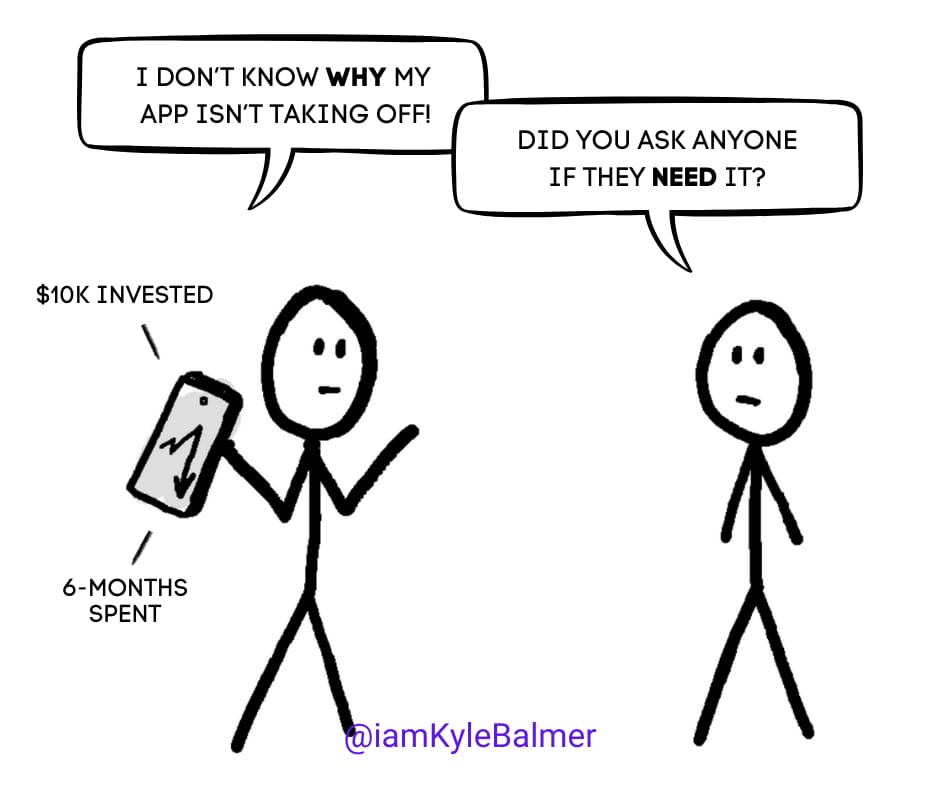
Time and time again, I've seen fantastic teams with mind-blowing AI tools, but there's one tiny problem - no sales. Nada. Zilch. 没有钱 (˚ ˃̣̣̥⌓˂̣̣̥ ).
And it's not just at events. Hop onto any AI directory or Product Hunt, and you'll find yourself scrolling through a graveyard of dead products. Tools that someone poured their heart, soul, and (probably!) a fair bit of cash into, only to have them languish in obscurity.
Hell, maybe you've been there yourself. I know I have. It's a tough pill to swallow, but in today's world, "build it and they will come" is about as outdated as a flip phone. And less likely to have an ironic comeback…
If this is all hitting a bit too close to home and you’re annoyed with me right now…that should tell you something! This will be an important Part for you.
The hard truth is this: with AI making tool creation easier than ever, we're drowning in a sea of products. And it’ll get worse.
But don't worry, today we're looking at how to avoid this fate. We're going to look at into validation - the step that separates the AI apps that thrive from those that dive. It rhymes so it must be true.
Here’s the podcast version:
Let’s get started:
Seeking validation
The importance of validation in the AI app development process
Identifying existing solutions as market confirmation
Strategies for customer interviews and market research
Leveraging your audience for validation
Unique validation techniques for AI apps
Before we dive in, let's get one thing straight: validation isn't just a nice-to-have step in your AI app journey. It's the difference between building something people want and building something that collects digital dust.
It’s a topic covered in lots of startup books and courses that everyone agrees is a good idea. And then they plunge straight into the fun building part instead.
Think of validation as your reality check. It's your chance to test your assumptions, refine your idea, and make sure you're solving a problem people actually care about - all before you invest significant time and resources into development.
You might spend MORE time validating than actually building your first version. And that’s fine. That’s not wasted time or procrastination. That’s ensuring what you build is worthwhile.
Here's a counterintuitive truth: if you find similar non-AI tools to your idea, that's actually a good thing. Why? Because it confirms there's a market out there. People are already looking for solutions to this problem.
Market risk is waaaay worse than competition risk. We can outmanoeuvre competition. We can’t outmanoeuvre a market not existing.
Your job isn't to create a market from scratch (that's a whole different ballgame and you need DEEP pockets). Your job is to bring AI superpowers to an existing market. Think of it this way: you're not trying to convince people they need a car. You're offering them a faster, more efficient car when they're already in the market for one.
Thankfully this is now trivial using AI.
An example. But you have to promise not to laugh at me.
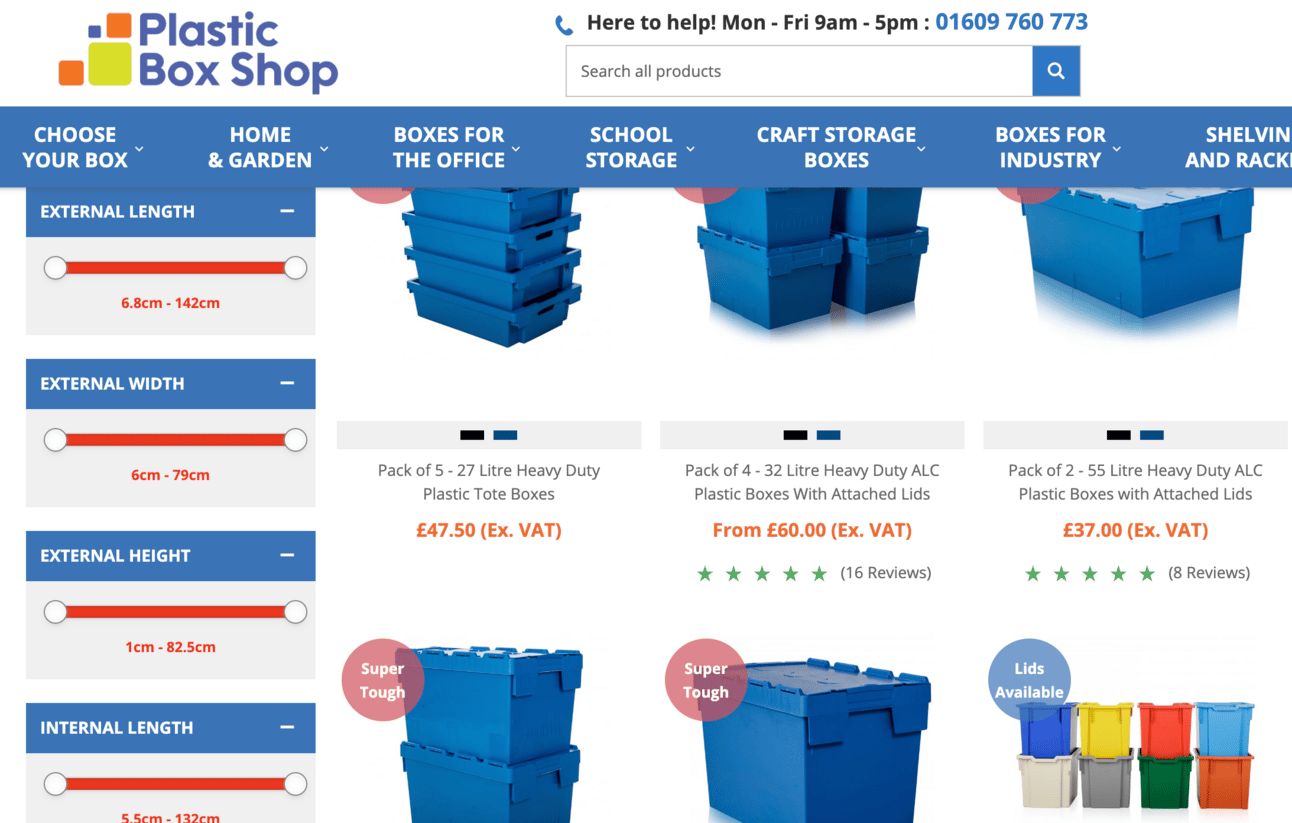
The other day I was looking to buy some plastic boxes for storage. I went to the (aptly named) PlasticBoxShop.co.uk website:
Here’s the thing.
I want a plastic box that is a certain size to fit in a certain space.
Sounds trivial right?
NOPE. Absolute nightmare of a task to do via any of the shops that sell boxes. I’m faffing around with multiple sliders. Eventually I had to do maths to convert dimensions in centimetres into volume in litres.
All to find a bloody box that fits nicely under a kitchen cabinet.
OK what about this then:
collect up all the boxes and their specifications on this site (and other sites if you’re feeling funky)
chuck them into an AI as data
build a tool that suggests the best boxes based on your dimensions
EASY. Like…I almost scraped and built this just to find my kitchen boxes I kid you not.
That’s an AI solution to an existing problem that has previously been solved using no AI.
Fix that and you can:
make a tool that affiliates to different box shops for a cut
sell the tool to an existing box shop for a few thousand
set up your own box drop-shipping store
Lots of options. Just by taking an existing problem and applying a bit of AI to solve it.
So, do your homework. Look for existing solutions that could be instantly improved with a pinch of AI. If people are already using the crappy non-AI solution they’ll bite your hand off for a better experience.
Also: if anyone wants to run with the plastic box tool above be my guest. I’ll tell you for nowt that I want that problem fixed! 😁
Finding existing solutions is passive validation.
Now, here's where the rubber meets the road: active validation.
You need to talk to real, live humans. I know, I know - as tech enthusiasts, sometimes we'd rather talk to our AI models than actual people. But trust me, this step is crucial. Sorry!
Aim to book 10-20 calls with potential customers. These aren't sales calls - they're learning opportunities. Your goal is to understand their problems, their current solutions, and what they're looking for.
Here are some key questions to ask:
What's the biggest challenge you face when it comes to [problem your app solves]?
How are you currently solving this problem?
What do you like about your current solution? What do you wish was better?
If you had a magic wand, how would you solve this problem?
How much time/money do you spend on this problem currently?
Remember, your job here is to listen more than you talk. You're gathering intelligence, not pitching a product.
Listen to their problems and (just as importantly!) the language they use to describe their problems.
Now, most of you won’t actually do this. I know this. But it’s one of the biggest differentiators of who will be successful. Sorry to be brutal but pulling your finger out here will exponentially increase success.
If you've been following previous Playbooks you've already started building an audience. Now's the time to leverage it.
Create posts asking for feedback on your idea. Run polls. Ask the "Is this a stupid idea?" question (you'd be surprised how honest people are when you frame it this way + your ego isn’t threatened when everyone agrees it’s dumb!).
The goal here is to get as much feedback as possible. And remember, silence is also feedback. If you put your idea out there and hear crickets, that's valuable information - they DGAF! 😭
To help you navigate this process, I've created a validation checklist. Use this AI prompt to generate a customised checklist for your specific idea:
You are an AI specialising in market validation for AI applications. Based on the previous AI app idea, create a comprehensive validation checklist. The checklist should progress from easy to implement tasks to more complex ones, acting as a red, orange, green light system for proceeding with development.

If no app idea was given previously prompt the user.

Please include:
1. At least 10 validation tasks, ranging from market research to customer interviews
2. Specific metrics or goals for each task (e.g., "Interview at least 15 potential users")
3. A scoring system to determine whether to proceed, pivot, or abandon the idea
4. Suggestions for pivoting if certain checkpoints aren't met
Run this prompt with your refined idea from Part 2. The resulting checklist will guide you through the validation process, helping you make data-driven decisions about your AI app's viability.
But you actually need to do the work here.
Remember, every "no" you hear during validation is saving you countless hours and dollars down the line. Embrace the nos and keep asking until you are hearing “tell me more”.
Related Playbooks: Business Fundamentals, Audience Fundamentals, Social Media Launch Strategy, Tiktokification of Social Media, Cohort Momentum Method, Starting a Business with No Money, Building an AI team with ChatGPT, Building a Team with Claude Projects and More…
Upgrade Today and get them ALL.
Premium readers find them in the Vault!
Keep Prompting,
Kyle
Let me take you back to my first rodeo in the app world. Picture this: wide-eyed enthusiasm, a head full of ideas, and absolutely no clue what I was doing.
I did it all wrong. I mean, spectacularly wrong.
I dreamt up this complex, all-singing, all-dancing app. Hired a team and threw money at them.
The problem? I wasn't a project manager. I wasn't a coder. Hell, I barely knew what I was asking for half the time.
The result? A whole lot of nothing for my trouble. Well, nothing except an empty wallet and a bruised ego.
It was a harsh lesson, but an important one. And you know what? It was entirely my fault. I overcomplicated things, bit off way more than I could chew, and paid the price. I wanted something complex but wasn’t able to handle that complexity.
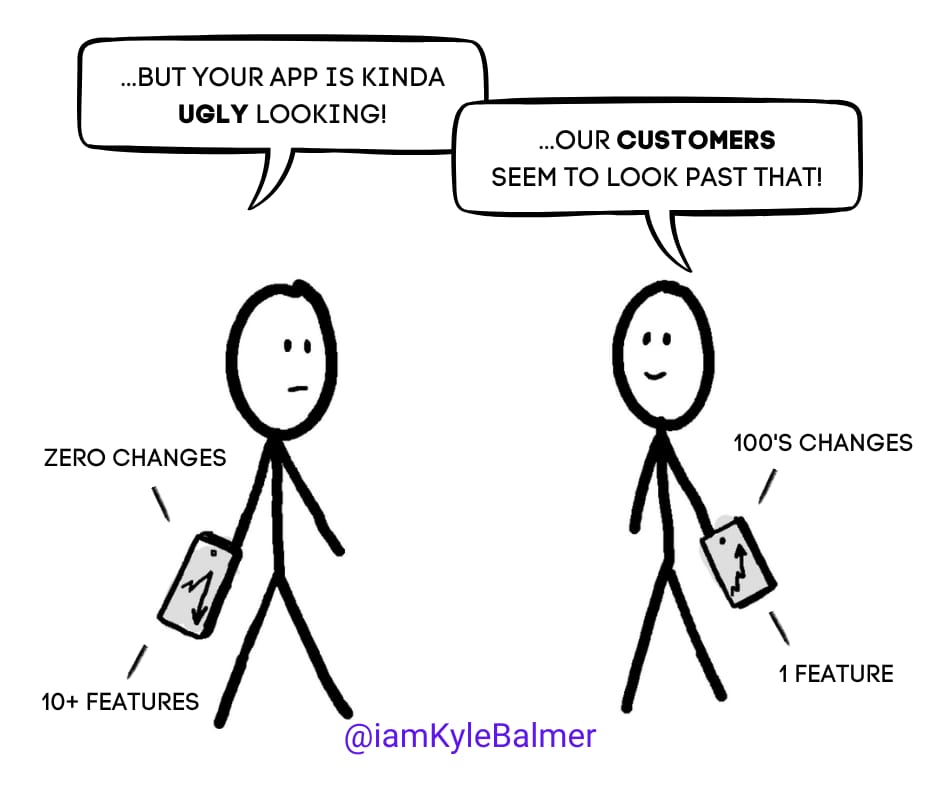
Let’s help you avoid making the same mistake.
Let’s get started:
Brick by Brick
The importance of starting simple
Options for AI app development: Custom GPT, no-code tools, traditional coding
Choosing the right approach based on your skills and resources
MVP (Minimum Viable Product) development strategies
Balancing features with speed to market
After my initial debacle, I learned a crucial lesson: when it comes to building apps, simpler is almost always better. Here's why:
Faster Time to Market: The sooner you get your app out there, the sooner you can start getting real user feedback. And remember what you think isn’t important. Only the market can tell you what’s up.
Lower Costs: Simplicity means less development time, which translates to lower costs. Which means you can deploy more ideas for the same cost.
Easier to Pivot: If you need to change direction (and trust me, you will), it's much easier to do so with a simpler app. Bigger ships, wider turning and all that.
Focused Value Proposition: A simple app that does one thing well is often more appealing to users than a complex app that does many things adequately. It’ll be 1000% easier to sell.
Here’s a Reddit post I literally saw today of someone who appears to be making ALL the mistakes:
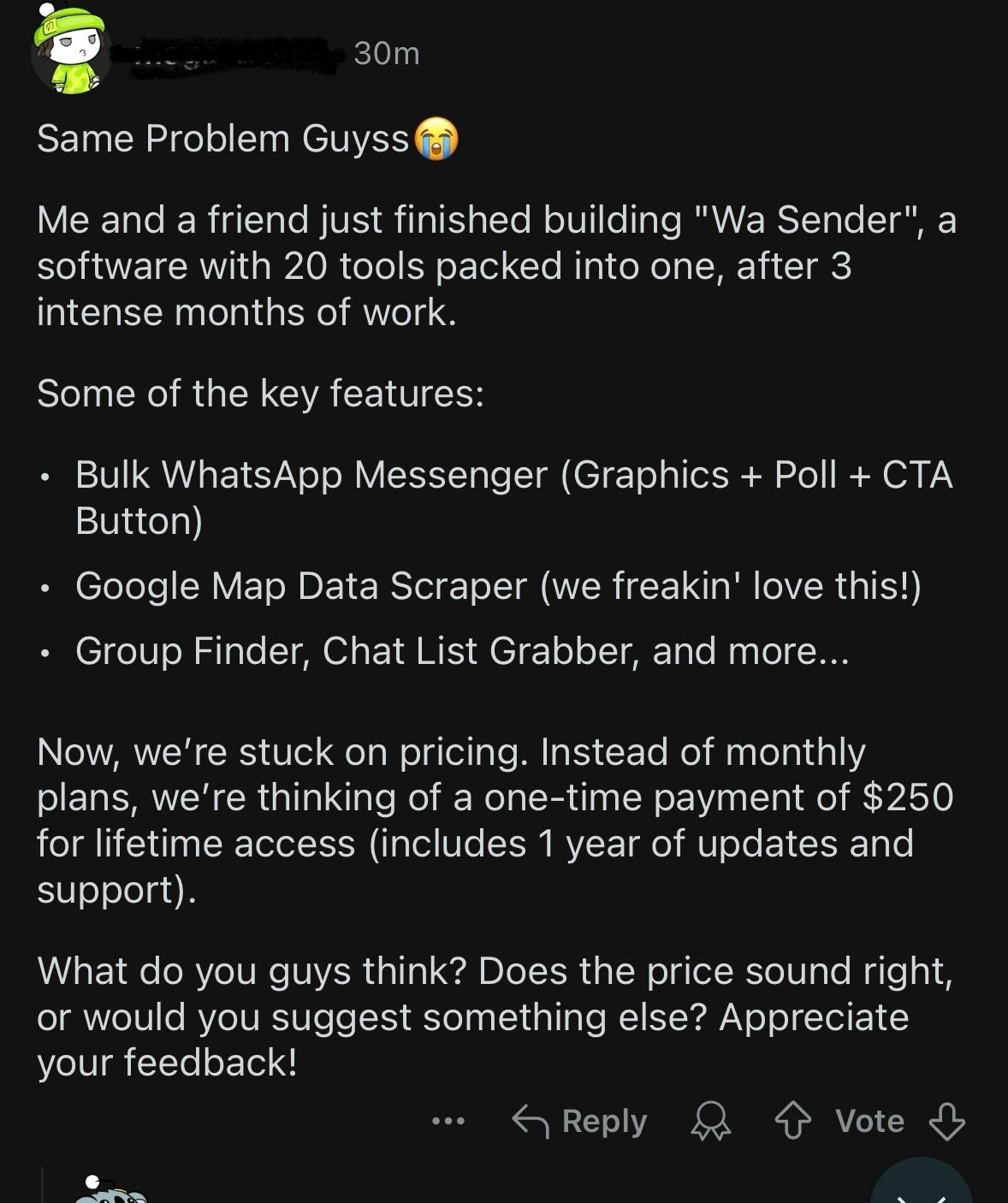
I wish them all the best of luck and hope I’m wrong. But this to looks like an overstuffed app that will be a pain to market. Simple first!
Let’s talk options for actually building this thing. Depending on your skills, resources, and the complexity of your app, you've got a few routes:
Custom GPT: If your app is primarily based on language models, you might be able to create a prototype using ChatGPT's custom GPT feature. This is great for testing concepts but has limitations for full-fledged apps. Also you can’t monetise or collect emails so this is purely for testing.
SaaS tools*: Platforms like Launch Lemonade let you very quickly deploy a prototype by stringing together your own prompts, running multiple models, having a central database for you files and more. This would actually be my #1 suggestion for getting starting.
No-Code Tools: Platforms like Bubble or Adalo allow you to build fully functional apps without writing code. They're fantastic for MVPs and can even scale to full products in many cases. There is certainly a learning curve though - they aren’t plug and play tools where you can whip something up in a weekend (unless you are already tech savvy).
Low-Code Platforms: Tools like Retool or Appsmith offer a middle ground, allowing you to build apps with minimal coding. Cursor and Replit (AI tools for coding sort of fit here - they are hard to classify honestly!)
Traditional Development: If your app requires complex integrations or custom algorithms, you might need to go the traditional route with frameworks like Flask (Python) or React (JavaScript).
So, how do you decide which route to take? Let's use an AI prompt to help you out:
You are an AI specialising in software development strategies. Based on the given AI app idea and developer profile, recommend the most suitable development approach. Consider factors like technical complexity, time to market, and resource requirements.

AI App Idea: see prior inputs and if no app idea present prompt the user.

Developer Profile:
- Coding Skills: [None/Basic/Intermediate/Advanced]
- Available Time: [Part-time/Full-time]
- Budget: [Low/Medium/High]
- Desired Time to Market: [ASAP/Within 3 months/6+ months]

Please provide:
1. Recommended development approach (Custom GPT, No-Code, Low-Code, or Traditional) - give specific tools to look at as well.
2. Rationale for the recommendation
3. High-level steps to get started
4. Potential challenges and how to mitigate them
5. Estimated timeline and resource requirements
Run this prompt with your specific details. The output will give you a (high level) tailored roadmap for your app development journey.
Regardless of which path you choose, your goal should be to build a Minimum Viable Product (MVP). This is the simplest version of your app that delivers value to users.
Do not overcomplicate!
Here are some key principles for MVP development:
Focus on Core Functionality: Identify the ONE key problem your app solves and build just that. Everything else comes later.
Embrace "Good Enough": Your MVP doesn't need to be perfect. It needs to be functional and valuable and that’s it for now.
Plan for Feedback: Build in ways to collect user feedback from day one. This could be as simple as a feedback form or as sophisticated as usage analytics, heatmapping etc.
Iterate Quickly: Plan to release updates frequently based on user feedback.
One of the biggest challenges in app development is deciding what features to include in your MVP. Here's a quick exercise to help you prioritise:
List all the features you think your app needs.
Now, cut that list in half.
Look at what's left and cut it in half again.
Alright you know the drill - cut it in half again.
What remains are your essential features. Ideally it’s ONE thing. Start with this.
Remember, every feature you add increases development time and complexity. Be absolutely ruthless in your prioritisation.
In our final Part, we'll talk about launching your AI app. We'll cover pricing strategies, creating a compelling sales page, and setting up your initial marketing efforts.
Remember, your first version doesn't need to be perfect. It needs to exist.
Better » Done.
Get something out there, and let your users guide you from there.
Related Playbooks: Business Fundamentals, Audience Fundamentals, Social Media Launch Strategy, Tiktokification of Social Media, Cohort Momentum Method, Starting a Business with No Money, Building an AI team with ChatGPT, Building a Team with Claude Projects and More…
Upgrade Today and get them ALL.
Premium readers find them in the Vault!
Keep Prompting,
Kyle
This is a topic near and dear to my heart because this past year I've been in launch mode. I mean, seriously in launch mode.
I'm talking about 8 different offers sent out into the wild. That's a lot of late nights, a lot of coffee (waaay too much), and a whole lot of nail-biting anticipation.
Want to know how many of those 8 launches really took off?
One.
Yep, just one. But here's the kicker - that one 6 figure success has made all the difference. It's kept the lights on, paid the bills and put in place foundations for a 7-figure business.
What did we do after hitting pay-dirt? We did it again. Same offer, same launch. Same result. And we’re about to do it again (but even bigger).
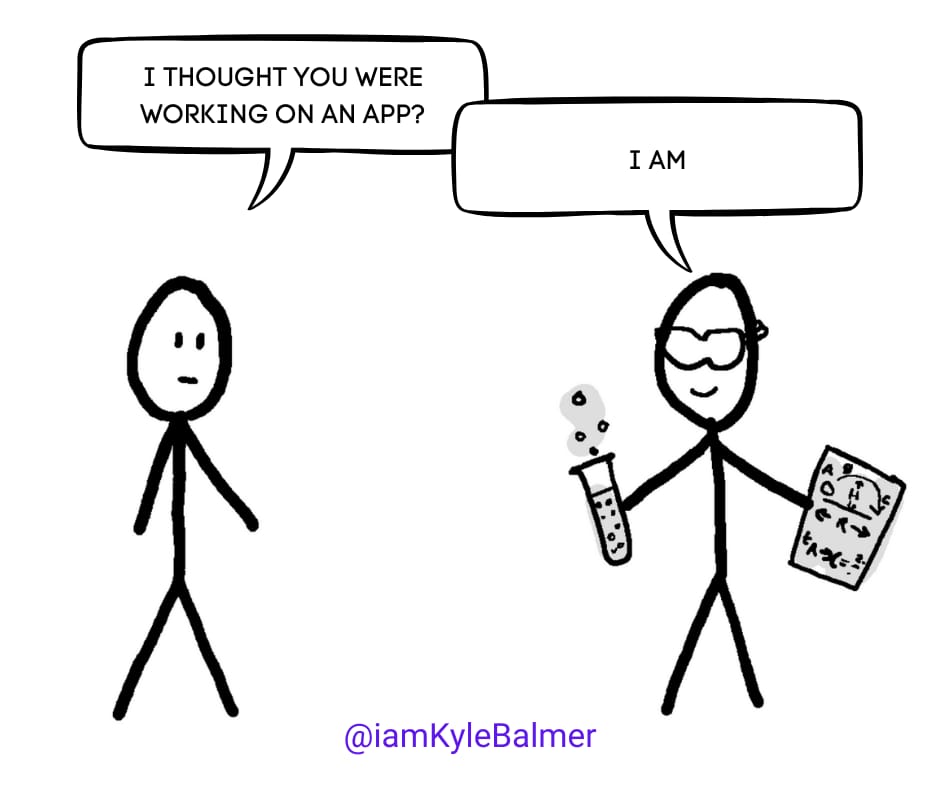
I'm on a mission to turn this launch process into a science. And today, we're going to apply everything I've learned to launching your AI app.
Podcast version of today’s topic:
Let’s get started:
First Launch
The launch mindset
The power of simplicity in your offer
Pricing for validation, not revenue
Creating a compelling sales page
Setting up a seamless checkout process
Post-launch strategies and scaling plans
I’ve covered launches (and will continue to cover them as it’s a big topic for me at the moment) in other Playbooks. Make sure to refer to them for greater detail.
First things first: launching isn't just about flipping a switch and hoping for the best. It's a strategic process that starts long before your app goes live. Here's the mindset we need to adopt:
Every launch is an experiment
Simplicity above all
Launches are not for revenue
The launch is just the beginning
First things first: launching isn't just about flipping a switch and hoping Elon Musk tweets (sorry, xeets) about you. It's an experiment, plain and simple. You're not failing; you're collecting intel.
Think of yourself as a scientist, but instead of mixing chemicals, you're mixing features, pricing, and marketing messages. Some experiments will fizzle out. Others might explode in your face. But every now and then, you'll create something magical.
The key is to embrace this experimental mindset. Don't get too attached to any one idea or approach. Kill your darlings as needed. And for the love of all that is holy, measure everything. That data is your new best friend. Treat it better than your cat (who doesn’t like you that much anyway… 😘 )
Now, let me share a crucial lesson I learned the hard way: when it comes to your initial launch, K.I.S.S. - Keep It Simple, Sexy. That’s what it means right…?
You know what kills more launches than anything else? Complexity. It's kryptonite. You start with a simple idea, and before you know it, you're trying to build the next operating system.
Stick to one clear offer. One pricing tier. One key feature that solves one specific problem. It's not about building the perfect product. It's about getting something out there that people can actually use and give you feedback on.
Remember, you can always add more later. But if you never launch because you're trying to make it perfect, well, you've already failed.
This one upsets people.
Here's a counterintuitive truth: your launch is not about making money.
I know, I know, we're all in this to get rich and buy a yacht or whatever. But that comes later.
Your launch is about validation. It's about proving that people will actually open their wallets for your solution.
Let me tell you a quick story. Back in the day, I won a Lean Startup Machine contest in New York City with a team run by Jen Du. Here she is looking fabulous with the product devised during the competition that she went on to make:

Want to know why we won? We were the only team who got people to hand over cold, hard cash. How much? A whopping $4 per customer.
Now, $4 might sound like chump change. But you know what? It's infinitely more than $0. It was proof that people valued our solution enough to pay for it.
Embrace this with your first launch - the goal isn’t retirement. You're trying to prove that your idea has legs.
Last but not least, remember this: the launch is the starting pistol. The real race begins after you hit that publish button.
Too many founders think launching is the finish line. They throw a launch party, pop some champagne, and then wonder why they're not millionaires by morning.
The truth is, launching is when the real work starts. That's when you start getting real feedback from real users. That's when you discover all the things you got wrong (and trust me, there will be many. It’s part of it). That's when you start iterating, improving, and really building something valuable.
So don't think of your launch as the end of the journey. Think of it as the beginning of a whole new adventure.
Now, let's get into the nitty-gritty of pricing and selling this puppy.
Pricing is an art and science all of its own. I took a whole damn class on it during my MBA. It was more interesting than you’d think! For your purposes right now here are some pointers and a prompt:
Keep it Simple: One clear offer, one clear price. No options for now.
Make it Affordable: Lower the barrier to entry. Remember, we're optimising for number of paying customers, not revenue per customer, in our first launch. More customers, more data.
Offer a One-Time Payment: This reduces commitment and makes it easier for people to say yes. I know I know I know that Monthly Recurring Revenue is the holy grail for indie builders but good god subscriptions are much harder to sell.
Here's a prompt to help you decide on your initial pricing:
You are an AI specialising in pricing strategies for product validation. Based on the following AI app description, recommend a simple, one-time payment pricing strategy for initial launch. The goal is to maximise the number of paying customers for validation purposes, not to maximise revenue.

AI App Description: [Insert your app description]

Target Market: [Describe your ideal customer]

Please provide:
1. Recommended one-time price point
2. Rationale for the recommendation
3. Suggestions for presenting this as a special launch offer
4. Ideas for future pricing evolution after validation
Pricing is really an art. It’s something myself and Harminder (my business partner) spend an inordinate amount of time discussing. So if blocked shoot us an email or join a live session one day.
Your sales page is your 24/7 salesperson. It needs to clearly communicate your app's value proposition and convince visitors to become customers. Here's what you need to focus on:
Start with a compelling headline that clearly states the main benefit of your app. This is your first impression, so make it count. Follow it up with a problem statement that resonates with your target audience. You want them nodding along, thinking "Yes, that's exactly what I'm struggling with!"
Next, dive into your solution. Explain how your app solves the problem, but don't get bogged down in technical details. Focus on benefits, not features. Remember, people don't buy products; they buy better versions of themselves.
Social proof is crucial. Include testimonials, case studies, or user stats if you have them. If you're just starting out, consider getting quotes from beta testers or industry experts who've reviewed your app.
When it comes to pricing, keep it simple and clear. Display your one-time price prominently, and if you're offering a special launch discount, make sure that's front and centre.
Address common questions or objections in an FAQ section. This can help overcome last-minute hesitations that might prevent someone from buying.
Finally, end with a strong call to action. Make it crystal clear what you want visitors to do next, whether that's "Buy Now," "Start Your Free Trial," or "Get Early Access."
How long? Lower the price the shorter the page. We’re aiming for a lower ticket first launch therefore shorter rather than long-form page!
Here's a prompt to help you draft your sales page copy:
You are an AI copywriter specialising in SaaS sales pages. Based on the following AI app description and target market, create compelling copy for a sales page. The goal is to drive initial sales for validation, with a focus on a simple, one-time payment offer.

AI App Description: [Insert your app description]

Target Market: [Describe your ideal customer]

Key Features: [List 3-5 key features]

Price Point: [Your chosen one-time price]

Please provide:
1. An attention-grabbing headline
2. An opening paragraph that states the problem and hints at the solution
3. 3-5 benefit-driven feature descriptions (build upon user inputted features)
4. A section highlighting the simplicity and value of the offerRemember, the launch is just the beginning. Once you've made your first sale - and only then - should you start thinking about what comes next. It's tempting to get ahead of yourself, to start planning for world domination before you've even made your first dollar. But trust me, that's a recipe for disappointment and wasted energy.
Instead, in those crucial early days after launch, your focus should be laser-targeted on two things: listening and iterating. Set up channels for users to provide feedback and monitor them. Every comment, every complaint, every bit of praise is gold dust. This is real-world data that you simply can't get any other way.
But let's say you've done it. You've got paying customers. They're happy. You're starting to see consistent sales. Now what?
Take a moment to celebrate. Seriously. You've done something amazing. You've created value out of thin air and convinced someone to pay for it. That's huge.
I forget to do this. Our last 6 figure launch I “treated myself” to a set of graphic novels worth $75. You don’t need to blow all the cash but make sure to get yourself something nice or go for a nice meal.
After this? Well…that’s a whole different kettle of fish. I’ll cover scaling in another Playbook - only relevant after that first $1!!
Keep Prompting,
Kyle
Are you ready to dive into the world of AI app development and transform your entrepreneurial journey? The '📱 Building Profitable AI Apps | AI Business Playbook' is your ultimate guide to rapidly ideating, building, and marketing AI applications that not only solve real problems but also generate profit. This playbook reveals the secrets behind successful launches, the art of simplicity, and the critical importance of speed and volume in app development. With actionable insights and proven strategies, you’ll learn how to turn your ideas into viable businesses in no time.
This playbook is designed for aspiring entrepreneurs, marketers, and tech enthusiasts who are eager to tap into the burgeoning field of AI app development. If you're tired of the 9-5 grind and looking for a way to leverage your existing skills to build a profitable business, this playbook is perfect for you. It addresses the common challenges faced by non-technical founders, providing a clear roadmap to navigate the complexities of building and marketing AI applications.
No! This playbook is designed for non-technical individuals, providing simple methods to create AI apps without extensive coding knowledge.
Results can vary, but the playbook encourages a mindset of rapid experimentation, allowing you to launch and iterate quickly.
Absolutely! Whether you're a beginner or have some experience, this playbook will guide you through the essential steps of building and marketing AI apps.
This playbook offers strategies to start small and build your project alongside your current job, ensuring you can transition smoothly.
While the playbook is self-contained, it encourages readers to engage with the community for ongoing support and feedback.