📝 Wikipedia's Field Guide to Spotting AI Writing: The Complete Tell List
TL;DR
- •Wikipedia lists signs to identify AI-generated writing.
- •Common AI writing clues include overused phrases and emphasis on importance.
- •Marketers can use this knowledge to refine AI-generated content.
With AI writing tools becoming increasingly prevalent, the ability to differentiate between human-written and AI-generated content is crucial. Wikipedia has taken the initiative to catalog indicators that can help identify AI writing, a step that reflects the growing concern about the authenticity of online content. As more entrepreneurs and marketers leverage AI for content creation, understanding these indicators can help maintain credibility and ensure quality in their communications.
The rise of AI writing tools has led to a surge of submissions and drafts that often lack the nuance of human writing. Wikipedia's guide not only serves as a useful resource for detecting AI-generated content but also highlights the importance of preserving the integrity of information across platforms. For entrepreneurs and businesses, recognizing these signs can be critical in maintaining trust with their audience and ensuring that their messaging resonates authentically.
The Key Details
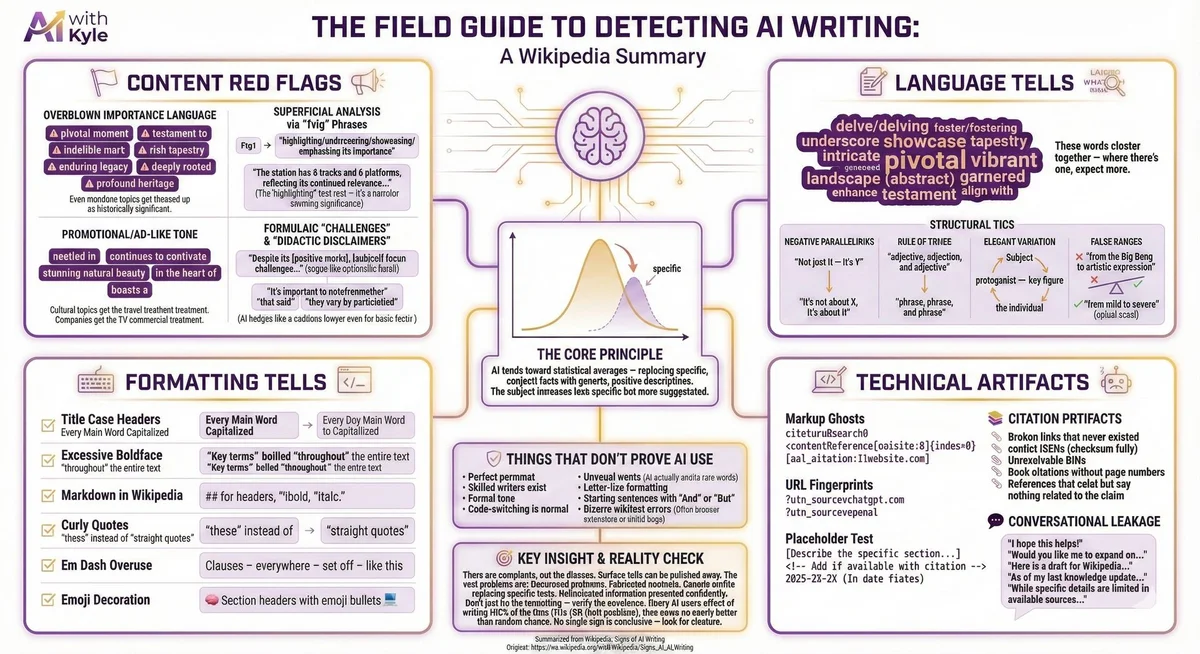
Wikipedia’s comprehensive list of AI writing tells includes various patterns and phrases frequently found in AI-generated content. These indicators serve as red flags that can alert readers and editors to the likelihood of AI involvement. Some of the most notable signs include:
Undue Emphasis on Importance: AI writing often places excessive importance on certain words, describing events or concepts as "pivotal," "crucial," or "revolutionary." This tendency can lead to an exaggerated tone that feels less genuine.
Negative Parallelisms: Phrases like "It's not just X, it's Y" are common in AI-generated text. This construction can make the writing feel formulaic and less engaging.
Overused Vocabulary: AI often relies on a set of favored words or phrases, such as "delve," "tapestry," and "underscores." These terms can make the text feel repetitive and lacking in originality.
These patterns not only help readers identify AI-generated content but can also serve as training material for future AI models. By understanding these tells, AI developers can work to refine their models and mitigate these issues, leading to more human-like writing.
Practical Implications for Entrepreneurs
Understanding the characteristics of AI-generated writing is essential for entrepreneurs who want to ensure the quality of their content. Here’s how you can leverage this information:
Refine Your AI Content
When using AI writing tools, be mindful of the common pitfalls outlined in Wikipedia’s guide. You can instruct your AI to avoid these tells, enhancing the authenticity of the output. By actively refining the content and incorporating a more human touch, you'll create a stronger connection with your audience.
Educate Your Team
If your business relies on AI-generated content, consider sharing Wikipedia’s findings with your team. This knowledge can lead to better editing practices, ensuring that AI outputs are polished and aligned with your brand's voice. Encourage your team to review drafts critically, looking for any signs of AI-generated phrases that may detract from the message.
Stay Ahead of Trends
As AI continues to evolve, keeping an eye on resources like Wikipedia can give you a competitive edge. Being aware of how AI writing is perceived can help you make informed decisions about your content strategy, allowing you to adapt and pivot as necessary.
Expert Insights
As discussed in a recent livestream, the prevalence of AI in content creation has sparked conversations about authenticity and reliability. Many users are unaware that they are encountering AI-generated content, which can lead to a disconnect when they discover the truth. This highlights the importance of transparency in using AI tools; businesses should communicate clearly about their content creation processes.
Moreover, the insights from the livestream emphasize that AI-generated ads, for example, perform better when their origins are unknown. This suggests a broader trend where the effectiveness of AI content hinges on user awareness and perception. As entrepreneurs, understanding these dynamics can help you craft strategies that leverage AI while addressing potential consumer biases.
Conclusion
Wikipedia's catalog of AI writing tells is a valuable tool for entrepreneurs navigating the complex landscape of AI-generated content. By familiarizing yourself with these indicators, you can improve the quality of your writing and maintain authenticity in your communications. As AI technology continues to evolve, staying informed and adaptable will be key to leveraging these tools effectively and ethically in your business.
Key Terms Explained
AI Writing
Content generated by artificial intelligence, often lacking the nuance of human writing.
Wikipedia
An online encyclopedia that allows collaborative editing and is a key resource for identifying AI-generated content.
Negative Parallelism
A rhetorical device where contrasting ideas are presented in parallel structure, often found in AI-generated text.
Overused Vocabulary
Common phrases and words that AI frequently uses, which can make content feel repetitive and less original.
AI Detection
The process of identifying whether a piece of content was generated by artificial intelligence.
Content Authenticity
The quality of being genuine and original, critical for maintaining trust with audiences.
Transparency in AI
What This Means For You
Enhancing Content Quality
For entrepreneurs, understanding the nuances of AI-generated writing can significantly enhance the quality of content produced. By familiarizing yourself with the common signs of AI writing, you can take proactive steps to refine AI-generated outputs, ensuring they resonate better with your audience.
Building Trust
Transparency about AI usage in your content strategy is vital. Consumers appreciate honesty and are more likely to engage with brands that clearly communicate their processes. By being upfront about using AI tools, you can build a stronger rapport with your audience and mitigate any negative perceptions associated with AI-generated content.
Future-Proofing Your Content Strategy
As AI technology continues to advance, staying informed about trends and best practices will be key. Regularly revisiting resources like Wikipedia's guide can help you adapt your content strategies, ensuring they remain relevant and effective in an ever-changing landscape.
Frequently Asked Questions
How can I identify AI-generated content?
Look for common signs like overuse of certain phrases, undue emphasis on importance, and negative parallelisms.
What should I do if my content feels too robotic?
Refine the output by adding personal touches and ensuring it aligns with your brand's voice.
Is it ethical to use AI for content creation?
Yes, but transparency about AI usage is crucial to maintain trust with your audience.
Can AI content affect my brand's reputation?
Yes, if the content feels inauthentic, it can harm your brand's credibility.
How can I train my AI to avoid common pitfalls?
Provide guidelines that include avoiding overused vocabulary and excessive emphasis on symbolism.
Sources & References
Love AI with Kyle?
Make us a Preferred Source on Google and catch more of our coverage in your feeds.