🎭 69% of Workers Use AI Daily But Hide It From Colleagues
TL;DR
- •69% of workers use AI but keep it secret from colleagues.
- •86% say AI saves time, yet 69% feel stigma around its use.
- •Concerns about job security lead to secretive AI use.
Artificial intelligence (AI) is increasingly becoming a part of daily work routines, with nearly 70% of employees using it regularly. However, a recent study from Anthropic reveals a surprising trend: a significant portion of these workers are keeping their AI usage a secret from their colleagues. This behavior stems from fear and stigma surrounding the automation potential of their roles. As entrepreneurs and business leaders, understanding this dynamic is crucial. It highlights both the potential benefits of AI and the challenges that come with its adoption.
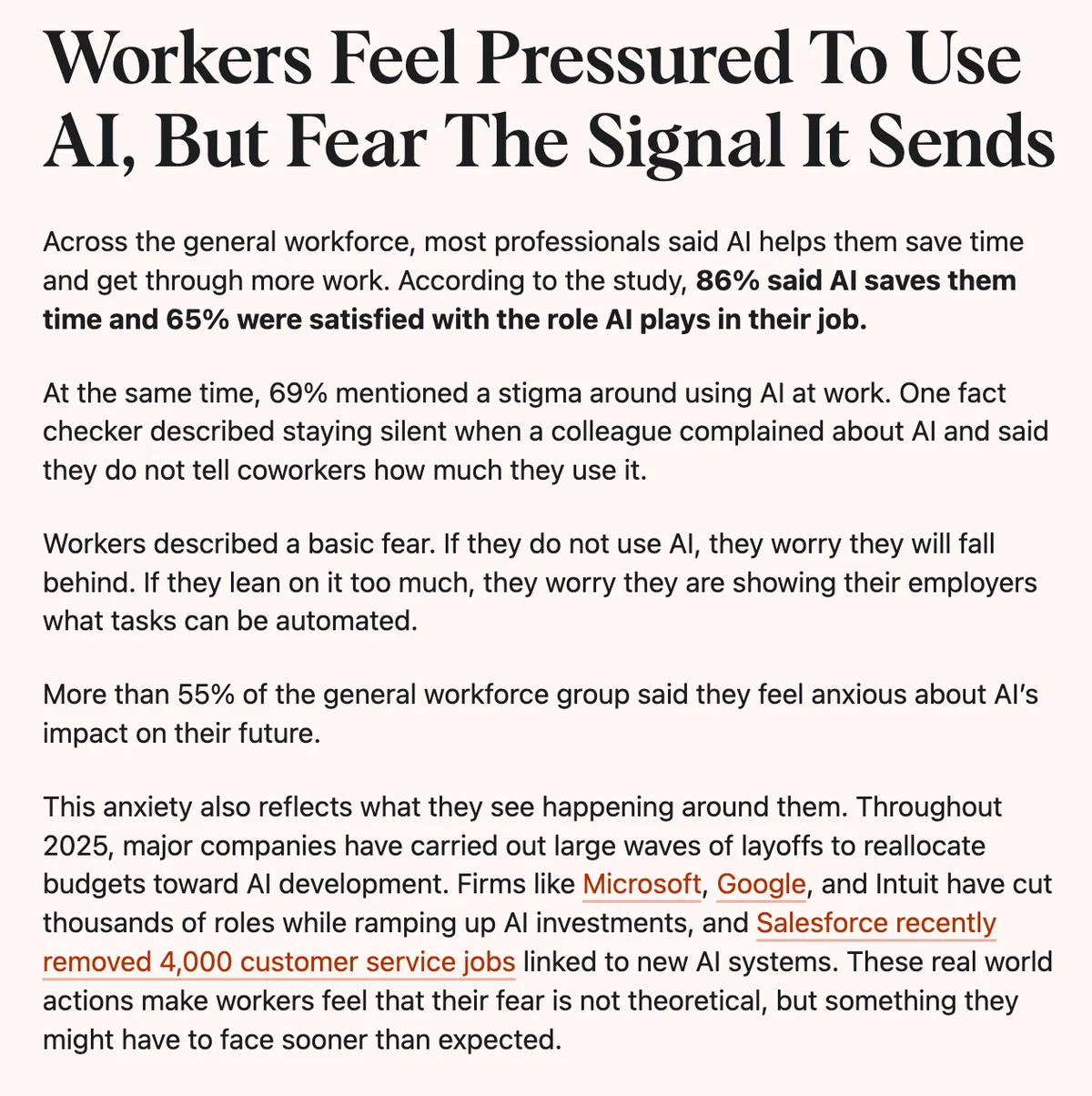
The study reveals that while many employees find AI tools beneficial—86% report that AI saves them time—there's a palpable fear of being seen as replaceable. This fear is not unfounded; as companies leverage AI to improve efficiency, employees worry about their job security. The most pressing question for many is: how do we navigate this evolving landscape where AI can both enhance productivity and threaten job security?
The Key Details
The Anthropic study surveyed 1,250 professionals and found that 69% admitted to using AI tools but chose not to disclose this to their coworkers. Many are concerned that openly using AI could signal to employers that their tasks can be automated. This stigma creates a paradoxical situation where employees are secretly benefiting from AI while simultaneously fearing the implications of its use.
Interestingly, 65% of respondents expressed satisfaction with the role AI plays in their jobs. This satisfaction suggests that, at least for now, employees see AI as a tool that can enhance their work rather than merely a replacement. However, this dual reality—enjoying AI's benefits while fearing its consequences—reflects a significant cultural challenge in the workplace.
Insights from the Study
The findings from this study resonate with what many professionals are experiencing in real-time. In workshops and discussions, a common theme emerges: employees feel pressured to adopt AI to keep pace with colleagues, but they also fear that showcasing their AI usage might expose them to job risk. This creates a reluctance to share insights and best practices about AI applications, ultimately hindering collaborative growth.
As Kyle Balmer noted during a recent livestream discussion, this fear is valid. Companies are collecting data on how employees use AI, which could be utilized for future automation. Thus, employees feel they might be inadvertently training their replacements, which is a serious concern that shouldn't be dismissed lightly.
The Fear of Job Replacement
The fear of being replaced by AI is not just a passing worry; it has become a significant factor influencing how employees engage with this technology. Workers are grappling with the reality that as AI tools become more capable, the nature of their jobs may change drastically or even disappear altogether. This sentiment is particularly pronounced among those in roles that involve repetitive tasks, which are more susceptible to automation.
In the current landscape, where many employees are bound to traditional 9-to-5 jobs, the stakes are high. The old notion of job security is swiftly eroding, and as Kyle pointed out, the traditional employment model is shifting. Workers need to consider developing additional skills or even pursuing entrepreneurial ventures to safeguard their futures.
Practical Steps to Mitigate Fear
To address these fears, companies should foster an environment where employees can openly discuss AI usage without fear of stigma. This can be achieved through workshops and open forums that emphasize the complementary role of AI in enhancing human capabilities rather than replacing them. Furthermore, leaders should reassure their teams that AI is meant to take over mundane tasks, allowing employees to focus on more creative and human-centric responsibilities.
Building Your Own Path
Given the unpredictable nature of job security in the age of AI, many experts suggest that diversifying income sources is essential. If employees can build side hustles or entrepreneurial ventures that leverage their skills, they create a safety net against potential job loss. By using AI effectively within their businesses, they can maintain their relevance in the workforce.
Kyle emphasizes the importance of pursuing personal projects alongside traditional employment. With the resources available, including free courses and community support, entrepreneurs can learn how to integrate AI into their business strategies, ensuring they remain competitive in an ever-evolving market.
Actionable Strategies for Entrepreneurs
Embrace AI Tools: Start integrating AI tools into your daily workflow to improve efficiency. Explore tools that fit your specific industry needs.
Educate and Share: Create a culture of openness about AI usage within your organization. Encourage team members to share their experiences and best practices with AI tools.
Focus on Upskilling: Invest in continuous learning and upskilling to stay relevant. Consider online courses that focus on AI applications relevant to your field.
Diversify Income Streams: Explore side projects or entrepreneurial ventures that can leverage AI to create additional income.
Conclusion
The growing use of AI in the workplace presents both opportunities and challenges. Understanding the dynamics of AI adoption and the fears surrounding it can help entrepreneurs and business leaders create a more supportive environment for their teams. By fostering open discussions and emphasizing the value of human skills, businesses can harness the full potential of AI while alleviating employee concerns about job security.
Further Reading
For more insights on this topic, check out the full study from FinalRoundAI.
Key Terms Explained
Anthropic
A company specializing in AI safety and research, known for developing the Claude AI model.
Claude
A family of AI models developed by Anthropic, designed for conversational tasks and advanced reasoning.
AI Stigma
The social perception that using AI in the workplace could indicate a lack of competence or lead to job insecurity.
Automation
The use of technology to perform tasks without human intervention, which can lead to job displacement concerns.
Entrepreneurial Ventures
Business initiatives undertaken by individuals to create new opportunities and generate income, often involving innovation and risk.
What This Means For You
Navigating the AI Workplace Landscape
The findings from the Anthropic study reveal a critical insight for entrepreneurs: the integration of AI into work culture is not just about technology adoption but also about managing human emotions and perceptions. As AI tools become ubiquitous, fostering a positive relationship with these tools is essential for both employee morale and productivity.
Action Points for Business Leaders
Promote Transparency: Create an environment where employees feel safe discussing their use of AI, reducing the stigma associated with it.
Invest in Training: Provide training sessions that focus on how to effectively incorporate AI into everyday tasks while reinforcing the value of human skills.
Support Innovation: Encourage employees to pursue side projects or entrepreneurial initiatives, leveraging AI to create new value streams.
By taking these proactive steps, businesses can not only enhance productivity but also build a more resilient workforce capable of navigating the challenges posed by AI advancements.
Frequently Asked Questions
What percentage of workers use AI daily?
69% of workers reportedly use AI daily but keep it hidden from their colleagues.
Why do workers hide their AI use?
Many fear that using AI openly could signal to employers that their tasks can be automated.
What can businesses do to address AI stigma?
Encourage open discussions about AI use and emphasize its role as a tool to enhance human capabilities.
How can employees protect their job security in an AI-driven environment?
By diversifying their skills and creating additional income streams, such as side hustles or entrepreneurial ventures.
What are the benefits of using AI in the workplace?
AI can save time, improve efficiency, and allow employees to focus on more creative, human-centric tasks.
Sources & References
Love AI with Kyle?
Make us a Preferred Source on Google and catch more of our coverage in your feeds.