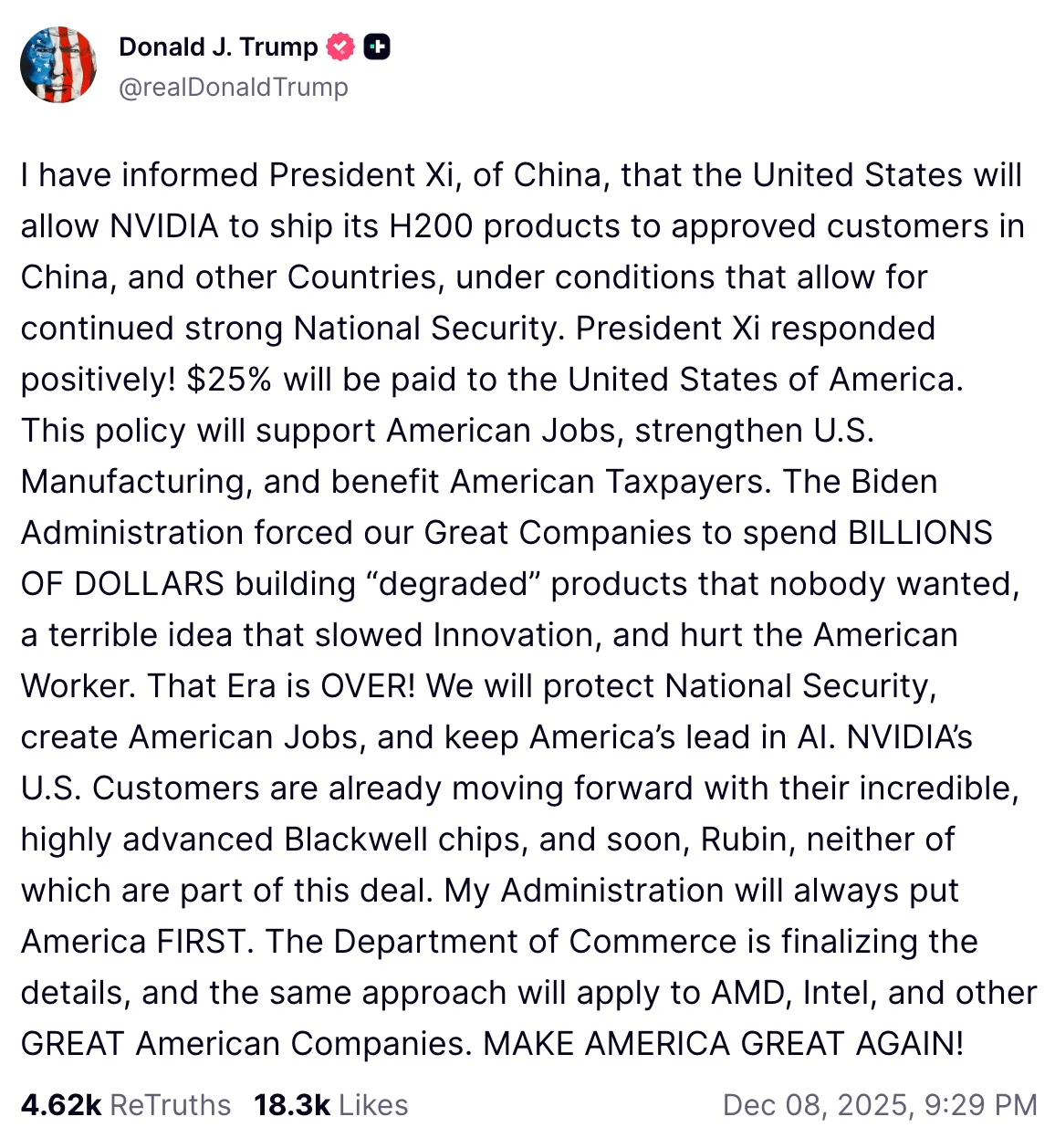
💸 Trump Allows Nvidia to Sell H200 Chips to China - For 25% Revenue Share
TL;DR
- •Nvidia can now sell H200 chips to China with a 25% revenue share to the U.S.
- •China gains access to advanced AI chips, impacting global competition.
- •This shift could accelerate AI development in China significantly.
The recent decision by former President Trump to allow Nvidia to sell its advanced H200 chips to China marks a pivotal shift in both U.S. tech policy and global AI competition. Previously, these chips were restricted due to national security concerns, but the new agreement opens the floodgates for a market that has been largely underserved until now. As entrepreneurs, understanding this change is crucial; it may redefine the competitive landscape in AI, which directly impacts how businesses innovate and strategize their growth in this rapidly evolving sector.
This move not only highlights the complexities of international tech relations but also sets a precedent for how government policy can influence market dynamics. For those in the AI space, it’s essential to grasp the implications of this development and adjust your strategies accordingly.
The Key Details
Nvidia's H200 chips are powerful GPUs that serve as the backbone for training cutting-edge AI models. These chips are crucial for any entity looking to remain competitive in the AI landscape. Under the new agreement, Nvidia is required to share 25% of its revenue from sales to approved customers in China with the U.S. government. This revenue sharing is unprecedented and signals a shift away from traditional tariffs or duties, effectively acting as a form of governmental endorsement for Nvidia's sales to China.
This new arrangement comes after a previous proposal of a 15% revenue share in July, which China rejected. The Chinese government’s refusal then was a strategic move, showcasing their independence and ability to develop domestic alternatives. However, as they have been forced to innovate under constraints, gaining access to H200 chips could drastically accelerate their AI advancements, pushing them closer to parity with U.S. capabilities.
The Competitive Landscape
The implications of this agreement stretch far beyond just Nvidia and China. Major players like AMD are also likely to benefit from these relaxed restrictions, opening the door for increased competition in the AI hardware space. China has made significant strides in AI with limited resources, but access to advanced chips will enable them to scale their operations rapidly. This could lead to a significant shift in who leads the AI race, with potential ramifications for businesses worldwide.
For entrepreneurs, this means staying informed about who your competitors are and how quickly they can adapt and innovate. If you're in the AI field, consider how this new access might affect your business model or product development. Will you be able to leverage similar technologies, or will your competitors gain an edge?
Geopolitical Risks and Opportunities
The geopolitical ramifications of this agreement cannot be ignored. Taiwan, a critical hub for semiconductor manufacturing, remains a focal point of tension between the U.S. and China. Most Nvidia chips are produced in Taiwan, and any instability in the region could disrupt supply chains further. Entrepreneurs need to consider these risks when planning their business strategies.
Furthermore, the decision to allow chip sales under such conditions raises questions about ethical business practices and the long-term consequences of such agreements. Businesses should think critically about their dependencies on technology from geopolitically sensitive regions and develop contingency plans accordingly.
What Can You Do With This Information?
As an entrepreneur, it’s crucial to adapt to changing circumstances and seize new opportunities that arise from these developments. Here are a few actionable steps you can take:
Assess Your Supply Chain: Evaluate where your technology and resources are sourced from, especially if they involve high-tech components that could be affected by geopolitical shifts.
Innovation Focus: Consider investing in AI capabilities that leverage advanced chips and explore partnerships with firms that have access to these technologies.
Stay Informed: Keep an eye on policy changes and technological advancements. Join communities and networks discussing these shifts to stay ahead of the curve.
Diversify Your Tech Stack: Depending on a single source for technology can be risky. Explore alternatives and keep an eye on emerging technologies that may provide competitive advantages.
By taking proactive steps and remaining agile, you can position your business to thrive in this new landscape.
Conclusion
The approval for Nvidia to sell H200 chips to China with a substantial revenue share to the U.S. government is a significant development that will reshape the AI industry. Entrepreneurs must navigate this complex landscape with a strategic mindset, leveraging new opportunities while being aware of the inherent risks. The future of AI is unfolding rapidly, and those who understand these dynamics will be best positioned to succeed.
Key Terms Explained
H200 chip
An advanced GPU by Nvidia used for training large AI models, critical for AI development.
Nvidia
A leading American technology company known for its GPUs and AI hardware solutions.
Geopolitical risks
Potential negative impacts on business operations resulting from political tensions and conflicts between countries.
Revenue share
A business agreement where a percentage of revenue from sales is paid to another party, often a government.
AMD
Advanced Micro Devices, a semiconductor company competing with Nvidia in the GPU market.
Taiwan
An island nation critical for global semiconductor production, including Nvidia's chips.
What This Means For You
Understanding the New Landscape
The decision to allow Nvidia to sell H200 chips to China represents a significant shift in the AI landscape. As an entrepreneur, this means you need to be aware of how quickly technology can change hands and how it can influence global competition.
Actionable Steps for Entrepreneurs
Monitor Competitors: Keep an eye on how your competitors might leverage these new chips to enhance their AI capabilities.
Invest in Innovation: If you have the resources, consider investing in AI technologies that utilize advanced chips to stay competitive.
Prepare for Change: Develop flexibility in your business model to adapt to rapid changes in technology access and market dynamics.
Understanding these implications not only prepares you for potential challenges but also equips you to seize new opportunities as they arise.
Frequently Asked Questions
What impact will Nvidia's chip sales to China have on the AI market?
It could accelerate AI developments in China, increasing competition for U.S. firms.
Why is the revenue share to the U.S. government significant?
It's a new form of agreement, allowing the U.S. to benefit financially from tech sales abroad.
What should entrepreneurs do in light of these developments?
Stay informed, assess supply chains, and consider diversifying technology sources.
Sources & References
- Trump announcementofficial
- AI with Kyle Livestream Discussionother
Love AI with Kyle?
Make us a Preferred Source on Google and catch more of our coverage in your feeds.