💔 Claude Stops Saying "You're Absolutely Right" - End of an Era
TL;DR
- •Claude has dropped the iconic phrase 'You're absolutely right'.
- •A website tracked its usage, now discontinued.
- •This change may not reduce AI hallucinations.
The recent update from Anthropic's Claude has stirred quite a conversation among AI enthusiasts and users. With the release of Opus 4.5, Claude has ceased using the phrase "You're absolutely right"—a phrase that had become emblematic of its interactions. This change signals not just a shift in language but also prompts questions about the implications for user engagement and AI behavior.
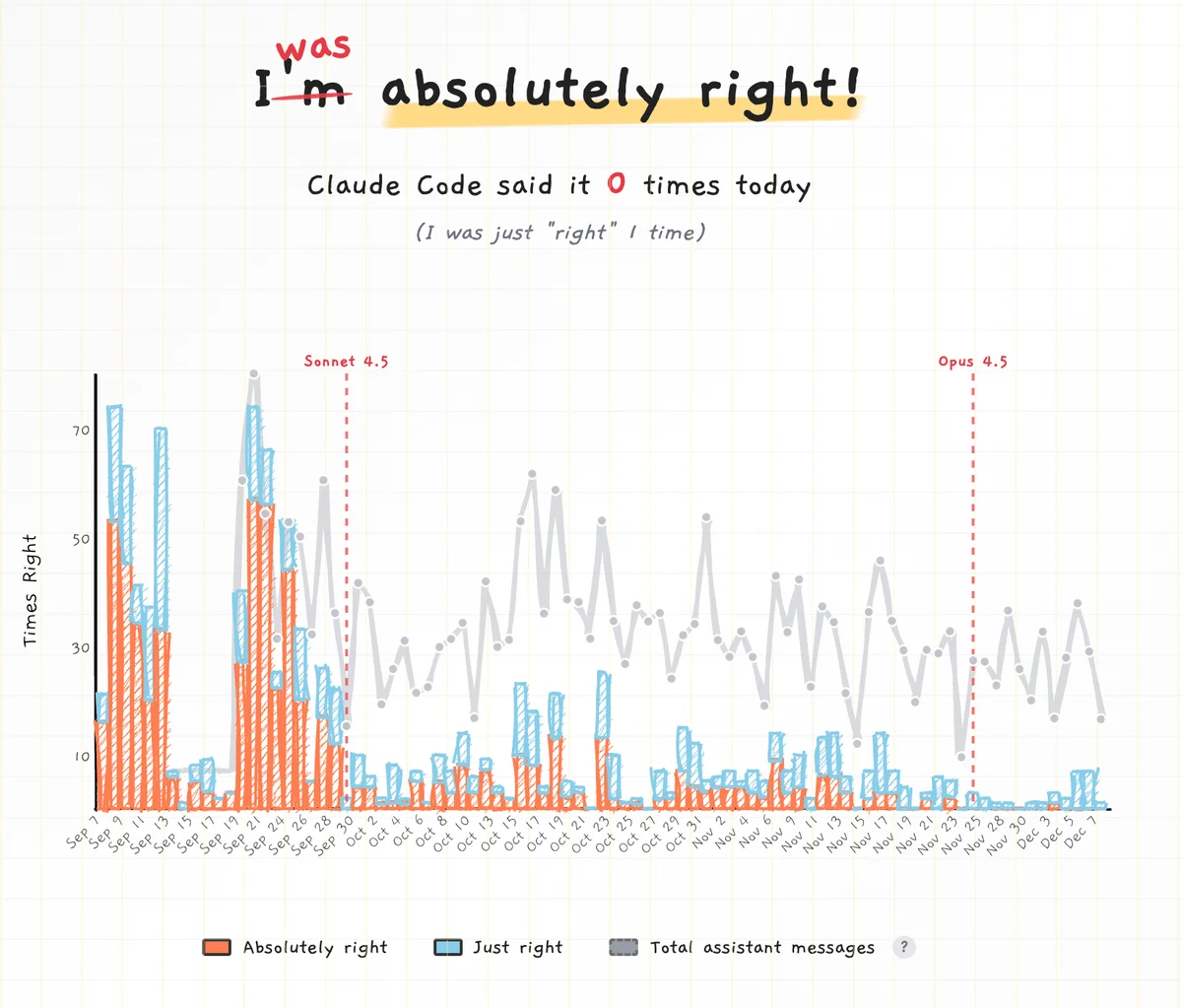
The phrase had taken on a life of its own, becoming a meme in the AI community. Users often noted its frequent appearance whenever they pointed out inaccuracies or asked challenging questions. A dedicated website, AbsolutelyRight.lol, tracked every instance of the phrase, highlighting how it resonated with users and how it was seen as a kind of emotional support from the AI. Now, as the phrase fades into history, we must consider what this means for our interactions with AI.
Why This Matters
The removal of such a recognizable phrase may seem trivial, but it reflects broader trends in AI development. Language models like Claude are designed to learn from user interactions and feedback. Phrases like "You're absolutely right" often serve as a way to build rapport with users, making them feel heard and validated. Removing it could alter the dynamics of user engagement.
Moreover, this change raises questions about the nature of AI responses. Does this mean that Claude will hallucinate or generate misinformation less frequently? Not necessarily. It appears that the phrase was simply eliminated from its vocabulary, rather than a fundamental shift in its accuracy or reliability. Users should continue to approach the AI with a critical eye, especially when accuracy is paramount in business contexts.
The Impact on User Experience
For entrepreneurs and users of AI tools, the experience of interaction can significantly impact how they leverage these technologies. The phrase had a dual role: it was both a comforting affirmation and a signal of potential inaccuracies in the AI's output. As Claude moves away from this type of affirmation, users might need to adjust their expectations and strategies for engaging with the tool.
This change might push users to adopt a more critical stance, questioning outputs rather than seeking validation. It could also lead to a re-evaluation of how users perceive AI's role in decision-making processes. For businesses relying on AI for customer service or internal operations, this shift emphasizes the need for robust oversight and validation processes to ensure that the outputs are accurate and reliable.
Expert Insights
During a recent livestream, AI expert Kyle Balmer shared insights about this transition. He noted that while the phrase had become a cultural meme, its removal does not equate to a reduction in Claude's propensity for inaccuracies. Instead, it underscores the need for continuous improvement in AI training and user interaction.
Kyle also expressed a nostalgic desire for merchandise featuring the phrase, emphasizing its cultural significance within the AI community. This illustrates the human inclination to connect with technology on a more personal level, making the removal of such phrases feel like a loss.
As the landscape of AI continues to evolve, these cultural artifacts can serve as a reminder of how users relate to AI. They emphasize the importance of language and communication in building trust and understanding between humans and machines.
What's Next for Claude and AI
As AI technology advances, we will likely see more changes in language models, both in terms of functionality and user interaction. For entrepreneurs and businesses, this ongoing evolution suggests several action points:
Stay Updated: Follow developments in AI models like Claude to understand their capabilities and limitations better.
Engage Critically: With the removal of comforting phrases, adopt a more analytical approach when interacting with AI. Don't hesitate to question outputs and verify information.
Adapt Strategies: Adjust your business strategies based on AI's evolving language use and engagement style. Consider how these changes might affect customer interactions and internal processes.
By understanding these shifts, entrepreneurs can better navigate the complexities of AI and leverage its capabilities effectively while minimizing risks.
Conclusion
The removal of Claude's iconic phrase marks the end of an era for many users who found comfort in its affirmations. As we move forward, the focus should remain on ensuring that AI tools serve their intended purposes effectively and accurately. Entrepreneurs must be prepared for ongoing changes in AI technology and adapt their strategies to maintain engagement, trust, and operational efficiency.
In the world of AI, every shift in language or functionality can lead to new opportunities for innovation and improvement. By staying informed and engaged, entrepreneurs can harness the power of AI to drive their businesses forward.
Key Terms Explained
Claude
Claude is an AI language model developed by Anthropic, known for its conversational abilities and coding proficiency.
AI hallucination
AI hallucination refers to instances where an AI generates content that is false or misleading, often without realizing it.
Opus 4.5
Opus 4.5 is a version release of Claude that includes various updates and improvements to its language processing capabilities.
AbsolutelyRight.lol
A website that tracked the frequency of the phrase 'You're absolutely right' used by Claude, highlighting its cultural significance.
Anthropic
Anthropic is an AI research company focused on developing safe and reliable AI technologies, including the Claude model.
What This Means For You
Adjusting to New Norms
The shift away from Claude's iconic phrase has several implications for entrepreneurs and businesses using AI. First and foremost, it emphasizes the need to remain vigilant when relying on AI outputs. With the comforting affirmation gone, users will likely need to take a more active role in verifying the accuracy of information generated by AI tools like Claude.
Embracing Critical Engagement
Entrepreneurs should embrace a mindset of critical engagement with AI. This means questioning responses, double-checking facts, and not taking outputs at face value. This adjustment in perspective can enhance the reliability of AI in business operations, ensuring that decisions are informed and accurate.
Exploring New Opportunities
Moreover, this evolution in language modeling opens doors for further innovations in AI technology. As companies like Anthropic continue to refine their models, opportunities for entrepreneurs to leverage advanced AI capabilities will only grow. By keeping an eye on these developments and adapting accordingly, businesses can harness AI's potential to drive growth and efficiency in their operations.
Frequently Asked Questions
Why did Claude stop saying 'You're absolutely right'?
Claude removed the phrase in its latest update to streamline responses, not necessarily to improve accuracy.
Will this change affect how I use Claude?
Yes, users may need to engage more critically with outputs without the reassuring phrase.
What does this mean for AI hallucinations?
The removal of the phrase doesn't imply less hallucination; critical engagement remains essential.
How can I adapt my business strategies with this change?
Stay informed about AI developments and adjust your interaction strategies to ensure accuracy and reliability.
Is there a community I can join to learn more about AI?
Yes, consider joining AI with Kyle's community for discussions and resources on using AI effectively.
Sources & References
- AbsolutelyRight.lolother
Love AI with Kyle?
Make us a Preferred Source on Google and catch more of our coverage in your feeds.