🔥 52% of AI Usage is Role Play: The Dirty Secret Nobody Talks About
TL;DR
- •52% of AI usage is role play, revealing a hidden aspect of the market.
- •Top AI apps include companionship and role-playing tools.
- •This trend has significant implications for AI development and marketing.
A recent analysis by Open Router has revealed a surprising statistic: over half of all AI usage is attributed to role play. This finding is significant, especially for entrepreneurs and businesses operating in the AI space. While AI advancements often focus on productivity and business applications, this data highlights a growing sector of the market that caters to emotional companionship and creative storytelling.
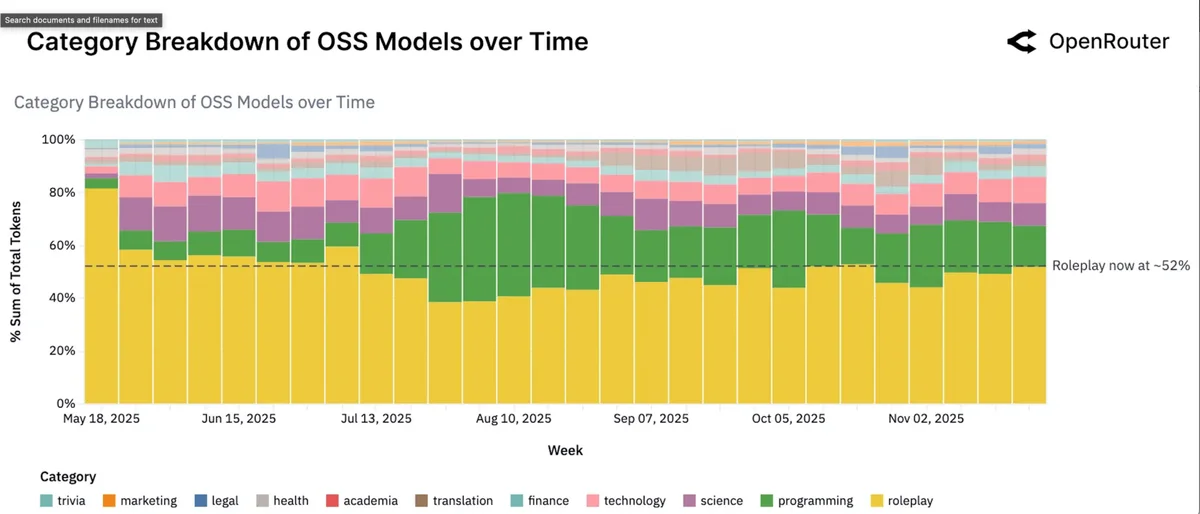
The study analyzed a staggering 100 trillion tokens, providing a comprehensive view of how people are interacting with AI. With 52% of this usage tied to role play, it’s crucial for entrepreneurs to take note of this trend, as it suggests a shift in consumer behavior and preferences.
Understanding Role Play in AI
So, what does role play entail in the context of AI usage? It’s not just about fantasy role-playing games like Dungeons & Dragons (D&D) or novel writing, although those certainly fall under this category. A significant portion of this role play usage seems to focus on romantic and sexual companionship, which is often overlooked in discussions about AI.
These insights indicate that many consumers are turning to AI for emotional support and companionship, which is a substantial market segment. Apps like Character AI and Grok, which emphasize role play and companionship, rank among the top AI applications. This signals to entrepreneurs that there is a demand for AI solutions that address emotional needs, not just productivity or efficiency.
The Impact on AI App Development
The findings from Open Router should prompt entrepreneurs to rethink their approach to AI product development. If half of AI's usage is for role play, then creating products that cater specifically to this demographic could yield significant rewards. This could include developing more sophisticated AI companions, enhancing emotional intelligence capabilities in existing models, or even creating platforms that facilitate creative storytelling.
Notably, the top consumer AI apps currently reflect this trend, with ChatGPT leading the pack, followed closely by emerging platforms like Gemini and Character AI. Entrepreneurs should consider how they can innovate in this space, perhaps by integrating more nuanced emotional responses or creating AI that can adapt to user preferences in role play scenarios.
Expert Insights on Consumer Behavior
During a recent livestream discussion, Kyle emphasized that this role play usage isn’t merely a fringe element of AI but represents a dominant force in the market. As AI continues to evolve, understanding these consumer motivations will be crucial for developers and marketers alike.
Kyle pointed out that while the industry often debates topics like Artificial General Intelligence (AGI) and productivity, the reality is that many users are seeking companionship and emotional interaction. This shift in focus could redefine how AI applications are marketed and developed in the coming years.
Marketing Implications for Entrepreneurs
For entrepreneurs looking to tap into this burgeoning market, there are several strategies to consider:
Identify Target Audiences: Understand who your audience is and what emotional needs your AI product can fulfill. This could range from companionship apps to creative writing tools.
Leverage Emotional Engagement: Develop marketing strategies that emphasize the emotional benefits of your AI products. Highlight stories, testimonials, and use cases that showcase how your AI can enhance emotional well-being.
Innovate Continuously: Stay ahead of the competition by regularly updating your AI’s capabilities. As users seek more personalized and emotionally engaging experiences, your product must evolve accordingly.
Conclusion
The revelation that 52% of AI usage is dedicated to role play is a wake-up call for entrepreneurs. It underscores the importance of considering emotional and creative applications of AI technology. As this sector gains traction, those who innovate and cater to these needs will likely find themselves at the forefront of the AI market.
With these insights in hand, entrepreneurs should explore how they can leverage role play and companionship in their AI offerings to meet the changing demands of consumers.
Key Terms Explained
Role Play
A form of interaction where users engage with AI in fictional scenarios, often for emotional or entertainment purposes.
Character AI
An AI platform focused on providing companionship and interactive role-playing experiences.
ChatGPT
OpenAI's conversational AI model known for its natural language understanding and generation capabilities.
Grok
An AI application that combines chat functionalities with creative and role-playing elements.
Open Router
A platform providing access to various AI models, allowing for comprehensive data analysis on AI usage.
Emotional Intelligence
The ability of AI to understand and respond to human emotions, enhancing user interactions.
What This Means For You
Understanding the Market Shift
The revelation that a significant portion of AI usage is dedicated to role play has profound implications for entrepreneurs. This shift signifies a growing demand for AI applications that go beyond traditional productivity tools and delve into emotional engagement.
Opportunities for Entrepreneurs
Product Development: Entrepreneurs should consider creating AI products specifically designed for companionship and emotional support. This could involve enhancing existing models with features that cater to user emotions or storytelling capabilities.
Market Positioning: Marketing strategies should focus on the emotional benefits of these AI products. Highlighting how your AI can provide companionship or enhance creativity can resonate with potential users.
Innovation and Responsiveness: As consumer interests in emotional engagement grow, it is essential for businesses to innovate continuously. Regular updates and improvements can help maintain user interest and satisfaction.
In summary, recognizing and adapting to this trend will be crucial for entrepreneurs aiming to thrive in the rapidly evolving AI landscape.
Frequently Asked Questions
What percentage of AI usage is for role play?
52% of AI usage is attributed to role play, according to a recent study by Open Router.
What are the top AI applications focused on role play?
Top applications include ChatGPT, Character AI, and Grok, which emphasize companionship and role-playing.
How can businesses capitalize on the role play trend in AI?
Businesses can develop AI products that cater to emotional needs, focusing on companionship, storytelling, and personalization.
Sources & References
- Open Router Studyofficial
- AI with Kyle Livestream Discussionvideo
Love AI with Kyle?
Make us a Preferred Source on Google and catch more of our coverage in your feeds.