🌏 China and Geopolitics
TL;DR
- •China's energy production gives it an edge in AI development.
- •Experts debate on chip sales to China amid geopolitical tensions.
- •AI's impact on jobs requires entrepreneurs to adapt now.
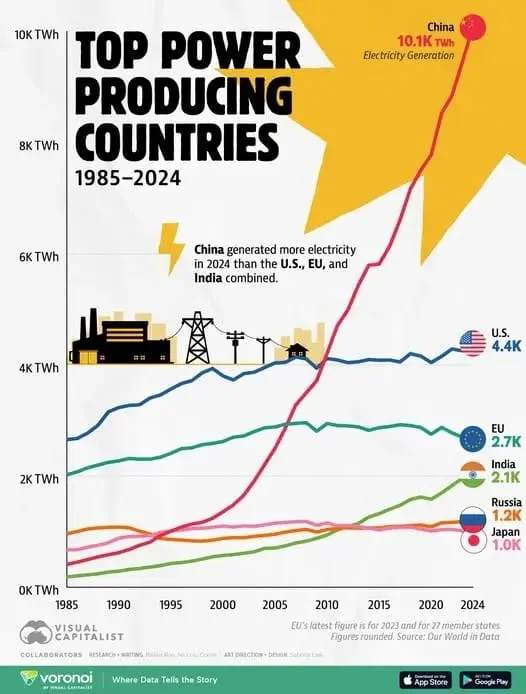
The conversation around AI and geopolitics has become increasingly relevant as tensions rise between major global players, particularly the United States and China. Recent discussions highlight a fundamental shift: the race for AI supremacy is not just about technology but also about energy resources. As AI models become more sophisticated, the energy required to power data centers and the infrastructure to support them is increasingly seen as a critical factor in determining who leads in AI development.
At the World Economic Forum, influential figures like Dario Amodei of Anthropic and Demis Hassabis of Google DeepMind shared their views on the implications of these geopolitical dynamics. Amodei argued strongly against selling advanced chips to China, equating the act to selling nuclear weapons. This sentiment reflects a growing concern among leaders in the tech industry about the risks of empowering a geopolitical adversary. Conversely, Hassabis emphasized the need for international cooperation, suggesting that collaboration could lead to safer advancements in AI.
The Energy Bottleneck
Former President Trump noted that the new battleground for AI development is energy production rather than just advanced AI models. This perspective is crucial for entrepreneurs who must understand that access to energy will dictate the pace and scale of AI innovations. Currently, China leads the world in energy production, generating more than the combined output of the rest of the world. This substantial energy advantage allows China to support extensive AI research and development initiatives.
As an entrepreneur, this means you should be aware of where your AI resources come from and the potential geopolitical implications of your technology stack. If energy becomes a bottleneck, it could impact your business operations, especially if you're relying on cloud services from providers that may face restrictions or interruptions due to international tensions.
Collaborating vs. Competing
The debate on whether to cooperate with China or to limit technological exports is multifaceted. On one hand, restricting chip sales could stall Chinese AI advancements, giving American companies a competitive edge. However, such a strategy may also lead to a tech arms race that compromises safety standards and ethical considerations in AI development. This is where the perspectives of Amodei and Hassabis diverge. Amodei advocates for immediate restrictions, while Hassabis calls for a collaborative approach to ensure responsible AI development.
For entrepreneurs, this presents a dual challenge: navigating a potentially volatile market while also ensuring that your AI practices are ethical and aligned with global standards. Consider how your business could benefit from collaborative efforts or partnerships that prioritize safety and ethical considerations in AI.
The Job Market Impact
One of the profound implications of AI advancements discussed during the forum is the potential disruption in the job market. Amodei predicts that up to half of entry-level jobs could disappear within the next five years due to AI automation. This is a significant concern for entrepreneurs, as the dynamics of the workforce will change dramatically.
Hassabis offers a slightly more optimistic view, suggesting that while there will be near-term disruptions, new jobs will eventually emerge post-AGI (Artificial General Intelligence). This uncertainty means entrepreneurs should begin thinking about diversification in their business models now. How can you prepare for potential job losses in your sector? What new opportunities might arise from the AI revolution?
Preparing for Change
In light of these changes, it's essential to adapt proactively. Here are a few strategies for entrepreneurs:
Diversify Income Streams: Consider developing multiple revenue channels. This could include offering new AI-driven services, creating educational content, or even launching products that leverage AI technologies.
Invest in Training: Equip yourself and your team with skills that will be valuable in an AI-driven economy. This might include learning new AI tools, understanding data analytics, or even exploring new business models.
Monitor Geopolitical Developments: Stay informed about international relations and how they impact technology access. This will help you anticipate changes that could affect your business operations.
Conclusion
The discussions at the World Economic Forum highlight the intricate relationship between AI development, energy resources, and geopolitical tensions. As entrepreneurs, understanding these dynamics is crucial for navigating the future landscape of business. The ability to adapt, collaborate, and innovate will be key to thriving in this rapidly evolving environment.
By staying informed and preparing your business for the changes ahead, you can position yourself to leverage the opportunities that AI presents while mitigating associated risks.
Key Terms Explained
AGI
Artificial General Intelligence; AI that can perform any intellectual task a human can do.
Nvidia H100
A high-performance GPU used for AI training and inference.
Energy Production
The process of generating electricity to power data centers and other infrastructure.
Chip Wars
The geopolitical struggle over semiconductor production and technology.
Claude
A family of AI models developed by Anthropic, known for their safety features and coding capabilities.
Gemini
Google's family of multimodal AI models designed for various applications.
What This Means For You
Understanding the Landscape
The discourse around AI and geopolitics underscores the importance of energy access and international relations in shaping the future of technology. Entrepreneurs must recognize that the availability of energy resources could dictate their competitive edge in the AI space.
Strategic Actions for Entrepreneurs
Engage in Continuous Learning: Stay updated on AI developments and geopolitical trends that could influence your market.
Foster Partnerships: Collaborate with other businesses or institutions to leverage shared resources and knowledge.
Adapt Business Models: Be ready to pivot your offerings as AI technologies evolve and market demands shift.
By actively preparing for these changes, entrepreneurs can position themselves to not only survive but thrive in an AI-driven future.
Frequently Asked Questions
What does AGI mean for businesses?
AGI refers to AI that can perform tasks at human-level intelligence, potentially transforming industries.
How can I prepare my business for AI job disruption?
Diversify your income streams and invest in training to ensure your team adapts to the changing job landscape.
Why is energy production important for AI development?
Energy is crucial for powering data centers; countries with higher energy production can support more extensive AI research.
What are the implications of chip restrictions to China?
Restricting chip sales could slow down China's AI advancements but may also escalate global tech tensions.
Sources & References
- World Economic Forum Discussionofficial
Love AI with Kyle?
Make us a Preferred Source on Google and catch more of our coverage in your feeds.