
A structural shift in hiring has started. It won't reverse when the cycle improves.
Full slide deck and practical action plan below.
UK unemployment rate
five-year high
18-24 unemployment rate
entry-level pressure
youth unemployment in Bradford
1 in 5 jobseekers
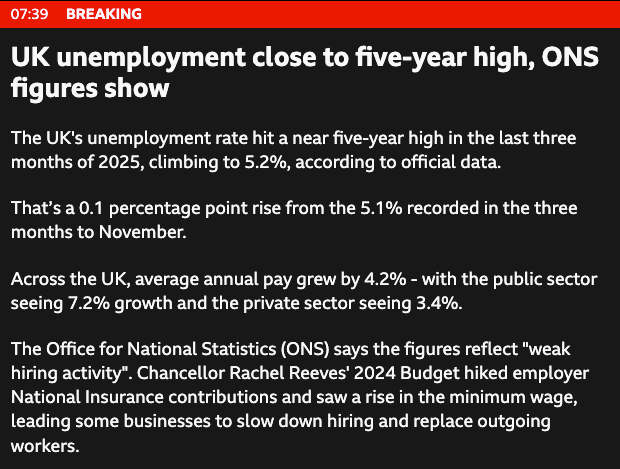
Weak hiring, slower wage growth, rising redundancies
This is bigger than one country or one political cycle. The UK data is a clear signal, but similar trends are appearing across much of the Western world.
Core thesis:
We are dealing with both cyclical weakness and a deeper structural labor shift. Cycles recover. Structural shifts change the baseline permanently.
Don't confuse temporary turbulence with a permanent reset
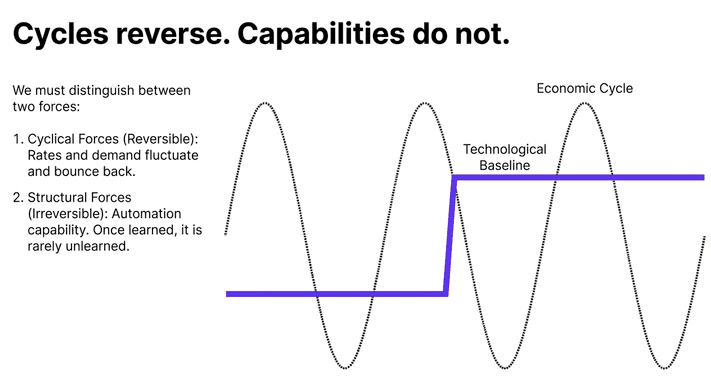
Interest rates, inflation, demand shocks, policy swings, and recession pressure. These move in cycles.
These can improve.
AI-driven task substitution, one-to-many productivity multipliers, and AI-native organization design.
These do not reverse.
Bottom line: even when the economy recovers, the labor baseline stays higher-tech and more automation-heavy than before.
AI changes the marginal hiring decision first
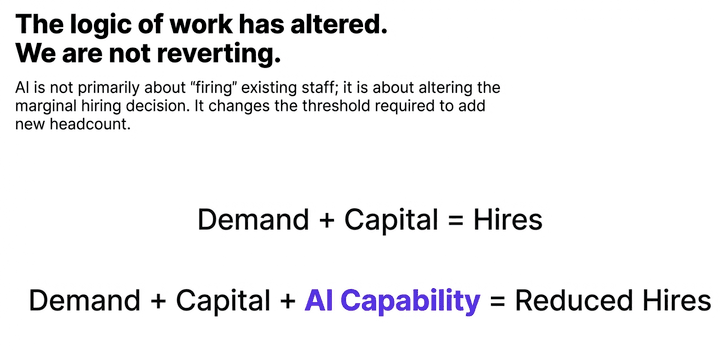
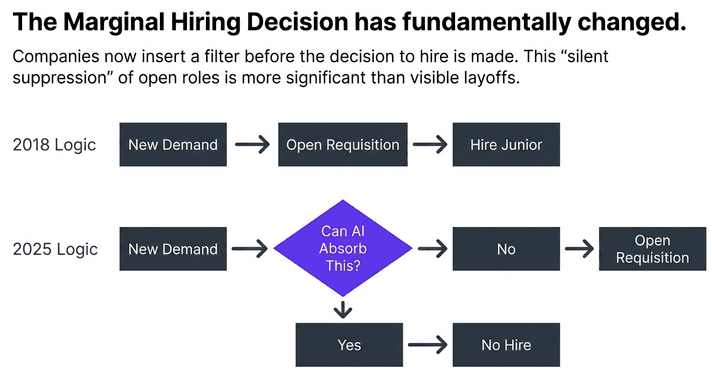
New demand → open requisition → hire junior.
New demand → can AI absorb this? → if yes: no hire, if no: open requisition.
This is usually not a dramatic layoff story. It's silent suppression of new roles. Fewer openings, thinner entry paths, and less visible accountability.
Entry-level disappears first, management compresses next
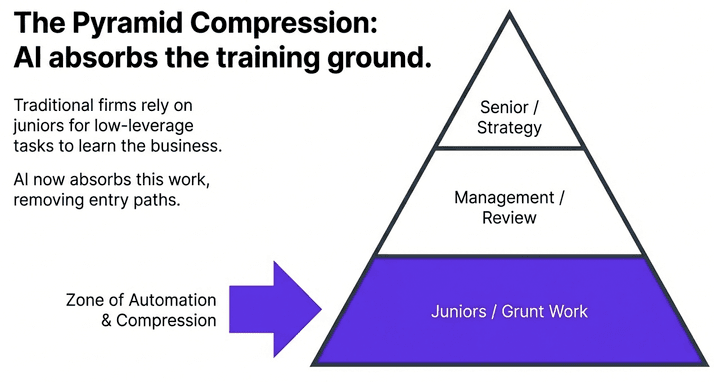
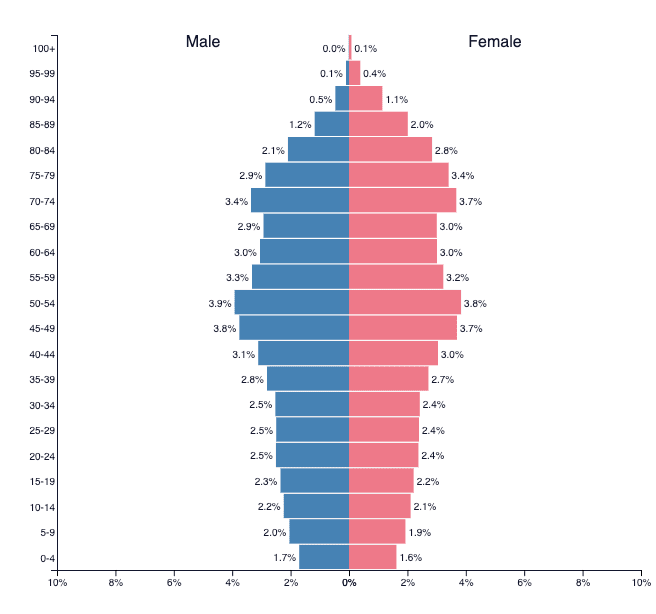
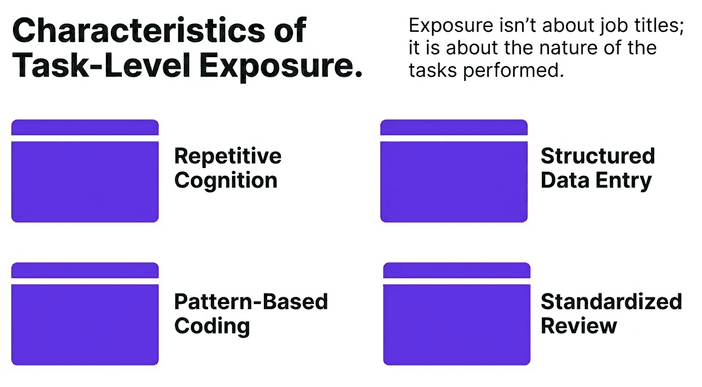
Most firms are pyramids: juniors at the base, managers in the middle, strategists at the top. AI is strongest at many base-level cognitive tasks, so the base shrinks first.
Hire 10 instead of 100 for the same output.
Fewer juniors means thinner development pipelines.
Management layers shrink as managed work declines.
Risk: career ladders become fragile and top-heavy. That's not a stable long-term shape.
Labs focus where they can compound fastest: coding and self-improvement
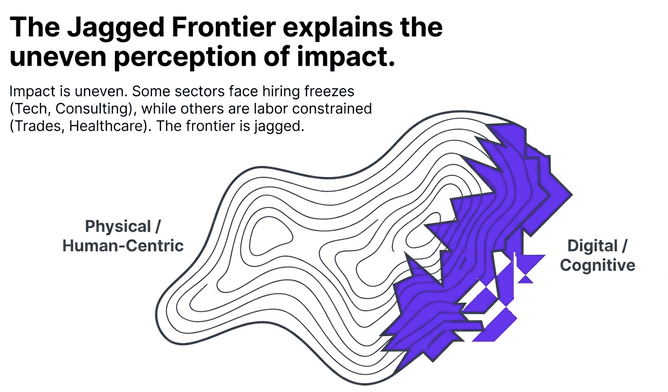
If AI looks weak in your sector today, it may just be out of focus, not out of reach. Frontier labs are heavily incentivized to improve coding because it helps build the next generation faster.
Watch software development as the canary in the coal mine. Once general capability rises, specialized domains become much easier to attack.
Income pressure in one sector cascades into others
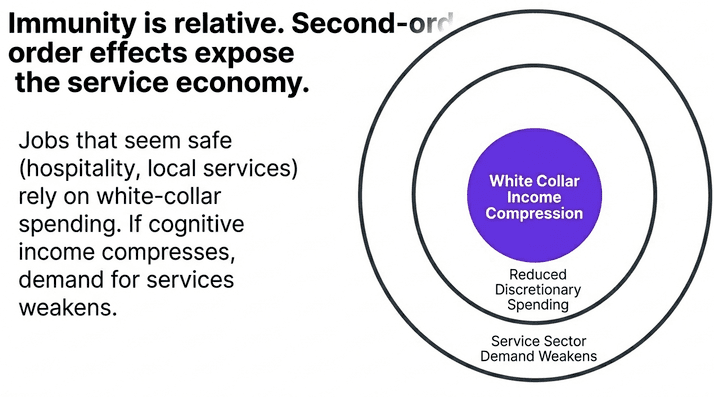
Even if your role is hard to automate directly, your customer base might not be protected. When white-collar income compresses, discretionary demand for many service businesses weakens too.
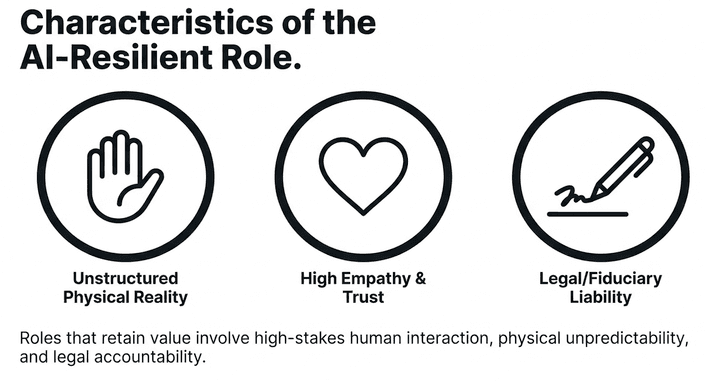
Resilience is about task profile, not job title
Roles requiring complex real-world physical adaptation still have time while robotics catches up.
Roles built on emotional regulation, reassurance, and deep human rapport remain harder to automate.
Where responsibility transfer matters, human accountability remains a protective buffer.
Keep your job. Build optionality in parallel.
Do not quit your job impulsively. Keep stable income while you build secondary and tertiary streams: freelancing, contracting, productized services, or tools in your domain.
Turn what you know into an AI-enabled tool or workflow that scales beyond your own time.
Package your AI knowledge with domain depth and run practical workshops for teams.
The full "Invisible Shift" slide deck
Expanded talking points from the full discussion
The labor market story is not "AI replaces everyone overnight." It's quieter. As firms face new demand, they now test AI first before opening headcount. That changes the slope of job creation without obvious headlines.
This is why weak hiring data matters so much. You can have fewer visible layoffs but still see growing pressure in unemployment, especially for younger workers entering the market for the first time.
Organization design is also shifting. Historically, juniors did foundational work, developed judgment, then moved up. If the base shrinks, long-term skill formation gets weaker and management structures become less stable.
No single profession is fully immune. Even non-automatable jobs can face demand shocks if customer segments see wage compression or job insecurity.
The practical strategy is optionality: keep your current income but build additional earning capacity now. The exact vehicle matters less than reducing single-point dependence.
The goal is not panic. The goal is resilience. Build leverage while conditions are still manageable.