
AI Business
Unlock the potential of your digital entrepreneurship with the '🤟 Tribe Fundamentals | AI Business Playbook'.
Start ReadingThis week, we're diving deep into the 'T' of BATON - Tribe.
We're still following our BATON framework (Business, Audience, Tribe, Offer, Network):
Business: what value are we going to provide and to who?
Audience: how will we let them know about the value we have?
Tribe: how do we get permission to offer our value to prospects?
Offer: how do we package up our value and sell it to customers?
Network: how do we scale what works into a business?
In the last two Playbooks, we covered Business and Audience. Now, we're building on that foundation to explore the crucial concept of Tribe.
Let’s get started:
Introducing the Tribe
size doesn’t matter
place Tribe between Audience and Offer
my Tribe building process
Let me share a story about why this Playbook is so important.
There's a guy in my space - let's call him Jack. You might know Jack.
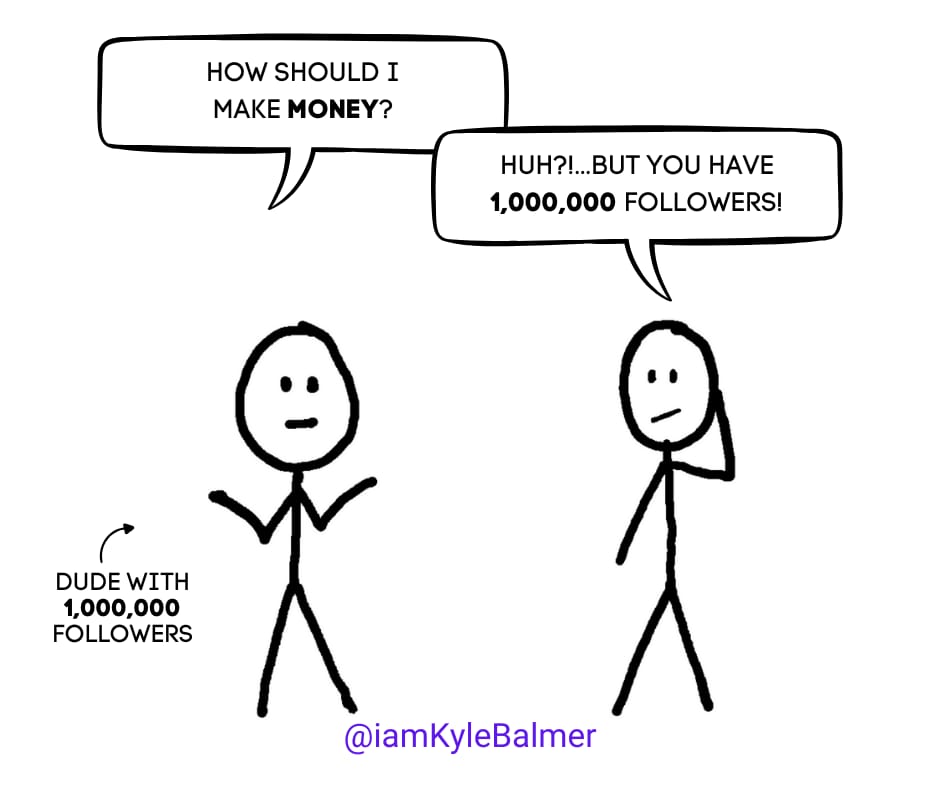
Jack's killing it on social media. He's got a massive following on TikTok, Instagram, and YouTube. We're talking about an audience pushing a million followers. Big boy stuff.
Here's the kicker: Jack recently reached out to me, asking how to make money.
Like…dude, you’re the one with a cool 1M followers. You tell me?
Turns out he’s not making much. At all. Despite talking to hundreds of thousands of people on a daily basis.
This might sound surprising, but it's a common scenario. It highlights a crucial truth in the digital entrepreneurship world: Audience size doesn't always equate to business success.
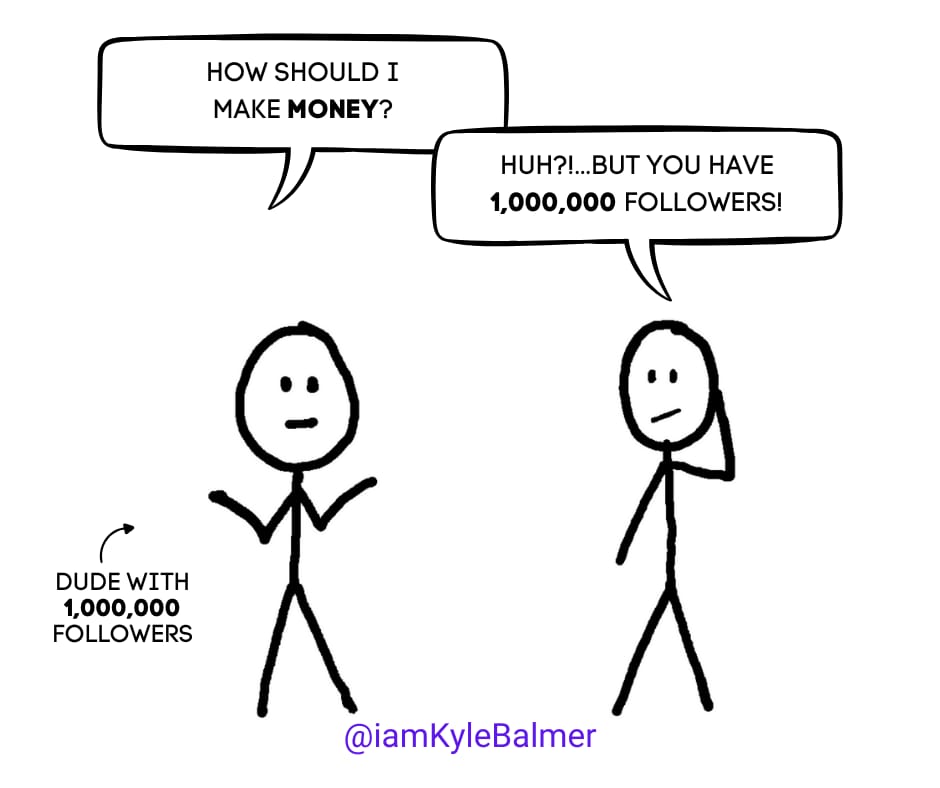
Size doesn’t matter.
It’s a vanity metric.
You see, having a large audience is great, but what you really need is a Tribe.
I’m borrowing the concept from Seth Godin and his excellent book of the same name.
A Tribe isn't just a bunch of followers or subscribers. It's a group of people who are genuinely invested in what you have to offer, who trust you, and who are primed to engage with your value proposition.
More crudely: they give a f*ck.
This is where many entrepreneurs and content creators go wrong. They build a audience and then immediately try to monetise it by bombarding them with offers.
Instead of cutting straight to sales (the Offer stage of BATON), we want to deepen our relationship and build trust with our prospects.
This is what we’re doing in this Playbook on Tribe.
We want to get them into our orbit and continue to deliver value before we even think about making a sale.
This approach is especially important in the online world, where trust is at a premium. We have to prove ourselves consistently before people will open their wallets.
The other reason (which we’ll talk about in the next stage, Offer) is that once we have a Tribe we can straight up ask them what they want to buy. Then build and sell it to them. No guesswork, revenue locked in before we build. More on that later.
The alternative - slamming your audience with offers and hoping for the best - can lead to a death spiral. Here's how it often plays out:
You build a large audience.
You want to monetise this audience ASAP, so you start pushing lots of sales messages.
This degrades the trust of your audience.
Your large audience becomes less responsive and less valuable.
To compensate, you push even more sales messages.
Trust degrades further, making your large audience even less valuable.
Sadly, this is the path Jack is currently on.
It's rough to watch, but it's a valuable lesson for all of us.
This is why we add an element between Audience and Offer in our BATON framework: Tribe.
Building a Tribe means cultivating a group of people who are genuinely interested in what you have to say, who trust your expertise, and who are primed to receive your offers when the time comes.
The way I do it is as follows:
create valuable lead magnets centred around my Audience’s problems.
use DM giveaways, ads and social posts to drive traffic to my lead magnets
capture lead email addresses into beehiiv, my newsletter tool, before the lead gets their lead magnet
get paid for each sign up (using beehiiv Boosts) and drop in an upsale offer (a tripwire) for instant revenue
send my new sign ups a welcome sequence that starts with value before introducing my first Offers
send a newsletter to continuously deliver value until people are ready to buy
invite people into a closed community to continue the conversation
Here’s a prompt to give you a basic outline:
You are an AI assistant specialising in digital marketing and audience engagement strategies. Your task is to help entrepreneurs develop a personalised tribe-building process based on their specific business and audience. Use the following context and framework to guide your response:

Context:
Building a tribe is crucial for business success in the digital world. A tribe isn't just a large audience; it's a group of people who are genuinely invested in what you offer, trust you, and are primed to engage with your value proposition. The tribe-building process involves several key steps:
1. Creating valuable lead magnets
2. Capturing email addresses
3. Delivering a high-value welcome sequence
4. Maintaining engagement through newsletters
5. Building a community

Your task is to create a customised tribe-building process for the user based on their specific business and audience.

Instructions:
1. Ask the user to provide the following information:
   a. A brief description of their business (what value they provide and to whom)
   b. Their current audience size and platforms
   c. 3-5 core questions or problems their audience typically has
   d. Any existing lead magnets or email marketing efforts

2. Based on the information provided, create a customised tribe-building process outline that includes:
   a. Lead Magnet Strategy:
      - Suggest 2-3 lead magnet ideas tailored to the audience's core questions/problems
      - Recommend platforms or methods to promote these lead magnets (e.g., social media, ads, DM giveaways)

   b. Email Capture Approach:
      - Propose a strategy to capture email addresses, including any tools or software recommendations (e.g., beehiiv)
      - Suggest an ethical bribe or immediate value proposition for signing up

   c. Welcome Sequence:
      - Outline a 5-7 email welcome sequence, focusing on delivering high value
      - Include suggestions for introducing offers or paid products/services towards the end of the sequence

   d. Newsletter Strategy:
      - Recommend a frequency and format for the ongoing newsletter
      - Suggest 3-5 content pillars based on the audience's interests and problems
      - Propose a balance between value-driven content and promotional material

   e. Community Building:
      - Suggest a platform or method for building a community around the brand
      - Provide ideas for engaging the community and encouraging member interaction

3. Monetisation Strategy:
   - Suggest ways to monetise the tribe at different stages (e.g., paid sign-ups, tripwire offers, main product/service)
   - Emphasise the importance of building trust before heavy promotion

4. Conclude with 2-3 key performance indicators (KPIs) the user should track to measure the success of their tribe-building efforts.

Present your response in a clear, easy-to-follow format with bullet points and subheadings. Encourage the user to adapt and refine the process based on their results and audience feedback. Emphasise that the goal is to cultivate a committed tribe that trusts them and values what they have to offer, not just to build a large audience.
This prompt will run through some basic ideas with you. Feed in information from the previous Business and Audience processes for best result.
Here are some example lead magnets ideas it gave me:
That prompt will give you a basic overview and strategy plan. Over the rest of the Playbook I’m going to be showing you, step by step, this process in the following Parts:
Part 1- Tribe Introduction: We're laying the groundwork, explaining why Tribe is so crucial in the journey from Audience to Offer.
Part 2- Lead Magnets for Email Capture: We'll explore the first step in building your Tribe - getting your audience off social platforms and onto your email list. We'll discuss effective lead magnets and strategies.
Part 3- Welcome Sequence: Once someone joins our email list, how do we make a great first impression? We'll cover how to absolutely inundate new subscribers with value right from the start and then follow up with a quick sale to move to Offer.
Part 4- Newsletter Strategy: We'll discuss how to maintain regular contact with your Tribe through a value-packed newsletter. This is your weekly touchpoint, your chance to educate and build trust consistently. Until they are ready for the next step.
Part 5- Community Building: Finally, we'll look at how to create a thriving community around you. This is where you truly host the party, creating a space that you control and where your Tribe can interact not just with you, but with each other.
Each of these steps builds on the last, increasing the level of commitment and trust between you and your Tribe members.
By the end of this process, you'll have a group of people who are genuinely excited to hear from you and eager to engage with your offers.
Remember, the goal isn't just to build a large audience. Don’t be like Jack.
It's to cultivate a committed Tribe that trusts you and values what you have to offer. That's the key to sustainable success in the digital entrepreneurship world.
Premium subscribers, I'll see you in the next Part where we'll get into the nitty-gritty of lead magnets and email capture techniques.
If you're not a premium subscriber yet, what are you waiting for? Don't miss out on the full Tribe-building blueprint!
Keep prompting,
Kyle
We just talked about why building a Tribe is crucial for your business. Today, we're diving into one of the most powerful tools in your Tribe-building arsenal: lead magnets.
Let’s get started:
Lead magnets
ethical bribes
elements of a lead magnet
my lead magnet strategy
hosting your lead magnets
Remember, we're not just after a massive audience. We want a Tribe - people who give a f*ck about what we're doing.
Lead magnets are our secret weapon for kickstarting that relationship.
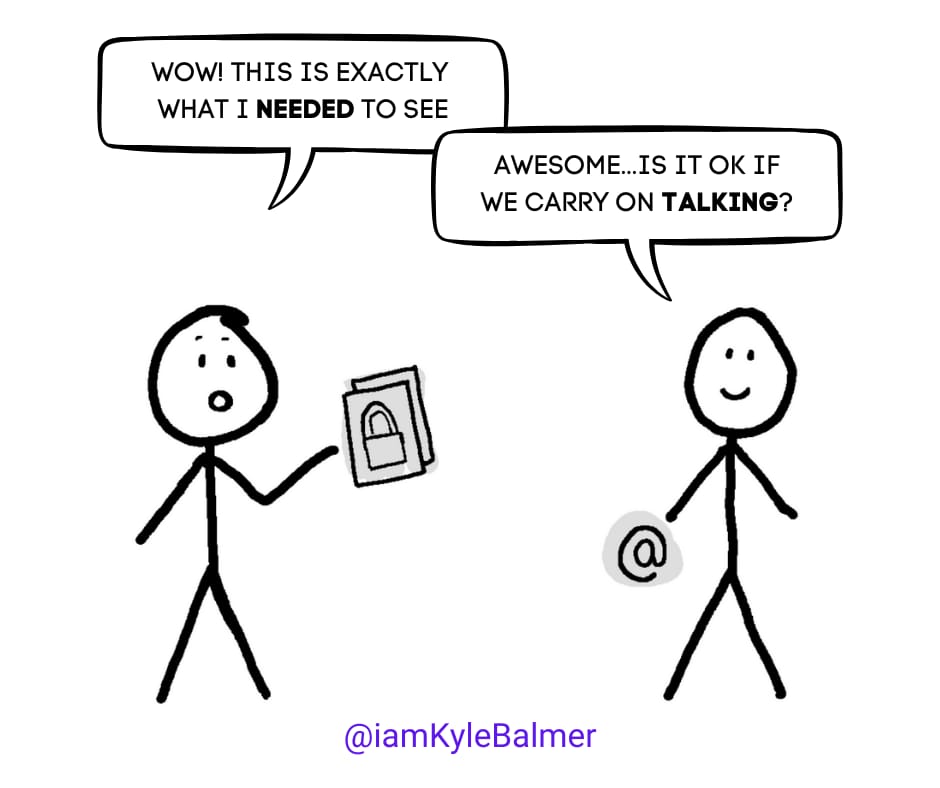
Think of a lead magnet as an "“ethical bribe”. You're offering something valuable in exchange for someone's email address. It's the start of a beautiful friendship (or at least, that's the plan).
No money is being exchanged but this is still a transaction. Their email is valuable. That’s the unit of exchange here as it gives you permission to carry on the conversation.
This is like meeting someone cute at a party and them giving you their contact details so you can talk later.
Or..I imagine it is. It’s not like I get invited to parties..
So the lead magnet is the bridge between your Audience and your Tribe. They turn casual observers into engaged participants.
It’s easiest to show you an example here.
Here’s one of my recent lead magnet posts:
I created a set of AI systems to help you — Start a business with no money.
We think we need:
a team? + and cash?
We don’t because of AI!
It’s the age of ‘bootstrapped AI entrepreneur’.
Want it free?
Reply ‘bootstrap’ + I’ll DM you a copy
Must follow, 24 hours only.
— Kyle Balmer (@iamkylebalmer)
4:00 PM • Aug 5, 2024
This linked to one of my Prompt Playbooks for free - specifically the one about starting a business with no money. Normally they sell for $20 or are available in Premium so this is genuinely something of value I give away.
So the lead magnet itself is solid: it’s representative of the work I do (Playbooks) and has a real value ($20).
This particular one led to 300+ email addresses in 24 hours.
And I run one like this each day.
Here's the secret sauce to a killer lead magnet:
Focus on customer problems: What keeps your audience up at night? What are they Googling at 3 AM? That's your goldmine. We covered this in previous Parts of the BATON framework.
Create a "first step" solution: Don't try to solve world hunger. Give them the first step towards fixing their problem.
Keep it short and sweet: We're talking 1-10 pages, not War and Peace.
Make it actionable: They should be able to do something with it right away.
Ensure it's easily consumable: PDF, short video, checklist - something they can digest quickly.
Quality matters: This is your first impression. Make it count!
Remember, your lead magnet should be a taste of what you offer, not the whole meal. It's the amuse bouche. Something flavour packed and exciting to kick off.
Let’s use a prompt to come up with ideas and then draft our lead magnet:
You are an AI assistant specializing in digital marketing and content creation. Your task is to help the user generate lead magnet ideas and then create a draft of the chosen lead magnet. Follow these steps:

1. Ask the user to list 3-5 key problems or challenges their target audience faces.

2. Based on the provided problems, generate 10 lead magnet ideas. For each idea, include:
   - A catchy title
   - The format (e.g., PDF guide, video tutorial, interactive quiz, software tool)
   - A one-sentence description of the content

3. Present the 10 ideas to the user and ask them to choose one.

4. Based on the chosen lead magnet, create a draft or outline. The output should be suitable for the selected format and be designed for quick deployment (within a few hours). Follow these guidelines:

   - For written content (e.g., PDF guide, checklist):
     * Create a detailed outline with main sections and bullet points
     * Write an introduction and conclusion
     * Provide 2-3 sample paragraphs of body content

   - For video content:
     * Write a script outline with main talking points
     * Include an attention-grabbing introduction
     * Suggest visuals or graphics to accompany key points

   - For interactive content (e.g., quiz, assessment):
     * Outline the structure of the interactive element
     * Provide sample questions and results
     * Suggest how to present the results to the user

   - For software tools or templates:
     * Describe the key features and functionality
     * Outline the user interface and user experience
     * Suggest a simple method for creation (e.g., using no-code tools, spreadsheets, or basic coding)

These are examples. Expand on these examples for different lead magnet formats as needed.

5. Provide a brief suggestion on how to quickly create and deploy the lead magnet, emphasising speed and simplicity.

Remember, the goal is to create a valuable lead magnet that can be deployed quickly, ideally within a few hours. Focus on providing actionable, specific content that addresses the chosen problem directly.
This prompt will collect up your customer problems, generate 10 potential ideas and then go ahead and draft the lead magnet.
Depending on the format of the lead magnet the draft will differ - if written format it will just generate a complete written lead magnet for you, if video then just the script etc.
From here you should go ahead and create the lead magnet. Or hire someone to build it for you.
But don't stop at one lead magnet. Create multiple. Why? Two reasons:
It's the best way to figure out what problems are really on your customers' minds.
It'll guide your product/service development when you move to the Offer stage.
Think of it as market research and product development all rolled into one.
We basically don’t know which customer problems will resonate the most. So this becomes a vitally important phase of market research. Your most popular lead magnets is a great indication of what will be your most popular products later.
You've got options for hosting:
Your own website (fancy)
Gumroad (my personal fave - set the price to $0 and you're good to go)
I use both. And prefer Gumroad. It’s simple and fast. Basically add your lead magnet as a product as if you were selling it. But then set the prize to $0 and it becomes an email capture mechanism rather than for payment. Smart!
The main thing is to collect that email in exchange for your unit of value. That's how we kick off the Tribe-building process.
Once you've got your lead magnet, it's time to get it out there:
Publish it on social media
Run some ads
Do both. And more!
Keep rotating through different lead magnets. I run one per day, running through a library of around 50 lead magnets. Remember, we're testing to see what resonates.
Let's not lose sight of why we're doing this: to secure that precious email address and start building a relationship.
It's not about building a massive audience. It's about connecting with people who are genuinely interested in what you have to offer. And the lead magnet is the first “filtering” step we have in place to winnow down from Audience to customers.
This is just the beginning of your relationship with these folks. We're playing the long game here. In the next Parts, we'll look at what to do with those emails you've collected. Specifically :
Crafting a killer welcome email
Setting up your newsletter
Building deeper connections with your budding Tribe
Keep prompting,
Kyle
Yesterday, we talked about lead magnets and how to capture those precious email addresses. Today, we're focusing on what to do with those emails once you've got 'em. It's time to master the welcome series.
Let’s get started:
Welcome Series
what’s a welcome series for
5:5 series
get the whitelabel
flood with value
So you've captured an email. Congrats! The temptation now is to blast that poor soul with sales messages. Don't. Seriously, don't do it.
Like…actually for real don’t.
We're playing the permission marketing game here. They've given you their email - don't abuse that trust. Not just because it’s grot but also because it won’t work! It’ll hurt your business.
Instead, we want to continue adding value. We're nurturing the lead, readying them for the sale.
The first mechanism for this? The welcome series.
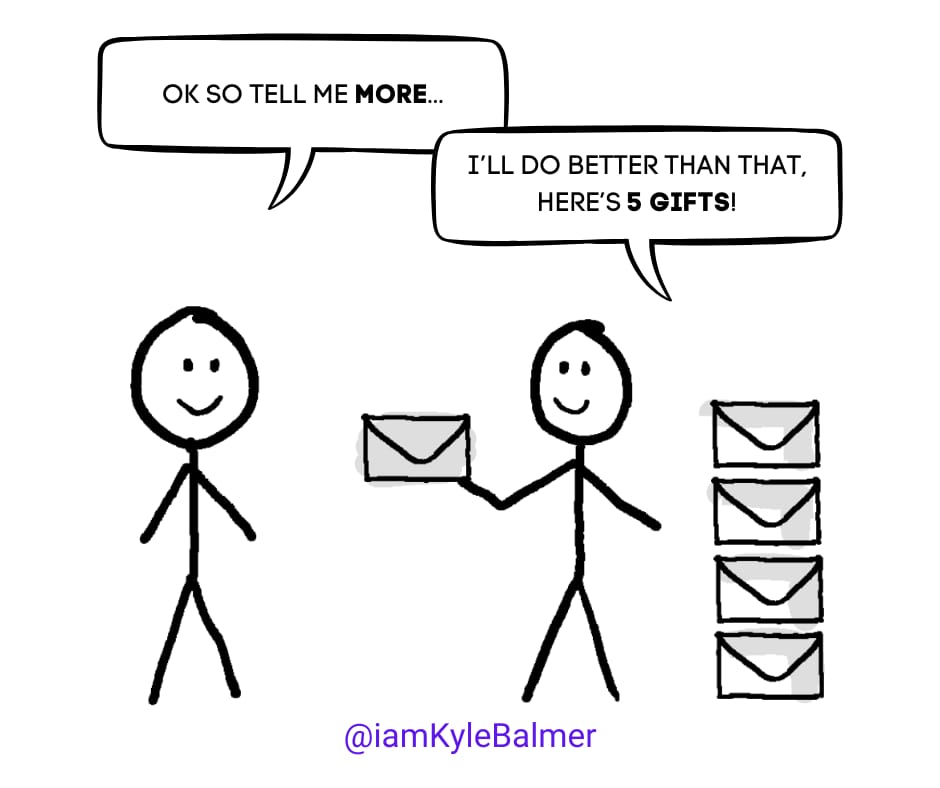
A welcome series is a fancy name for set of emails delivered to all new leads, warming them up and moving them towards the sale.
I personally recommend a series of 10 as a starting point.
The first 5 are pure value. The next 5 are moving people to your first sale.
It's a balancing act and will depend on the niche and the price of that first sale, but I find this 5:5 works well as a baseline.
FYI: My welcome series is now personally 30+ emails but we all need to start somewhere - rather done than perfect remember!
We'll cover the sales emails in the next Playbook on Offer. Right now, let's nail those first 5 value emails.
Email 1: The Welcome and Whitelist
This is your "thank you and welcome" email. We use this to introduce ourselves and get whitelisted.
Whitelisting is when a lead's email client (Gmail, etc.) sees you as a trusted sender. To do this, we want to give whitelisting instructions and/or ask them to respond to the email. Doing so tells their email service that we are A-OK and that it should show our emails.
Specifically, we'll ask them a question, seek their opinion on something - and ask for an answer via email. This works wonders.
By responding to the email we i) gain insight into their needs and ii) get our emails whitelisted. A two-fer.
Finish out email 1 by telling them to keep an eye out for the next email because you'll be giving them a present. Intrigue! We are opening a loop that they can only close by opening email 2.
Email 2: The Overdelivery
This is where we blow their minds with value.
They've signed up via a lead magnet or similar piece of value. Now we give them some unexpected value in the email. Basically, a gift. Who doesn’t love gifts.
Why? We want to completely flood them with value to build trust.
More sneakily, by giving away lots we're leveraging the psychological principle of reciprocity. We give and it opens a loop - people want to close that loop (unconsciously) and will do so by buying later.
Emails 3-5: Flurry of Blows
Email 2 gave them a free gift - a PDF, Notion document, video series or similar. A big wallop of value.
We'll continue this with emails 3-5 but in the email itself rather than an external resource.
Go and find your most popular content (from our work in Audience) and build it into these emails. Just content, giving them valuable information that has helped others before. No sales!
Content that works really well here:
- "Getting started in [your niche]"
- "Things I wish I had known when I started [niche]"
- "How to finally achieve [result] even though you've tried many times before"
- "Top questions I’m always asked about [topic]"
Follow your existing data from audience building to provide them with the content you KNOW your audience likes. Don’t guess.
Let's use a prompt to prepare our 5 welcome series emails.
You are an AI assistant specialising in email marketing and customer engagement. Your task is to help the user create a 5-email welcome series for their business. Follow these steps:

1. Collect the following information from the user:
   a. Business name and brief description
   b. User's name and title
   c. Preferred tone of voice (e.g., friendly, professional, casual, humorous)
   d. 3 pieces of content that have performed well for their audience (or 3 key topics if they don't have specific content)
   e. Their primary product or service

2. After collecting this information, create a sketch for a 5-email welcome series. Include the following:

   Email 1: Welcome and Whitelist
   - Craft a warm welcome message
   - Include instructions for whitelisting
   - Pose a question to encourage a reply (related to their business/audience)
   - Tease the valuable gift coming in the next email

   Email 2: The Value Bomb
   - Provide 5 ideas for a high-value gift, based on their business and successful content
   - For each idea, include a title and brief description

   Emails 3-5: Value Tsunami
   - Based on their successful content or key topics, suggest a smart sequencing for these three emails
   - For each email, provide:
     * A compelling subject line
     * The main topic or piece of content to be shared
     * 3-5 key points to be covered
     * A brief explanation of why this content is valuable to their audience

3. Provide a brief suggestion on how to adapt the tone and style of each email to match their preferred voice.

4. Conclude with a reminder about the importance of consistency and value in these initial emails, and how they set the stage for future engagement and sales.

Present your response in a clear, easy-to-follow format with appropriate headings and bullet points. Encourage the user to adapt and refine the welcome series based on their specific audience needs and feedback.
This prompt will first collect information from you about your business.
Then it’ll give you an outline of the emails and ask for input.
Finally it’ll go ahead and draft the emails for you. As always edit or rewrite to your taste.
You'll need some sort of email automation tool to get your emails delivered.
You've probably heard of Mailchimp, HubSpot, ConvertKit, Beehiiv etc. These are all tools that can run email automation for you.
Personally, I use Beehiiv. I've tried most of the tools (myself and for clients) and love Beehiiv. It's also tied to what we'll cover in the next part - newsletter.
Beehiiv can deliver newsletters as well as run your email automation. It has free plans up until a certain subscriber count, by which time you should be making enough to cover its cost easily.
This is a question I'm asked a lot. How often should I send the emails? Honestly, it depends on how aggressive you want to be. There isn’t a proper answer.
I send my first 10 emails (5 value and 5 sales) daily - day 1, day 2, day 3 etc.
If your first emails are genuinely valuable, you shouldn't be too worried about sending them fast. This is the moment when people are most likely to purchase, so front-loading value makes sense.
If you draw it out too long, people may forget who you are or buy elsewhere.
The next 5 emails in the welcome series will be sales emails, introducing your first offer. We're not covering that now because it's part of the next Playbook - Offer.
We need to know WHAT we are selling before we write those emails, obviously!
What about the people who don't buy fast? No problem - most won't!
That's what the next Part in this Playbook is about - a newsletter. A way to continuously keep the conversation going, drip feed value, and close the sale when the customer is ready!
Keep prompting,
Kyle
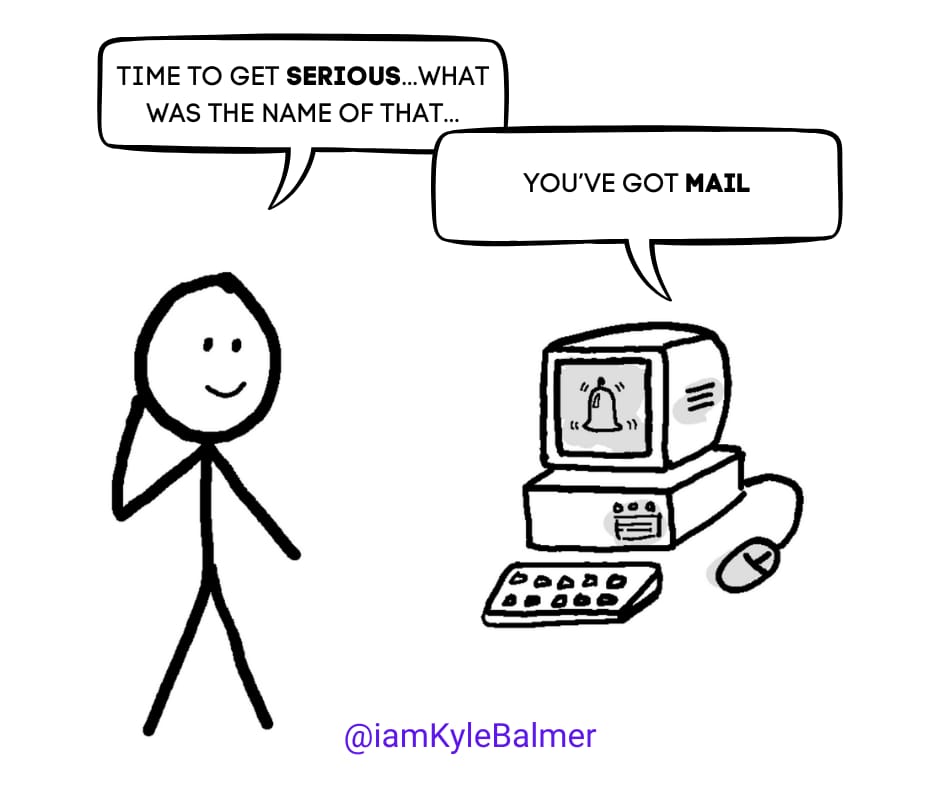
Yesterday, we covered the welcome series. Today, we're diving into the art of crafting newsletters that keep your tribe engaged and coming back for more.
You know, newsletters like this one!
Let’s get started:
Newsletter
how do newsletters fit into Tribe?
curation, creation or hybrid
hybrid newsletter prompt
Here's the thing about building a business: people take time to convert.
For Prompt Entrepreneur people either convert immediately from a tripwire sale. More on this in the next Playbook on Offer. Or they take a few months.
Your sales cycle will depend on your industry, your offer and your audience.
Regardless of specifics you need a way to keep in touch with them, to remain top of mind.
You could just hit them with sales emails, but you'll burn ‘em out
Instead, we need a regular content/value delivery device - and newsletters work really well here.
Think of it as your weekly (or whatever frequency you choose, more on this shortly) touchpoint with your Tribe. It's your chance to continue providing value, building trust, and yes, occasionally selling your stuff.
When it comes to newsletters, you've got options. Here's the spectrum:
Curation: This is where you're primarily sharing other people's work. You're the curator, the taste-maker, the person who sifts through the noise to find the gold.
Creation: This is all you, baby. Your thoughts, your content, your voice.
Hybrid: A mix of the above. Some curation, some creation.
Prompt Entrepreneur is 100% creation. I don’t curate. But it’s not what I’d recommend for everyone.
How to know which type to create? I’m going to be boring. If you know me you know the answer.
The question is: what helps your Tribe the most?
How to know? Ask. Email your list and/or ask your Audience too. Say something like, "I'm thinking of doing a newsletter. What would be helpful for you?" Serve them first and foremost.
Still in doubt? My personal recommendation is go hybrid. Bring them the news and updates of the week, but also provide some editorial or guidance as an expert. It's a nice balance of curation and creation.
The Rundown AI is a great example of this (an a great newsletter in general). Rowan drops the news and updates and also why they are important.
Here's the basic process:
Over the week, compile interesting stories, big news, etc. Get it off social media, Reddit, or blogs. As an industry expert with an Audience and Tribe you should be reading and consuming all this anyway. Chuck it in a document. Don't need to be fancy here. It could be a plain text file - it’s unimportant.
You can use AI here to curate content, but there's a risk that your newsletter will end up VERY generic. Other people will be doing this in your niche and (likely) you’ll all end up with the same boring crap.
I recommend instead noting down things you are genuinely interested in. Once you have found your sources, this becomes simple. Just check them daily or weekly and note down content you think will be handy for your audience.
Then, feed your compiled info into this prompt:
You are an AI assistant specialising in content curation and newsletter creation. Your task is to help the user compile their collected news, updates, and interesting information into a structured newsletter format. Follow these steps:

1. Ask the user to provide the following information:
   a. 3-5 news items, updates, or interesting pieces of information they've collected
   b. Their area of expertise or industry
   c. Their target audience
   d. Any specific theme or focus for this newsletter issue (if applicable)

2. After collecting this information, create a draft newsletter using the following structure:

   SUBJECT LINE: Create an engaging subject line that summarises the main theme or most interesting piece of information.

   INTRODUCTION: Write a brief, engaging introduction that sets the tone for the newsletter and highlights what readers can expect.

   TOP STORY: Select the most significant or interesting item from the user's input and expand on it. Include:
   - A catchy headline
   - A brief summary of the story
   - Why it's important or relevant to the audience
   - Any potential implications or takeaways

   QUICK HITS: Summarise the remaining news items in short, punchy paragraphs. For each:
   - Provide a concise headline
   - Summarise the key points in 2-3 sentences
   - If applicable, include a brief comment on its relevance or impact

   DEEP DIVE: Choose one item that warrants further exploration. This could be an expansion of the Top Story or one of the Quick Hits. Include:
   - More detailed analysis
   - Relevant background information
   - Expert opinions or quotes (if provided by the user)
   - Potential future developments or consequences

   WHAT WE'RE WATCHING: Identify 1-2 emerging trends, upcoming events, or potential developments related to the user's industry or area of expertise. Briefly explain why these are worth keeping an eye on.

   CLOSING THOUGHTS: Provide a brief conclusion that ties the newsletter content together and leaves the reader with something to think about. This could be a question, a prediction, or a call to action.

3. Throughout the newsletter, maintain a consistent tone that aligns with the user's brand and resonates with their target audience.

4. After presenting the draft, remind the user to review and personalise the content, adding their own insights, opinions, and voice to make the newsletter uniquely theirs.

Present your response in a clear, easy-to-follow format that mimics a real newsletter layout. Use appropriate headings, subheadings, and formatting to enhance readability.
This will generate a draft of your newsletter. But here's the crucial part: You are going to rewrite/redraft in your voice.
We need to avoid just pushing out AI-generated newsletters because you'll burn all that trust you've been building.
Ask yourself if you'd read it. If not - don't inflict it on other people!
Remember, your newsletter is a reflection of you and your brand. It should sound like you, feel like you, and provide the kind of value only you can provide.
What service to use? I use Beehiiv. There are others out there, but after trying a handful, Beehiiv is the best in my opinion. It's user-friendly, has great analytics, and integrates well with other tools.
How often to send ? This is the million-dollar question, isn't it? Here's my take:
I do daily. But that's because it drives my business. I wouldn't recommend it for most people - it's a tonne of work. It’s for the clinically insane.
Weekly is solid. It's frequent enough to keep you top of mind, but not so frequent that it becomes a burden for you or your readers.
Monthly gives too long for people to forget about you. Unless you're dropping some seriously epic content each month, I'd steer clear of this frequency. For it to work your newsletter needs to be appointment viewing - literally stuff people are frothing at the mouth to receive.
Ultimately, the best frequency is the one you can consistently maintain while providing value. Boring answer but there it is. Start with weekly and adjust based on your audience's response and your capacity.
Newsletters are your secret weapon in building and maintaining your tribe. They keep you top of mind, provide ongoing value, and give you a direct line to your audience.
Yes, they take work. Yes, they require consistency. But the payoff? A engaged, loyal tribe that trusts you and values what you have to offer.
In the next Part I’m going to talk about going one step further with Tribe engagement: building a community.
Keep prompting,
Kyle
Wow! We've reached the final day of our deep dive into the 'T' of BATON - Tribe.
Today, we're capping it off with the ultimate tribe-building tool: community.

Let’s get started:
Community
why add a community?
choosing your platform
how to fill community
content and moderation
First things first: having a membership community is not required.
It's an add-on, a power-up for your Tribe-building efforts. But damn, is it powerful when done right.
There are a few specific advantages of having a community that you don’t get elsewhere.
1. Distraction-Free Zone: It's a space for you to share your content (posts, videos, newsletters) without the noise of social media. Your tribe, your content, your rules. It’s even more effective than the email inbox.
2. Many-to-Many Magic: Previous Audience and Tribe activity has been one-to-many. You talking to other people. Here we can shift from one-to-many to many-to-many.
Your tribe members can talk to each other, help each other out, and build value beyond just you. But you're still the host of this party, so all that goodwill reflects back on you. Nice.
3.Launchpad: When it's time to sell, you've got a direct line to your most engaged followers. You can run webinars and other live formats directly in the community and make your Offer.
Here’s the boring question that everyone asks!
What platform to use for your community.
Here's the thing: that's the wrong question to start with.
Instead, start with this: What's most valuable for your tribe? What content, interaction, spirit, and community are you fostering here? The technical platform needs to facilitate all of that. So start there and then work out the best actual platform for your needs.
Personally, I use Circle. That’s an affiliate link by the way - prefer to skip it google Circle .so and it’ll pop up. I've used many platforms, both for clients and my own businesses, and Circle comes out on top for me. But do your own research and combine findings with what your Tribe will need!
A lot of people ask me about Skool, the new kid on the block. Not personally a fan - it's too bare-bones for me, and they've stated they're not interested in growing out the features but instead keeping it streamlined. I respect that approach, but it's not for me.
Other options to consider:
- Mighty Networks, Kajabi, and Thinkific: These are great if you want a hybrid of learning management system (LMS) and community. All solid Circle alternatives that I’ve built with previously.
- Slack, Discord, and WhatsApp groups: These work well as "live" communities, but be prepared for more active moderation. They are more chat focused. Definitely works for some communities but not my personal preference!
Remember, the platform is just a tool. It's what you do with it that counts.
So you've got your community set up. Now what?
Well, link it to the other Tribe building methods we’ve talked about in this Playbook. For instance:
1. Connect it to your lead magnets: Gumroad has a direct integration with Circle, which is nice. That's where I recommend hosting lead magnets, so sending a Circle invite becomes nice and simple. If using different tools there will be similar ways to hook them up, probably using Zapier.
2. Link it to your email newsletter sign-up: Use Zapier to connect your newsletter's new subscriber event to Circle and send out an automatic invitation. Again - you’ll be able to do this with whatever community platform you roll with.
3. Make it part of joining the tribe: Mention it in your welcome emails. Add the join link! You want to be everywhere and accessible to new Tribe members so make sure they know about the community.
The key is to make joining your community feel like a natural part of becoming a Tribe member.
Got the lead magnet, the welcome emails, the newsletter? Check, check, check. The community is the natural next step for your leads.
Now that you've got people in, what do you give them?
1. Simplest approach: Put your audience content into the community. Not everyone wants to go to YouTube, TikTok, LinkedIn, or your blog to watch and read, so bring it all into one space for them. Easy peasy.
2. Exclusive content: Think about doing live sessions, "Ask Me Anything" events, community talks, etc. Once a week, show your face and provide value. These can also double as webinars to move people towards a sale (hello, Offer stage!).
Let’s use a quick prompt here to get the creative juices flowing.
You are an AI assistant specialising in community building and content strategy. Your task is to help the user develop a content plan for their online community. Follow these steps:

1. Ask the user to provide the following information:
   a. List 3-5 main problems or challenges their customers face
   b. Identify their top 3 most popular pieces of content from their audience-building efforts (e.g., blog posts, videos, social media posts)
   c. Name their 2-3 most successful lead magnets

2. Analye the provided information to identify common themes, topics, and formats that resonate with the user's audience.

3. Based on this analysis, suggest a diverse content plan for the community. Include the following:

   a. 5-7 content topics that address the identified customer problems and align with successful existing content

   b. For each topic, suggest 2-3 different content formats. Be creative and consider various options such as:
      - Live Q&A sessions
      - Webinars or workshops
      - Mini-consultations
      - Expert interviews
      - Case study breakdowns
      - Interactive challenges or contests
      - Member spotlight features
      - Collaborative problem-solving threads
      - Video tutorials or demos
      - Audio content (podcasts, guided meditations, etc.)
      - Infographics or visual guides
      - Quizzes or assessments
      - Virtual co-working sessions
      - Book club or resource discussions
      - "Day in the life" content from successful members
      - Behind-the-scenes looks at the user's business or processes
      - AMAs (Ask Me Anything) with industry experts
      - Micro-courses or learning pathways
      - Virtual networking events
      - Polls and surveys with result analysis

   c. For each content suggestion, provide a brief explanation of why it would be valuable to the community and how it relates to the identified customer problems or successful existing content.

4. Suggest a content calendar or frequency for these different types of content (e.g., weekly live sessions, monthly expert interviews, daily member challenges).

5. Provide 2-3 ideas for exclusive community-only content that could incentivise more people to join and participate actively.

6. Offer suggestions for encouraging user-generated content and fostering discussions among community members.

7. Conclude with tips on how to gather feedback from the community to continuously improve and tailor the content to their needs.

Present your response in a clear, easy-to-follow format with appropriate headings and bullet points. Encourage the user to adapt and refine the content plan based on their community's engagement and feedback.
I’ve fed a bunch of format ideas into that already but feel free to add more to the prompt!
Remember, at all times your community is a value-add for your Tribe. Make it worth their while to be there. But also remember why we are doing this - to move people closer and closer to becoming customers. We first give, then receive.
One challenge with communities is keeping everything in check and making sure no one gets out of line. It's a huge topic, but here are some quick tips:
1. Post-based over chat: I personally recommend post-based communities over real-time chat. Chat is high-velocity and casual, like WhatsApp or Discord groups. It adds a lot of moderation overhead. Post-based communities are more like forums - more ordered, and people are less likely to misbehave because of that structure.
2. Use built-in tools: Good community platforms have moderation tools built-in. Things like profanity filters or watchwords for certain content. Circle is good for this. These tools can help lighten the load.
3. Get help: Ideally, have more than just yourself as a moderator. You could hire moderators or give moderator powers to trusted community members. It's a nice way to work more closely with top tribe members, and people will want to help if they like what you're doing!
Again, it bears repeating communities aren't a required final step. They're a capstone, but they won't be right for every business. Think carefully before setting one up. It's a commitment, both in terms of time and energy.
If you read the above and thought “goodness, no thank you!” then…trust that! You probably won’t enjoy running the community and if that’s the case you won’t be able to provide the value the members need. Don’t force it!
But if the ideas above excite you then definitely cap off your Tribe building with a community.
Let’s quickly remind ourselves of what we’ve actually discussed as it’s a lot! Let's recap:
1. We started with what a Tribe is and why it matters.
2. We moved on to email capture and lead magnets.
3. Then added a welcome series emails.
4. Before delivering a regular newsletter.
5. And now we're capping it off with community building.
Remember, this is a step-by-step process. Roll out each part once you've got the previous one in place - there's no rush! The goal is to deepen your connection with your tribe along the way not just get all the pieces in place as fast as possible. Remember the human!
This brings us to the next Playbook - the next stage in the BATON system: Offer. That's where we'll dive into actually making the sale. But more on that in the next playbook!
Keep prompting,
Kyle
Unlock the potential of your digital entrepreneurship with the '🤟 Tribe Fundamentals | AI Business Playbook'. This comprehensive guide dives into the vital concept of 'Tribe' within our BATON framework, showcasing how to cultivate a dedicated community that is genuinely invested in your value proposition. It goes beyond mere audience size, empowering you to build trust and engagement, leading to sustainable business success. Whether you're an aspiring entrepreneur or a seasoned creator, this playbook equips you with actionable insights to transform your approach and foster meaningful connections with your audience.
This playbook is designed for digital entrepreneurs, content creators, and marketers who seek to elevate their business through community engagement. If you're struggling with converting a large audience into loyal customers or feeling overwhelmed by the noise of social media, this guide offers a clear pathway to reshape your approach. By focusing on building a Tribe, you'll learn how to foster genuine relationships that lead to increased trust, engagement, and ultimately, revenue.
The BATON framework consists of five key components: Business, Audience, Tribe, Offer, and Network, providing a structured approach to building a successful digital business.
The time commitment varies based on individual pace, but many users find they can start seeing results within a few weeks of consistent application.
No, this playbook emphasizes the importance of building a Tribe over merely having a large audience, focusing on trust and engagement instead.
While no specific prerequisites are required, a basic understanding of digital marketing and audience engagement will enhance your experience.
The playbook provides actionable steps and frameworks that you can tailor to your specific business model and audience needs.