
AI Authority
Unlock the power of social proof to elevate your sales game with our comprehensive playbook, '⭐ Social Proof to Supercharge Sales using AI'.
Start ReadingThis week we’re going to be focused on the important topic of social proof.
There’s a severe lack of trust in the world today.
It’s not surprising - every day you’ll hear about a new scam or charlatan relieving people of their cash.
This is ten-fold online. People trust very little online.
When we are building a business online we need to make sure that people know they can trust us.
We do this, first, by being trustworthy! That should go without saying!
When you make a promise deliver on it. Nay, overdeliver. Surprise people in a positive way!
But this itself isn’t enough - we need to make sure other people, prospects, know that we are worthy of their trust.
One powerful method is social proof.
Social proof comes in many forms:
reviews
written testimonials
video testimonials
case studies
happy customers referring your product
and many more.
Social proof is powerful because it’s not you, the business owner, talking about how great your product is.
It’s other people, people who have purchased, used and love your products.
Testimonials for example can help boost conversions on a sales page by 34% and 72% of consumers will only purchase after receiving a favourable review.
In marketing we tend to work in the realm of adding a couple percentage points here and there - shifting a conversion rate from 5% to 6% for example is a big deal.
With social proof though we have a powerful lever than can mean the difference between a product/service’s success or failure.
This week we’ll be deep diving into social proof and how it can supercharge your business:
Part 1: Collecting text testimonials
Part 2: Capturing stories with video testimonials
Part 3: Strategies to incentivise
Part 4: Social proof goes social media
Part 5: Supercharge your website
The basic shape of the week is to first show you how best to collect and then how to deploy social proof.
The most basic form of social proof is the written testimonial. Here’s an example:
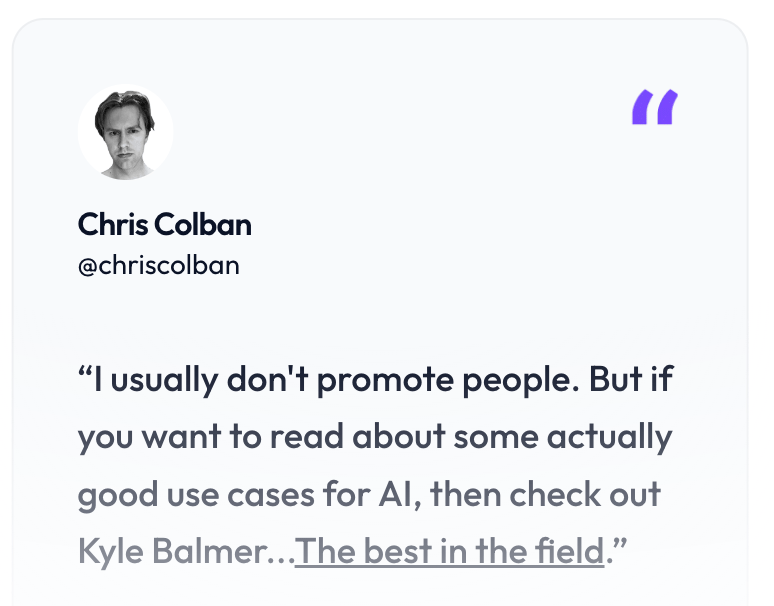
Thanks Chris! Go follow him on X!
These are not reviews of a particular product or service but instead a general testimonial about you and your business.
This generality makes them very powerful as we’ll see as we go through the week. It allows me to deploy them in many different ways: on websites, on social media, on sales pages, in marketing emails etc. etc.
They become extremely powerful assets that once collected can be used again and again.
How to get them?
People do not write them automatically. Unfortunately!
You need to nudge people, often multiple. Sitting down to write a testimonial takes time and people are busy.
I like to nudge at a few different points, specifically:
during email sequences after free sign ups. Ie. “if you are finding this valuable please can you tell me how and in what way?”
after purchases - a follow up a few days later asking for a review and a nudge a month or so later once they’ve had time to fully use the product.
after providing a service as part of the feedback collection.
Most of your customers (as long as your product/service is good!) will be happy to write you a testimonial - it’s just we need to i) nudge them and ii) make it as simple as possible for them.
Here’s a prompt to write a personal request that you can email them. This will be the heaviest hitting and most likely to lead to a testimonial.
Act as my marketing assistant

I want to request a testimonial from a recent purchaser

Their name is [name]

The product they purchased was [product name]

and the product is: [Description of the product including benefits]

Please write a request email asking them to provide a testimonial

Focus on how they should now be experiencing the benefits of the product.

Explain that it would be a personal favour and extremely helpful if they are able to provide a testimonial.

Finish with a call to action for them to give a testimonial here: [give link]

Keep it to 300 words max. Don't overdo the language, keep it simple.
I’ve run this using my 10 Steps programme as the product, providing the description to ChatGPT.
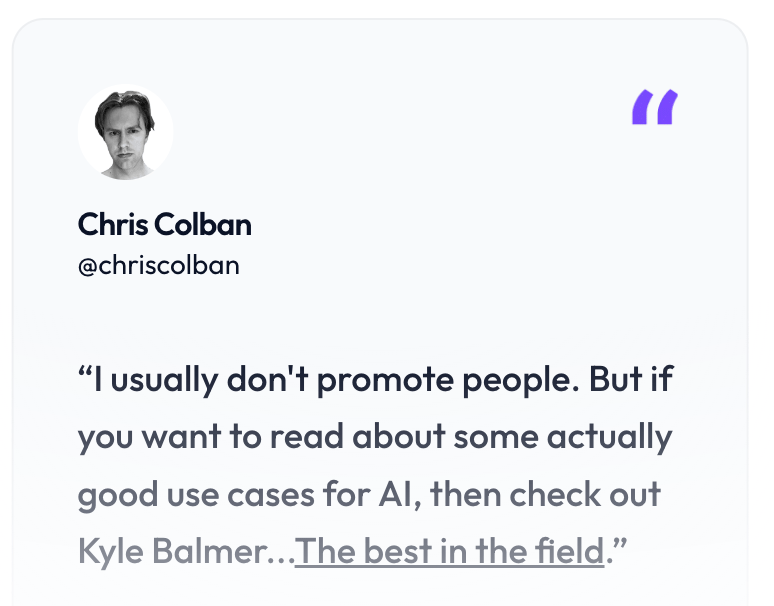
That’s perfect - it’s tailored to their product specifically. You can go further and add in any other details you know about them from engaging with them previously.
Is it more work to personalise and send individually? Yes absolutely!
But remember that these testimonials are worth their wight in gold and will help you sell and help more people in the future.
For collecting the actual testimonial you can ask them to respond to the email (simplest, fastest) with their written testimonial.
Alternatively use a tool like Senja.
That’s what we personally use (and love) as it managing, collating and keeping track of hundreds of testimonials becomes a logistical nightmare later on! Senja is free to start with and is my personal recommendation.
Email is great but often you’ll find the fastest way to get to people is a quick DM or even text message.
This is primarily the case if you’ve made the sale via X or a similar social platform and can shoot them a quick message. This is the highest hit rate method as it’s much harder for them to ignore!
You can also do this via text if they’ve purchased from you and you have a phone number attached - that’s a little more complex but has super high competition rate.
In either case we need a short short short message!
Below the previous prompt let’s use a conversion prompt:
Convert this into a DM I can send on Twitter

Do not include the link in first message, instead ask permission to send link
This will kick out a shorter version:
Notice how I haven’t dropped the link in. This is important if you haven’t talked to them on social before. If you drop a link into the very first message then chances are your message with go to Message Requests or a similar “spam” folder in DMs.
Instead keep it plain text and ask if you can send the link - once you get a response and OK ping them the link.
Get everything rolling with text first of all. These will be the bedrock of most of your social proof so just doing today’s work will get you a long way.
Tomorrow we’ll look at video testimonials - a much rarer and hyper powerful format.
Here’s a reminder of what we’re covering this week:
Part 1: Collecting text testimonials
Part 2: Capturing stories with video testimonials
Part 3: Strategies to incentivise
Part 4: Social proof goes social media
Part 5: Supercharge your website
Until then, keep PROMPTING!
Kyle
Before I jump I want to share the X Space I participated in yesterday. We chatted about AI entrepreneurship, branding, growing newsletters at zero cost and much more. The recording is now available here:
I’ve live right now on this space
Hop on!— Kyle Balmer (@iamkylebalmer)
11:40 AM • Jan 15, 2024
Today we’re looking at video testimonials.
Video testimonials are like written testimonials on steroids.
Much more than text, video testimonials can capture your customer’s emotions and feelings about your products.
You’ll (probably!) have far fewer video than text testimonials.
And that’s absolutely fine - their potency more than makes up for it.
Asking for video testimonials is very similar to asking for text testimonials.
The main barrier is that (most) people hate being on video!
We need to i) assuage their fear of shooting a video and ii) make it as technically simple as possible for them.
Basically we have to remove barriers to make everything easy.
Any remaining fricton will be enough for them to think “I’ll do it later”.
Here’s our prompt for an outreach message:
Act as my marketing assistant

I want to request a testimonial from a recent purchaser

Their name is [name]

The product they purchased was [product name]

and the product is: [Description of the product including benefits]

Please write a request email asking them to provide a video testimonial

Prompt the questions:

Who are you?
Why did you start using the product
What do you like most about the product

Explain that it would be a personal favour and extremely helpful if they are able to provide a testimonial.

Explain that they just need to shoot a video on their phone and not to worry about quality. We're most interested in what they have to say, not the video quality.

Keep it to 300 words max. Don't overdo the language, keep it simple.
This will generate a basic testimonial request, adapted for video.
Here’s the most relevant section :
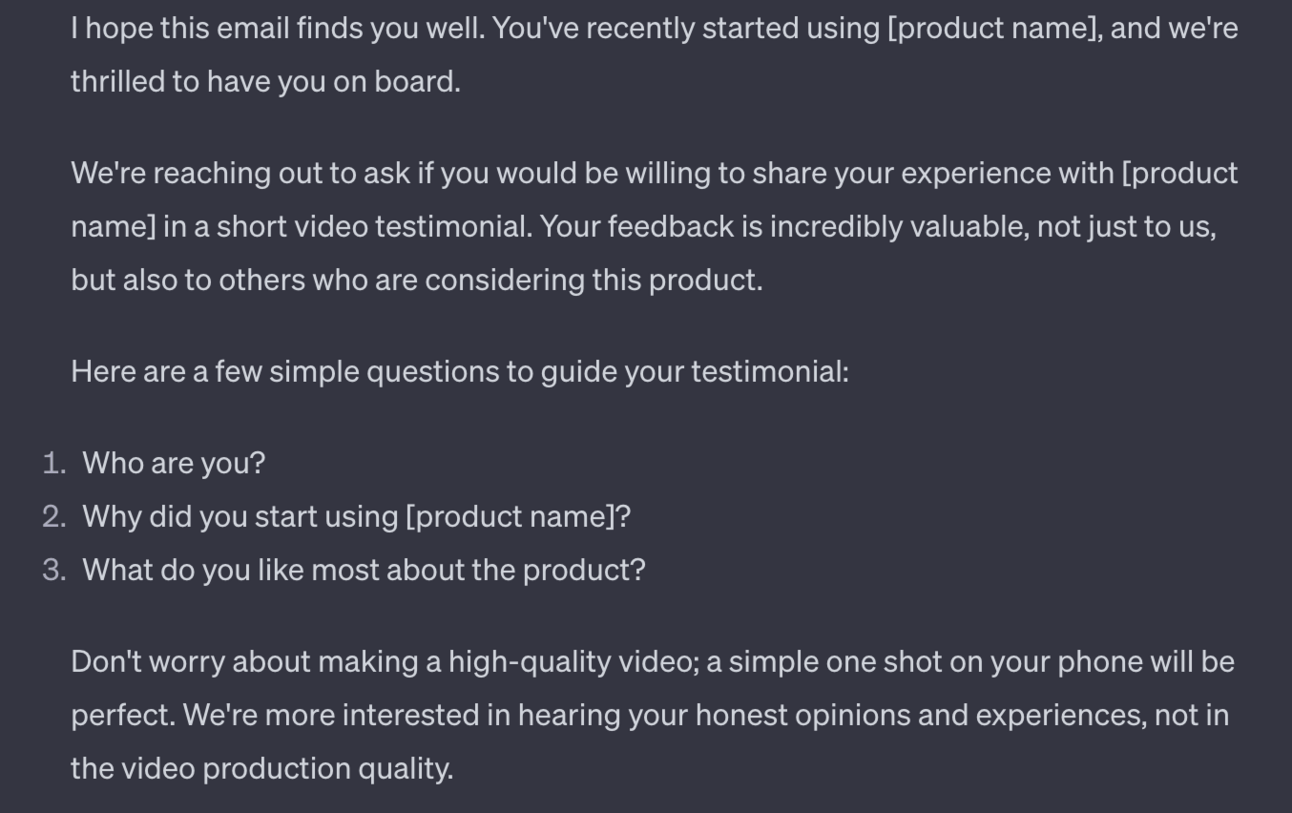
This will work with some people but ideally we need to make this even easier. Two methods we can use here:
incentive
simple record tool
First up, additional incentive. Video testimonials are worth a fortune to your business because they’ll help you convert more.
Incentivising video testimonials is a high ROI investment - basically find something valuable that you can give them for free in exchange for a testimonial. The more valuable the better - you’ll get a higher submission rate.
In your messaging position it as a “thank you gift” rather than a straight up bribe! 😂
Second, make the recording even easier. Everyone can record something on their phone but there are still barriers - they have to then email it to you. Reducing the number of steps is important.
Personally I use Senja for this - it has a built in video collection tool that captures from the customer’s camera and uploads straight to you. Here’s what it looks like:
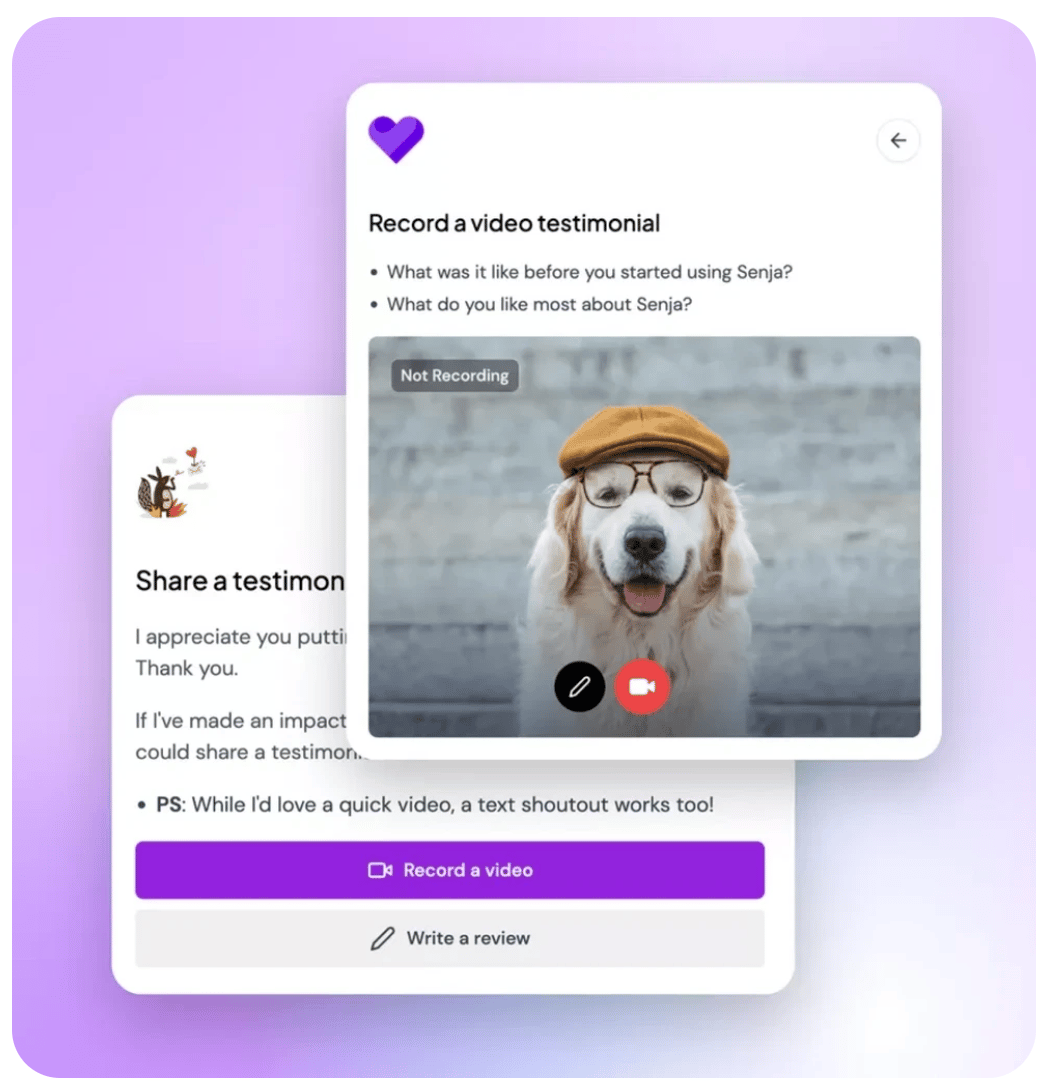
Very slick.
Again the name of the game here is to make the process as easy as humanly possible for our customers by removing any possible resistance.
Once we have a video testimonial we can also convert it to a text testimonial.
This allows us to double dip and have it in multiple formats.
To do this we need to quickly transcribe the audio to text.
If the testimonial is a few seconds long then go ahead and do this manually.
Otherwise, there are multiple AI tools that allow you to transcribe quickly.
On phone I personally use the Captions app. I can upload a video, generate a transcript. and then download the transcript.
One challenge is that transcriptions are often quite verbose - so to turn it into a tighter written testimonial use this prompt:
Act as a marketing manager

Below you'll find the text of a transcribed testimonial

It's in natural spoken language and I want to convert it into a more concise written testimonial

Review the testimonial and extract the more positive, descriptive, emotional aspects of the testimonial to create a truncated version - maximum 4 sentences.

Do not change any language - this is a quote and must remain accurate. Retain the order of words within sentences, do not create new sentences.

[copy paste testimonial transcript]
Here’s an example transcription:
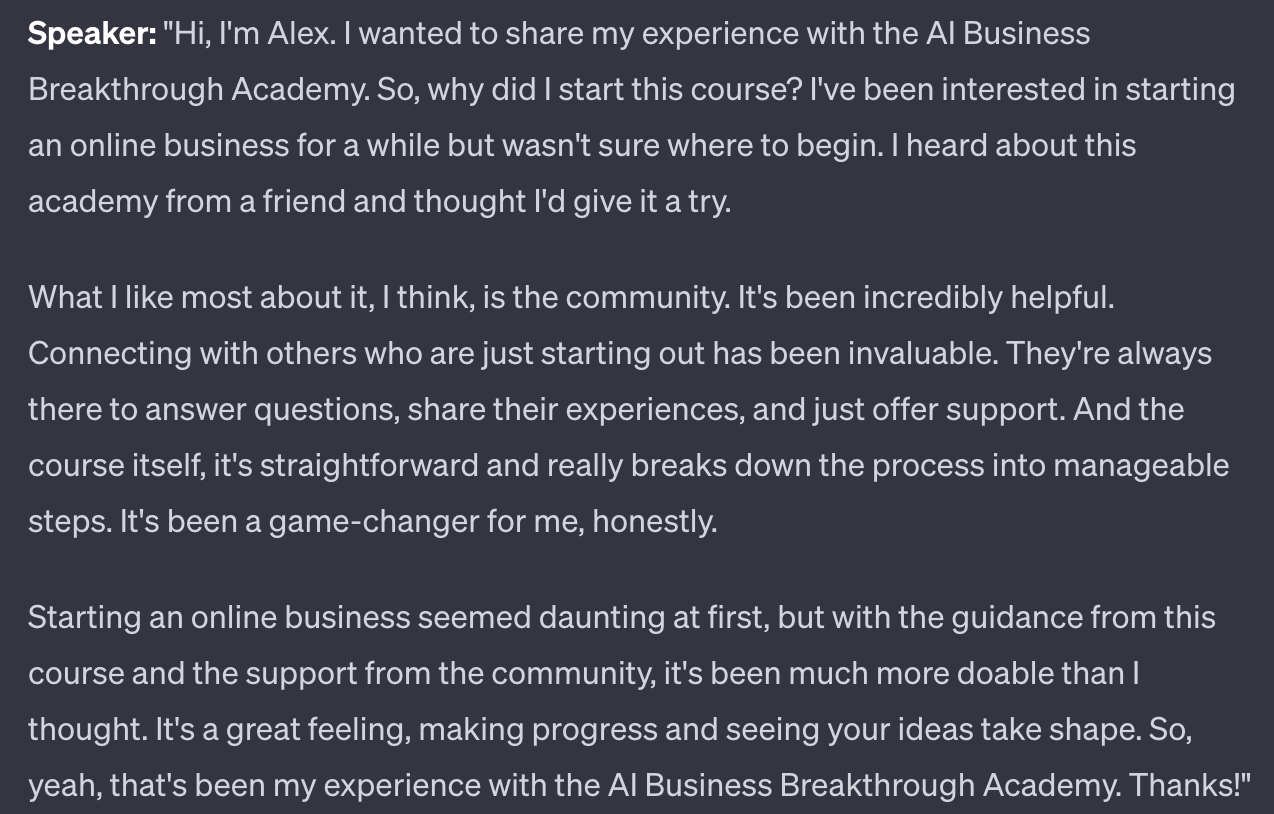
We put this through the prompt above and get this output:
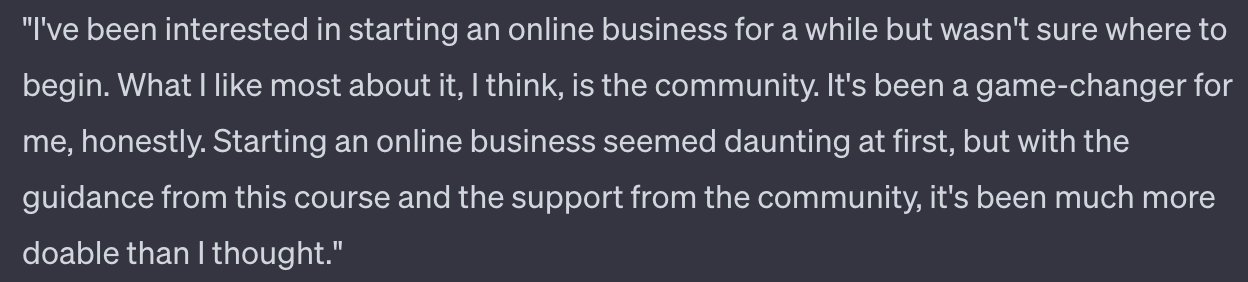
The prompt extracts the best lines and condenses into a short punchy (but still accurate!) written testimonial.
Use this as well as the video version. We’ll talk about how to deploy testimonials in a later Part.
We’ve covered the two main types of testimonials - written and video.
In the next Part we’ll cover some more strategies to incentivise and increase the number of testimonials you get. Then we’ll wrap up by looking at how best to use your testimonials to generate more sales.
Here’s a reminder of what we’re covering this week:
Part 1: Collecting text testimonials
Part 2: Capturing stories with video testimonials
Part 3: Strategies to incentivise
Part 4: Social proof goes social media
Part 5: Supercharge your website
Until then, keep PROMPTING!
Kyle
Today we’re looking at more advanced tactics to supercharge your social proof collection.
With social proof the name of the game is overwhelm - we want to be able to show lots and lots of high quality testimonials.
We don’t expect them all to be read.
Instead we use the sheer volume of praise to convince prospects.
This Part will focus on speeding up acquisition so you can overwhelm with positive testimonials!
The fastest way to gain a high volume of positive social proof is to operate at volume.
Think about it - if you sell 10 products you might get 1 testimonial. 10%.
If you sell 1000 products you might get 100 testimonials. Again, the same 10%.
OK great you’re thinking - I just need to sell more? Great, really useful. Not. 😂
What we’re going to do is instead offer something for free but with a “bonus” that we send when someone gives us a testimonial.
This allows us to get volume (by using a free offer) and incentivise testimonials (by using a bonus bump).
You are still getting a testimonial - it’s just for a free product rather than a paid one. That’s fine though because it will still be about you and the valuable stuff you have produced. This gives us a really solid base of testimonials - most importantly: at scale.
First up you need a killer freebie.
Let’s use a prompt here:
Act as a content marketer

My business niche is [business niche]

My customer main problems are [list out problems]

Prepare lead magnet ideas.

The lead magnet ideas should be highly valuable, text based, short and easily consumable, relevant to the main problems my customers have.

Give me 10 alternatives and ask for my decision. Wait for my decision before continuing.

Then for the lead magnet I want to have a bonus offer. This bonus should build on the initial lead magnet and follow the same requirements.

Provide 10 bonus ideas and ask for my decision. Wait for my decision before continuing.

Then write the lead magnet outline and bonus outline in full.
For the example I use these parameters:
My business niche = “helping businesses implement AI for growth”.
main problems = “ lack of understanding about AI, uncertain where to start with AI, lack of technical skill.”
The prompt will first generate 10 ideas.
Here are the first 5 I got:
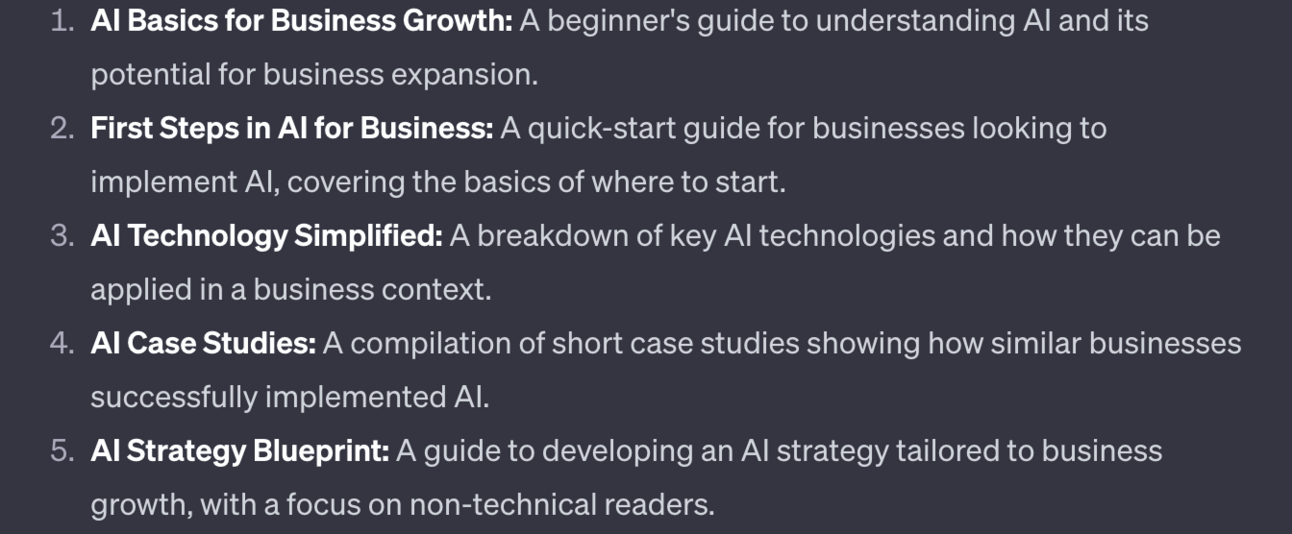
Tell ChatGPT which you prefer to continue. I’ll go with #2.
ChatGPT will then generate bonuses based on that specific freebie. Here are the first 5 ideas it gave me:
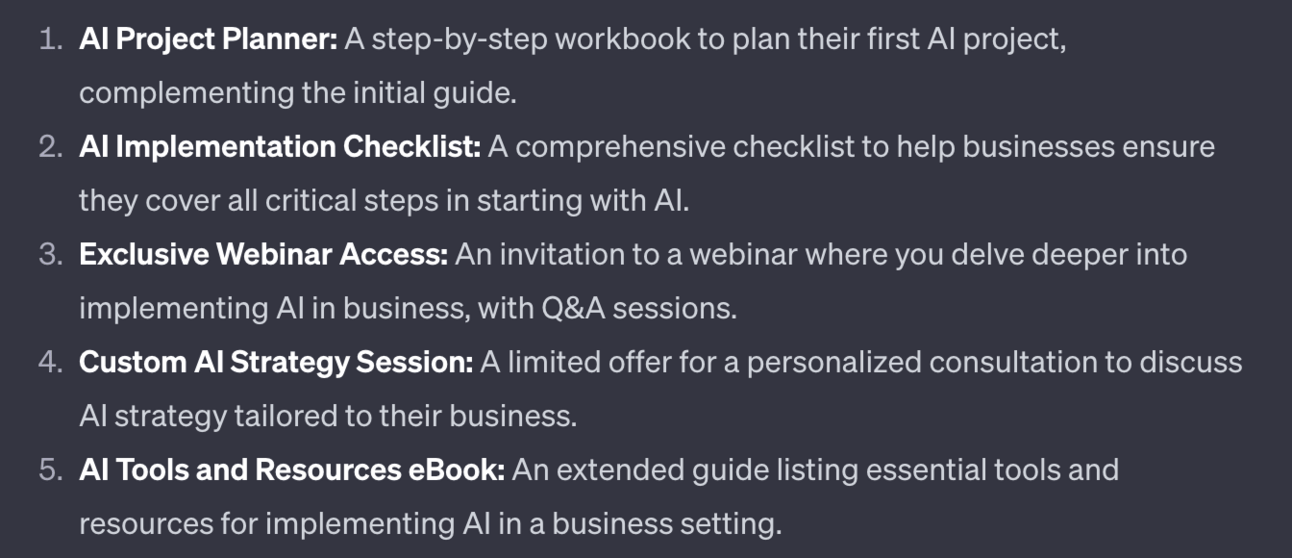
I love the first one, AI project planner, and know that I can easily mock that up. So I make that decision. ChatGPT will now outline both the freebie and its bonus.
These will be outlines only. You can ask ChatGPT to flesh them out in full but personally I’d recommend you work from the outline build the freebie yourself our outsource. It needs to be high quality!
You now have the two parts needed: the freebie and its bonus.
The setup now is:
publicise the freebie
when delivering the freebie mention there’s a bonus for giving a testimonial
send a testimonial reminder a few days after delivering the freebie
if they send in a testimonial send the bonus
I personally use DM giveaways on X to do the first steps. I’ll outline this properly in the Premium Prompt below.
Other ways to do this are to set up the freebie in Gumroad as a free product then have “thank you” email mention the testimonial bonus. Then they can either manually email you the testimonial or use Senja.
The exact technical set up depends on your tech stack but this is the basic shape and can be applied using whatever tools you use. Need specifics? Post on X with your current tech tools and tag me in. I’ll see it and answer.
This method works really well alongside an X DM Giveaway.
Earlier this week I dropped a post on this over on X but want to bring it here to make sure you don’t miss it. I know not all of you are on X!
In it I show you how I consistently publish giveaways that lead to 500+ X followers and few hundred newsletter subscribers.
Per post.
Here’s the full thread:
I've just added 700 followers + 500 newsletter subscribers from a single post
No boost, no advertising
And I can do this consistently
This thread will show you how
It's a long one so bookmark it.
ok let's do this
— Kyle Balmer (@iamkylebalmer)
5:09 PM • Jan 15, 2024
The trick now is to combine this particular strategy with your testimonial incentive campaign as outlined above.
In the DM where you send them the freebie adjust the messaging to include something like this:
“PS. If you find this useful I’d love it if you could write a quick review. Who you are, what you do and why you found this valuable. Send that over to me and I’ll send you a special bonus to say thanks - [add bonus details]”
Then just roll the campaign like usual, get the X followers and lots of great testimonials!
You now have the tools to start pulling in lots of testimonials.
The next step is how we deploy them. In the final two Parts I’ll cover using social proof on social media and on your website.
Here’s a reminder of what we’re covering this week:
Part 1: Collecting text testimonials
Part 2: Capturing stories with video testimonials
Part 3: Strategies to incentivise
Part 4: Social proof goes social media
Part 5: Supercharge your website
Until then, keep PROMPTING!
Kyle
Over the last few Parts we worked on collecting text and video testimonials.
Well, what are we going to do with them now?
In this Part we look at the power of testimonials on social media.
The first use of your new testimonials is to make sure to publish them on social.
First we’ll cover text testimonials then video.
For text there are a number of levels of doing this:
text
designed image
designed image
Each is more complicated than the last.
First up is just copy/pasting the text of a testimonial and posting it as a quote to social.
I see people doing this but don’t personally - the reason: anyone could make up anything! We need to build trust, not destroy it.
The second option is a properly designed image.
For instance look at these Canva templates:
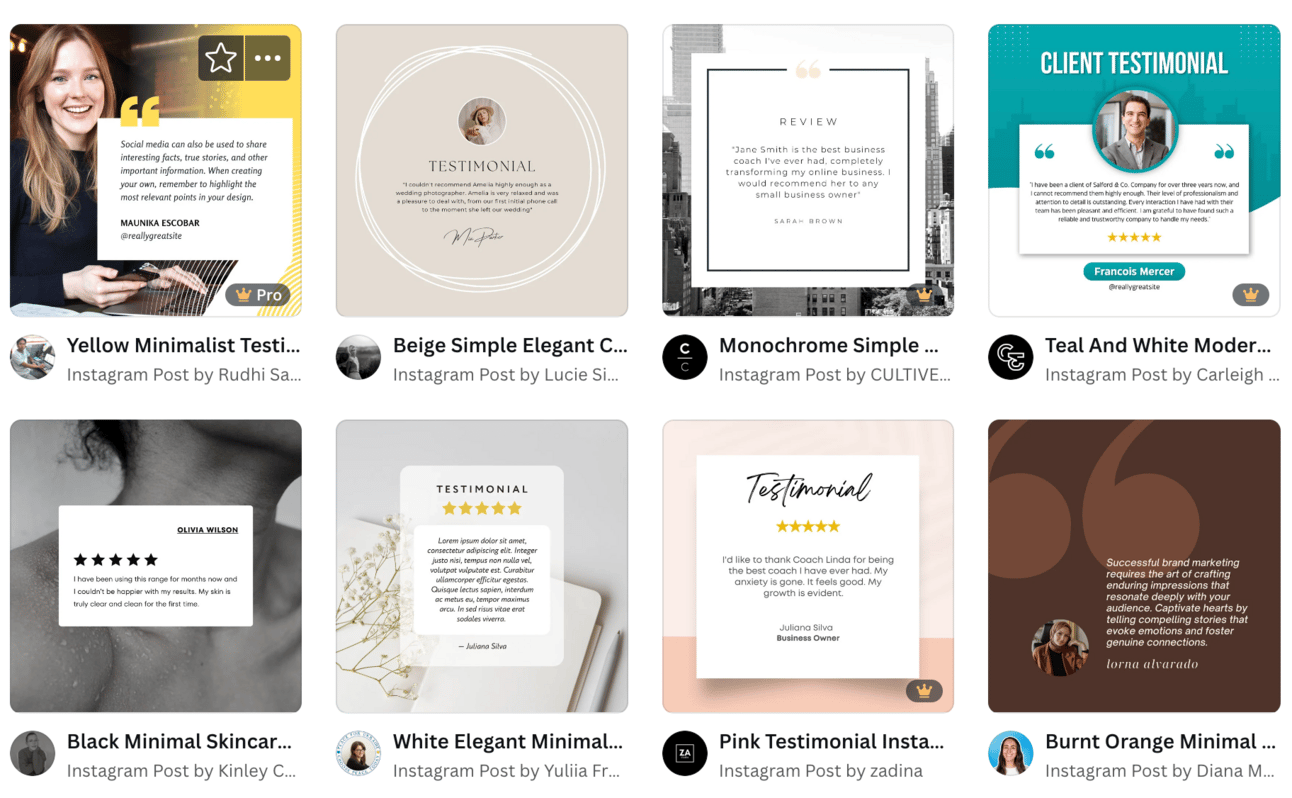
To make these yours you’d do some branding adjustments and then simply copy paste testimonial text into the template.
It’s some manual work but Canva thankfully makes it a lot easier.
Got lots and lots of testimonials? Senja can output beautiful graphic versions for you - if you have a larger volume and need a workflow this is definitely the way. There are a tonne of social asset templates that it can export to - some examples here.
What about the third option - this is the one I tend to use the most myself: simply screenshot new testimonials.
Here’s an example:
Another stellar review
Love you guys
— Kyle Balmer (@iamkylebalmer)
4:15 PM • Jan 7, 2024
And one from an email testimonial:
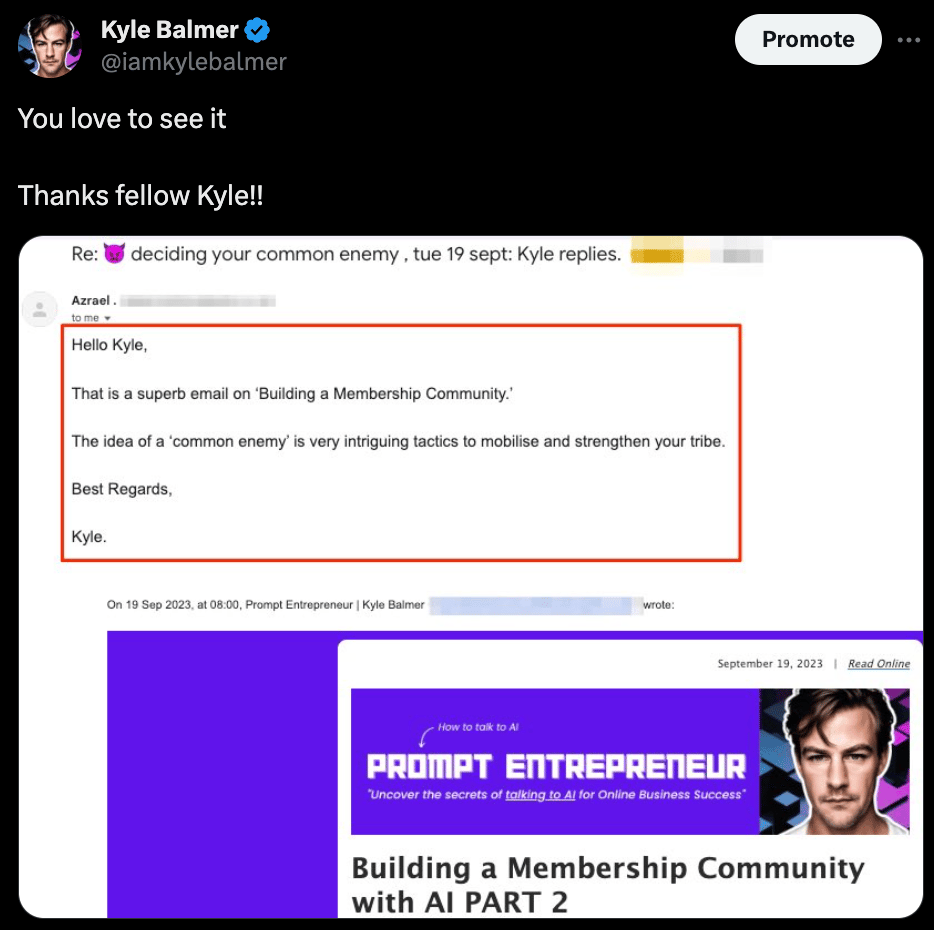
Crude right? Looks unprofessional? I agree!
But this is what works best for social engagement for me.
Probably because it’s looks the least manufactured? Because…it’s not manufactured at all!
This causes a pattern break that disarms people. Most scrollers are used to flash looking ads from companies. A raw screenshot undercuts that and stops the scroll.
Obviously testing is the name of the game here. I’d recommend running some social proof testimonials as both a more designed version and a basic screenshot. Same text, different format.
See what works better with your socials.
OK what about video?
First thing first I recommend hardcoding some subtitles in.
Why’s that?
Most people scroll social with their sound off. Unless they are on the same London bus as me and then they are using Tiktok at full volume like a sociopath.
Adding subtitles is thankfully nice and easy nowadays. I personally do mine on my phone using an app called Captions.
You upload the video and it’s automatically scanned for audio to generate subtitles. You choose the style and then you are good to go. Very very simple and the basic version is free.
What about editing? My recommendation is do not edit. Again we are building social proof here and authenticity makes the videos more believable.
If your brand is more corporate and professional then take all of the above with a pinch of salt. My personal opinion is still that you’ll do better with less edited, more “real” assets but that’s a bigger discussion!
To wrap up, how often should you be posting some form of social proof?
I find that one a day is a nice balance. More if you can spin it into a success story about why the customer is doing great. Celebrate their wins. The fact that they happened to use your product is a nice by-product!
Chances are you have a lot of text testimonials and not that many video testimonials.
To balance this out let’s look at how we can convert text testimonials into videos.
Creating custom animated text is tricky but there are now AI tools that can help us out.
I like Typeframes. There’s a demo to play around with the interface:
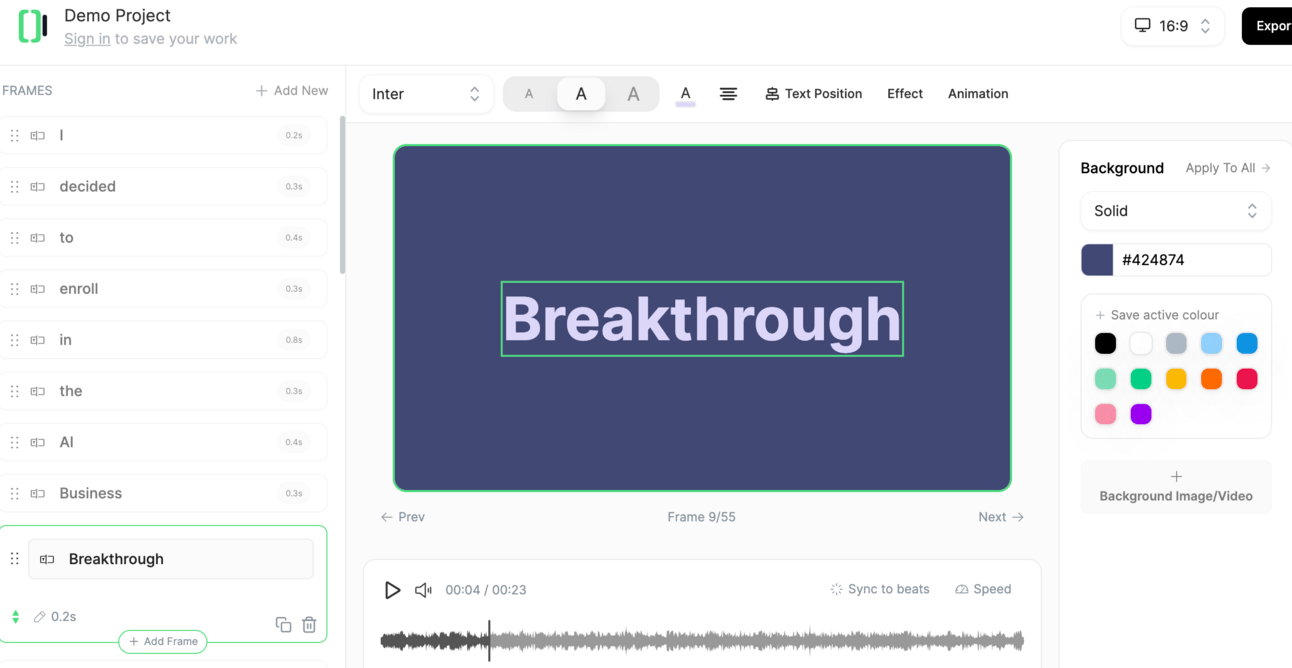
The basic idea is that text can be made into rapidly animating videos complete with music and lots of eye catching colour changes. Much more engaging than a flat text testimonial and well worth rotating into your mix to test.
If you want to stick to the more “authentic,” less produced type of video then one alternative is to record yourself reading the testimonial.
This works well if you have a heavy focus on personal brand.
The video would literally be you thanking the person and reading out their kid words, reacting and commenting as you go. Very raw, very real.
As with all social media content test test test and see what works best!
Here’s a reminder of what we’re covering this week:
Part 1: Collecting text testimonials
Part 2: Capturing stories with video testimonials
Part 3: Strategies to incentivise
Part 4: Social proof goes social media
Part 5: Supercharge your website
Until then, keep PROMPTING!
Kyle
Wrapping up this guide by looking at how best to use testimonials as social proof on your website.
Social proof should be used all over your website - your homepage, about me page, blog…everywhere!
But it is most powerful on pages where you are getting someone to act.
For example:
on newsletter sign up page to get an email
on a sales page to convert a sale
on a call booking page to secure a booking
First I’ll give you some advice and examples about where I find them valuable.
Then we’ll going to look at how to analyse your current website and find the best places for testimonials.
I’m going to use one of my sales pages as an example.
Because I know it intimately. And…so you go visit it. Cheeky eh?
The site is for my AI Business Breakthrough Academy here: link.
Study this as a template and then you’ll start to see social proof everywhere. You just need to tune your mind to the marketing tricks being played on you!
Right after the header my first testimonials kick in:
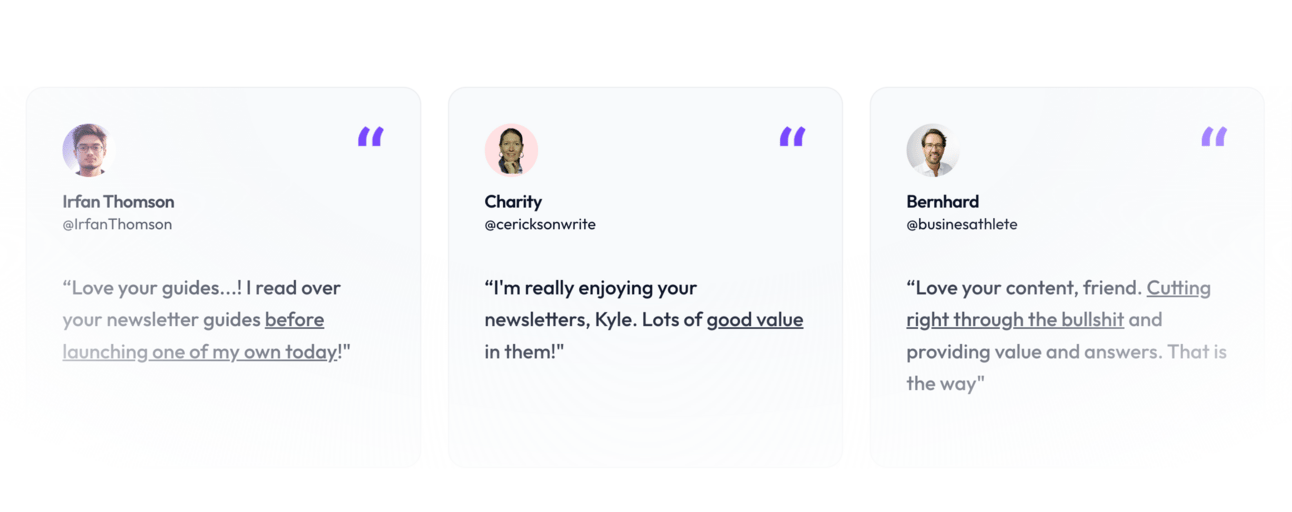
These are literally the second thing you see on screen - kind words from wonderful people out there who have taken a moment to write something down.
This particular format is a slider - it slides in multiple testimonials, one at a time. Will someone sit and read them all? I doubt it! The point is simply to show that there are lots!
Throughout the long form text of the article you’ll also notice that I break up sections with testimonials. They act as a “OK we’re done with this bit, onto the next section” break. I just use testimonials as the breakpoint between sections.
A little further down you’ll notice I use the “raw” technique we used in the last Part:
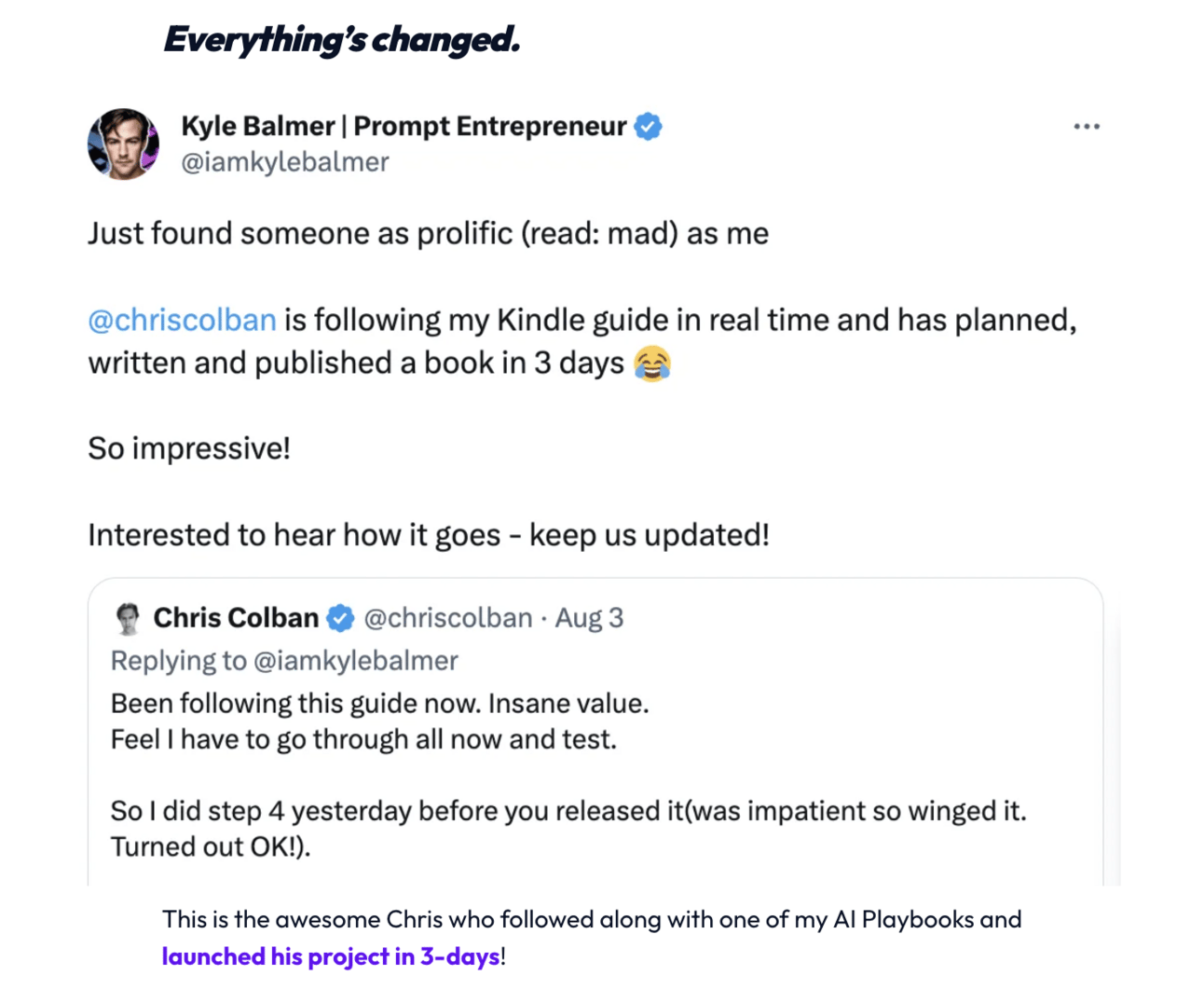
Here I break up some text to drop in a screenshot of a Twitter message - complete with date! I could have converted this to a nicely designed graphic asset but instead kept it as a screenshot to keep it “real”.
The last big area I’ll use testimonials is around the sale.
Personally I’ve found they work really well just after the price is given. That’s the moment when someone knows the price and have a decision to make. That’s when I drop in a LOT of testimonials from people just like them to help with the decision.
We’re going to use prompts to help us specifically with a sales page like this. Want to adapt to a newsletter sign up page or similar? No problem - just adjust the prompt and remove “sales page”.
Let’s use a prompt that can assess a page and make suggestions:
Act as a sales copywriter

Make note of all the places I use social proof like testimonials or reviews

Then assess this sales page and make suggestions for where I should include more social proof

Give specific sections of the page that would benefit from more social proof and give examples of the type of social proof to add

[Add website URL]
You’ll need ChatGPT with web access for this. If you don’t have that use Bing/Copilot.
The prompt will cause ChatGPT to scan your site and generate a list of suggestions:
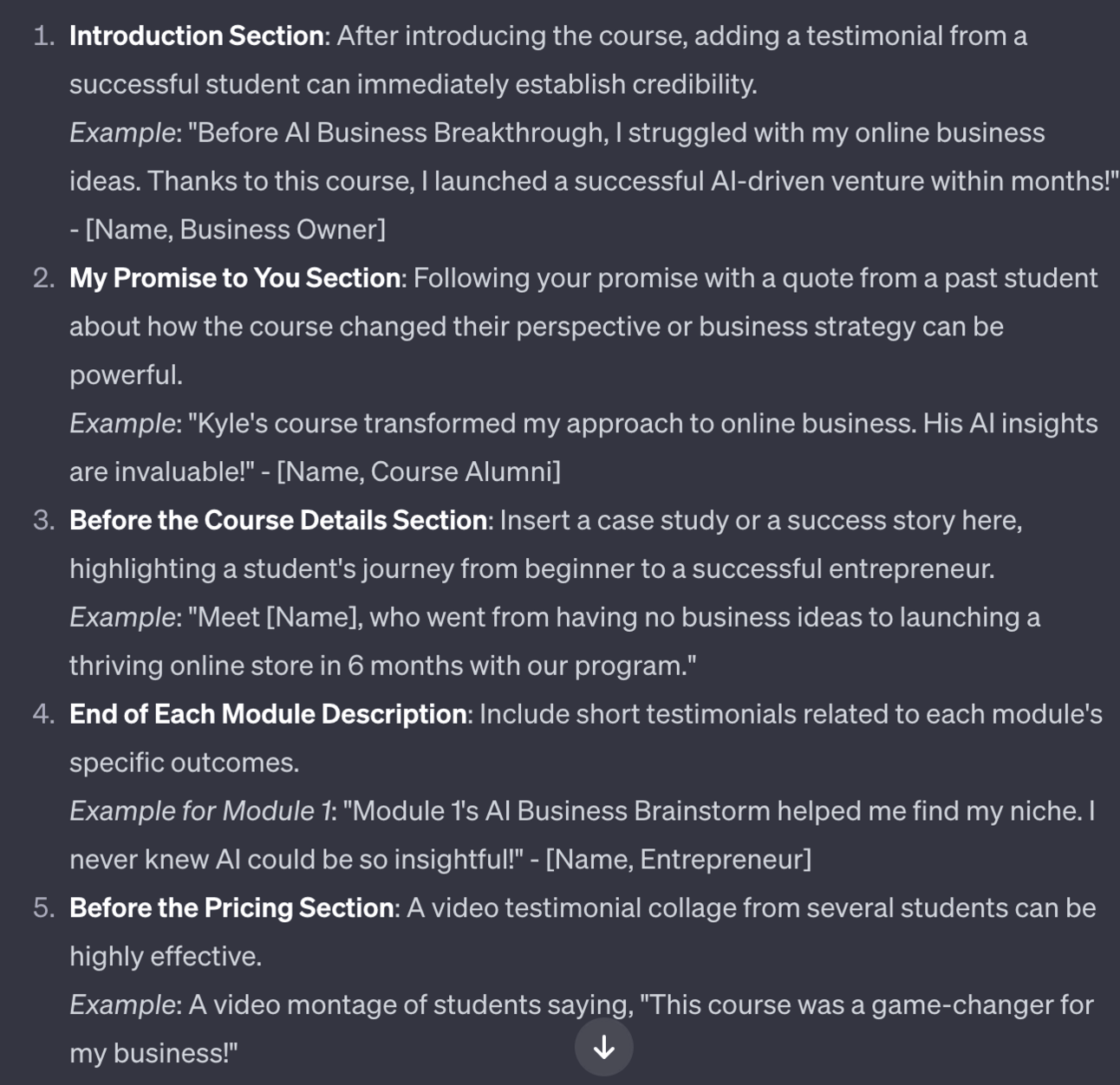
Killer!
Go through your collected testimonials and look for ones that would fit.
In Premium I’ll about how to specifically collect these.
Lets go a little further with our Premium Prompt.
We’ve just generated a list of testimonials that would be helpful to have.
But what if you don’t have these yet?
Let’s use a simple prompt to help us out here:
Write a survey that I can send to past customers that elicits these specific testimonials.

Do not simply ask the exact question but write more open ended questions that allow people to naturally answer.
This will create a survey to generate the testimonials that we need.
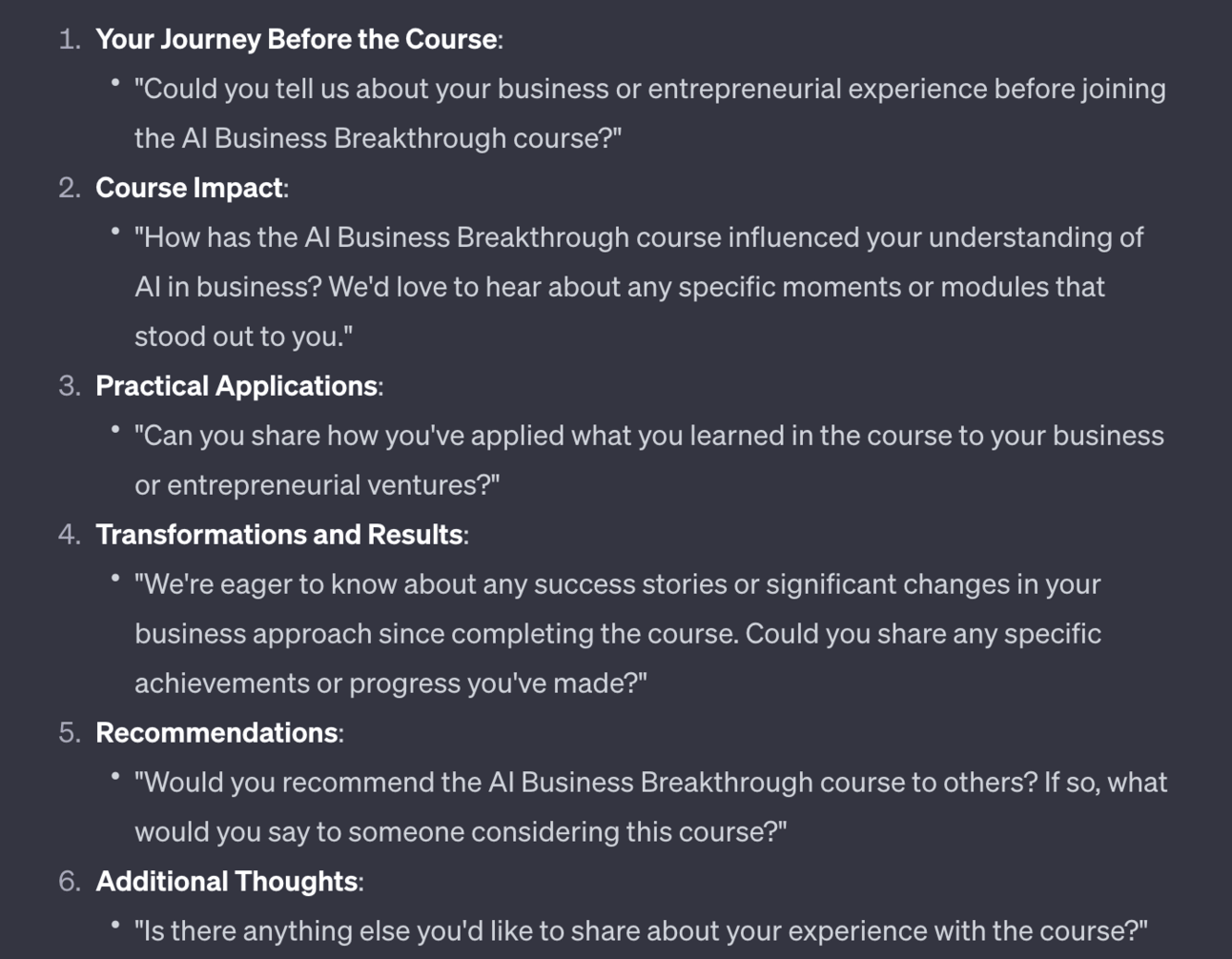
Send this out as a survey (Google Forms is fine) to past customers and you’ll have the killer testimonials you need to flesh out the webpage.
We only need a single good testimonial per section so if you send to a handful of customers you should get the coverage you need.
That’s it - we’re again at the end of the week!
Hopefully this has been super valuable in giving you a social proof strategy to apply to your business.
Here’s a reminder of what we covered this week:
Part 1: Collecting text testimonials
Part 2: Capturing stories with video testimonials
Part 3: Strategies to incentivise
Part 4: Social proof goes social media
Part 5: Supercharge your website
Tomorrow (Saturday) I’ll send out the roundup issue with all 5 Parts compiled.
Until then, keep PROMPTING!
Kyle
Unlock the power of social proof to elevate your sales game with our comprehensive playbook, '⭐ Social Proof to Supercharge Sales using AI'. In a world where trust is dwindling, this playbook offers you the tools to harness the influence of testimonials, case studies, and customer referrals, transforming potential buyers into loyal customers. Dive deep into strategies that go beyond mere promises, enabling you to showcase the genuine experiences of your satisfied clients. This playbook not only guides you through the steps of collecting powerful social proof but also demonstrates how to strategically deploy it across your marketing channels for maximum impact.
This playbook is designed for entrepreneurs, marketers, and business owners who struggle with building trust in an increasingly skeptical online marketplace. If you find it challenging to convince potential customers of your product's value or feel overwhelmed by the competition, this playbook is perfect for you. With actionable insights and strategies, you will learn how to turn the positive experiences of your existing customers into powerful marketing assets that drive sales and foster loyalty.
No prior experience is required. This playbook provides step-by-step guidance suitable for beginners and seasoned marketers alike.
While individual results may vary, implementing the strategies in this playbook can lead to noticeable improvements in your sales within a few weeks.
Absolutely! The strategies outlined are versatile and can be adapted for various industries and business models.
You'll need basic access to social media platforms, email marketing tools, and any video recording software for testimonials. We also recommend using a tool like Senja for managing testimonials.
Yes! By effectively using social proof, you can convert more leads into customers and build a loyal following that trusts your brand.