
AI Business
Are you tired of feeling like a failure when it comes to selling?
Start ReadingI need to confess something: I'm rubbish at selling.
Or at least, that's what I've always told myself.
For years, my "sales strategy" has been what I like to call the Information Dump and Run. You know the one - share loads of valuable information, quietly mention there might be something to buy somewhere, then practically sprint away before anyone can object.
Heaven forbid we actually sell something, right?
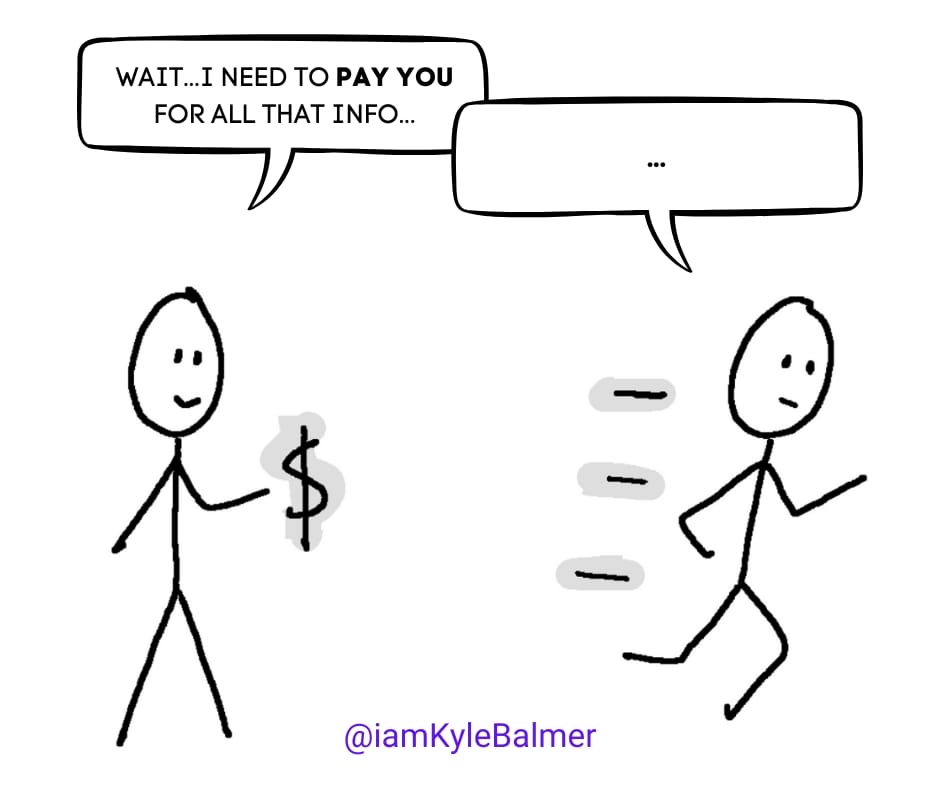
This has all shifted recently and now I’m delivering full blown sales webinars in the style of Russell Brunson.
It’s been a massive shift and in this Playbook I’ll cover how you can make the shift yourself and rocket your business.
Let’s get started:
Sales webinars for the non-salesperson
My journey from information dumper to sales convert
The internal barriers keeping us from selling
The framework that changed everything
Something happened this year that completely changed my perspective. And it wasn't what I expected. It wasn't some fancy sales training or breakthrough moment. It was simply... clients throwing money at me. And me trying my best not to catch it.
Let me explain.
Earlier this year, I started doing AI workshops for corporate clients. When I first started, I charged £100 per hour because, well, that seemed "reasonable". And by reasonable, I mean safe. Non-threatening. The kind of price where you don't feel like you're bothering anyone. Terribly British of me…
Then something weird happened.
A client asked for more workshops. I was pretty busy building other parts of the business, so I thought I'd bump the price up a bit - maybe they'd say no and solve my scheduling problem. They didn't. They said yes.
So I did it again with the next client. Bumped it up more. Still yes. No hesitation.
Keep in mind, I'm still delivering the exact same value. Same content, same expertise, same results for the client. Just charging more for it.
This pattern kept repeating. I'd raise my prices, convinced THIS would be the time people would tell me to “piss off, mate." But they didn't. They kept saying yes. Over and over again.
Fast forward a few months and the average is £1500 per hour and the record is now £4,000 per hour.
Let that sink in. That's a 40x increase from where I started! It’s also what I used to make in a month but in an hour…which is…kinda mad.
Was that because my value had increased 40x? Nope. It was because I started to ask the proper price…
And here's the kicker - not a single client has complained about the price. Not one has said "this wasn't worth it." In fact, they've rebooked me and referred me to others.
The barrier wasn't them. It was me.
I was saying "no" for them before they ever had a chance to say "yes."
But here's where it gets interesting. Because even after this pricing revelation, even after seeing that people would happily pay premium prices for value, I still had this massive mental block about doing “proper” sales webinars.
And it wasn't because I doubted what I was selling. Quite the opposite.
I know my stuff helps people. The AI workshops? They're transforming businesses. Teaching people how to use AI isn't just about technology - it's about giving them back hours of their lives, helping them stay relevant in a rapidly changing world, showing them how to build sustainable businesses in the AI era. Hyper valuable for companies.
The Playbooks? I get messages daily from people telling me how they're changing lives. How they've finally found clarity in their business. How they're making their first real money online or growing their business faster than ever.
I've written about this before in my Authentic Selling playbook - when you truly believe in what you're selling, it's not really selling. It's helping. It's serving. It's genuinely improving people's lives.
So why did the idea of doing a proper sales webinar fill me with dread?
My stomach was in knots for days before my first one. I mean proper anxiety. Convinced people would hate it. Certain they'd be furious about being "sold to." Imagining the angry messages, the unsubscribes, the "how dare you" responses.
I almost cancelled it three times.
But…
…They loved it.
No, seriously. People were sending messages during the webinar saying how much they were enjoying it. How helpful it was. How much they appreciated the structure and clarity.
"This is exactly what I needed to hear." "Finally, someone explaining this properly!" "Love how you're breaking this down."
It was literally the opposite of everything I feared.
I even got to the sales portion and 90% of people stayed. I was expecting a mass exodus but that was just my fears talking. Turns out 90% of people i) didn’t care or ii) wanted to hear the sale.
Know what made the difference? I followed a framework. Specifically, Russell Brunson's “Perfect Webinar framework”.
Here's what I've learned: Most of us who consider ourselves "not natural salespeople" are actually sitting on goldmines of value. We're experts in our fields. We have genuine solutions to real problems.
But we're doing everyone a disservice by hiding behind "information only" content.
Because here's the truth: Information alone doesn't create transformation. I used to think that was enough - just give people the facts and they'll act on them. But I was dead wrong.
Think about it - we all know we should eat healthy, exercise regularly, save money. But knowing isn't enough, is it? People are still unhealthy and struggle with money. Even though they know what needs to be done.
Transformation requires two things: information AND emotion. The head AND the heart.
People need the logical structure, sure. I’m great at that part!
But they also need to feel it. They need to emotionally connect with the possibility of change. They need to get excited, inspired, maybe even a little uncomfortable with where they are now.
That's what a proper sales webinar does - it bridges that gap between information and emotion. It takes people on a journey that engages both their logical brain ("here's exactly what to do next") and their emotional core ("imagine how this could change everything").
And over the next week, I'm going to break down exactly how to do it, piece by piece.
Here's what we'll cover:
Part 1: Sales webinars for the non-salesperson - why this framework works and what to expect
Part 2: The Big Domino & Opening - how to start strong and set the stage
Part 3: The Three Core Secrets - the heart of your presentation that keeps people glued
Part 4: The Stack & Offer - turning interest into action without feeling sleazy
Part 5: Technical Setup & Execution - making it all work smoothly (even if you're tech-challenged)
The framework itself is deceptively simple. At its core, you're:
Breaking down false beliefs that hold people back
Sharing your solution through story and structure
Making an offer that feels like a no-brainer
But like many simple things, the magic is in the execution. And that's exactly what we'll be covering. With a little help from AI of course.
What about 60+ Different AI Business Courses that help you — build an audience, make sales online, and build your dream business — using the horsepower of AI.
If you feel this is not for you — Unsubscribe here.
Keep Prompting,
Kyle
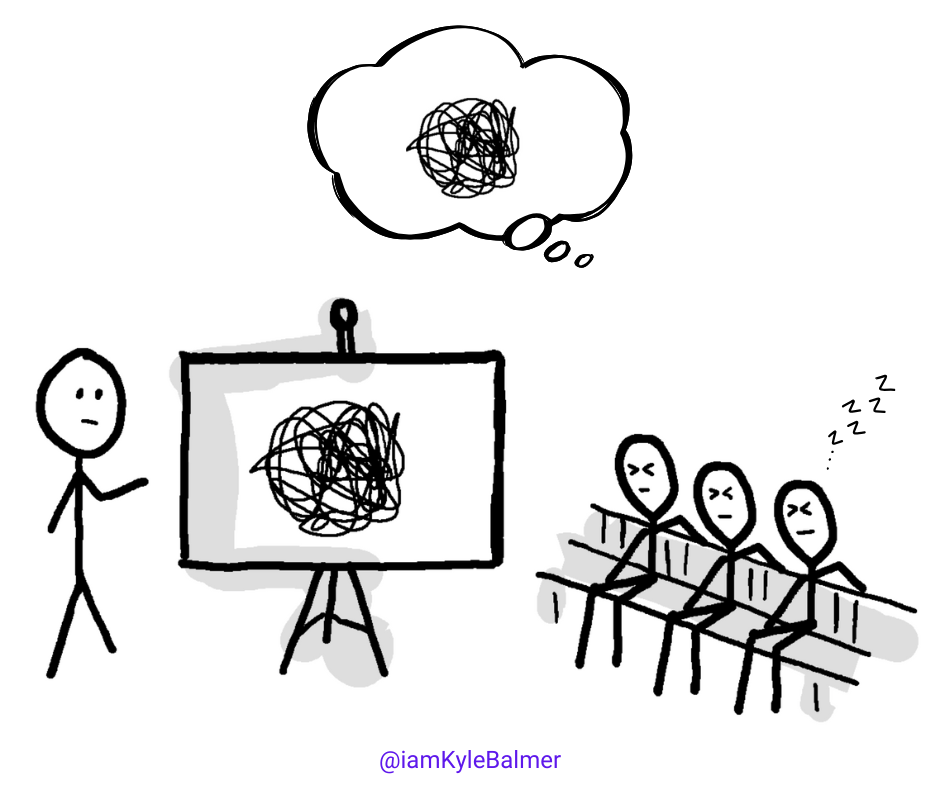
Here I am… two hours into what was supposed to be a one-hour workshop, still trying to cover "just one more thing."
My slides looked like a Wikipedia page had exploded. My attendees had that glazed look. And I was desperately trying to cram in every single piece of knowledge I thought they needed.
Watching attendees drop off one by one. Then in groups of 10. Dwindling away. Brutal.
See, I'm a researcher by nature. I dive deep into topics, explore every angle. Hell you read my newsletter, you know I go a bit overboard!
And when it comes to presenting? My natural instinct is to try and download my entire brain into the audience.
But here's what I've learned: when you try to say everything, people hear nothing.
Let’s get started:
The Big Domino & Opening
The Big Domino concept
Finding your core belief
Why intro serves the domino
Opening that hooks
Building quick credibility
The Big Domino Belief is all about convincing your prospects of the One Thing that will eliminate their objections and make them ready to buy.
The concept sounds too simple at first: focus on changing just ONE belief. The one belief that makes all other objections irrelevant.
Basically if you can knock down this one domino then everything else will collapse. All other objections, all other “but what about”, all other “but not for me” will cease to have power. Because the BIG domino has smashed all these other smaller dominoes.
My inner researcher rebelled. Surely we need to address everything? Right??
But then I tried it…and it worked.
For my AI workshops webinar, I focus on one core belief: businesses around the world are crying out for AI training and you can fulfil that demand with workshops.
Not about the technical details. Not about presentation skills. Just that one foundational belief that changes everything else.
The result? Success. It made my workshops simpler, streamlined, focused and more effective.
Here's why this works: presentations aren't about information transfer. If they were, we'd all just absorb the information and be able to do “the thing”. That (sadly!) isn’t what happens!
Good webinars and presentations are about transformation. And transformation starts with belief change. Without the belief change the technical details do not matter.
Some example will help here.
Think about some real Big Domino examples:
Weight loss program: "Your genetics and age aren't the problem - the real reason you can't lose weight is you're following advice designed for bodybuilders, not busy parents"
Business coaching: "Your market isn't too crowded - the real opportunity comes from being the first to combine [X] and [Y] in your niche"
Real estate investing: "You don't need a huge deposit - banks are actively looking to lend on properties that meet specific criteria most people don't know about"
My AI workshops: "Technical expertise isn't the barrier - companies are desperately seeking trainers who can explain AI in simple terms their teams can understand"
See the pattern? Each one:
Identifies the perceived barrier ("I'm too old", "market's saturated", "need lots of money", "not technical enough")
Flips it into an opportunity
Hints at a solution
This is what a real Big Domino does - it doesn't just say "you can do it." It fundamentally shifts how they see their situation.
Slick eh?
Change that ONE belief, and everything else becomes easier.
Of course: identifying that ONE belief, that big domino that you need to topple, is hard!
Crack it though and the rest will fall into place. Let’s use AI to start helping us work it out:
You are a strategic marketing advisor specialising in Russell Brunson's Perfect Webinar framework. Your task is to help identify the user's "Big Domino Belief" - the one core belief that, when changed, makes all their other objections irrelevant and prepares prospects to buy.

Context:
The Big Domino concept comes from Russell Brunson's Perfect Webinar framework. It states that there's ONE core belief that, once changed, will make all other objections fall away naturally. This is NOT about features or benefits - it's about a fundamental shift in how prospects view their situation.

Process:
1. Ask the user these questions one at a time, waiting for their response:
   - What transformation do you provide for your customers?
   - What's the biggest objection you hear from potential customers?
   - What's different about the customers who do buy vs those who don't?
   - What did you have to believe before you fully committed to this?
   - What are your successful customers' success stories?
   - What's the market signal that shows demand for your solution?

2. After collecting responses, analyse patterns looking for:
   - Common beliefs in success stories
   - Shifts in perspective that led to action
   - Market validation points
   - Core fears or doubts being overcome

3. Construct a Big Domino belief statement following this format:
   "[Market signal or proof] means [possibility for prospect] despite [current limiting belief]"

4. Present the statement along with:
   - Why this is the key belief
   - How it addresses other common objections
   - How to demonstrate it's true
   - Ways to reinforce it throughout the presentation

Start with the first question: What transformation do you provide for your customers? and continue one at a time.
Now, here's the crucial bit: Everything in your webinar serves one purpose - to make your Big Domino belief real for your audience.
This is why we start here. Your entire webinar, from opening to close, is about establishing and reinforcing this one belief. And it starts with your intro.
Your intro isn't just an introduction. It's the setup for your Big Domino. It's laying the groundwork for that one belief that changes everything.
In my webinar, I open with real numbers: the explosion in companies looking for AI training, the shortage of qualified trainers, the rates being charged. Each piece builds towards that core belief that there's massive demand you can tap into.
According to Brunson, your intro needs to follow a specific flow:
Pattern interrupt - wake them up, get their attention
Build rapport - show you understand their world
Qualify yourself - but without bragging
Create anticipation - set up what's coming
Begin the journey to your Big Domino
Personally I do the following:
Pattern interrupt - talk about how I used to be a multi-millionaire and lost it.
Build rapport - talk about depression and difficulties over the last decade
Qualify yourself - drop info about the newsletter, Amazon books, thousand of students etc.
Create anticipation - drop the fact that I charge $1000-4000 per hour doing something I’m about to teach my audience
Begin the journey to your Big Domino - talking about the obscene unmet demand in the market right now.
I highly recommend you check out some of Russel Brunson’s own presentations. There are lots on Youtube for free- these will give you an idea of how he pulls all this off. And you’ll get to learn about potato guns too - bonus!
Here's a prompt to craft your perfect intro:
You are a strategic advisor specialising in Russell Brunson's Perfect Webinar framework. Help craft an introduction flow that builds towards revealing the user's Big Domino belief.

Context:
The Perfect Webinar introduction must transition the audience from their current state to being ready to accept the Big Domino belief. This isn't about hype - it's about creating the right context for your core message.

The introduction follows this structure:
1. Pattern interrupt: Break their current thought patterns
2. Build rapport: Show you understand their world
3. Qualify yourself: Demonstrate authority naturally
4. Build anticipation: Set up what's coming
5. Begin the journey to the Big Domino

Please provide:

First, ask the user for:
1. Their Big Domino belief (from previous exercise)
2. Their target audience description
3. A surprising fact or statistic about their market
4. Their relevant background/experience
5. The main promise of their webinar

Then create:
1. 3 potential pattern interrupt openings
2. A rapport-building story that links to their audience's current situation
3. Natural ways to weave in their qualifications
4. A "what's coming" framework that leads to the Big Domino
5. Transitional phrases to bridge each section

Format the response as a complete introduction flow they can adapt and use.

Start by asking for their Big Domino belief from the previous exercise.Tomorrow we're diving into the Three Core Secrets - how to present your educational content in a way that reinforces your Big Domino belief.
Before then:
Use the first prompt to identify your Big Domino belief
Use the second prompt to craft an intro that builds towards it
Test your intro on someone - does it naturally lead to your Big Domino?
Practice the flow as many times as possible. It becomes easier!
Authentic Selling, AI Entrepreneurship 101, Building your AI Expert Brand, Offer Fundamentals, Alex Hormozi’s 100M Offers, Profitable Workshops, Live Video, Sales Funnels 101…
Upgrade to get access to over 60 AI Business Courses.
Keep Prompting,
Kyle
My biggest mistake with early webinars? I treated them like university lectures.
Makes sense, right? I had knowledge to share. People wanted to learn.
So I'd create detailed slides, pack them with information, and deliver lesson after lesson after lesson.
And people loved it! They’d be taking screenshots and photos and copious notes. The chat would be full of "this is great!" and "so helpful!"
But then... nothing happened.
All those excited attendees? They'd go right back to their old ways. No action. No transformation. Just more notes gathering digital dust.
More information is insufficient.
Instead of just teaching, we need to structure these lessons specifically to support our Big Domino.

Let’s get started:
The Three Secrets
The three core secrets framework
Finding your perfect vehicle
Breaking internal blocks
Overcoming external barriers
Examples across different niches
Before before we dive into the educational core, let's look at the full structure of a Perfect Webinar:
Introduction (what we covered yesterday)
Three Secrets (the educational core - today's focus)
Secret #1: The Vehicle (Lesson 1)
Secret #2: Internal Barrier (Lesson 2)
Secret #3: External Barrier (Lesson 3)
Stack & Offer (coming tomorrow)
Close (we'll cover in Part 5)
The Three Secrets section is the educational core of your webinar. This is where we get to teach, to share our expertise.
Brunson uses the word Secrets here. I find that a bit “much” personally and tend to call them lessons. Use whichever works for you - I’ll use them fairly interchangeably here.
Here's how the three secrets work:
Secret #1: The Vehicle This is your opportunity or method. The path you're inviting them to take.
Examples are the best way to grok the concept so here are a few:
Niche
Vehicle
Why it works
AI education
Running training workshops for businesses
Scales well, premium pricing, immediate value, huge demand
Property investing
House flipping in specific neighbourhoods
Tangible assets, proven model, clear exit strategy
Weight Loss
20-minute specific workouts for busy parents
Fits real life, targeted audience, clear differentiation
Online Course Creation
Cohort-based courses with live elements
Higher completion rates, premium pricing, built-in testimonials
The key is specificity. You're not just offering "make money" or "get fit" - you're offering a specific path - your particular vehicle to their goal.
Secret #2: The Internal Barrier This is what's been holding them back. The voice in their head saying "but..."
Examples across niches:
Niche
Internal Barrier
Why it works
AI education
"I'm not technical enough to teach AI"
Show how explanation skills matter more than technical depth
Property investing
"I need lots of money to start"
Reveal specific financing strategies others overlook
Weight Loss
"I don't have time for proper workouts"
Demonstrate how traditional workout advice is wrong for busy parents
Online Course Creation
"My knowledge isn't unique enough"
Show how their specific experience creates unique value
Secret #3: The External Barrier This is the thing that's stopped others from succeeding with similar vehicles. But - and this is crucial - you have a unique solution to this barrier.
Some examples:
Niche
External Barrier
Why it works
AI education
Businesses want proven training materials
My battle-tested workshop materials and scripts
Property investing
Finding good deals in hot markets
Reveal specific financing strategies others overlook
Weight Loss
Generic programs don't work for busy parents
Specifically designed workouts for small time windows
Online Course Creation
Low completion rates kill testimonials
Cohort model with specific engagement tactics
Got the idea? We’re now going to use a mega-prompt that’ll question you extensively and help you get started.
Here's a prompt to help identify your three secrets:
You are a strategic advisor helping craft the Three Secrets section of a Perfect Webinar. Your task is to help identify and articulate the Vehicle, Internal Barrier, and External Barrier that will drive action.

Context:
The Three Secrets must:
1. Support the Big Domino belief
2. Flow logically together
3. Lead to your solution

Process:
1. Ask these questions one at a time:

For the Vehicle:
- What specific path/method are you suggesting?
- Why this vehicle over others?
- What makes it uniquely suitable for your audience?
- How does it support your Big Domino?
- What proof do you have this vehicle works?

For the Internal Barrier:
- What belief holds your audience back?
- What do they tell themselves that stops them?
- What did you have to overcome yourself?
- How does breaking this barrier support your Big Domino?
- What stories/evidence breaks this barrier?

For the External Barrier:
- What legitimate obstacle exists?
- Why have others failed to overcome it?
- What's your unique solution?
- How does this tie back to your Big Domino?
- What proof shows your solution works?

2. Analyse the responses to craft:
- A clear Vehicle statement
- An Internal Barrier breakthrough
- An External Barrier solution

3. Structure them in order of revelation:
- How to introduce each secret
- What stories/evidence support each
- How they build upon each other

Start with: What specific path/method are you suggesting to your audience?
Use this below you Big Domino work from before or make sure to copy in your Big Domino.
The key is making these three secrets work together. Each should:
Build on the previous one
Support your Big Domino
Lead naturally to your solution
The prompt above will do the basics but you’ll need to refine. You are the expert here!
For each lesson, you want:
The revelation
The proof
The breakthrough moment
Let me show you how this flows in my webinar:
Secret 1 (Vehicle): "The fastest growing opportunity in AI isn't building tools - it's teaching others how to use them. Here's why workshops specifically are the perfect vehicle..."
I’ll then prove this is the case with data, personal stories, testimonials and any thing else that supports my argument.
Once I’ve hammered this home and got agreement that workshops are a great vehicle for making money in the growing AI space I’ll use something like:
“OK we agree there’s massive demand and opportunity here. Give me a yes in chat if you agree. Awesome. But you may be thinking that you personally are’t the person to be fulfilling that demand. Let me show you why that is not true…”
I’ll then segue into:
Secret 2 (Internal): "The biggest myth in AI training is that you need to be technical. What you actually need is the ability to explain complex things simply. Let me show you why..."
Again, using the lesson content to show why this is the case. Supported with emotional stories and rational data.
Once I’ve cleared this hurdle we move to the next block:
“You now agree that there’s demand. And that even without a PhD in AI you can fulfil this demand and make $1000/hour. But you don’t have the time to create the workshops, test them out with real client and potentially make mistakes. Thankfully…”
followed by a transition into the third secret.
Secret 3 (External): "The main challenge isn't creating workshop content - it's having proven material that gets results. Here's how we solve that..."
Each secret leads naturally to the next, and all support my Big Domino about worldwide demand for AI training. Remember that this is your ultimate goal here.
You need to create a similar flow, all supporting the Big Domino - moving from vehicle through internal block through external block.
Start with the prompt and again check out Brunson’s own webinars to see it in action!
Next we're diving into the Stack & Offer - how to present your solution in a way that feels inevitable after revealing these three secrets.
Authentic Selling, AI Entrepreneurship 101, Building your AI Expert Brand, Offer Fundamentals, Alex Hormozi’s 100M Offers, Profitable Workshops, Live Video, Sales Funnels 101…
Upgrade to get access to over 60 AI Business Courses.
Keep Prompting,
Kyle
Ever watch one of those nature documentaries where a penguin tries to land on an ice shelf? They swim so gracefully. Masters of the sea.
Before they pop out of the water... flopping around awkwardly until they find their feet and waddle away in the most ungainly fashion.
That was me presenting offers in early webinars.
I'd spend an hour delivering great content, building trust, sharing value.
Then came the offer part and... flop. Waddle waddle.
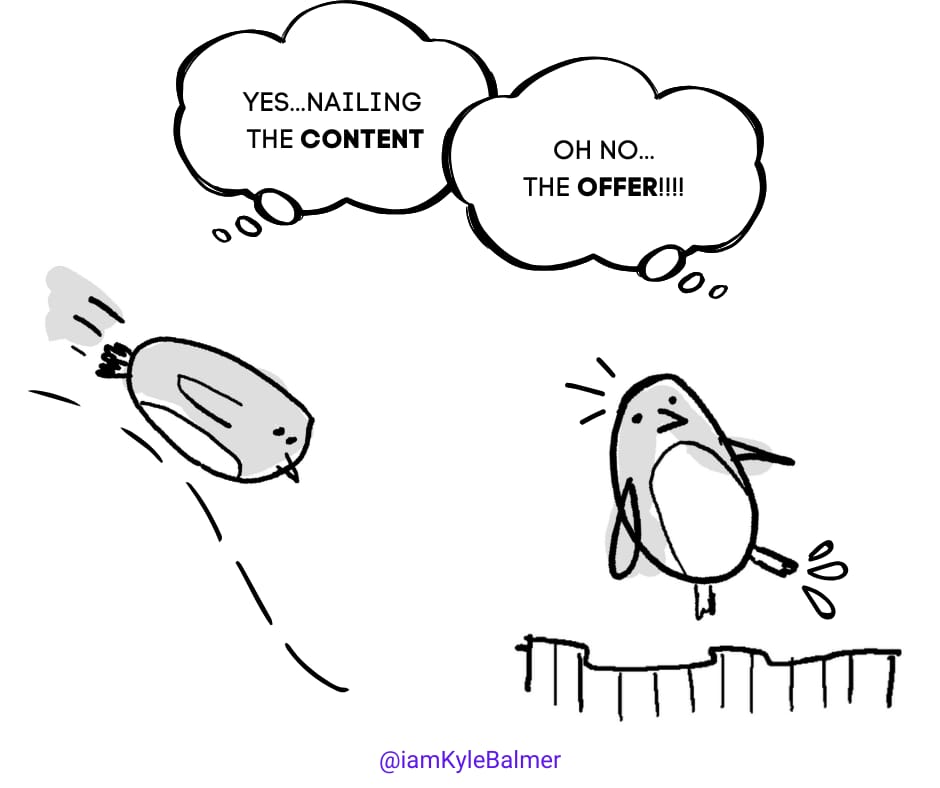
"So um, yeah, if you want to buy this thing, it's £497..."
Proper British, right? Apologetic about actually selling something. Even when I know it’s super valuable for them.
In this Part we explore how to stick the landing.
Let’s get started:
The Stack & Offer
The stack method
Building your value stack
Making the price feel welcome
Remember where we are in the Perfect Webinar structure:
Introduction (Part 1)
Big Domino (Part 2)
Three Secrets (Part 3)
Stack & Offer (Now)
Close & Technical Setup (Part 5)
When I used to do offers I’d list out features, give a price and leave
Technical specifications. Bullet points of what's included. Like I was reading out an instruction manual.
No story. No emotion. No transformation. Just... facts.
Here's the thing about features lists - they make perfect logical sense. After all, people want to know what they're getting, right?
But I noticed something weird. The more detailed my features list, the LOWER my sales.
Turns out, I was making a classic engineer's mistake - assuming people make buying decisions based on specifications. They don't.
Brunson taught me a better way: the stack.
Let's talk about what the stack actually is. You've got your core offer - that's the heart of your solution. But then you stack additional pieces around it that systematically address:
Every fear raised in your three secrets
Objections holding people back
The path to first success
Ongoing support
The basic idea is to stack the offer so much that purchase becomes inevitable. We go through our offer specifically to knock down objections.
An example will help. Here’s a potential stack:
Core offer (the main transformation)
Implementation support (how they'll actually do it)
Fast-start elements (getting first results)
Advanced strategies (scaling up)
Bonuses that remove final objections
Each stack isn't just a "bonus." It's strategically chosen to knock down barriers.
Here's a stack for selling AI workshop training as an example:
Core Offer: Workshop materials, license and training guides
Stack 1: "Step-by-step prospecting system" (Addresses the fear: "How do I find AI workshop clients?")
Stack 2: "First Workshop Framework" (Handles "I'm scared of public speaking" by starting with small charity workshops)
Stack 3: "Tech Training Guide" (Kills the "I'm not technical enough" worry)
Stack 4: "ROI Calculator" (Proves the "businesses will pay" promise)
etc. etc. for as long as is needed!
See how each piece connects back to fears and objections we surfaced in the three secrets? You’ll need to do the same!
Presenting each stack element follows a simple structure:
What it is - crystal clear, concrete value
Quick proof (story or testimonial)
Move on fast - keep momentum
You aren’t just using the stack to give them even more features and information! It’s tempting but no - go instead for shock and awe.
For example: "Next you get my Client Acquisition System. Here’s what it is. This is exactly how I landed my first corporate client - a £4,000 workshop for some big company. In fact, one of my students used this last week to book their first £2,000 gig. But that's not all..."
See how quick that was? Value, proof, move on.
Here’s a prompt to get us started:
You are a strategic advisor helping craft the Stack section of a Perfect Webinar. Your task is to help identify and structure stack elements that address objections and increase value.

Context:
The Stack must:
1. Start with a strong core offer
2. Add elements that address fears/objections
3. Include proof for each element
4. Build inevitable value

Process:
1. Ask these questions about the core offer:
- What's the main transformation you provide?
- What's included in the basic offer?
- What proof do you have it works?

2. For each of the Three Secrets covered earlier:
- What fear/objection was raised?
- What could you add to address it?
- What story/proof supports it?

3. For common buyer concerns:
- What stops people buying?
- What could you add to remove that barrier?
- How can you prove it works?

4. For implementation fears:
- What worries people about getting started?
- What support could you add?
- What examples show success?

Structure each stack element as:
1. Clear description (what it is)
2. Quick proof/story
3. Transition to next element

For each suggested stack element, provide:
- Clear name/description
- Value proposition
- Proof/story options
- Connection to objections/fears

Start with: What's your core offer and its main transformation?
You may hit a problem here where you don’t actually have solutions to your customer’s problem- you don’t have a good way to deal with their objections.
Now, what if you don't have all these elements yet?
Make them.
Seriously. Your offer needs to be irresistible. If you identify a fear or objection that's holding people back, create something to address it.
For example a big fear for your customers is not being able to secure their first paid client. Great: create a 30 day “Find your First Client” quick-start guide and add it to the offer stack.
Reverse objections into selling points.
This is where most people get stuck. They think they need to have everything perfect before launching. But here's the secret: your stack will evolve based on what your audience tells you they need.
Here's how:
During webinar Q&A, pay attention to questions that reveal fears and concerns
Use these to create new stack elements
For example, in my webinar if someone asked: "I'm unable to deliver workshops in person because I have 3 kids and it's hard for me to carve out time."
Boom! That could become a new stack element - "Online Workshop Delivery Guide." Here’s how you can deliver webinars online for greater flexibility.
Each objection is an opportunity to make your offer more valuable. Your stack should evolve as you understand your audience better.
In Part 5 we're covering two crucial elements:
The Close - how to wrap everything up and handle final objections
Technical Setup - the platforms, tools, and systems to make your webinar run smoothly
Before then:
Use the prompt to build your initial stack
For each element, write your quick proof/story
Practice presenting each element in under 30 seconds
List potential objections you might need to address later
Remember: Your stack isn't just a list of features. It's a carefully structured set of solutions that makes success inevitable for your customers. Make this switch and the sale becomes waaaay easier, believe me.
Authentic Selling, AI Entrepreneurship 101, Building your AI Expert Brand, Offer Fundamentals, Alex Hormozi’s 100M Offers, Profitable Workshops, Live Video, Sales Funnels 101…
Upgrade to get access to over 60 AI Business Courses.
Keep Prompting,
Kyle
I spent fifteen minutes explaining GDPR compliance details for my workshop materials to one attendee.
Data processing agreements, retention policies, the works.
Meanwhile, twenty other people who were ready to buy drifted away, their basic "how do I get started?" questions unanswered.
Classic me - diving deep into technical details because one person asked. Completely missing the point of what Q&A and closing is actually for!
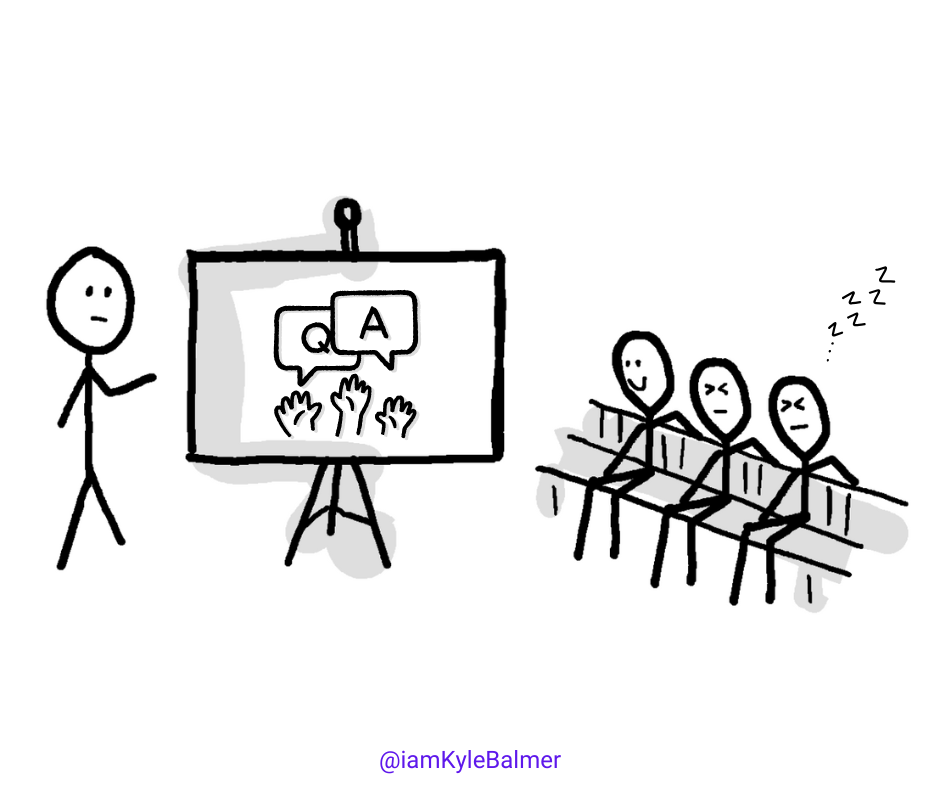
The Q&A isn't about perfectly answering every possible edge case. It's about removing the final barriers to action for the majority of your audience. It’s about the close.
Let’s get started:
The Close & Technicals
What the close is really for
Handling objections effectively
Q&A that drives action
Technical setup made simple
Bringing it all together
Remember where we are - this is the final piece of the Perfect Webinar:
Introduction (Part 1)
Big Domino (Part 2)
Three Secrets (Part 3)
Stack & Offer (Part 4)
Close & Tech Setup (This Part)
The close has one job: get people to take action.
That's it. Not to showcase your expertise. Not to answer every possible question. Not to dive into implementation details that can be handled later.
Your job is to remove the final barriers stopping people from taking action.
Here's how it works:
Stack Recap Quickly remind them of the total value - but don't re-present everything. Just hit the high points: "You're getting the complete workshop system, the client acquisition framework, the fast-start guide...". Super fast, no need to rehash everything.
Final Call to Action Make it crystal clear what they need to do next. Don't assume they know: "Click the button below, choose your payment option, and you'll get instant access...". Make sure to use an active verb - go here, click there, type this…
Handle Common Objections Whilst people are off completing the action you’ve set them you’re going to keep talking! Specifically to wrap up any final objections by using a Q&A.
Address the big ones that affect everyone:
Time to implement
Support available
Payment options
Getting started steps
etc.
Notice: these are broad objections that matter to most people. Not edge cases!
Here's a prompt to help identify and handle your key objections:
You are a advisor helping craft the Close section of a Perfect Webinar. Your task is to help identify and handle the key objections that stop people taking action.

Context:
The Close must:
1. Address common barriers to action
2. Keep momentum
3. Lead to clear next steps

Process:
1. Ask these questions about common objections:
- What stops most people buying?
- What questions come up repeatedly?
- What concerns did you have before starting?
- What do successful customers ask first?

2. For each major objection:
- How can you handle it proactively?
- What proof removes this concern?
- What guarantee or support addresses it?

3. For Q&A preparation:
- What are the top 5 most common questions?
- How can you answer them briefly?
- What can be handled in support later?
- What edge cases should be taken offline?

4. For the final close:
- Clear call to action script
- Time/scarcity element if applicable
- Final value reminder
- Next steps outline

Structure each objection handling as:
1. Acknowledge the concern
2. Provide the solution
3. Share proof it works
4. Move forward

Example:
"I know you might be worried about time to implement. That's why we include our Fast Start system. John used this last week to go from zero to first client in 10 days. Now, let's talk about..."

Start with: What are the top 3 objections you hear most often?
This will get you started and prepared for the Q&A closing section. This will give you the basics for at least your fist webinar. But…let’s go into more detail about how we can be more strategic.
Here's something I learned the hard way: Don't wait for questions to be asked!
Huh? What? But then how do you know what to answer??
You KNOW what people will ask:
Is there a payment plan?
What if I need more support?
How fast can I get started?
What if I'm not technical enough?
These come up every single time. It’ll always be similar questions. So why wait?
You've got two options:
FAQ Style Hit these straight up: "Before we go to questions, let me cover the most common ones I get...". This allow you to straight up pre-empt the questions. You’ll seem like a mindreader. But it also shuts off back and forth with the audience. Because of this you might want to look at…
Personal Touch Wait for someone to ask (they will), then make it sound personal: "Thanks Jim - great question about payment plans. I actually made sure we had flexible options because..."
The second approach feels more natural, but requires a bit of setup.
Here's how I handle it: first, brief your moderator. Yes, you want a moderator! Their job is to:
Watch the chat
Pin/collect relevant questions
Prioritise questions you want to address
Filter out edge cases
Give them a list of "priority topics" - things you WANT to address like payment plans, getting started, support available. Basically the list we came up with above.
Also give them "park for later" topics - the GDPR-style questions that derail momentum. You’ll get an idea what these sort of questions are as you do more Q&As.
When questions come in during the webinar, have your moderator note them down (or pin/star them in your webinar software).
Then when you get to Q&A, you can say: "I see Jim asked about payment plans - thanks Jim, great question. Several others have asked about this too..."
This feels natural AND lets you control the flow. You know what you are going to say - you are just waiting for someone to mention it to trigger your response.
In the spirit of pre-empting questions I’ve added this final section.
The whole purpose of this playbook is to get you started building and delivering webinars ASAP.
And the first thing people ask me about webinars is… what webinar tool should I use?
Honestly: I don’t care. It’s a boring question! All the tools are basically the same! BUT I know not knowing the technical setup can be a barrier to actually starting! So…here are some quick recommendations to remove the block.
I use Streamyard. Could I use Zoom Webinar? Sure. Could I use other platforms? Absolutely.
The platform honestly doesn't matter much. What matters is:
Can people see your slides?
Can they hear you clearly?
Can they buy easily?
That's it. Don't overcomplicate it.
Here's my simple setup:
Streamyard for delivery
Keynote for presentation
2 screens, laptop and a plug in monitor for webinar + chat.
Payment link ready to paste in chat and added to all the sales slides
Basic USB microphone, a Blue Yeti
Single airpod for hearing people (my cohost, the only other person who speaks)
Some ring lights off Amazon for lighting
A pull up grey screen behind me as a background
Yes, you could get fancier. But start simple. You can always upgrade later. And honestly it won’t have much of a impact. If they can see and hear you OK that’s sufficient.
Over these five parts, we've covered the complete Perfect Webinar framework:
Part 1: Introduction
Why most webinars fail
The importance of structure
Part 2: The Big Domino
Finding the core belief you need to bust
Why one belief beats many
Building everything around it
Part 3: Three Secrets
The Vehicle (your method)
Internal Barriers (mindset blocks)
External Barriers (practical challenges)
Part 4: The Stack
Building irresistible value by stacking
Presenting each element
Making price feel inevitable
Part 5: Close & Tech Setup
Handling objections effectively
Running smooth Q&A
Simple technical implementation
The key to all of this? Focus on transformation, not information.
Take nothing else from this Playbook and you’ll be fine.
Every piece - from your Big Domino through to your final close - should drive people toward taking action. Not just squirrelling away more information.
Remember: Don't let perfect be the enemy of started. Your first webinar won't be perfect. Neither was mine. But it will get better every time.
Authentic Selling, AI Entrepreneurship 101, Building your AI Expert Brand, Offer Fundamentals, Alex Hormozi’s 100M Offers, Profitable Workshops, Live Video, Sales Funnels 101…
Upgrade to get access to over 60 AI Business Courses.
Keep Prompting,
Kyle
Are you tired of feeling like a failure when it comes to selling? Imagine transforming your approach to sales and confidently delivering webinars that not only engage but also convert your audience into loyal clients. In this playbook, 📅 Sales Webinars, I share my personal journey from an 'Information Dump and Run' strategy to mastering the art of sales webinars, using proven frameworks that generate results. You’ll learn how to harness your expertise and deliver value in a way that resonates with your audience, ultimately helping you to skyrocket your sales and impact.
This playbook is designed for entrepreneurs, coaches, and consultants who struggle with sales and feel uncomfortable promoting their services. If you find yourself giving away too much information without a clear path to conversion, this playbook will help you break through those barriers. Whether you're just starting out or have been in business for years, you’ll discover strategies to transform your webinars into powerful sales tools that not only showcase your expertise but also convert leads into clients.
No prior sales experience is required. This playbook is tailored for those who feel non-salesy and want to learn effective selling techniques.
You can start implementing the strategies right away. Expect to invest a few hours in preparation for your first webinar, and ongoing practice will enhance your skills.
This playbook is perfect for building your audience as well. The techniques taught can help you attract and engage your target market effectively.
Absolutely! The principles outlined in this playbook can be applied to various sales formats beyond webinars, including one-on-one consultations.
The playbook includes a simple technical setup guide to help you navigate the tools needed to run successful webinars.