
This week we’re looking at how to run workshops.
If you currently leverage your expertise to produce content, build an audience, develop products and services then workshops are a no brainer addition.
Workshops pay extremely well, boost your reputation by working with big companies and allow you to secure your position as an industry expert.
Hate public speaking? Naturally an introvert? Me too. So I’ll be covering how to create and delivery high impact workshops even if its your greatest fear.
This week we’ll cover:
Part 1: Why workshops?
Part 2: What your workshop will be about
Part 3: Building your workshop the right way
Part 4: Securing bookings
Part 5: Delivery without fear
Let’s get started:
Why Workshops?
Easy addition between Content Marketing and Service Offers. Workshops act as a natural bridge
Fast cash, very low cost means high profit potential immediately.
The ultimate authority builder. Become known as an expert in your niche to secure more business at a higher rate generally.
You know I’m all about adding varied income sources to your life and business.
With AI becoming more and more prevalent the future of work is uncertain.
Having multiple income streams helps diversify away the risk. If one source gets removed the others remain in play. So: get more income sources!
If you are already a creator, or have a business that is based on your personal expertise, then workshops are a fantastic addition.
If you create content (and you should!) to market yourself then workshops are a simple extension. You are basically packaging your “best of” up into a 1 hour workshop for people who haven’t necessarily digested everything you’ve written or recorded before.
It’s a natural next step.
This is even more powerful if what you offer are services. Your workshops immediately slot in as the opener to sell services. Sitting between your content and the sale.
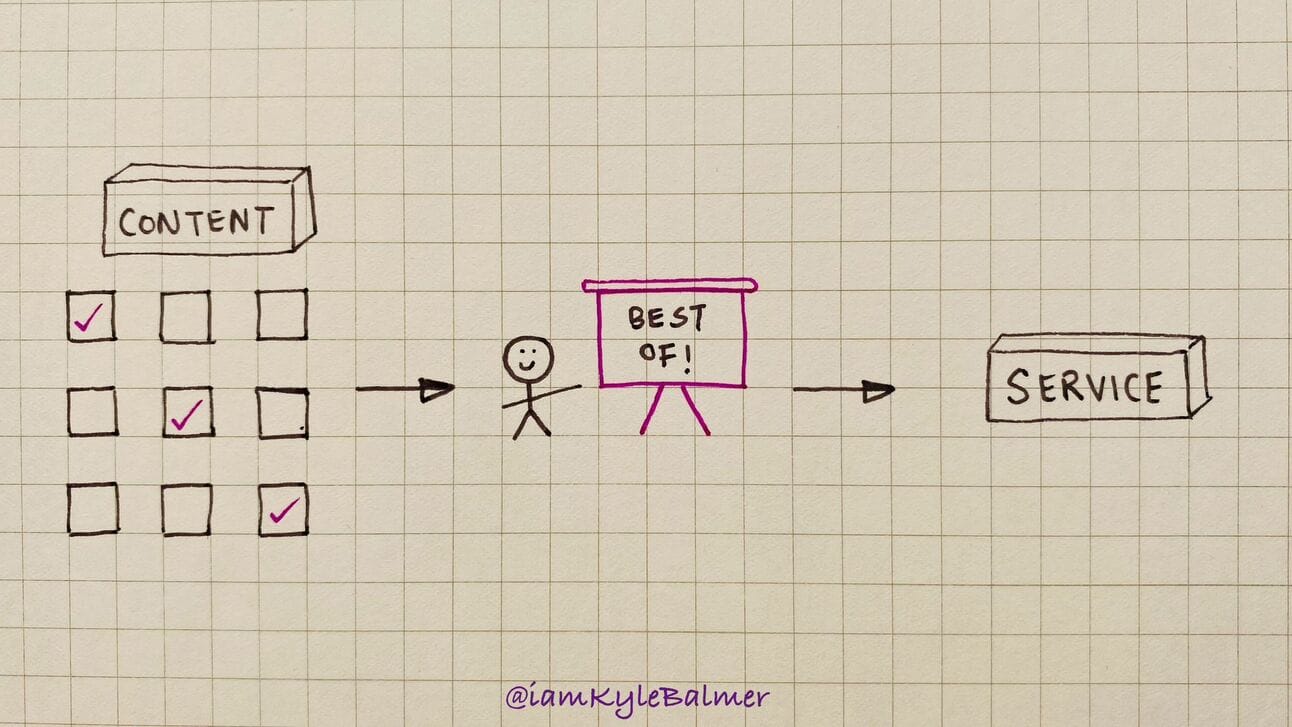
Content → Workshop → Implementation
Content marketing gets you noticed and secures the workshop booking.
At the workshop you give them the good stuff, provide massive value, show them how to do it.
And then as an option you can offer implementation help via your services after the workshop. Sure you’ll be giving them the basics but remember that 1 hour isn’t very long!
We’ll talk about learning objectives in the next Part and I’ll be emphasising that you need to keep it light - 2-3 maximum learning points. It’s enough to give people a grounding but also opens up the sale of a service offer.
One big reason for lots of business owners to deploy workshops is cash!
This is a crude one but it’s very true.
You can make good money delivering workshops and presentations. Basically businesses and organisations will pay good money to have an expert come in and teach a specific subject.
Your rate will depend on:
the topic and niche
the audience size
your experience and confidence asking for a high rate!
As a base level I charge £1000 ($1250) for a one hour workshop session in London. That’s minimum - for a small group.
That’s a pre-prepared session so requires very little customisation or preparation upfront. I rock up, deliver the session, and pocket £1000+ in an hour. Again that’s the lowest base rate.
You can (and probably will) charge a lot more when the group size is larger or as soon as the workshop requires customisation beforehand.
To get a better idea head to perplexity.ai (not ChatGPT because this is a research task and Perplexity will give better results).
Use this prompt and turn on Pro mode. On a free plan you get a few free Pro uses per day.
What is the rate for a workshop speaker in [location] in the [niche] field for [customer type]This will pull up some more specific data about your particular circumstances.
As a business owner, the financial upside of workshops is tough to ignore. Workshops allow you to get paid extremely well for sharing your expertise. When you factor in the relatively low overhead involved, the profit margins on workshops can be outstanding.
But whilst it’s a good reason it’s not the main reason!
Being known in your niche is super powerful. I believe this, not money, is the biggest play with workshops.
It’s also (incidentally) a major counter to being replaced by AI. I covered that in detail in my Playbook on Personal Branding.
By delivering workshops you strengthen your position of expert authority. You are, in a very real way, in a powerful position. The more people’s attention you can hold the more power you exert. It’s crude but true.
You become worth listening to. People will pay to hear what you have to say.
That’s an extremely strong social signal to other people operating in the market.
For example once I did a workshop with a Geneva based WHO affiliated NGO the doors for other NGO work open up.
After working recently with a top 10 company in the Forbes Cloud 100 that opens other doors for corporate work.
It all reinforces your position in the industry. Not only for workshops but for building your brand, selling products, acquiring clients, raising funds and more.
This is more important than the cash you acquire from the workshop itself because it pushes your overall rate up. Your time becomes more and more valuable as more people want access to what you know.
So whilst the short term cash is great it’s the longer term reputation boost that is truly valuable here.
In the next 4 Parts I’ll be walking your through exactly how to build an income from workshops. As always, leveraging AI to aid us and speed deployment.
Part 1: Why workshops?
Part 2: What your workshop will be about
Part 3: Building your workshop the right way
Part 4: Securing bookings
Part 5: Delivery without fear
Next up we’ll lock down what your workshop will be on. We’ll key in on a simple 1 hour workshop on one topic that will become your highly marketable calling card.
We’ll then structure the workshop using a technique that’s helped me hugely. The key is NOT to write the slides until the end. I’ll walk you through stp by step and we’ll use ChatGPT to assist us along the way.
Once we have our marketable workshop ready we’ll begin to pick up some gigs. We won’t go straight to the top but instead will work our way up the ladder so that you refine the workshop, build in confidence and know that you are providing mad value.
Finally we’ll cover the actual facilitation and delivery of workshops. I’ll show you how I overcame my fear of public speaking to become (apparently!) quite good at it.
Keep prompting,
Kyle
Today we’ll override this challenge and start constructing a workshop that customers will love.
Let’s get started:
What your workshop will be about?
Solve the most common problems your customers have
Determine 2-3 learning outcomes
Learn How to x : this is a how-to workshop, not a keynote presentation
When experts construct workshops thinking about what they’d want the workshops tend to suck.
These workshops will tend to pack in too much in too short a session. The facilitator will run into participants who need extra help to keep up. Extra time is needed to catch them up. The schedule slips. The facilitator starts to rush through content to “get it all in”. Energy and goodwill diminishes.
You’ve probably been to workshops like this. You come out of them feeling more confused than when you went in. A waste of time.
Instead we’re going to design our workshop:
at a less advanced level
covering a small handful of learning outcomes
and focusing on making those small number of learning stick rather than simply adding more and more “content”
It’s going to be quality over quantity.
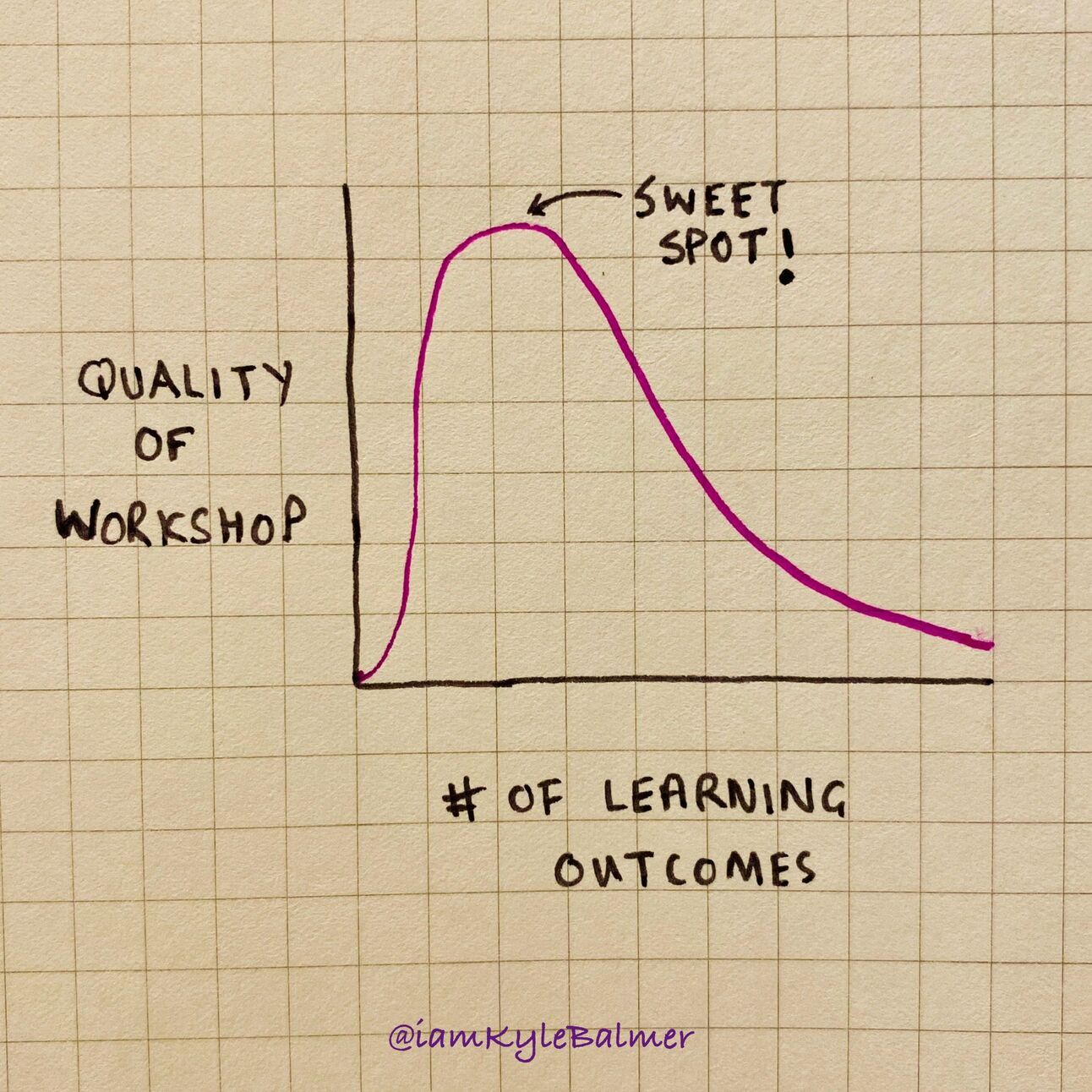
Later you can have more advanced workshops on advanced topics. For your first though keep it for a wide, beginner audience.
Why? Chances are the general knowledge level around your niche is much lower than you expect. You probably think the public know a lot about the topic but that’s because you are (likely) surrounded by a bubble of peers like you. They are also experts!
For example, one of my first workshops on ChatGPT I had to spend 30 minutes just getting people onto ChatGPT. They didn’t know if it was a software, something they had to download or some sort of website. Literally starting from zero.
So any content on prompt engineering, the best uses of AI in an organisation and custom GPTs is entirely pointless if people haven’t even logged into ChatGPT!
Your audience will be similar. They will know a lot less than you do.
What we want to do is find out the burning questions they they have about your topic.
There are a couple of ways to do this.
If you already do content marketing then the best method is to look at your most popular posts and videos. Chances are these will guide you towards valuable topics.
For example I have one video on TikTok with 3.2M views. It’s about the RISEN prompting framework. That goes in all my workshops and I’m often told it’s the most valuable component.
Let existing popularity guide what will be popular in the future.
Use Google Ad data or (more simply) Answer the Public to look up commonly asked questions about your niche. These tools will tell you what topics and questions are already being asked.
If still stuck then look at courses about similar subjects to yours over on Udemy and other course platforms.
You can also look at the topic on Youtube for a broader approach. Basically you are looking for topics that consistently seem to do well, across multiple channels.
These methods are less useful than looking at your own audience data but still valid.
From the most popular topics you want to carve our 2-3 learning objectives.
No more. Resist the urge.
For example in my basic AI for businesses workshop my learning objectives are:
how to think about AI
using AI is a communication skill
the best (and worst) tasks to use AI on
That’s it.
One hour is not a long time and nailing 3 points well is far more powerful than 10 points poorly.
The workshops are structured around absolutely nailing these learning outcomes using a mixture of lecture, exercises , Q&A and other learning strategies. We’ll discuss all this in the next Part.
Right now you need to work out your 2-3 learning objectives.
We want to convert our popular content and common questions in our learning objectives.
I’d recommend grabbing pen and paper and working this out manually. It’s a very important exercise! The most important in fact.
But we can also use a prompt to get us started:
Act as a workshop creator

I need 3 learning outcomes for my 1 hour session.

Help me to define these learning outcomes by analysing this data: i) my most popular content ii) commonly asked questions and iii) existing popular third party content.

Prioritise my content above all in your analysis.

Combine the provided info in 3 coherent learning outcomes. For each write a title, description and outline what data is in each.

You do NOT need to use all the data. Create a 4th category for data that does not fit into the learning outcomes.

Data follows:
i) my most popular content

ii) commonly asked questions

iii) existing popular third party content
Into this I fed:
Data follows:
i) my most popular content
my prompt engineering framework (3.2M views)
which AI is best?
what's the best free AI?

ii) commonly asked questions
how can I use AI in my business?
Is AI hype?
ow to use AI for meeting notes?
is AI safe?

iii) existing popular third party content
how AI will change business
ChatGPT errors and how to fix them
how to make $10,000 a month using AI tools
And ChatGPT outputted detailed learning outcomes.
Here’s the first of three:
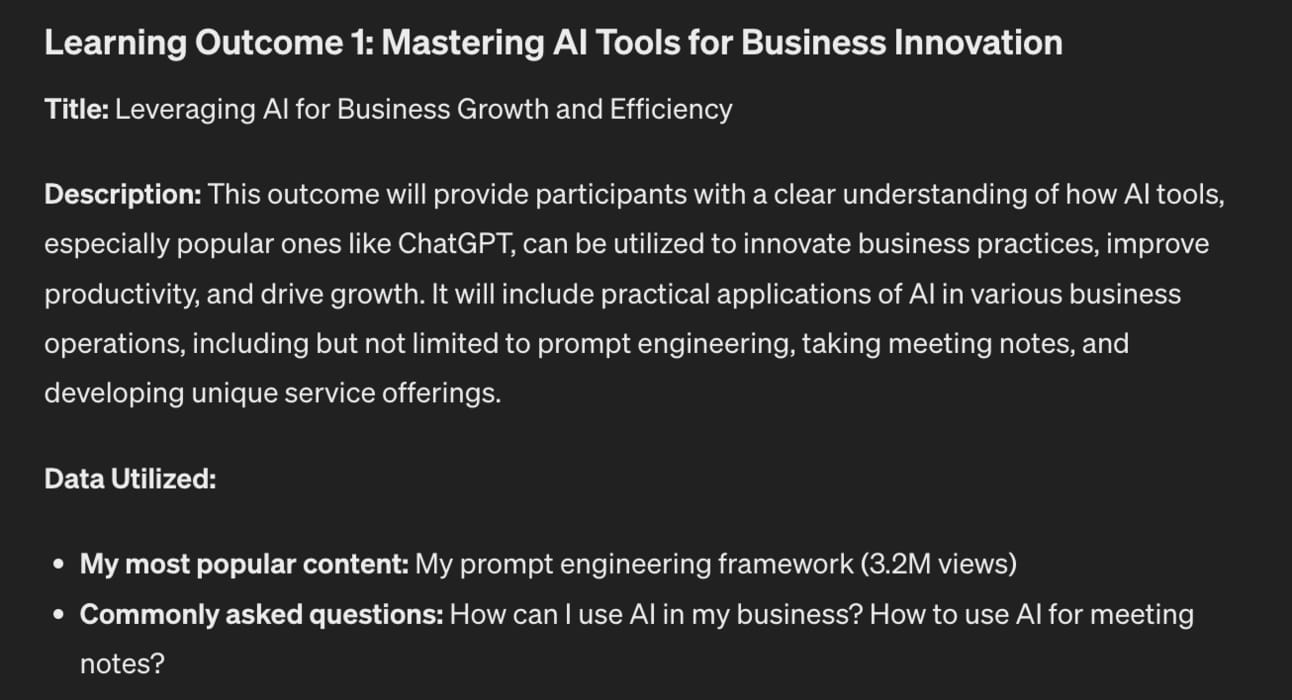
The prompt also has a “dump” category where it adds the topics that don’t fit in. This is handy otherwise ChatGPT will just stick these topics in an inappropriate place.
Use this only to get started thinking about your three learning outcomes. It’s a first pass so make sure to (as an expert) dig into this exercise in more detail.
Once you have your three learning outcomes decided use this simple prompt:
Using these three learning outcomes
Devise a descriptive and marketable title and subtitle
Use "How to X" as the format
This will combine the learning outcomes into a title for you.
I got:

That’s a perfectly good working title. We can (and should) adapt it once we have the rest of our workshop prepared. But for now that’ll do the trick.
In the next Part we’ll structure our workshop, converting learning objectives into the actual running order of the day.
Keep prompting,
Kyle
First things first. If I see even a glint of Powerpoint or Keynote I’m coming for you.
Stop making your workshops (or any presentation) in Powerpoint. It’s the most common method. And the worst. Stop it.
I’ll show you a method that will lead to a leaner, better workshop for your participants.
Let’s get started:
Building your workshops the right way
Prepare a skeleton of your workshop
Alternate lectures and exercises to keep engagement high
Prepare slides right at the end
We’ll be preparing our workshop as a sketched-out skeleton first.
Focusing on what really matters.
And then, once we have the basic shape in place, we’ll begin to flesh it out and prepare slides.
Many people start working out of their slide making tool for workshops first. The problem here is you’ll start focusing on the details far too early. That’s backwards.
You’ll be worrying about title font size (your problem) rather than how the information will be absorbed (the participant’s problem- and what they care about).
In the last Part we worked out 2-3 learning outcomes. Ideally no more, especially if your workshop is only 1 hour. 60 minutes is not a long time.
We’ll use these learning outcomes to structure our workshop.
First - we decide the macrostructure.
How long is the workshop? Is there a lunch break? When are coffee breaks?
If your workshop is 1 hour this is all very simple. It’s start, 1 hour delivery, finish.
If your workshop is more than this you’ll need to start structuring in breaks to keep your participant energy high - every 60 minutes or 90 minutes tops.
This is why I recommend starting with a nice simple 1 hour workshop!
It simplifies the process for you massively - as well as being much easier to sell as it doesn’t require your client to carve out half-a-day for the workshop!
Once you know the basic macrostructure we want to slot in the learning outcomes as our main sections.
1 hour session, 3 learning outcomes? 20 minutes each. Give or take. Depending on the complexity.
Longer session? You’ll need to get a bit smarter about the structure. The prompt later in this guide will help you get started with this.
Do not just lecture. This is a workshop. Not a presentation.
You going up there and talking for 1 hour or - god forbid- 3 hours is not going to help your attendees learn.
The power of a workshop is that is allows practice as well as theory. You can teach a little and then get the participants to apply what you’ve just taught.
If your subject is practical this is especially the case. Imagine talking to an audience for 3 hours about welding and not letting them weld anything. It’s ineffective learning.
I generally recommend switching between lecture and exercise every 15 minutes tops. Any more and your lecturing will sap energy from the room.
Here’s the good news for those of you who are scared of public speaking. In a one hour workshop you may only be speaking half the time. I did a 3 hour workshop the other day and was lecturing for less than half that time.
If lecture and exercise are two formats then Q&A is a third. It gives you another switching point to conserve energy and, again, means you don’t have to “memorise” material but can just answer questions as an expert in the field.
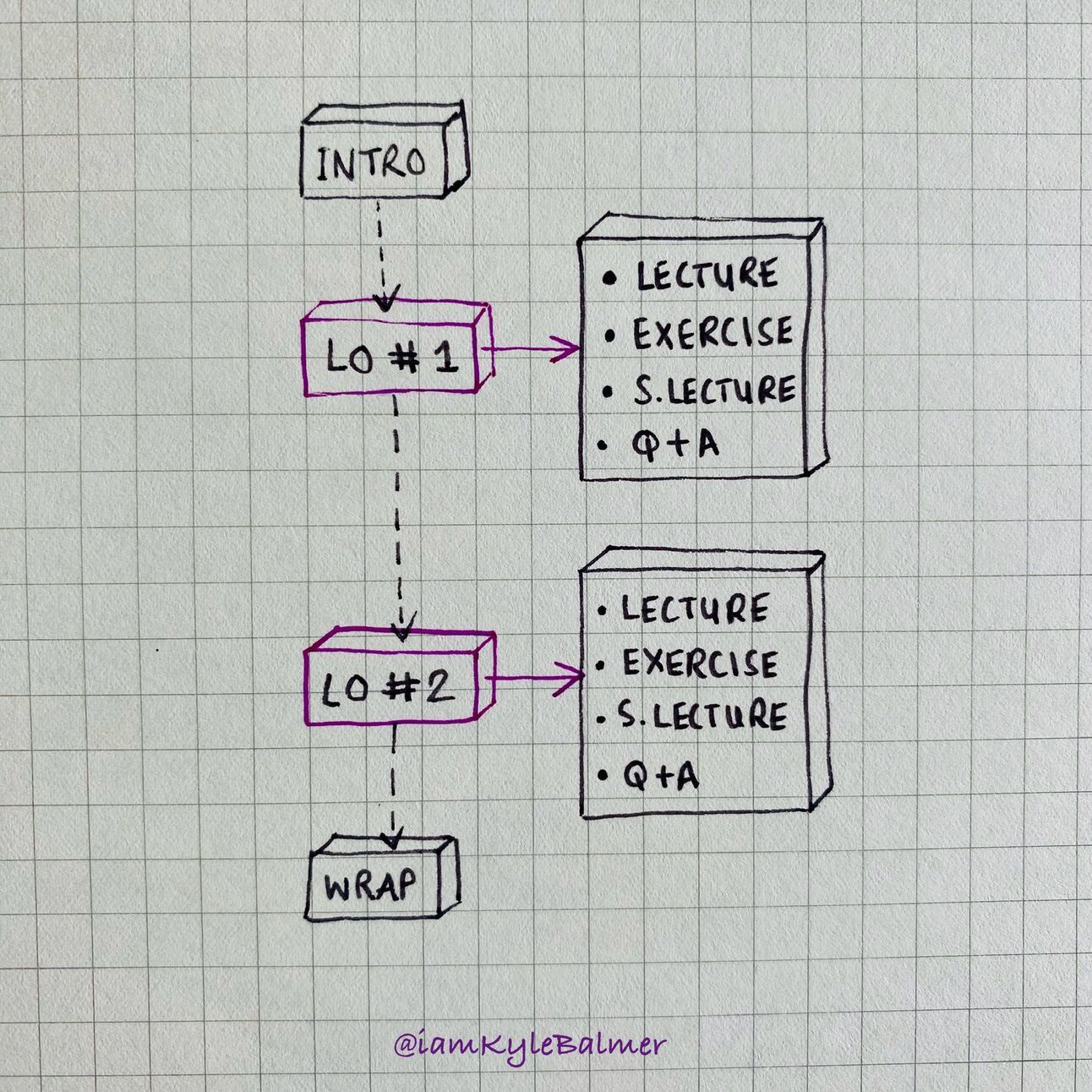
Here’s how I’d structure a one hour workshop with 2 learning outcomes:
Intro 5 minutes (5)
Lecture Outcome 1, 10 minutes (15)
Exercise Outcome 1 , 5 minutes (20)
Lecture Outcome 1, 5 minutes (25)
Q&A Outcome 1, 5 minutes (30)
Lecture Outcome 2, 10 minutes (40)
Exercise Outcome 2 , 5 minutes (45)
Lecture Outcome 2, 5 minutes (50)
Q&A Outcome 2, 5 minutes (55)
Wrap up, 5 minutes (60)
Notice how it uses the same pattern for both learning outcomes:
Lecture
Exercise
Short lecture
Q&A
Everything is broken up and the format switches often to keep people engaged. That 60 minutes will fly past, believe me.
In each of these sub sections you’ll basically cover the following:
Lecture - core concept and intro to exercise.
Exercise - time to complete the exercise.
Short lecture - reinforcing the core concept via the exercise they did.
Q&A - getting reflections on exercise and making sure everyone gets the core concept.
If you aren’t comfortable public speaking this is a blessing. What you’ve done is shift the pressure from being all on you to instead being distributed between you and the participants. And this also will make the workshop much more engaging for the participants. Win-win.
The exact exercises will depend on your learning outcomes, the level of the participants and the length of the exercise. You can use ChatGPT to help you work out potential exercises by giving it these parameters.
One thing I would say though is that it’s helpful to give a range of exercises:
individual exercises, short quick applications of knowledge, 1-2 minute exercise.
pair exercises, when some quick discussion is needed. 3-5 minute exercise.
small group of 3 or 4. 5-10 minute exercise. When much more in-group discussion is needed.
Basically work out how much you want participants to learn from one another by discussing the topic. If you think their knowledge exchange will be valuable then go with larger groups.
Be aware that it takes time to get people into groups and (importantly) to calm them back down after the exercise. The bigger the groups and the longer the exercise the more time this “exercise admin” takes.
OK! Now that we’ve covered some basic principals let’s put everything into practice with a prompt:
Act as a workshop designer

Help me design a workshop that will be [x] hours long
The learning outcomes are [list learning outcomes, max 3]. Make sure all learning outcomes are covered during the session.

Create a time blocking for my workshop.
No section should be more than 90 minutes. Add breaks every 60-90 minutes.

For each learning outcome there should be a mix of lecture and exercise, ending with 5 minutes of Q&A.
Ideally follow this structure per learning outcome
Core Lecture
Exercise
Short lecture
Q&A

The format (lecture/exercise/q&a) should alternate every 15 minutes minimum to maintain attendee energy.

Suggest exercises for each exercise section. Suggest exercises for individuals, pairs or small groups.

Provide the workshop outline with timings in a table. Make sure than the sum of all sections adds up to the total length of the workshop.
Give ChatGPT your learning outcomes and length of the workshop and this prompt will compile a basic skeleton outline of the workshop.
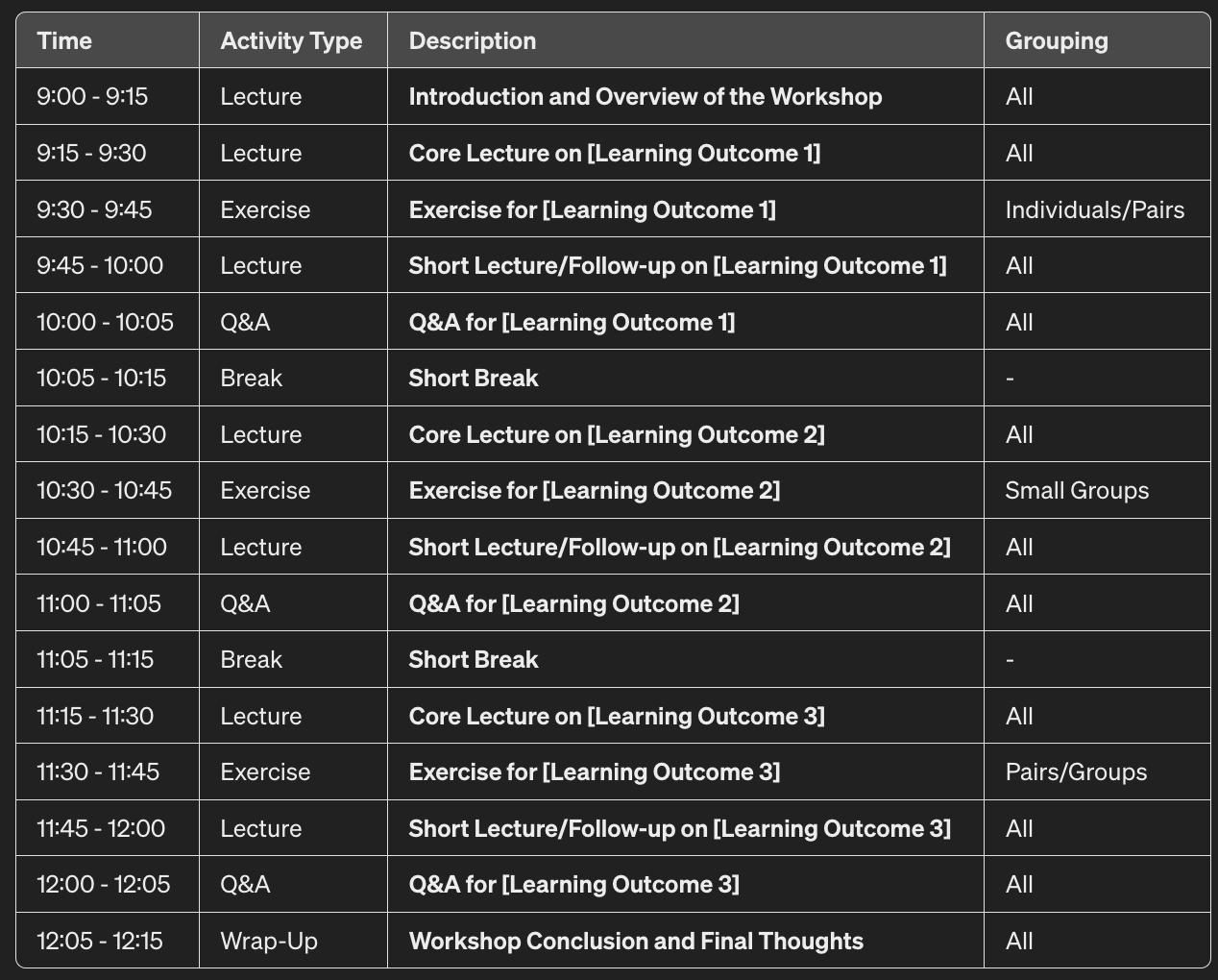
Provide your actual learning outcomes and ChatGPT will suggest topics and exercises for you.
Remember, this should be a jumping off point only. A basic skeleton that you are now going to fill in yourself based on your own expert knowledge and what we discussed above.
Once you’ve got your skeleton in place you can finally create your slides!
I’ll allow it!
Start literally with one slide per section:
Intro
Learning Outcome 1
Learning Outcome 1 Exercise
Learning Outcome 1 Q&A
Learning Outcome 2
Learning Outcome 2 Exercise 2
etc.
Basically recreate your skeleton in slides. Then start to fill in extra slides if you need them. There isn’t time to go into workshop slide design here but generally:
limited text - one sentence per slide
images only when instructive, not for decoration
always cut rather than add slides
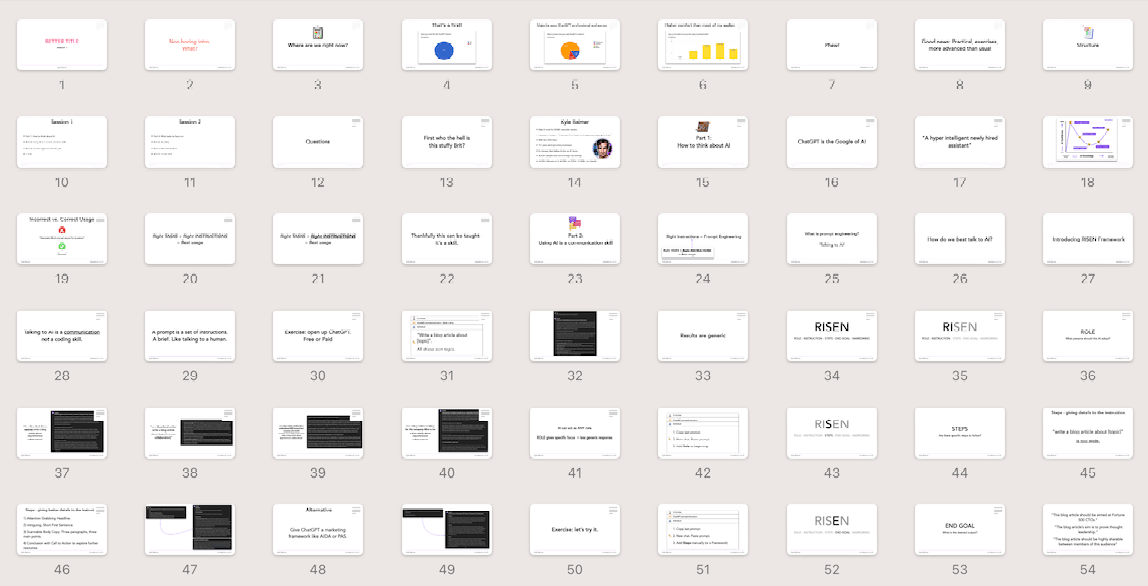
Example of my recent deck: limited text, images when instructive and less not more.
What we most need to avoid is you using the slides as a crutch. The worst workshops are when the presenter reads off the slides. Ideally you aren’t even looking at them yourself -we’ll discuss this in the final Part when we discuss delivery.
For now you have the core steps to develop your workshop though. In the next Part we’ll talk about securing clients for your brand new workshop.
Keep prompting,
Kyle
This’ll kickstart the revenue, sure - but more importantly it’ll start the cycle of improvement that’ll make your workshop absolutely killer.
Let’s get started:
Securing Bookings
Online to offline
Start low priced and bump each time
How much you charge?
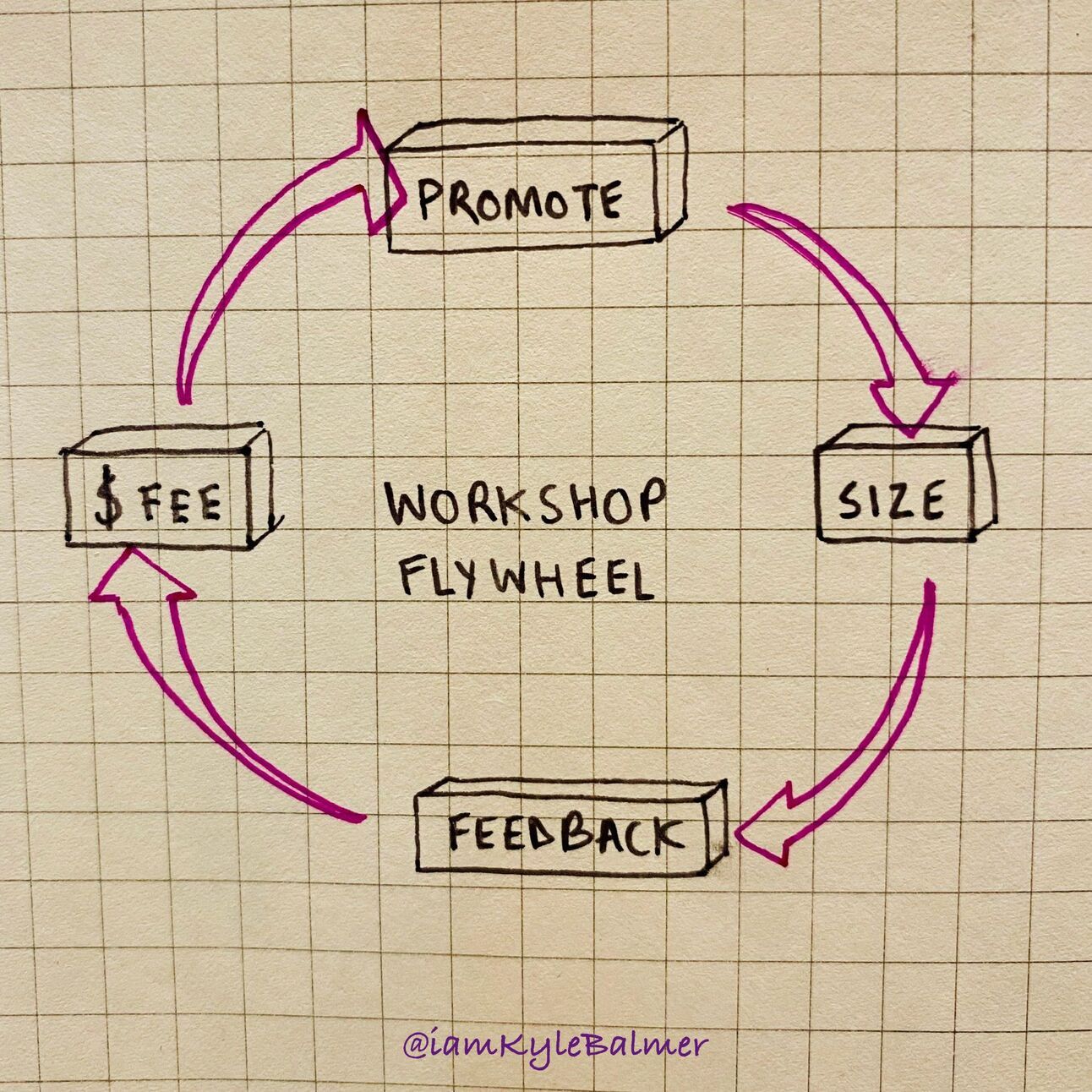
Now that you have the basic workshop in place we need some clients.
I’d recommend doing the first run as quickly as possible so that you can maintain momentum.
Do you have social media presence or an email list? Offer your workshop to them. It could be online and (for now) low price.
The main thing is to i) get the workshop ready and ii) begin to improve it. We do both by actually having to give the workshop!
This is why I recommend just finding the fastest way to deliver the workshop even if it’s to a small handful of people. It doesn’t matter. We just need to get started.
Online will generally be easier to organise too. You can use a fancy webinar package or honestly Google Meet is perfectly fine for smaller groups.
Online facilitation makes group work trickier. You need breakout rooms which, whilst doable, add layers of complexity. As such I’d recommend using individual exercises and then following up with having select participants tell you what they learned from the exercise.
After your first workshop gathering up feedback is super important.
You want positive feedback to turn into testimonials for marketing your workshops. I use Senja to collect testimonials personally - it makes it a lot easier.
You also want negative feedback so you can make improvements. Hard, yes, but important. I’d recommend having some sort of survey you send participants after the event - a Google Form is sufficient.
If you want honest feedback make it anonymous. And actually ask for how you can improve - otherwise some people will just say “it was great” and nothing helpful!
From your first workshop you can begin to escalate upwards.
Generally we’ll follow this pathway:
small audiences to larger audiences
online audiences to offline audiences
low pay to high pay
individual to companies
We don’t just try to pitch Fortune 500 companies straight away. Unless you are already a big name this will probably be a fool’s errand. Instead we work our way up the ladder.
We do this for a couple of reasons. The main one is that we need to build a track record - it’s harder to book doing a workshop for 250 people when you haven’t done one for 10 people yet.
But at the same time this is also great news for the more introverted. You can get used to each crowd size bit by bit.
This is precisely what I had to get through myself - initially even talking to 10 people was nerve-wracking. Do this a couple of times though and it becomes second nature.
You then do 50 or so participants. Again, first time: scary. After a few it’s easy.
Then 100, 200 etc.
Each level up is scary initially and then not a big deal once you are used to it!
Your confidence as a speaker and workshop facilitator will grow as you do more and more.
If you want a shortcut to this also do video content marketing - short, unedited videos are great for this.
Basically start talking about the topics you cover in your workshops in your short video content. Small snippets of content. This lets you practice delivery of core concepts even when not on stage. Practice makes perfect and content marketing gives you a reason to keep teaching!
If you do content marketing make sure to talk about your workshops.
This is how I get all my inbound bookings -just people reaching out and asking for training and workshops.
One note here: make sure to tidy up your LinkedIn. People will see your content elsewhere (X, TikTok, Youtube etc.) then come to check out your credentials on LinkedIn. Even if you don’t drive the traffic from LinkedIn the people hiring you for workshops will check you out there!
For outbound I’d also recommend LinkedIn. Specifically using automation via Meet Alfred or a similar tool. Filter for training, professional development and HR staff members at your target companies and use outreach to pitch your workshops. This becomes a lot easier once you have a track record of past companies who you’ve delivered workshops to.
This is a big question with no one obvious answer.
Always start by asking their budget - if they give it to you happy days. You know how to price your workshop (as long as it makes financial sense to you). Ideally you want to get them to tell you their budget first.
Sometimes this isn’t an option and you need to work out pricing.
It’s going to depend on:
your experience and reputation
the niche you operate in and location
the size of the company you are doing the workshop for
how many attendees
how customised the workshop is.
Lots of factors.
We can use a ChatGPT prompt to give us ballpark figures:
How much should I charge for a [x] hour workshop delivered to [y] people.
The client is a [company details]
The topic is [topic] and the client location is [location]
This will give you a very broad ball park such as this:
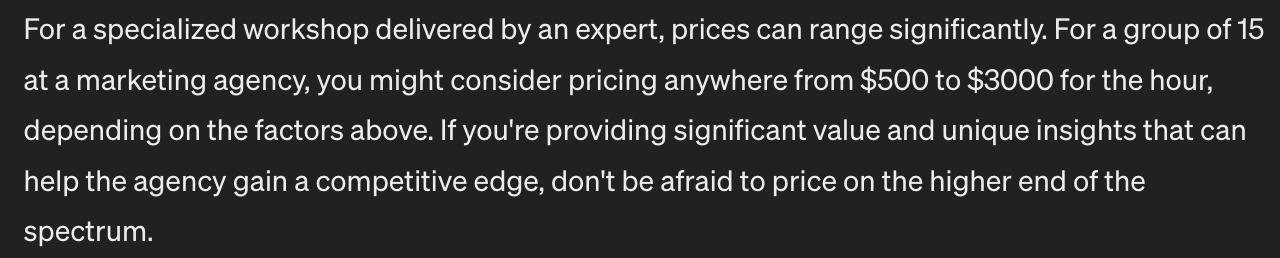
This is when working upwards from small to larger events comes into its own.
Basically for your first pitch come in low(ish). For instance with the information above I’d start at $1000 for the hour.
If they agree immediately, no questions asked then you’ve learned something: next time charge more! It was too cheap.
If the client agrees immediately great. I give the workshop, collect testimonials and reviews and find another client. This time I say $1500.
Still no hesitation? $2000 and so on.
Keep going until there’s push back at your initial pricing. That’s your price for this sort of client.
You can also short circuit this process by finding out what others in the industry charge. That’ll get you to the industry figure immediately!
Now you have enough to go ahead and find your first client and a rough plan of action for where to go to from there.
In the next Part we’ll cover the bit you might be dreading the most - the actual delivery!
Keep prompting,
Kyle
We HATE the idea of being up on stage in front of other humans.
With them paying attention to us. Watching our every move. Listening to every word.
Horrors!
In this Part I’ll cover how to deal with this and deliver your workshop with confidence.
Let’s get started:
Delivery without fear
You already have goodwill, maintain it.
Nail the intro
Step away from the computer
Practice between workshops
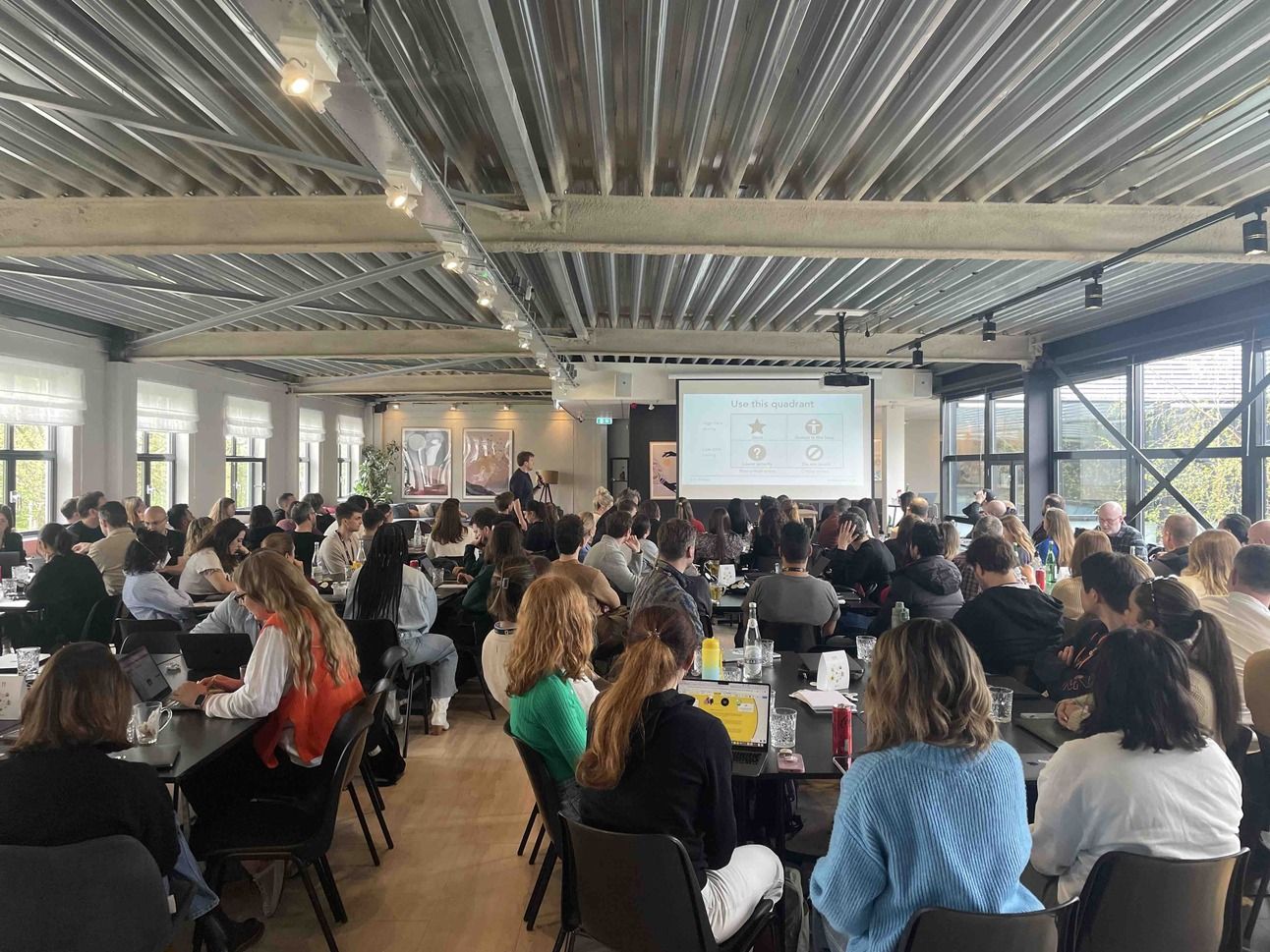
I’m naturally an introvert. Public speaking does not come easily to me.
Even now, after a large event I need to go sit alone in a dark room!
After this event last week I was a write-off for the rest of the day:
Here’s a really useful insight though that helped me a lot.
When you start a workshop you have the goodwill of the audience.
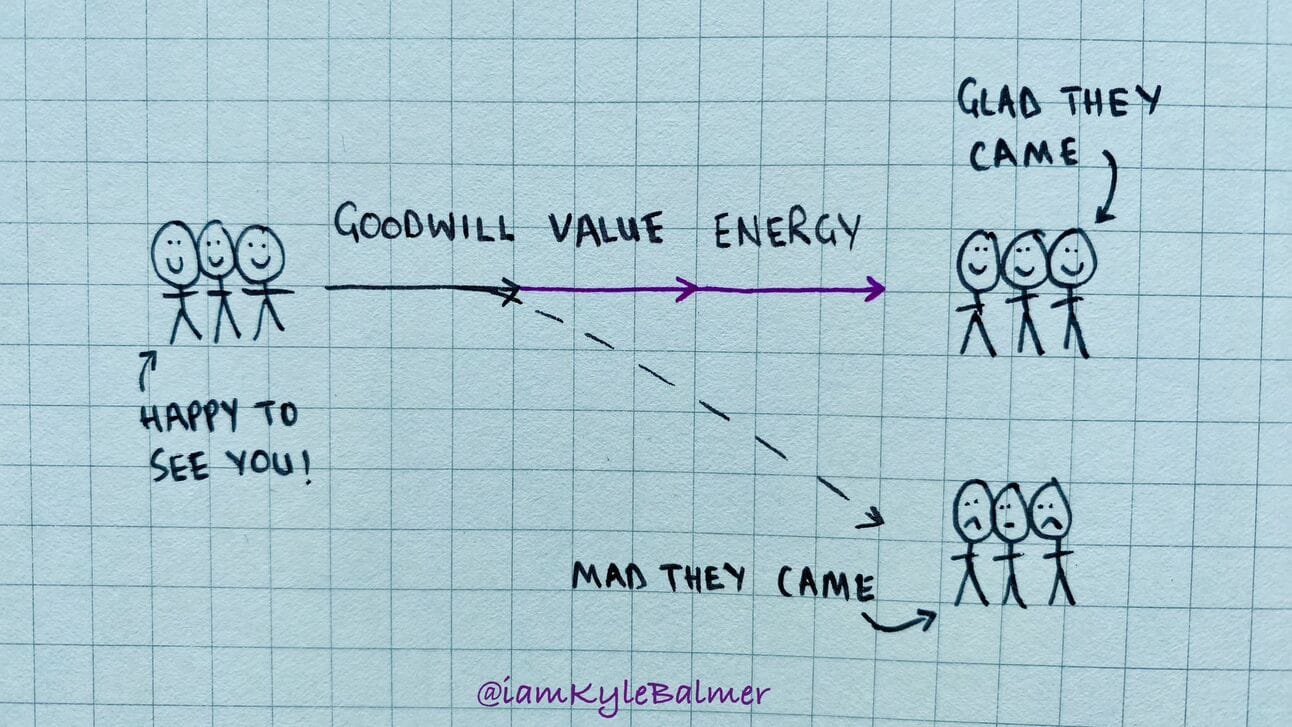
They are there to learn and want you to succeed. They don’t want to sit through a bad workshop so actively hope you do a good job. They support you.
You job is to maintain that goodwill. Focus on doing this.
Maintaining the goodwill come from:
delivering concrete value
keeping the energy up
Both of these should be covered by the fact we started with learning outcomes (concrete value) and we’ve built in lots of format switches (energy boosting). Also we’re going for small gigs first and then building confidence by steadily increasing the number of people we’re talking to. All of this is built into the Playbook structure in the last Parts.
Let’s cover some more tips to really cement this and make you more confident in your delivery.
If we want to maintain goodwill then the intro is super important.
The audience has goodwill for you and the workshop already. In the first few minutes you need to show them that their trust is well founded.
I personally do this with a 1-2 punch of humour and value.
I’ll always start by getting people to laugh. It’s literally the thing I spend the most time on in preparation - what silly jokes can I tell at the beginning?
Genuinely not joking here.
It’s a very quick way to put people at ease and get them to like you. Humour is a superpower here.
As soon as I get a couple of laughs I’ll dive straight into something valuable. A quick preview of what we’ll be covering but immediately something that makes people perk up and think “ok, ok, this is going to be good”.
Then and only then will I introduce myself.
Most workshops will start with a “who am I” intro slide. No-one cares. They probably know who you are already or have a pretty good idea you know what you are talking about by the fact they are listening to you.
So don’t front and centre talking about yourself. Nudge it back in the intro to after you’ve given them something juicy to chew on.
My intros are generally:
jokes to put people at ease and bump goodwill (1 minute)
valuable nugget of information (2 minute)
who am I (1 min)
why we’re here today (1 minute)
And then straight into the first learning objective.
If you can nail the intro you’ll start the core content feeling confident. Generally nerves settle down once you get into the swing of delivery so knowing your intro inside-out is a very high value use of your preparation time.
There is a tendency for workshop facilitator to stay at their computer.
They may not be reading the slides (good lord don’t do that!) but they may be relying on presenter notes.
By all means have some notes added to the slides using the Presenter Notes feature but don’t use them as your script.
In fact: get away from the computer altogether.
Invest in a clicker (they are $10 or so) so you can change slide from anywhere in the room.
And during your presentation step in front of the computer. Don’t hide behind the podium but use the full space.
This mean you can focus all your attention and energy on the audience without the physical block of a screen between you.
It’s scary because you can’t constantly use your presenter notes. But liberating because you are free of the podium and can better interact with the participants.
This immediately gives you the largest charisma boost. Super simple but most workshop presenters don’t do it.
Ultimately this is about practice. The more you practice speaking the better you’ll be.
Ideally you want to be practicing in front of an audience as that gives the most exposure.
But there are ways to get the practice even between workshops and talks.
The first is doing video content. Specifically though: do video content as targeted practice.
I strive to do my video in one take. No edits.
Why? It most simulates the experience of public speaking.
Over the last 6 week or so I’ve forced myself to do one-take videos. It was hard at first. Then got easier. I’m still improving of course. But know that if I keep putting in the reps I’ll just get better.
When public speaking you can’t edit your sentences together. And it’s one take.
So the more fluid you get at one-shot delivery of your ideas the better you’ll be able talk publicly too.
Here’s a video (in one take!) about this:
@iamkylebalmer Fluid public speaking and video is one of the most crucial skills you can have in 2024. I’m no expert - but i’m putting in the reps. As s... See more
A step up from this recorded video is doing Live video. This even better replicates public speaking because you are in a live situation - just like a real event!
I’ve done a whole Prompt Playbook on going live which you can find in the archive or the Vault.
Going live is also a great place to straight up practice your workshop. Just go live and start delivering. For your own practice more than anything else!
Of course nothing beats actually doing live workshops in person. But these methods can help you to build confidence in between and used as a supplement.
In this Prompt Playbook we’ve looked at why and how to add workshops to your product mix. Not just for the revenue but also the reputation that comes from delivering workshops.
Hopefully this guide has given you the basic step by steps to add workshop in your business.
As a reminder we covered:
Part 1: Why workshops?
Part 2: What your workshop will be about
Part 3: Building your workshop the right way
Part 4: Securing bookings
Part 5: Delivery without fear
Now your only job is to get that first workshop together and out into the world!
Keep prompting,
Kyle
Unlock the potential of your expertise with the '👨🏫👩🏫 Profitable Workshops | Playbook'. This comprehensive guide empowers you to leverage your knowledge to create high-impact workshops that not only elevate your authority in your niche but also generate significant income. Whether you're an introvert who dreads public speaking or a seasoned presenter looking to refine your approach, this playbook will provide you with actionable strategies to engage your audience and deliver value while overcoming your fears. Transform your knowledge into a profitable workshop that attracts clients and builds your reputation!
This playbook is designed for content creators, entrepreneurs, and professionals who possess valuable expertise but struggle to monetize it through workshops. If you've ever dreamed of stepping onto a stage or leading a group but felt held back by self-doubt or a lack of direction, this guide is perfect for you. It addresses the challenges of public speaking and workshop delivery, providing structured support to help you confidently share your knowledge and build a thriving income stream.
No prior experience is necessary! This playbook is designed for beginners and those looking to improve their skills, providing step-by-step guidance to build your confidence.
The playbook offers actionable strategies that you can start implementing immediately. Depending on your pace, you can expect to see results within a few weeks.
The playbook includes guidance on identifying your unique expertise and how to align it with market demand, ensuring you choose a workshop topic that resonates with your audience.
Absolutely! You'll learn effective marketing strategies and how to position yourself as an authority, making it easier to attract clients and secure bookings.
Yes! The principles and techniques outlined in the playbook are applicable to both in-person and virtual workshops, allowing you to reach a wider audience.