
AI Authority
Welcome to '🏗️ Build in Public', your ultimate playbook for launching AI tools with a focus on audience-first strategies.
Start ReadingGo to any AI tools directory right now. ProductHunt's AI section. There's An AI For That. Future Tools. There are many. And the story is the same.
What you'll find is heartbreaking.
Thousands of brilliant AI tools. Clever solutions. Impressive tech. Most with under 100 users. Many completely abandoned.
These aren't bad products.
I've tested dozens - many are genuinely innovative. But their creators made the same fatal mistake: they built first, thought about distribution later.
Field of Dream’s “Build it and they will come” doesn’t work.
Unlike Kevin Costner they discovered an uncomfortable truth.
Without an audience, you have two options: borrow someone else's (affiliates, partnerships, favours) or buy attention (ads, sponsorships). Both require either cash you don't have or relationships you haven't built.
So these tools sit there.
We are going to do better. We’re going to start building our audience right now. So when we have something built we can immediately take it to them.
"But Kyle," you're thinking, "shouldn't we be building by now? This feels like procrastination. We've done a week of research. Now we're making videos for social media? When do we actually BUILD something?"
Here's what those ghost-town creators wish someone had told them: Building is only 50% of the equation. Distribution is the other 50%. And if you start distribution after building, you're already too late. We won’t make that mistake.
Today changes everything. We're not delaying your build. We're ensuring it doesn't end up in the AI graveyard.
Let’s get started:
Why brilliant AI tools die (hint: it's not the product)
The two expensive alternatives to having an audience
Pre-build, during-build, and post-build audience advantages
Why this isn't about becoming an influencer
I talk to lots of founders building products with AI.
Their marketing plans? Post on ProductHunt, share in a few Reddit threads, hope for organic discovery. When it doesn’t work send DMs to someone like me and ask for free shout outs. Here’s one that just landed as I write this:
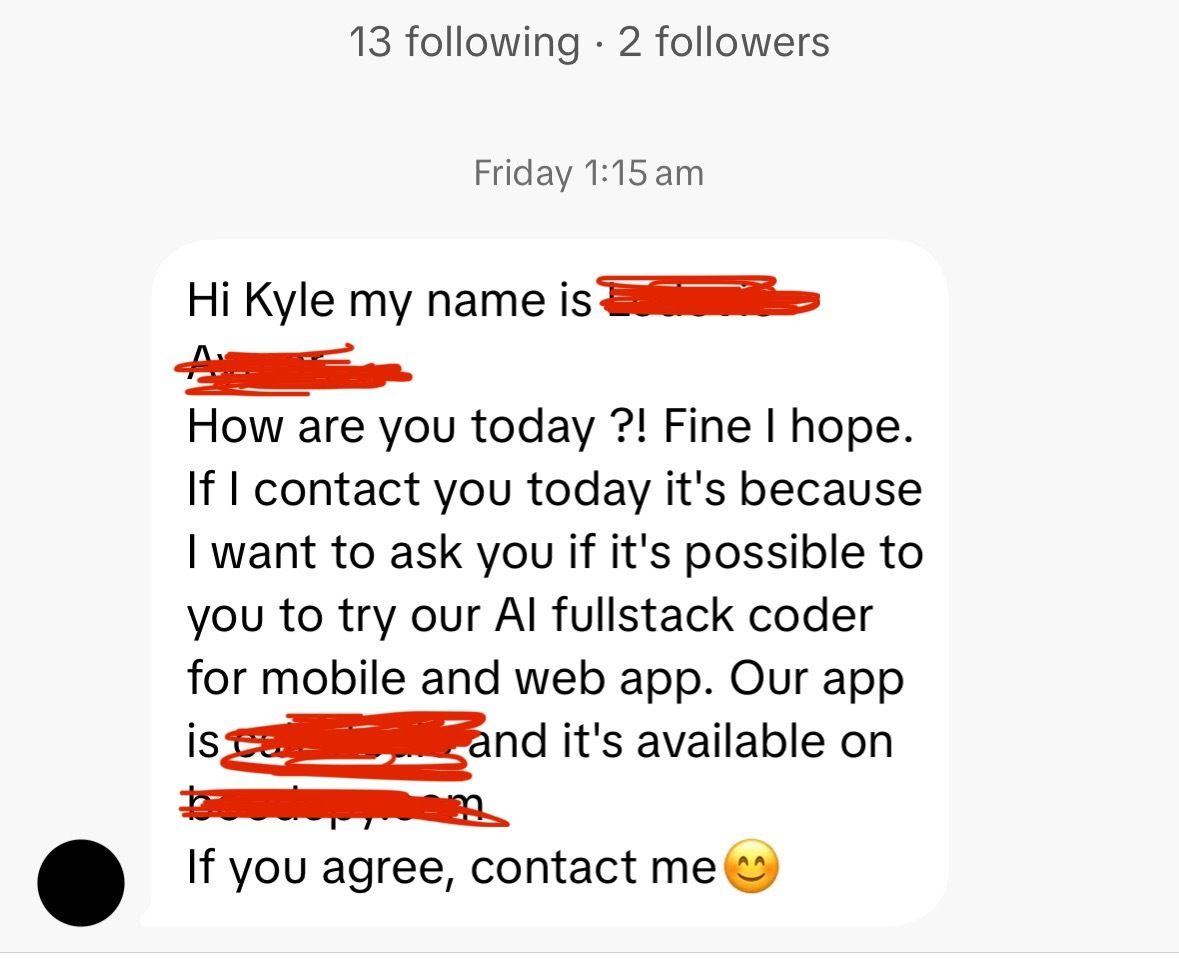
I get 5-10 requests like this every day. I wish I was exaggerating here.
Hope isn't a strategy.
Meanwhile, I recently watched another founder launch a much simpler tool - basic AI prompts for real estate agents. Nothing revolutionary. But she'd been posting daily TikToks about AI in real estate for three months before building anything.
Launch day: 500 people on the waitlist. First week: 200 paying customers.
The difference wasn't the product. It was the audience.
My own businesses only took off once I had an audience. Before that? Struggle and hustle for every sale.
Now? I can build and launch something knowing I'll get paid. I use my audience to validate demand, build to their needs and finally for sales.
Let's be clear about what we're doing: content marketing. Building an audience through valuable content that attracts your future customers.
Now, before we dive in, let's acknowledge the elephant in the room. There are 100% alternatives to content marketing:
Plenty of “normal companies” (ie. plumbing companies) are happily doing millions without a single social post
Accountancy firms crushing it through referrals alone
B2B software companies using pure outbound sales
And so on…
They're not on social media. They use referrals, partnerships, or have cash to spend on ads and salespeople. Plenty (the majority!) of businesses operate quite happily and profitably without TikTok.
Perfectly doable. But here's the catch - they need size or cash. As a solopreneur starting from zero? You have neither. Damn.
Content marketing is your unfair advantage because:
It costs time, not money
It builds while you sleep (content works 24/7)
It compounds (post 100 helps post 1 get discovered)
It pre-qualifies buyers (they already know and trust you)
It’s also (sorry to be brutal) probably the only viable avenue open to you. Unless you have investment and can spend heavily to acquire customers.
Building an audience before you build your product isn't delaying - it's de-risking. Having abnormal audience makes every stage of making money simpler, easier and more scalable. It’s hard to overestimate how useful an audience is - but let me try to list it all out!
Here's what an audience gives you at each stage:
Pre-Build Benefits:
Test ideas with real people who might pay
Validate problems before writing code
Get feature requests from actual users
Build anticipation and waitlists
Start relationships with potential customers
During-Build Benefits:
Real-time feedback on features
Beta testers who actually care
Avoid the "build in stealth mode" death trap
Course-correct based on user input
Post-Build Benefits:
Launch to customers, not crickets
Word-of-mouth from day one
Social proof and testimonials
Lower customer acquisition cost
Feedback loop for improvements
Without an audience, your only options are expensive:
Borrowing Distribution:
Affiliates (need attractive commissions, 50%+ in most cases)
Partnerships (need existing relationships and they’ll want to see track record)
Guest posting (need credibility)
Influencer deals (need budget)
Buying Distribution:
Paid ads (£10-50 per customer)
Sponsorships (£500-5000 per placement)
PR services (£1000+ per month)
Cold outreach tools (time + money + technical expertise)
See the problem? Both paths require resources you probably don't have. Producing content on the other hand requires neither.
It requires a phone. And your willing participation. And that’s it.
Let me be crystal clear: we're not turning you into a content creator or influencer. Their business model is attention. Views, likes, shares, brand deals. Their audience is their product (which they sell to advertisers).
Your business model is solving problems. The audience is just distribution infrastructure.
Think of it like this:
Influencers: Audience IS the product
You: Audience is the CHANNEL to deliver your product
I’m not telling you to become an influencer. We are still building our business here!
Already a premium member? Check your inbox for invitation link.
For the next 45 days, you need one platform. Just one. And it needs to prioritise speed over perfection.
My recommendation: TikTok or Instagram Reels.
How to choose:
Where are your potential customers? → Use that one
Don't know? Where are your favourite creators in your niche? → Use that one
Still don't know? Which do you actually use daily? → Use that one
Never use either? → TikTok. The algorithm is more beginner-friendly because each video is judged independently of your follower count
Don't overthink this. You'll eventually repost content across platforms anyway. What matters now is starting the creative habit, not picking the "perfect" platform.
Why these two?
Built-in recording (no external tools)
Zero editing required (they have start-stop recording, I’ll show you how to use it in the next Part)
Quicker to produce and publish
Algorithm favours consistency over polish
Short-form forces clarity
Your market is already there scrolling
Not YouTube (too much production). Not LinkedIn (too much text). Not Twitter (too much noise).
Video. Short. Daily. Done.
Here's your intro video generator. Use this with everything we covered in Week 1:
You are a video script writer helping someone introduce themselves and their AI Summer Camp journey. Create a 30-60 second video script based on their Week 1 work. Their details:
- Market: [From Day 1]
- Specific problem: [From Day 2] - Competition gap: [From Day 3]
- Their wedge: [From Day 4]
- Customer insights: [From Day 5] Create a natural, conversational script that:
1. Opens with "I'm taking the AI Summer Camp challenge"
2. Mentions their specific market and problem they're solving
3. Explains why this problem matters (use customer language from Day 5)
4. States their 50-day goal ($1K revenue)
5. Invites viewers to follow the journey
6. Ends with clear next step Keep it:
- Conversational (like talking to a friend)
- Specific (use exact problem, not vague statements) - Honest (including being at the beginning)
- Under 60 seconds when spoken naturally
- No stage directions or b-roll, just script text Example opening: "I'm taking the AI Summer Camp challenge to build a real AI business in 50 days. I'm focusing on [specific market] who waste hours every week on [specific problem]..."
Record it 3 times. Post the best one. Don't aim for perfect - aim for done.
Tag me (@iamkylebalmer) and I'll engage with your intro video. Nothing beats early momentum like having a larger account give it an engagement bump.
By end of today:
Choose your platform using the decision framework above
Set up your profile
Generate your script using the prompt above
Record and post your intro video (tag me!)
No fancy equipment. No editing software. No perfectionism. Just your phone and commitment.
Also don’t worry about your profile picture, bio or anything like that yet. It doesn’t matter.
Right now just shoot and post. Don’t overthink it.
Tomorrow I’ll show you how I produce content at speed. No editing suites. No perfectionism. Just you, your phone, and 5 minutes per video.
Keep Prompting,
Kyle
People ask me constantly: "Kyle, how did you build your following?"
I tell them the same thing every time: Just do one video a day, every day.
That's it. Don't worry about anything else. Don’t sweat what you talk about. Don't stress about technicals. Forget about editing. Just film yourself talking about something in your business - questions people ask, relevant news, random thoughts. That sort of thing.
They nod. They smile. Then they go away and... do nothing.
But the ones who just get on with it? They do amazingly.
Take @superpowersai on TikTok - one of my students who simply started posting. Understood the assignment - and did it.
No fancy setup. No professional editing. Just picked up the camera and shot consistent daily videos about AI. Result? 10,000+ followers and growing.
It's not rocket science. It’s about i) getting started and ii) sticking to it.
Today is about the first of these: removing every single block between you and that first video.
Let’s get started:
Why friction kills more content creators than bad content
The 5-minute video protocol that removes all excuses
Finding your first topic with TikTok's Creator Insights
Your question-answering video script generator
Building the daily habit that changes everything
The biggest enemy of content creation isn't bad content - it's friction.
Better to have 10 terrible videos than no videos at all.
Every extra step between idea and published video is a chance to quit. So…we need to remove as many steps as possible to get you started.
This is why we're removing:
Editing concerns (shoot and post)
Lighting worries (natural light or room light is fine)
Sound perfection (phone mics are designed for this)
Script anxiety (use the prompt below for now)
Two massive benefits here. First, removing friction eliminates procrastination potential. No excuses left.
Second, platforms and audiences actually prefer these authentic videos. You're building trust for business, not entertainment. Polish won't help you - connection will.
This is why we use TikTok or Instagram. They're built for exactly this kind of rapid, authentic content.
Let’s cut to it.
Here's my exact process - tested over thousands of videos:
Setup (30 seconds):
Phone in hand or propped up
Face the window (natural light) or just use room lighting
Quick test record to check framing
TikTok Process:
Tap + button
Hold red button to record (or tap for hands-free)
Record first sentence
Release or tap to stop recording
Take ok?
Hold or tap to record next sentence
Take ok? Repeat
Delete as bad takes as you go along
Keep going until captured it all
Tap "Next"
Toggle on auto-captions
Add simple text overlay if needed
Write one-line description
Add 3-5 relevant hashtags
Post immediately
Do not delete
Instagram Process:
Swipe right to camera
Swipe to "Reels" at bottom
Same recording process, using Start/Stop recording
Add captions
Write description (can be longer than TikTok)
Add a few hashtags
Publish, do not delete
No external apps. No downloads. No editing software. Just you, talking to camera, sharing something useful.
Importantly both TikTok and IG let you sue “start-stop” recording. You can literally record sentence by sentence, make sure it’s good, then move on to next sentence. Zero editing needed after as you’ve captured it all clean.
Already a premium member? Check your inbox for invitation link.
What should you talk about? Today, let's start simple with a question-answering video. Here's how:
Open TikTok, go to Creator Tools → Analytics → Research → Creator Search Insights.
You can also search Creator Search Insights in the normal TikTok Search it’ll appear.
Type in your keyword (like "AI" or your industry term). You'll see trending searches like this:
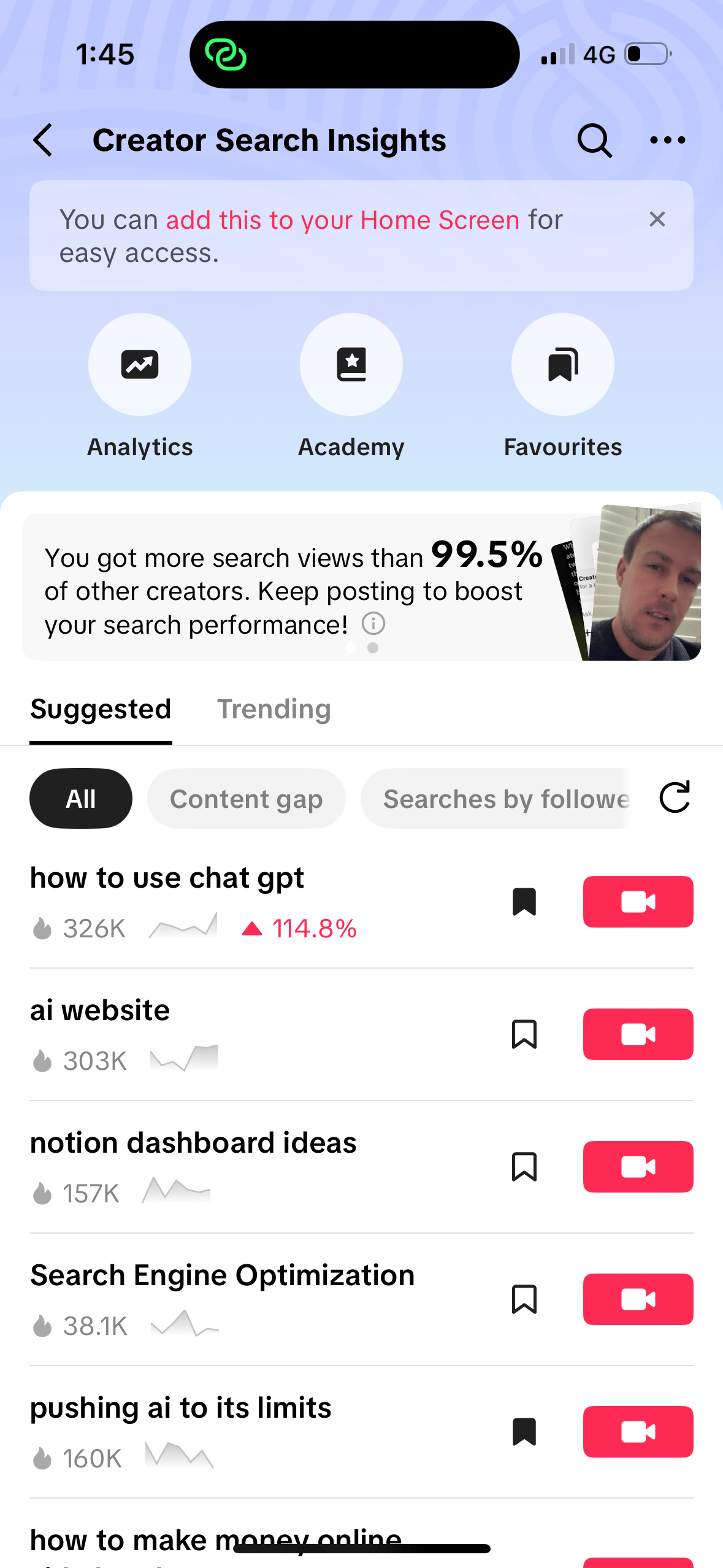
Note: Mine is already filled with AI topics because TikTok knows what I create
Alternatively use Google and type “how AI [niche]” and you’ll see suggested questions like this:
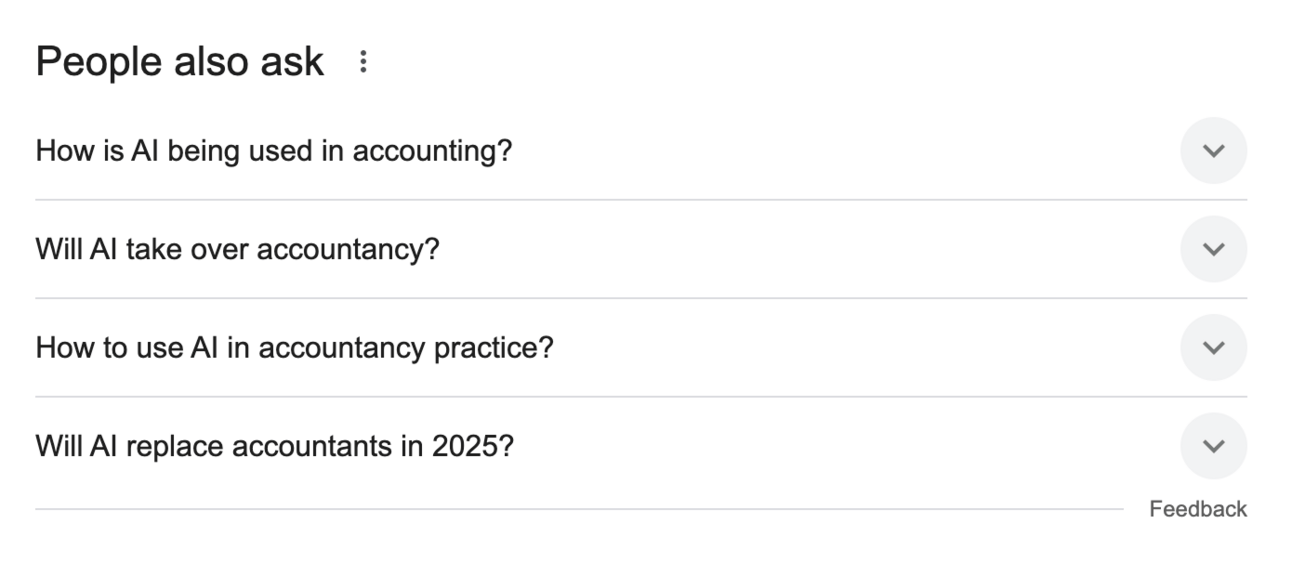
Take any of those search terms and use this prompt:
You are a viral video scriptwriter. I need to create a 30-60 second video answering a specific question in my industry. Search term/question: [Insert from Creator Insights/Google Suggested Questions]
My industry: [Your niche from Week 1] Interview me with 3-4 quick questions to understand my unique take on this topic. Then write: 1. Five different hook options (first 3 seconds, no fluff)
2. The main answer in simple, conversational language
3. One specific example or quick tip
4. Natural ending (no "follow for more" - just wrap up the point) Write only the spoken words - no stage directions, no "Host:" labels, no technical instructions. I want to read this directly to camera like I'm talking to a friend. Keep it under 150 words total. Industry expert tone, but conversational. No corporate speak.
That prompt will spit out a quick script. Adapt as necessary and just record. Don’t overthink! If you need to just read it. Or use as a guide. Whatever comes easiest.
Today is just practice. Here's what you need to do:
Open your app - spend 5 minutes exploring the recording interface
Practice the mechanics - record yourself saying anything, just to understand the buttons
Use Creator Insights - find one trending question in your niche
Generate your script - use the prompt above
Record and post - one take, 5-minute protocol, publish immediately
Your build in public component? That video IS it.
Remember again: You're not trying to become an influencer. You're building distribution channels for your business. Every video is a potential customer discovering you exist. Every post teaches the algorithm who you serve. Every day you skip makes launch day harder.
(Want advanced hooks and viral frameworks? I dive deep on those in my AI Authority Accelerator).
Tomorrow, we'll find your collaborators. Other creators who already have your audience's attention. Not competition - your future amplification network.
I'll show you exactly how to identify them, engage authentically, and build relationships that multiply your reach.
But today? Just make one video. Press record. Share what you know. Post it.
The algorithm rewards action, not intention.
Keep Prompting,
Kyle
Recently something incredible happened in my TikTok creator group.
I’d just won an all expenses-paid trip to San Francisco to visit Lovable for their demo day. Super cool.
But I myself hadn’t actually realised I’d won…
Instead someone in the group told me!
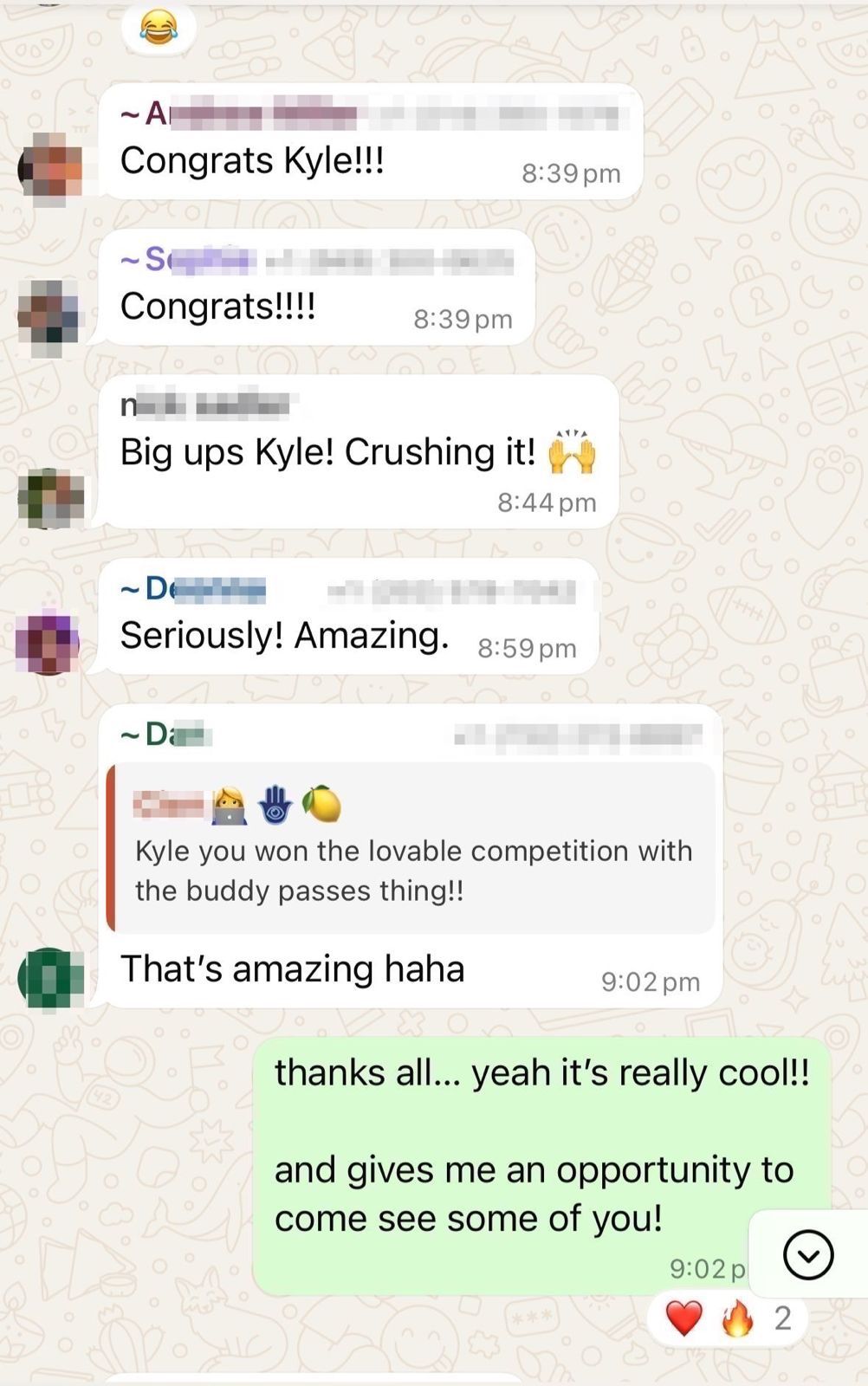
And then the group chat exploded. Not with jealousy or competition, but with genuine celebration. "Congrats Kyle!" "So deserved!" "Can't wait to see what you share!"
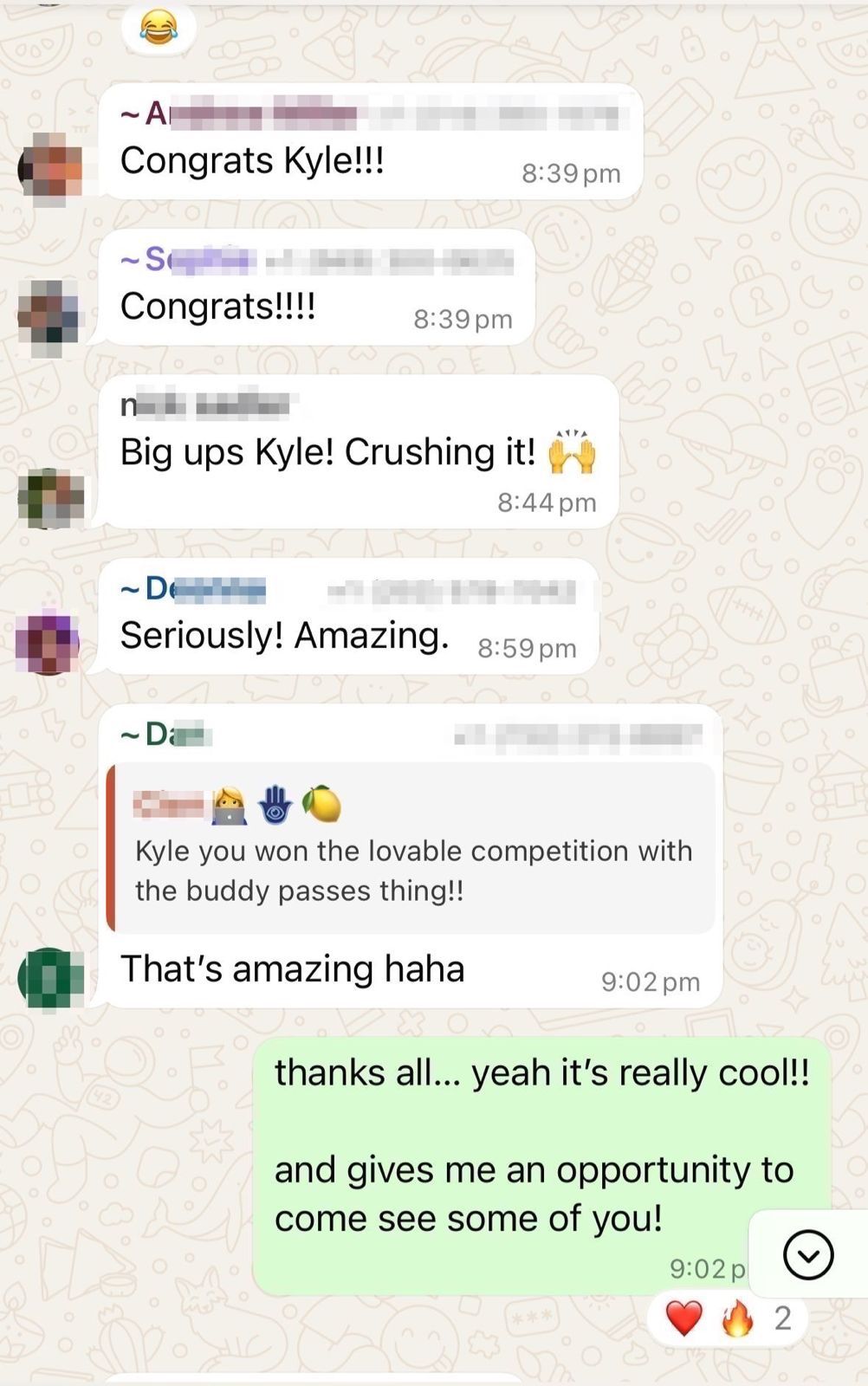
This is a group of fellow TikTok and Instagram AI creators. A lot of them you’ll likely know. Actually, name a creator in the space and they are in the group…
These are technically my "competitors" - we all create AI content, chase the same trending topics, target similar audiences. But here's the thing: we've never seen it that way.
When I'm in SF next month, I'll be shouting them out from the Lovable offices. Meeting up with several of them while I'm there. Sharing everything I learn with the group.
We figured out something most creators miss: we can grow the pie together rather than fighting over slices. My win is their win. Their growth helps my growth. We all rise together. Comrades! 😆
This is exactly what you need to build in your niche.
(Want to be apart of a growing supportive group just like this? Check out our AI Entrepreneur Group Chat).
Let’s get started:
Why other creators are collaborators, not competitors
The Dream 100 strategy from Traffic Secrets
Finding your tribe with AI assistance
The "Top Creators" video that builds instant relationships
Growing together vs growing alone
Here's what most people get wrong about content creation: they think audiences are finite. If someone follows another creator in your niche, they won't follow you.
Completely backwards.
Audiences are hungry for perspectives. If someone follows one AI educator, they'll likely follow five. If they watch one video about AI in real estate, they'll watch twenty.
In fact, your "competitors" have already done the hard work - they've gathered people interested in your exact topic. Think about it: every creator in your niche is proof your market exists. Every follower they have is a potential follower for you. Every video they post educates your future audience about why your topic matters.
Competition mindset: "They're talking about my topic!" Collaboration mindset: "They're warming up my audience!" It’s a shift to make conceptually but once you do it flips the script.
This actually applies to business as well. Your competitors don’t have to be. They can (and should) become people you work with, not against. For now we are focused on your audience building but hopefully these lessons are more widely applicable.
Already a premium member? Check your inbox for invitation link.
A really useful concept is the Dream 100. This concept comes from Russell Brunson's "Traffic Secrets" - brilliant book if you haven't read it. The idea is simple but powerful: create a list of 100 people you want to work alongside.
Not compete against. Work alongside.
These are people who already have your dream audience's attention. Initially, they might seem on a different level - bigger following, more engagement, established presence. But here's the magic: as you put in the work, they eventually become peers.
The progression is thus:
You follow them (you're invisible)
You engage thoughtfully (they notice)
They check your content (curiosity)
They follow back (recognition)
You hop on calls (relationship)
You collaborate (partnership)
I've watched this happen dozens of times. That "untouchable" creator with 100K followers? Six months later, you're doing joint livestreams. Heck I’m doing it myself right now, rising the ranks! It takes some time but it’s a strong play.
First up let's build your hit list.
Here's the prompt to find your first batch:
You are a social media research assistant specialising in finding niche communities. Help me identify content creators and thought leaders who already have my target audience's attention. My niche: [From Week 1]
My platform: [TikTok/Instagram]
My target audience: [Your specific market] Search for and list creators who:
1. Post about [your industry] + AI/automation/technology
2. Have between 1K-500K followers (accessible but established)
3. Post at least weekly (active creators)
4. Get consistent engagement (not just follower count) For each creator found, note:
- Handle/username
- Follower count (approximate)
- Main content themes
- Engagement style with audience
- One unique angle they take Also identify:
- 3-5 hashtags they commonly use
- Common questions their audience asks
- Content formats that perform well for them Find exactly 20 creators, prioritising those who engage with their comments and seem approachable for collaboration.
Use this with Manus or another research-capable AI.
We're starting with 20, not 100. Why? Quality over quantity. Better to deeply research 20 than surface-scan 100.
Then run it again four more times, each time adding: "These people are already on my list, find 20 different creators: [paste previous names]"
By the end, you'll have your Dream 100 - carefully researched, properly targeted, ready for engagement. That’s the first bit!
Want to instantly get on these creators' radar? Make a "Top Creators in [Your Niche]" video.
Here's an example of one I did:
@iamkylebalmerReplying to @Steve Masty i wanted to highlight some other awesome AI Educators here on tiktok and over on twitter Tiktok : @Rachel Woods... See more
These videos absolutely KILL for several reasons:
Creators love being recognised (who doesn't?) and will engage
Their audiences discover you through the tag
You position yourself as someone who knows the space
It's valuable content for anyone entering your niche
Oh and…it’s super easy to shoot.
Script structure:
"Found the best creators teaching [your niche + AI]. Save this if you're interested in [topic].
Number 5: @creator - They focus on [unique angle]
Number 4: @creator - Best for [specific thing]
Number 3: @creator - Love their [content type]
Number 2: @creator - Go-to for [specialty]
Number 1: @creator - Nobody explains [topic] better
Follow them all if you want to master [your niche + AI]. Who did I miss?"
Make sure to actually tag them in the video and caption. Most will comment, many will share, some will follow back immediately. It’s an easy peasy win.
By end of today:
Run the Dream 100 prompt
Follow all 100
Study their top content - what works, what doesn't
Create your "Top Creators" video featuring ~5 of them
Tag every creator you mention
Tomorrow, we'll dive into content that actually attracts your market. You'll learn exactly what to post beyond "follow my journey" updates - strategic content that positions you as the AI authority in your niche.
For now? Go find your people. They're not your competition. They're your future collaboration network. And friends!
Keep Prompting,
Kyle
The worst feeling as a new creator? Sitting down to record and having absolutely no idea what to talk about.
And if you are a business owner it’s even worse. You have other stuff to worry about. We don’t need yet another block stopping us from building an audience.
When I started I remember staring at my phone, TikTok open, thumb hovering over the record button. Nothing. Complete blank. The pressure to be "creative" or "valuable" paralysed me.
Twenty minutes later, I'd close the app without posting anything. "I'll think of something tomorrow," I'd tell myself. Tomorrow came. Same problem.
This went on for weeks (probably months actually) until I realised something: I didn't need inspiration. I needed a framework. Think of it like training wheels - not permanent, but essential for getting started.
I just needed something that meant I’d sit down and know what to post. No creativity. No muse needed. Just do the darn thing.
Once I had a simple system for what to post, everything changed. No more blank slate paralysis. Just pick from the framework, record, post, move on.
Today I'm giving you the basics of this framework. You won't need it forever - you'll develop your own voice and formats over time. But right now? You need to start posting, and this removes all the friction.
Understanding the content funnel (and why we start at the top)
Finding exactly what works in your specific niche
Content types that attract your market
Your research-driven content strategy
Before we dive into what to post, let's remember why we're posting at all. This isn't about becoming an influencer or building a content empire. It's about driving our business.
Content marketing follows a funnel:
Top of Funnel: Broad interest content that attracts many
Middle of Funnel: More specific content about your niche
Bottom of Funnel: Direct content about your solution, moving into sales content
Most new creators make a fatal mistake - they start at the bottom. Every video is "hire me" or "buy my thing." Nobody knows them, trusts them, or cares yet.
And guess what…the content fails. No surprise. It’s the equivalent of going on a date and going straight for a kiss on the lips after exchanging names. Gross. And won’t work.
We're starting at the top. Cast a wide net, build trust, demonstrate expertise. Only then do we narrow toward our specific solution. Without top of funnel, nothing else works.
Think of it this way: top of funnel gets people interested, middle builds trust and authority, bottom converts to customers. Skip the top and you're selling to an empty room.
We want to start at the top. But…what is top of funnel content in our industry.
I don’t know!
Not very helpful eh?
In fact it’s a lot more helpful than me pretending I do. That’s more damaging. We don’t want to guess. we want to know.
Your Dream 100 creators from the last Part have already done the testing. Let's learn from their wins.
Here's a research prompt that analyses what's actually working:
You are a content strategy analyst specialising in social media performance. I need you to analyze successful content patterns from creators in my niche. My niche: [Your niche from Week 1]
Platform: [TikTok/Instagram] Analyze this creator: [Insert one creator handle from your Dream 100 list] Please research and report:
1. Their top 5 performing videos from the last 3 months
2. Common themes across high-performing content
3. Video hooks that generated most engagement
4. Content formats they use repeatedly (tutorials, news reactions, tips, etc.)
5. Average video length of top performers
6. Hashtag patterns in successful posts
7. Types of questions their audience asks in comments Then provide:
- 3 content angles that consistently perform well
- Specific hooks I could adapt for my industry
- Content gaps they're not addressing that I could fill Focus on patterns and frameworks I can adapt, not copy.
Run this prompt with Manus or your preferred AI agent. Do it for 5-10 creators from your Dream 100 list - one at a time to get detailed analysis.
The patterns you'll find become your content roadmap. Not copying, but understanding what your market responds to. The prompt will give you directions you can explore and emulate moving forward. We’ll use this in the next Part when we create a 30 day content plan for you.
It’s hard to recognise content types unless you know what creators are doing. Here are a few proven formats that work everywhere. Just knowing these means you’ll start to recognise them. Which is the first step to being able to emulate them yourself.
Newsjacking: React to AI developments through your industry lens. "OpenAI just announced X - here's what it means for real estate agents." You become the translator between AI news and your niche.
Tool Recommendations: "3 AI tools every accountant should use." Specific to your market, solving their actual problems. Position yourself as the curator who understands their needs.
Educational "AI for [Industry]": Break down concepts simply. "How construction companies can use ChatGPT for project estimates." You're the bridge between AI and their world.
Behind the Scenes: Document your build process. "Day 9 of building AI tools for marketers - here's what I learned." Transparency builds trust.
Quick Wins: "Save 2 hours weekly with this AI prompt for lawyers." Immediate value, specific to their workflow. These get saved and shared constantly.
Myth-Busting: "No, AI won't replace accountants - here's what it actually does." Address fears and misconceptions in your market.
(In my AI Authority Accelerator, I provide 30 specific video prompts - one for each day of your first month. But these six types will get you started strong.)
Already a premium member? Check your inbox for invitation link.
By end of today:
Run the research prompt for at least 5 creators from your Dream 100
Document patterns you're seeing across successful content
Identify 3-5 content angles that consistently perform
Note content gaps you could fill
Don't worry too much about creating content yet - today is pure research. Understanding what works before you create. But…still shoot a build in public video of course to document what you’ve just learned!
Share your research insights:
"Day 9 of AI Summer Camp: Just analysed top creators in [your niche].
Fascinating patterns:
[Pattern 1 you noticed]
[Pattern 2 you noticed]
[Gap you could fill]
Not copying - understanding what my market actually wants to see.
What content do you wish existed for [your industry + AI]?"
Tomorrow is the final day of Week 2, and we're solving the consistency problem once and for all. I'll show you how to create a month of content ideas in 30 minutes, plus the daily creative habit that’ll get you through the month.
Keep Prompting,
Kyle
As I'm writing this, I just got home from my second ever muay thai lesson.
Was I good? No. Did I get kicked (gently!) in the head? Yes. Will I go back next week? Also yes.
Here's the thing - being bad at it makes complete sense. Why wouldn't I be? It's literally my second time. I box usually, so all this leg stuff is new and weird. Of course I'm terrible. I've never done it before.
But by committing to make this a habit, I know I'll get better. I probably won't be great. But I'll definitely be better. And that's all I can control.
Content creation is exactly the same.
Your first video will be awkward. Your tenth will be slightly less awkward. By your hundredth? You won't even think about it.
For six months, I posted 3-5 TikToks daily. Not because I was special or talented. But because I understood that consistency beats talent when talent doesn't show up consistently. Say that 10 times after a pint I dare ya.
I didn't see real traction until month four. FOUR MONTHS of daily posting before the compound effect kicked in. Most people quit by week two, expecting to be good at something they've barely started.
The difference wasn't talent or luck. It was treating content like my muay thai training - show up, be bad, get slightly better, repeat.
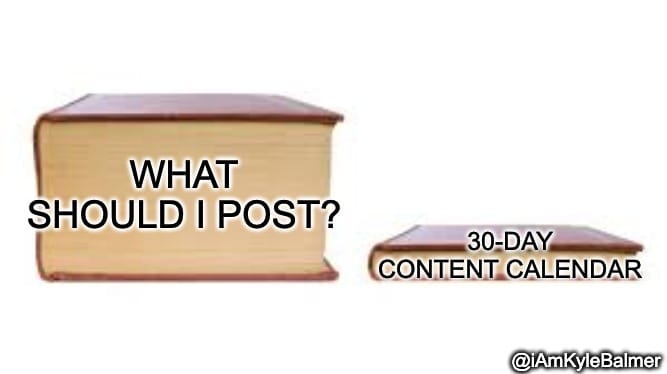
Today, we're removing the last barrier between you and that consistency - the daily question of "what should I post?"
Let's get started:
Why habits beat motivation
Remove decisions
Your 30-day content calendar prompt
Making daily posting inevitable, not optional
Every morning, you make about 35,000 decisions. What to wear, what to eat, which route to take. By noon, you're experiencing decision fatigue. By evening? You're running on empty.
Famously this is why Steve Jobs wore the same thing everyday. One less thing to spend mental energy on.
This is why "what should I post today?" becomes paralysing. It's not a creative problem - it's a decision problem. You're asking your depleted brain to be creative on demand.
The solution isn't motivation or inspiration. It's removing the decision entirely.
You have to make it a habit.
When you have a pre-planned calendar of content ideas, posting becomes automatic. No decisions, no friction, no excuses. You wake up, check day 10, see "AI tools for [your industry]," record it, post it, done.
This isn't about becoming robotic. It's about creating space for creativity by removing administrative decisions. When you don't waste energy on "what," you can focus on "how" - making each video better than the last.
Let's build a month of content that removes all guesswork. This prompt takes everything you've learned this week and creates a customised calendar:
You are a content strategist specialising in building authority through consistent posting. Create a 30-day content calendar for social media. Background context:
- My niche: [From Week 1]
- Platform: [TikTok/Instagram]
- Content research insights: [Paste key findings from Day 9 research]
- My goal: Build authority at intersection of AI + [industry] Create exactly 30 video ideas following this distribution:
- 5 Tool Recommendations (specific to my market)
- 10 Educational (AI concepts for my industry)
- 10 Quick Wins (time-saving tips)
- 5 Myth-Busting (addressing industry fears about AI) For each idea provide:
1. Day number (1-30)
2. Content type
3. Specific topic/angle
4. Hook (first 3 seconds)
5. One key point to make Mix content types throughout the month - don't group similar types together. Ensure topics are specific to my industry, not generic AI content. Format as a simple list I can check off each day.
This gives you a complete month of content. No more morning paralysis. Just execution.
You may notice that I’ve not included newsjacking or build in public posts. Why? Because these can’t really be planned! Or at least shouldn’t. They need to be done on the fly to be valuable. I’d highly recommend including build in public (in fact I’m giving you daily examples) on top of other videos but do what you can.
Already a premium member? Check your inbox for invitation link.
By end of today:
Generate your 30-day calendar using the prompt
Review and adjust any ideas that don't fit your style
Share your commitment publicly
If you need a months worth of scripts check out AI Authority Accelerator.
Post your 30-day commitment:
"Day 10 of AI Summer Camp: Just created my 30-day content calendar.
No more 'what should I post?' paralysis. 30 ideas ready to go.
Daily posting for 30 days starts now. Building my distribution before my product.
Who's committing to consistency with me?"
Look what you've built in just five days:
Chosen your platform (no more platform paralysis)
Posted your first videos (broke the seal)
Found your Dream 100 (collaboration network started)
Researched what works (data-driven approach)
Created 30 days of content (no more blank slates)
You've gone from "I should post something" to having a systematic approach to building your audience. The foundation is laid. Now you just need to put in a little work each day to get it rolling.
Week 3 changes direction completely. We‘ve decided our market. You've got distribution building in the background. Now it's time to lock in your business idea.
Not just any idea - one validated by the audience you're building. We'll use everything you learned in Week 1 about markets and problems, combined with your growing audience insights.
Keep the content habit going. It's working even when you can't see it yet.
Keep Prompting,
Kyle
Welcome to '🏗️ Build in Public', your ultimate playbook for launching AI tools with a focus on audience-first strategies. In a landscape flooded with innovative AI solutions, many creators struggle to gain traction due to a lack of audience engagement before their product launch. This playbook flips the script, guiding you to cultivate a dedicated following while you develop your AI tool. By the end of this journey, you'll not only have built a product but also a community eager to support it, ensuring you're not just another tool lost in obscurity.
This playbook is designed for aspiring AI entrepreneurs and solopreneurs who are eager to launch their innovative tools but are uncertain about marketing and audience engagement. If you've ever felt overwhelmed by the competition or worried that your groundbreaking idea might go unnoticed, this playbook is perfect for you. It empowers you to take proactive steps towards building an audience, ensuring that when you launch, you have a ready-made community excited to support your vision.
No prior experience is necessary! This playbook is designed to guide you step-by-step through the process of audience building and marketing.
The playbook is structured over 10 weeks, with manageable daily tasks that can fit into your schedule, requiring only a few dedicated hours each week.
Yes! Whether you're creating a simple tool or a complex AI solution, the principles of audience engagement and marketing can be applied across all types.
You don't have to! This playbook focuses on using content as a means to build an audience, not to become a social media influencer. Your audience is a channel for your product.
Absolutely! It's never too late to start building your audience. You can integrate these strategies at any stage of your product development.