💰 OpenAI Completes For-Profit Conversion - Mission Officially Dead?
TL;DR
- •OpenAI transitions to a for-profit model, changing its mission.
- •Microsoft now holds a 27% equity stake in OpenAI.
- •Implications for AI development and funding are significant.
OpenAI’s recent shift to a for-profit model marks a pivotal moment in the AI landscape. As the company transitions from its original nonprofit roots, it raises critical questions about the future of artificial intelligence development, funding, and ethical considerations. This change comes at a time when the demand for AI solutions is skyrocketing, making it essential for businesses and entrepreneurs to understand the potential implications.
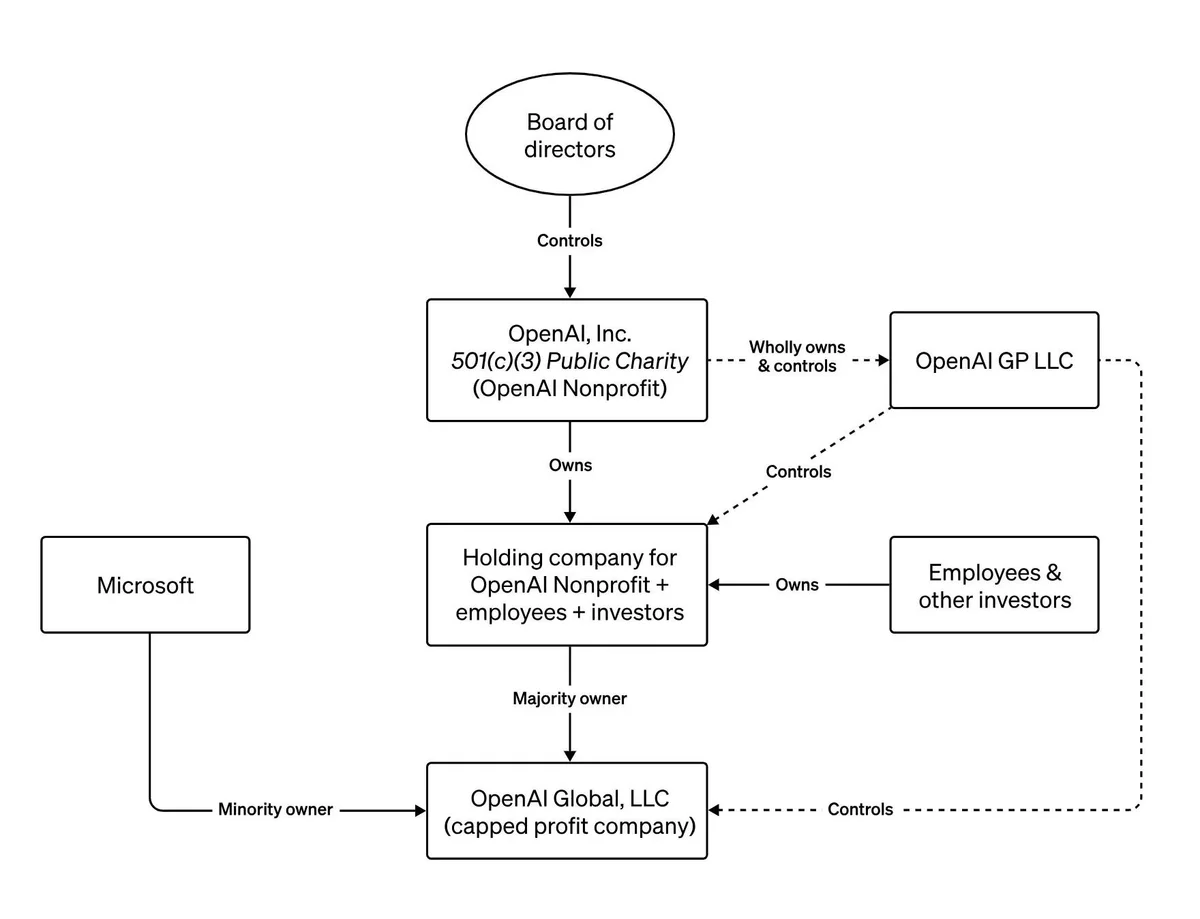
The conversion allows OpenAI to attract necessary capital to fuel its growth and innovation efforts. With Microsoft taking a 27% equity stake, this partnership is likely to influence the kinds of projects OpenAI pursues and how they approach their AI development strategies moving forward.
The Key Details
OpenAI has officially restructured itself into a public benefit corporation, as approved by the Delaware Attorney General. This move allows them to streamline their operations and focus on profitability, a necessity for any modern tech enterprise. Previously, Microsoft had a complex profit-sharing agreement that gave them a 49% share of profits without a direct ownership stake, which was often not exercised due to OpenAI's non-profitable status.
Now, with a clearer equity structure, Microsoft’s stake is worth over $100 billion based on OpenAI's valuation of $500 billion. This shift simplifies their business model and could lead to a more robust financial position for OpenAI, allowing them to make bold moves in the competitive AI space.
The Original Mission vs. Commercial Interests
When OpenAI was founded in 2015, it was built on the promise of being open and nonprofit, focused purely on benefiting humanity. However, as Kyle Balmer notes, that original mission seems to be fading. The reality is that to build one of the largest and most influential companies in the world, financial incentives are necessary.
While this new structure might allow OpenAI to better align its goals with societal benefits, it also introduces conflicting interests. Kyle emphasizes that as more investors enter the fold, the challenge of maintaining a mission focused on humanity's welfare becomes increasingly complex. The profit motive can easily overshadow altruistic intentions, leading to concerns about the direction of AI development.
The Complicated Landscape of Ownership
OpenAI's organizational structure is already notoriously complex, filled with various LLCs and holding companies. This restructuring adds another layer of intricacy, as they navigate the transition to a for-profit entity. As entrepreneurship becomes more intertwined with AI, understanding these corporate structures will be crucial for anyone looking to leverage AI technologies.
With the changes in equity stakes and the profit-sharing model, entrepreneurs need to stay informed about how these developments may affect their partnerships and collaborations within the AI ecosystem. This is particularly important for those who are considering working with OpenAI’s products or services.
What Does This Mean for Entrepreneurs?
As an entrepreneur, it’s vital to recognize the implications of OpenAI's restructuring. Here are some practical takeaways:
Funding Opportunities: With OpenAI now positioned to raise capital more freely, there may be more opportunities for collaboration, investment, and innovative projects within the AI sector.
Ethical Considerations: As the organization shifts towards profit, consider how this aligns with your own business values. Are you comfortable working with a company that might prioritize profits over ethical AI development?
Strategic Partnerships: The relationship between OpenAI and Microsoft will likely shape the future of AI tools and platforms. Keep an eye on how this partnership evolves and how it may benefit your business.
Conclusion
OpenAI’s transformation into a for-profit corporation is significant not just for them, but for the entire AI landscape. As an entrepreneur, staying informed about these changes will enable you to make strategic decisions that align with your business goals. Understanding the balance between innovation, profit, and ethical considerations will be essential as we move forward in this rapidly evolving field.
Stay tuned for more updates, as the ramifications of this shift continue to unfold and impact the world of AI technology.
Key Terms Explained
OpenAI
A leading artificial intelligence research organization that aims to ensure that AI benefits all of humanity.
Microsoft
A global technology company and major investor in OpenAI, known for its software products and cloud services.
Public Benefit Corporation
A for-profit corporation that aims to produce a public benefit and operates in a responsible and sustainable manner.
Equity Stake
An ownership interest in a company, represented as a percentage of the company’s total shares.
Nonprofit
An organization that operates for purposes other than making a profit, often focused on social, educational, or charitable goals.
AI Development
The process of creating and improving artificial intelligence technologies and systems.
What This Means For You
Funding and Investment Opportunities
The shift to a for-profit model positions OpenAI to attract substantial investment, which can lead to more robust AI solutions and tools. For entrepreneurs, this means access to potentially more powerful and diverse AI technologies as OpenAI continues to innovate and expand its offerings.
Ethical Considerations
As OpenAI prioritizes profitability, businesses must consider the ethical implications of partnering with them. It’s essential to align your business values with those of your partners, especially in a field like AI, where ethical considerations can significantly impact societal outcomes.
Strategic Positioning
Understanding OpenAI's new structure and its partnership with Microsoft can help you better navigate your own AI initiatives. Stay aware of how these changes could affect your operational strategies, from product development to market positioning.
Frequently Asked Questions
What does OpenAI's conversion to for-profit mean for AI ethics?
It raises concerns about prioritizing profit over ethical considerations in AI development.
How will this affect my business if I use OpenAI products?
You may see changes in pricing, availability, and the types of projects OpenAI pursues.
Is Microsoft still a major partner of OpenAI?
Yes, Microsoft now holds a 27% equity stake in OpenAI, solidifying their partnership.
What is a public benefit corporation?
It's a for-profit corporation aimed at producing a positive impact on society while generating profit.
Will OpenAI's mission change after this conversion?
Yes, their focus may shift more towards profitability, impacting their original mission of benefiting humanity.
Sources & References
Love AI with Kyle?
Make us a Preferred Source on Google and catch more of our coverage in your feeds.