🔒 Anthropic Pulls Up the Ladder on Claude Code
TL;DR
- •Anthropic restricts Claude Code access for third-party tools.
- •xAI's Grok team caught using Claude Code for development.
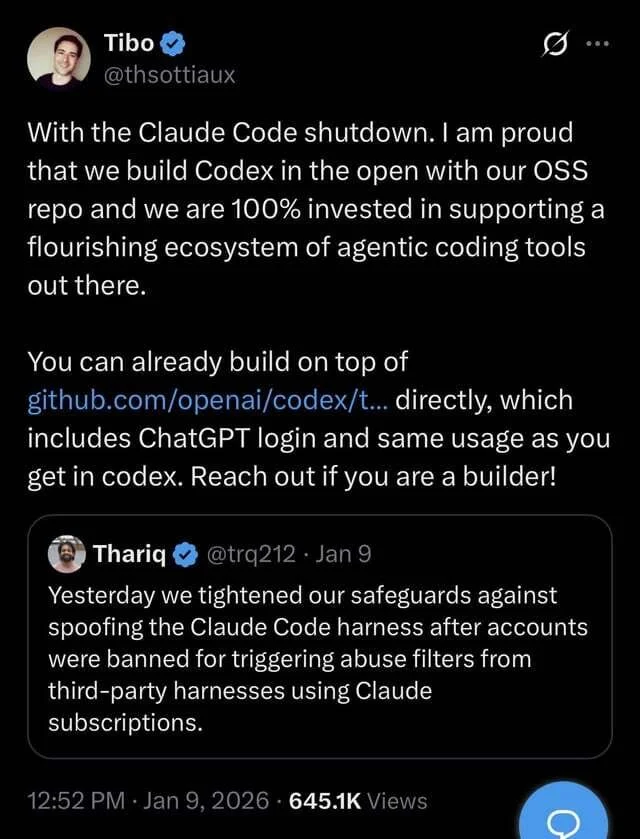
- •OpenAI highlights its open approach amid Claude Code restrictions.
Anthropic's decision to restrict access to Claude Code has sent ripples through the AI community, particularly among developers and companies relying on its capabilities. As Claude Code continues to dominate the coding assistant landscape, the pushback from Anthropic signifies a strategic move to protect its intellectual property and maintain an edge in the competitive AI market. For entrepreneurs, understanding these dynamics is crucial, as they directly impact how coding tools and AI models are accessed and utilized in business operations.
The coding landscape in AI has evolved rapidly, with Claude Code emerging as a leader. Many developers and startups have integrated Claude Code into their workflows, benefiting from its superior coding capabilities. However, as its popularity grew, so did the concerns from Anthropic about third-party exploitation of their technology. This brings us to the recent developments that have shifted the landscape.
What Changed?
Two major actions taken by Anthropic have caught the attention of the tech world: blocking third-party tools from accessing Claude Code and cutting off access for Elon Musk's xAI team.
Blocking Third-Party Tools
Previously, tools like OpenCode allowed users to connect their Claude subscriptions through alternative interfaces. This effectively let users access Claude Code at a fraction of the API costs, which could run into the thousands of dollars per month. By blocking these third-party tools, Anthropic is asserting control over how its technology is used, ensuring that users engage with Claude Code through its official channels only. This move, while frustrating for users, underscores the value Anthropic places on its model and its desire to prevent competitors from leveraging its technology for their gain.
xAI's Access Cut Off
In a surprising twist, it was revealed that xAI, the company founded by Elon Musk, was using Claude Code for internal development. Musk had previously claimed that xAI's Grok was the best coding model available, but it turns out that the engineers were relying on Claude Code to enhance their own product. The internal memo from xAI's co-founder, Tony Wu, highlights the unexpected productivity hit this cutoff will impose, pushing them to accelerate their own development efforts.
Responses from the AI Community
The fallout from these actions has sparked a flurry of reactions across the AI ecosystem. OpenAI, a competitor, quickly seized the opportunity to contrast its open-source approach with Anthropic's increasingly restrictive policies. In a statement, OpenAI emphasized its commitment to fostering a thriving ecosystem of coding tools, positioning itself as a champion for accessibility in AI technology.
This back-and-forth between companies offers a glimpse into the competitive nature of the AI industry. Entrepreneurs and developers should take note of these dynamics, as they dictate not only the tools they can use but also the overall direction of AI innovation.
The Bigger Picture
As the landscape of AI coding tools becomes more competitive, entrepreneurs need to adapt their strategies accordingly. With Anthropic's actions indicating a shift towards protecting proprietary technology, businesses relying on AI tools must consider the following:
Evaluate Your Dependencies: If your product or service relies on third-party access to Claude Code or similar tools, it’s time to reassess. Consider how these changes will impact your operations and explore alternatives.
Explore Open-Source Options: OpenAI's commitment to open-source models like Codex could provide a viable alternative for businesses seeking flexibility and cost-effectiveness in their AI tools.
Keep an Eye on Competitors: As companies like xAI scramble to pivot away from reliance on Claude Code, there may be opportunities for entrepreneurs to innovate in areas that address gaps left by these adjustments.
Insights from the Community
During the recent discussion on these developments, experts highlighted the importance of adaptability in the face of rapid changes in AI technology. One key takeaway was that while proprietary models offer superior performance, they also carry risks related to access and control. Entrepreneurs should remain vigilant and open to leveraging a variety of AI tools to stay competitive in their respective markets.
The conversation also touched on the potential for collaboration within the AI community. By sharing insights and resources, developers can foster innovation while navigating the complexities of proprietary technologies. This collaborative spirit could be essential for overcoming the challenges posed by restrictive access policies.
Conclusion
In conclusion, Anthropic's recent moves to restrict access to Claude Code mark a significant turning point in the AI coding landscape. For entrepreneurs, this means navigating a more complex environment where access to powerful tools may be limited. By staying informed and adaptable, businesses can continue to leverage AI technology effectively, whether through proprietary models or open-source alternatives. Understanding these dynamics is crucial for maintaining a competitive edge in an ever-evolving market.
Key Terms Explained
Claude Code
Anthropic's advanced coding AI model known for its superior coding capabilities.
OpenAI
An AI research organization focused on developing and promoting friendly AI for the benefit of humanity.
xAI
Elon Musk's AI company known for developing AI technologies, including Grok.
OpenCode
A third-party tool that previously allowed users to access Claude Code at reduced rates.
API
Application Programming Interface, allowing different software applications to communicate with each other.
What This Means For You
Navigating the New Landscape
The recent actions by Anthropic to restrict access to Claude Code highlight the shifting landscape of AI tools and their accessibility. For entrepreneurs and developers, this necessitates a proactive approach to ensure they are not overly reliant on a single tool or model. Here’s what you should consider:
Diversification of Tools: Explore a variety of AI coding tools to mitigate risks associated with access restrictions. Open-source options like Codex can provide reliable alternatives.
Innovation Opportunities: With competitors like xAI needing to develop their own models, there may be gaps in the market that savvy entrepreneurs can fill. Stay alert for emerging opportunities as competitors adapt.
Community Engagement: Engaging with the AI community can provide insights and collaborative opportunities. Sharing knowledge can lead to innovative solutions and help navigate the challenges posed by proprietary technologies.
Why This Matters
Ultimately, the actions of major players like Anthropic reshape the AI landscape, influencing how businesses leverage technology for growth. Understanding these shifts is crucial for making informed decisions about which tools to adopt and how to position your business in a competitive market. By staying adaptable and informed, you can harness the power of AI effectively, ensuring your business remains at the forefront of innovation.
Frequently Asked Questions
What is Claude Code and why is it significant?
Claude Code is Anthropic's coding AI model, recognized for its superior coding abilities and efficiency.
How does Anthropic's restriction affect developers?
The restrictions limit access to Claude Code, requiring developers to find alternatives or adapt their tools.
What alternatives are available if I can't access Claude Code?
OpenAI's Codex and other open-source tools are viable alternatives for coding assistance.
Sources & References
Love AI with Kyle?
Make us a Preferred Source on Google and catch more of our coverage in your feeds.