🤯 Andrej Karpathy is Having a Crisis
TL;DR
- •Andrej Karpathy admits feeling behind in programming due to AI advancements.
- •The concept of 'capability overhang' is critical for understanding AI's future impact.
- •Entrepreneurs can leverage AI tools to enhance productivity and solve complex problems.
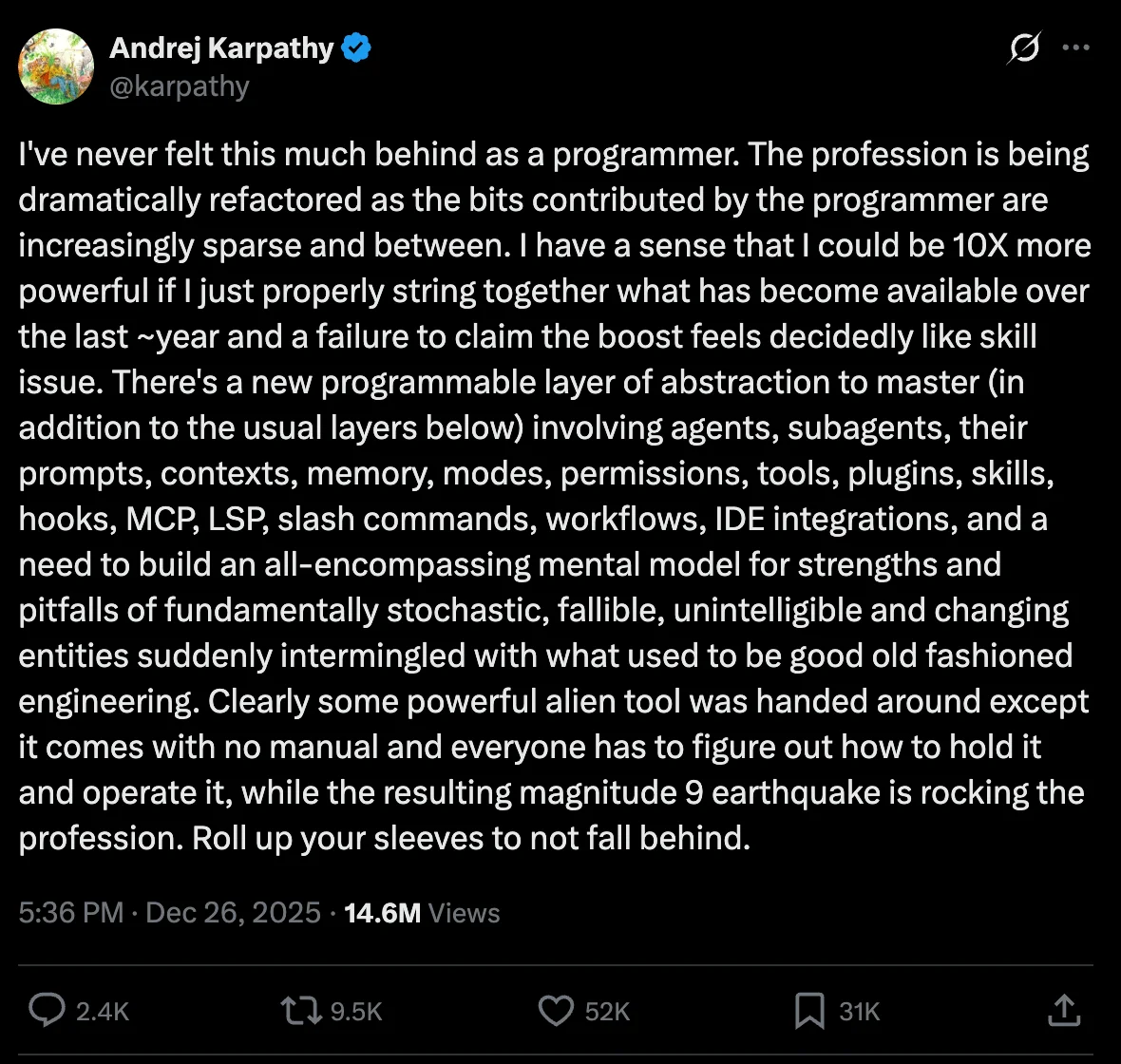
Andrej Karpathy, a prominent figure in the AI community and co-founder of OpenAI, recently expressed a sentiment that many in the tech field have likely felt: he feels behind as a programmer in the rapidly evolving landscape of artificial intelligence. This admission is significant because it reflects the broader challenges faced by professionals as AI technology accelerates at an unprecedented pace.
With tools and models becoming increasingly sophisticated, understanding how to harness this technology is essential for anyone looking to remain relevant in their field. For entrepreneurs, this could mean the difference between keeping up with competitors and falling behind.
What is Capability Overhang?
The term "capability overhang" refers to the gap between the potential uses of advanced technologies and our current understanding and implementation of these technologies. In simpler terms, we have access to incredibly powerful AI tools and models, but many people—including experts—are unsure how to leverage them effectively.
Ethan Mollick, a noted expert in the field, highlighted that even if AI development were to stop today, we still have decades' worth of technology to integrate into our workflows. This means that as entrepreneurs, we have a golden opportunity to explore these tools and find innovative applications that can enhance our businesses.
Karpathy's Crisis of Confidence
Karpathy's recent remarks underscore a growing concern among tech professionals: despite their expertise, they feel overwhelmed by the rapid advancements in AI. He pointed out that the programming landscape is changing dramatically, with AI taking over significant portions of tasks that were once the domain of human programmers.
He stated, "I could be 10 times more powerful if I just properly string together what has become available over the last year or so." This highlights an essential truth: the tools are becoming more powerful, but our ability to utilize them effectively is lagging. Karpathy's experience serves as a reminder that even those who helped build these technologies can feel lost amid the changes.
The Opportunity for Entrepreneurs
So, what does this mean for you as an entrepreneur? The capability overhang presents a unique opportunity. If you can successfully navigate this chaos and help others do the same, you can carve out a significant niche in the market. Whether through content creation, consulting, or workshops, there are numerous ways to monetize this knowledge gap.
For example, you could create educational resources aimed at demystifying AI for non-technical users. This could involve writing guides, producing videos, or even offering one-on-one training sessions. The key is to focus on practical applications of AI that can benefit specific industries or roles.
Expert Insights from the Livestream
During a recent livestream, various insights were shared about the current state of AI and its implications for entrepreneurship. One significant takeaway was the idea that many people are still stuck in a mindset that is several years behind the technology. This gap provides an excellent opportunity for those willing to step up and help others understand how to leverage AI effectively.
For instance, one participant suggested that entrepreneurs could build specialized tools for specific industries, such as creating support chatbots for real estate or automating workflows for marketing teams. By addressing the unique needs of different sectors, you can create tailored solutions that stand out in a crowded market.
Navigating the Future
As we move into 2026, understanding the capability overhang will be crucial. Entrepreneurs who can bridge the gap between what AI can do and what their target audience thinks it can do will be well-positioned for success. This could involve identifying key pain points in your industry and providing solutions that simplify the integration of AI into existing workflows.
By focusing on tangible benefits and practical applications, you can make AI accessible to those who may feel intimidated by the technology. Your role as a translator of AI capabilities can create significant value for businesses and individuals alike.
Conclusion
Andrej Karpathy's reflections on feeling behind in the programming landscape serve as a bellwether for many in the AI community. As entrepreneurs, we are at a critical juncture where the potential of AI technologies is immense, but our ability to harness that potential is still developing. By educating ourselves and others about these tools and finding ways to apply them effectively, we can not only keep pace with advancements but also lead the charge in innovating new solutions for the future.
Embrace the chaos of the capability overhang, and consider how you can position yourself as a guide for others navigating this evolving landscape. The opportunities are vast, and those who act now will likely reap the rewards in the years to come.
Key Terms Explained
Capability Overhang
The gap between the potential of advanced technologies and our current understanding of their applications.
OpenAI
An AI research lab known for developing large language models like GPT-4.
GPT-4
OpenAI's large language model designed for advanced reasoning and understanding of context.
Claude
Anthropic's family of AI models focused on safety and interpretability in AI systems.
AI Tools
Software applications that leverage artificial intelligence to automate tasks or enhance productivity.
What This Means For You
Understanding the Capability Gap
The fact that a leading figure like Andrej Karpathy feels overwhelmed by AI advancements should resonate with many entrepreneurs. It illustrates that the pace of change is fast, and even experts are grappling with how to keep up. As an entrepreneur, this presents a dual opportunity: to understand the technology yourself and to help others navigate this landscape.
Actionable Steps to Take
Educate Yourself: Stay updated on the latest AI tools and techniques. Participate in webinars, read articles, and engage with communities focused on AI.
Create Value: Consider developing workshops, courses, or guides that help non-technical users understand AI tools. Your expertise could be invaluable to those looking to integrate AI into their workflows.
Build Relationships: Network with professionals in your industry to identify pain points that AI could address. Tailor your offerings to meet these specific needs, thereby enhancing your marketability.
By taking these steps, you can position yourself as a knowledgeable resource in the AI field, helping to bridge the gap between potential and practical application. Entrepreneurs who embrace this chaos and learn to navigate it will be well-equipped to thrive in the evolving landscape of AI.
Frequently Asked Questions
What is capability overhang in AI?
Capability overhang refers to the gap between advanced AI tools and our current ability to use them effectively.
How can entrepreneurs leverage AI tools?
Entrepreneurs can create educational content, consulting services, or specialized AI applications to fill the knowledge gap.
Why is Andrej Karpathy's admission important?
His feelings reflect a broader sense of overwhelm in the tech community regarding the rapid evolution of AI.
What opportunities exist in the AI space for 2026?
There are opportunities in education, consulting, and creating tailored AI solutions for specific industries.
How can I start using AI in my business?
Begin by identifying specific tasks or challenges in your business that AI can help automate or improve.
Sources & References
Love AI with Kyle?
Make us a Preferred Source on Google and catch more of our coverage in your feeds.